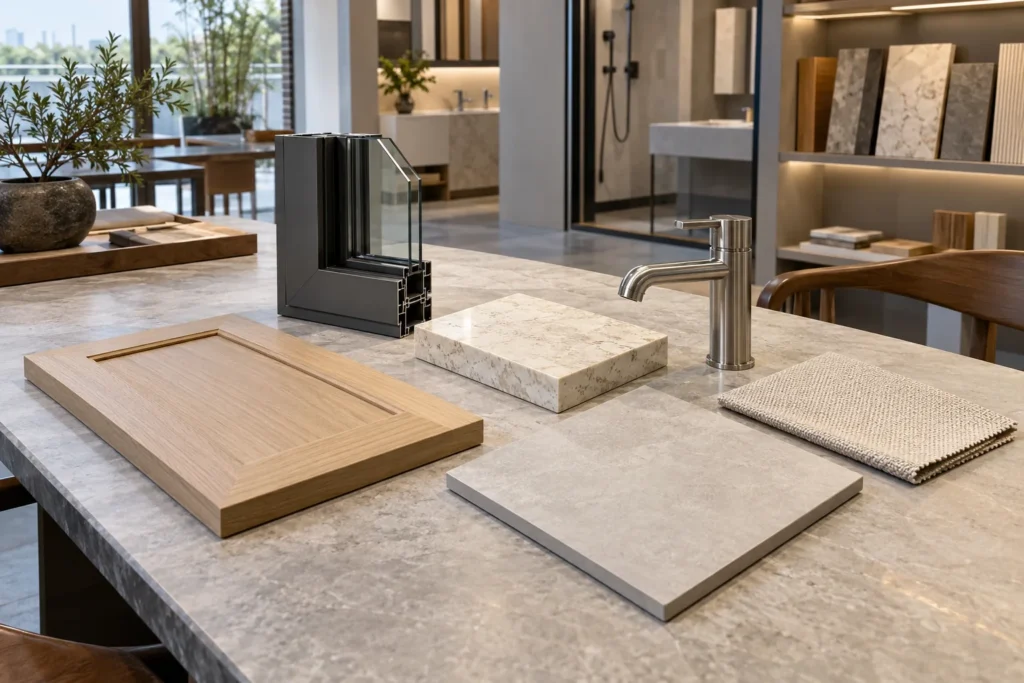
For apartment soft furnishings, compare the product collection against consistent specifications, samples and delivery requirements. I recommend approving fabrics, sizes and care requirements before placing repeat orders. Separate appearance choices from tested performance so the finished rooms remain practical to maintain. See Sibolla Building for related project options.
Soft Furnishings: Key Takeaways
- Begin each apartment project by measuring spaces carefully. This shows what fits and helps you make useful areas.
- Ask clients questions and use pictures to learn their likes. Knowing their style and needs helps you pick soft furnishings that suit them.
- Prioritize curtains, upholstery, rugs and high-use items according to function and maintenance. Keep paint in the separate finishes budget.
- Make a list of favorite suppliers to make sourcing easier. Keep track of how suppliers do and keep notes to check quality and trust.
- Choose performance fabrics for busy apartments. These fabrics fight stains and fading, so they work well for homes with kids and pets.
Assessing Your Soft Furnishings Requirements
Defining Space Needs
For apartment soft furnishings, start with verified room dimensions, circulation routes and fixed furniture positions. Then divide the layout into functional zones. Check storage, lighting and installation access before finalizing sizes.
Here is a simple checklist to guide you:
- Measure each room and note doors, windows, and built-in features.
- Decide the main use for each space.
- Map out how people will walk through the room.
- Pick a focal point, like a window or TV wall.
- Create zones for relaxing, eating, or working.
- Plan for storage and lighting.
Gathering Client Preferences
You need to know what your client wants. Ask questions about their style and how they live. Some people like bold colors, while others want calm spaces. Find out if they have children or pets. Ask about any special needs, such as easy-to-clean fabrics. Write down their favorite colors, patterns, and materials. This helps you choose soft furnishings that match their taste and lifestyle.
Tip: Use photos or mood boards to help clients show what they like.
Setting Functional & Style Goals
Define how each room will be used before selecting soft furnishings. For example, a furnished rental may need washable textiles and replaceable items, while a show apartment may prioritize a particular visual scheme. Record these priorities alongside the approved layout.
Use the room checklist to connect measurements, occupancy and maintenance requirements with the material specification.
Soft Furnishings Budget and Cost Control
Estimating Soft Furnishing Costs
Build an itemized soft furnishings schedule before requesting prices. Compare fabric, construction, dimensions and quantities alongside delivery and installation charges. The table below can organize the quotation scope.
| Item | Quantity basis | Costs to include |
|---|---|---|
| Upholstery | Approved furniture schedule | Fabric, construction, finishing and delivery |
| Rugs | Room dimensions and layouts | Material, size, edging and delivery |
| Curtains | Window measurements and heading design | Fabric, lining, making, hardware and fitting |
| Cushions and throws | Unit or room schedule | Fabric, filling, making and replacements |
Use supplier quotations for the approved quantities and specifications. Include sampling, freight, fitting and any import costs in the budget.
Prioritizing Key Items
Prioritize items that affect privacy, comfort, wear and repeated maintenance. Confirm curtain sizing and rug performance before spending the remaining budget on accessories.
- Curtains and window treatments: Check privacy, lining, dimensions and operating hardware.
- Large area rugs: Change spaces more than smaller accessories.
- High-impact elements: Give your project a strong visual effect.
Balance visible design impact with wear, cleaning and replacement needs.
Tracking and Adjusting Budgets
Use a shared cost register or suitable project software to track quantities, commitments and approved changes. Reconcile it with current quotations and invoices.
Keep approved specifications and budget revisions together so the procurement team can compare like-for-like costs.
Selecting Suppliers for Apartment Soft Furnishings
Evaluating Supplier Reliability
You need suppliers you can trust for your apartment projects. Good suppliers help you avoid late deliveries and mistakes. They also help you save money. When you pick a supplier, look for these things:
- Fair prices for products, shipping, and warranty.
- Review defect records and inspection plans. ISO 9001 concerns a quality-management system, not certification of each furnishing product. [1]
- On-time delivery and steady lead times.
- Strong finances, shown by good financial reports.
- Clear rules for safety, laws, and industry standards.
- Realistic lead times and good planning for making products.
- Fast and honest communication, especially if there are problems.
- Quick answers and correct information from their team.
- Clear paperwork, like product details and approvals.
- Fast sample making and new designs that follow trends.
- Verify relevant product or material evidence. Social audits, membership platforms and textile labels have different scopes; do not treat BSCI, Sedex, GOTS and OEKO-TEX as equivalent certifications.
- Flexibility with order sizes, packaging, and shipping needs.
- A long-term partnership mindset that values trust and growth.
You can use a checklist to compare different suppliers. This helps you choose the best one for your project.
Tip: Ask for proof of certifications and check past delivery records before you decide.
Benefits of Integrated Sourcing
Integrated sourcing can reduce separate handoffs for a coordinated package. Ask us to define categories, approvals and reporting responsibilities in the proposal.
- Confirm access to the specified products and quantities.
- Compare complete delivered costs rather than assuming every direct order removes markups.
- Real technical support and clear information from the source.
- Custom options for your project, so you get the right size, color, and style.
- Simple ordering and project management tools that save you time.
- Agree order-status updates and delivery milestones.
- Better communication and coordination for your project.
- Confirm availability before specifying a collection or material.
- Use agreed samples and inspection criteria to control quality.
- Strong client communication systems that build trust.
Confirm packing, freight, customs and receiving responsibilities. Integrated sourcing does not guarantee that every shipment will avoid delays or damage.
Building a Preferred Supplier List
You should make a list of trusted suppliers for your projects. Start with suppliers who meet your quality and delivery needs. Add those who offer good prices and strong support. Sibolla Building can help you make this list by being your main supplier. You get the benefit of their network and experience.
Here is how you can build your preferred supplier list:
- Track each supplier’s performance on quality, delivery, and service.
- Keep records of certifications and past project results.
- Review supplier communication and problem-solving skills.
- Update your list after each project to keep it current.
Maintain the supplier list using documented performance and approved product capability. Consolidate where it helps, while keeping alternatives for critical items.
Note: A preferred supplier list helps you respond quickly to new projects and changes.
Soft Furnishings: Materials and Fabrics

Image Source: pexels
Performance Fabrics for Apartments
Compare fabrics by intended use and test evidence for abrasion, pilling, lightfastness and cleaning. A performance label alone does not establish every property.
Here is a table with popular performance fabrics:
| Requirement | Evidence to request |
|---|---|
| Abrasion | Relevant method and result for the specified fabric |
| Lightfastness | Test conditions and suitability for the exposure |
| Cleaning | Current instructions for the exact fabric and treatment |
| Stain handling | Approved cleaning method and any tested treatment |
| Fire performance | Applicable project and destination requirement |
Check the exact fabric’s current care instructions. Bleach compatibility, stain treatment and outdoor suitability vary within brands and product ranges. Do not substitute another fabric’s test result.
Tip: Pick performance fabrics if you have kids or pets. They are easy to clean and keep your apartment looking new.
Sustainable & Certified Materials
Separate recycled content, sourcing and emissions claims. Verify the exact material or product listing against the requirement it addresses.
Here is a table of important certifications:
| Evidence type | What to check |
|---|---|
| Indoor-emissions label | Listed product, configuration and emissions scope |
| Recycled-content claim | Documented content and chain of supply |
| Textile-content certification | Certified material and applicable processing scope |
| Environmental assessment | Method, scope and product-specific evidence |
Match certification evidence to the specified fabric or furnishing. A label does not establish universal safety or environmental superiority.
Maintenance, repair and replacement planning can reduce waste. A sustainability label does not automatically imply a longer lifespan.
Matching Textures and Colors
Select textures against the approved design brief and cleaning requirements. Use physical samples to assess feel, appearance and suitability for repeated apartment use.
Use accent colors where the project brief supports them. Review upholstery and rug samples together under the intended room lighting.
Check neutral and accent finishes as a complete scheme. Record approved sample codes and acceptable batch variation before repeat production.
- Choose textures that suit the design and maintenance brief.
- Bold colors make rooms lively instead of plain.
- Rich colors act like art in your space.
- Monochrome rooms use shades and textures for interest.
- Warm beige and caramel tones show personality.
- Use color consistently across approved samples rather than assuming it produces a specific mood.
Record the approved combinations by unit type so repeat orders can follow the same scheme.
Sourcing Key Soft Furnishing Items

Image Source: pexels
Cushions & Throws: Comfort and Style
Cushions and throws can change how an apartment feels. They make rooms more comfortable and stylish. You pick materials based on how they look and how much you will use them. Here are some popular materials and what they do:
- Silk and velvet make rooms look fancy and formal.
- Cotton and linen give a relaxed or country feel.
- Soft textures like velvet, faux fur, boucle, chenille, and merino wool make rooms feel cozy.
- Fancy fabrics like cashmere, chenille, and faux fur add comfort and style.
- Choose fabric constructions and treatments for the expected wear and exposure. Fibre names alone do not establish resistance to pets, water or sunlight.
Tip: Try mixing different textures and colors. This makes your apartment feel warm and stylish. You can put cushions and throws on top of each other for more comfort.
Wall Panels & Headboards: Custom Solutions
You can make wall panels and headboards fit your apartment’s style. Custom choices help you create special spaces that show who you are. The table below lists popular ways to customize:
| Customization Options | Description |
|---|---|
| Headboard Styles | Custom-upholstered, wall-mounted headboards with different designs. |
| Bed Frame Options | Many styles and materials for bed frames. |
| Construction Styles | Different ways to build for strength and looks. |
| Leg Options | Pick leg styles that match your design. |
| Nailheads | Decorative nailheads for extra detail. |
| Wood Finish Options | Many wood finishes to fit your style. |
| Textile Options | Lots of textiles, including strong and fancy fabrics. |
| Leather Options | Choose leather for a rich, fancy feel. |
| Glam Velvets | Special velvet choices for a classy look. |
| Performance Fabrics | Tough fabrics for busy areas. |
| Discontinued Fabrics | See a list of old fabrics for ideas. |
Note: Custom wall panels and headboards help make bedrooms and living rooms stand out. You can pick materials that fit your apartment’s look.
Window Treatments & Rugs: Cohesion Tips
Window treatments and rugs help bring your apartment together. Curtains, blinds, and shades let you control light and privacy. Rugs show where spaces start and end and make rooms warmer. Pick colors and patterns that go with your furniture and walls. Choose tough materials for places where people walk a lot. You can layer rugs to add more texture and style.
Repeat approved sample codes and dimensions across window treatments and rugs. Confirm cleaning and replacement requirements before ordering.
Soft Furnishings: Quality Control and Order Management
Sample Review & Prototyping
You should look at samples before buying a lot. Checking samples lets you see the real color and feel. You can touch the fabric and look at the stitching. If you want something special, ask for a prototype. Prototypes help you test if things fit and look right in your apartment. You compare samples to what you want for your project. This makes sure the soft furnishings match your style and needs.
For example, approve soft furnishings samples before releasing custom sizes or repeat room orders. Keep the sample reference with the purchase order so later deliveries can be compared.
Managing Orders & Deliveries
Track soft furnishings approvals, production dates and receiving arrangements in one order schedule. Because textiles are sensitive to unsuitable storage, agree clean, dry conditions and follow the product-specific handling guidance. Coordinate deliveries with room readiness to reduce extra handling.
| Logistics provision | What to agree |
|---|---|
| Storage | Suitable conditions, duration, location and responsibility |
| Order planning | Approved quantities and production milestones |
| Freight | Route, packing, Incoterm and receiving arrangements |
| Reporting | Available order and carrier updates; escalation contacts |
You check your inventory often to know what you have. You use digital tools to watch shipments and deliveries. If there are delays or missing items, you fix problems fast.
Handling Returns & Adjustments
Agree the claims and return process before ordering, especially for custom-made items. Record defects against the approved specification and request written instructions.
- Ask for return approval first. This stops mistakes.
- Pick the best way to ship the item back. This saves time and money.
- Check the item when it comes back. Look at its condition.
- Agree repair, replacement, credit or another remedy under the actual contract.
- Do not reship, alter or dispose of disputed goods before agreeing evidence and next steps with the supplier.
You keep notes about returns and changes. You learn from each case to make your process better. This helps your apartment project stay on track and keeps clients happy.
Soft Furnishings Supplier Support
Clear Communication
For soft furnishings, agree who approves fabrics, dimensions and substitutions. Review progress at agreed milestones and record changes in the order schedule. If a supplier flags a delay, confirm the effect on installation and the proposed recovery action.
- Have meetings often to check work and fix issues.
- Use digital tools to share news and track inventory.
- Tell suppliers what you need and what you plan.
- Do not make deadlines too short to avoid stress.
- Talk about problems early and give helpful feedback.
Tip: Talking openly and honestly helps you and your suppliers work better together.
Negotiating Terms
Compare soft furnishings quotations using the same fabric, construction, quantities and delivery scope. Then negotiate payment milestones and claim responsibilities alongside price. Where consolidation offers a saving, check that it preserves the specified quality and installation schedule.
- Learn about prices and how suppliers set costs.
- Focus on quality and trust, not just price.
- Build trust and think about the future.
- Find deals that help both sides.
- Show why working with you is good for them.
- Talk about payment and delivery options.
- Keep talking honestly during talks.
- Know your limits and be ready to say no.
- Keep your promises to build trust.
Note: Good negotiation helps you get the best value and keeps your supplier relationships strong.
Long-Term Partnerships with Sibolla Building
For repeat soft-furnishing packages, agree sample records, inspection criteria and reporting with us. Review actual performance after each order rather than assuming identical outcomes.
- One person to talk to for everything
- Consistent specifications and recorded delivery milestones
- Expert advice and support
- Access to new and custom products
- Clear escalation and approved alternatives for critical items
Keep approved samples and order records so repeat projects can use a consistent specification.
Soft Furnishings: Resolving Sourcing Problems
Managing Delays & Supply Issues
You might have delays and supply problems in your apartment project. These problems can slow you down and make you feel stressed. Some common reasons are:
- Shipping delays happen when there are not enough trucks or drivers. Items can wait in centers for many days.
- Stock on websites may not be right. Sometimes, things say “in stock” but are not really there because vendors do not have enough workers.
- Changes in the global supply chain can make you wait longer for materials.
To handle these problems, check with your supplier often. Ask for updates on your orders in real time. Use digital tools to track your shipments. If you notice a delay, talk to your supplier right away. Keep a list of backup products or suppliers. This helps you stay on track if something goes wrong.
Tip: Add extra time to your schedule to deal with delays.
Resolving Quality Concerns
Inspect delivered items against the packing list and approved samples. Photograph defects and notify the supplier within the agreed claim period. Confirm the remedy in writing before returning custom goods.
You can lower the chance of problems by asking for samples before big orders. Use suppliers with strong quality checks. Keep records of all your orders and messages.
Adapting to Project Changes
Projects can change often. You may need to change your sourcing plan. Strategic sourcing helps you stay flexible. This means you build long-term relationships with your suppliers. You work together to meet new needs.
You can use these strategies to help you adapt:
| Action | Purpose |
|---|---|
| Use current order records | Identify changed quantities, prices and dates |
| Review supplier performance | Select appropriate corrective actions and alternatives |
| Maintain a risk register | Assign owners and escalation steps for open issues |
Smart sourcing can help you save money and make your supply chain stronger. When you use clear steps, your project can be more sustainable.
Note: Be ready for change and work closely with your suppliers. This helps you fix problems fast and keep your project moving.
Send me the apartment layouts, furnishing schedule, quantities and destination. We can review sample requirements, specification gaps and the proposed delivery scope before quotation. See services for related project options.
Soft Furnishings FAQ
Soft furnishings are things like cushions, throws, rugs, curtains, and upholstered furniture. You use them to make your apartment more comfortable. They also add color and style to your rooms.
You pick performance fabrics because they fight stains and fading. You read the care instructions before you buy. You choose materials that are easy to clean or last a long time.
Integrated sourcing combines agreed categories and coordination tasks under one contact. Confirm the quality, logistics and customization scope in writing.
You write down everything you need to buy. You look at prices and check the quality. You use digital tools to watch your spending. You spend more money on the most important items.
Photograph damage, record package references and notify the supplier within the agreed period. Request instructions and an agreed remedy; custom items may not have standard retail return rights.
References and Sources
Sources checked on 27 September 2026. Standards and guidance apply within their stated scope; project recommendations are Kyle’s procurement judgment.