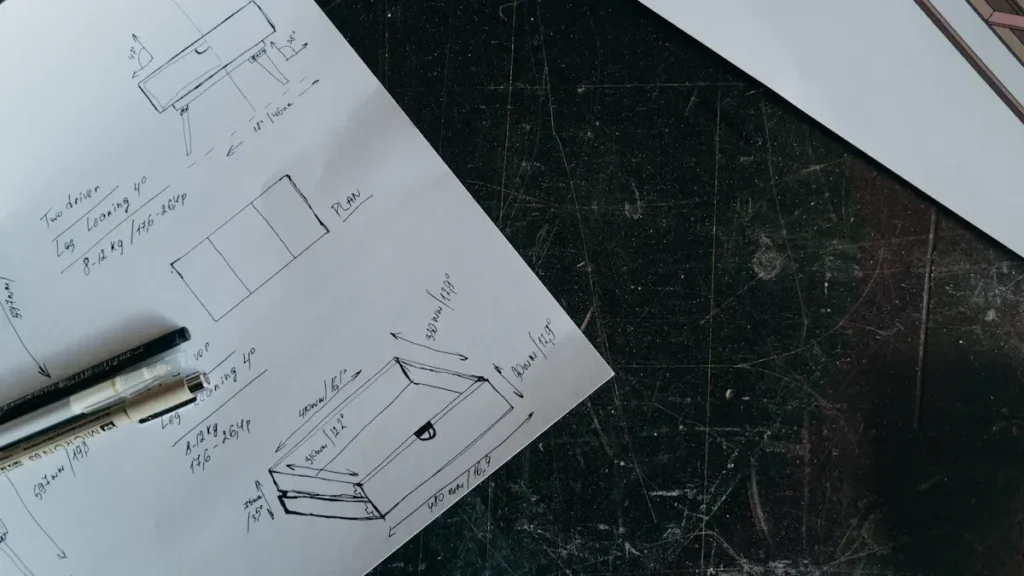
A building materials supplier should be approved against a defined project package, with clear responsibilities for drawings, product selection, inspection and delivery. A showroom visit or attractive quotation can establish interest. An order needs a record showing which supplier owns each category, which inputs remain provisional and who can authorize production.
For an overseas developer or contractor, the expensive gap often sits between products. A cabinet may fit its drawing while conflicting with a countertop cut-out. A window may arrive before its opening is ready. Coordinated supply helps when those interfaces receive named owners and approval dates. It cannot replace the project’s designer, installer or local approval authority.
Use the following checks before awarding a multi-category package. They address supplier scope, evidence and release conditions rather than claiming that any supplier can manufacture every item internally or deliver an undefined project on a fixed schedule.
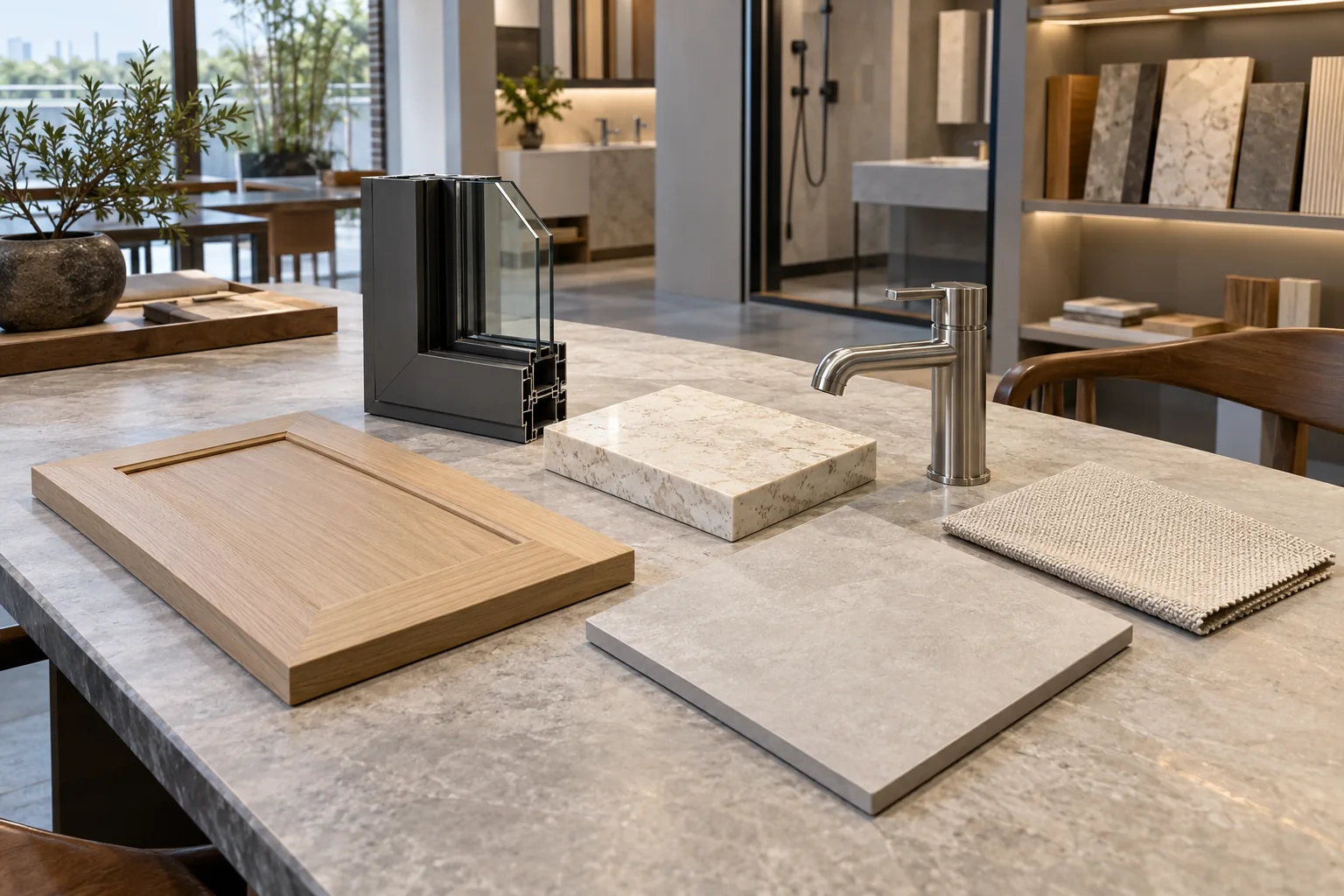
AI-generated illustration of a multi-category material review; not a photograph of Sibolla premises or an actual order.
What scope should a building materials supplier accept?
Separate supply from design and installation
Start with a category list linked to rooms, quantities and drawing revisions. Give each line a scope description that distinguishes product supply, shop drawing preparation, installation guidance and site installation. Those services carry different responsibilities. A general phrase such as complete bathroom package leaves uncertainty about waterproofing, concealed plumbing, backing and final connections.
For bathroom fixture selection, identify which party confirms service positions and mounting conditions before the supplier develops details. Record the same boundary for other categories. A supplier’s willingness to coordinate information does not establish responsibility for engineering an existing wall or approving destination-market requirements.
Confirm category ownership and exclusions
Ask whether each category is manufactured internally, produced by a specialist partner or sourced as a standard item. The answer should identify the party handling specification changes, inspection and replacement. Buyers need that responsibility chain even when communication remains with one project team.
Use this scope register to establish the minimum evidence for a comparable offer.
| Scope item | Required record | Responsible party | Approval boundary |
|---|---|---|---|
| Category coverage | Room-linked product schedule | Supplier and buyer | Named included and excluded items |
| Site dimensions | Dated measurement record | Appointed site team | Finished surfaces and reference points |
| Shop drawings | Revision-controlled drawing set | Supplier with designer review | Fabrication details within agreed scope |
| Product performance | Model-specific technical documents | Manufacturer and project reviewer | Stated application and destination |
| Inspection | Agreed inspection plan | Supplier and buyer representative | Scope, timing and release authority |
| Delivery | Packing and shipment schedule | Supplier, forwarder and site team | Named handover and receiving conditions |
The register exposes missing owners before price negotiations. Keep unresolved items visible in the quotation. Treating them as assumptions transfers uncertainty into production, where corrections may affect several categories together.
Which documents should a building materials supplier quote from?
Establish one pricing revision
A floor plan explains arrangement. A BOQ establishes described quantities and units. Elevations, finish schedules and product schedules add information that a plan cannot carry alone. Send a coordinated set and state which document governs if two records disagree.
Separate measured quantities from allowances. An allowance for stone area needs a later cutting and layout review; a count of cabinet units needs dimensions and component scope. Ask suppliers to identify the basis of each price rather than comparing totals assembled from different assumptions.
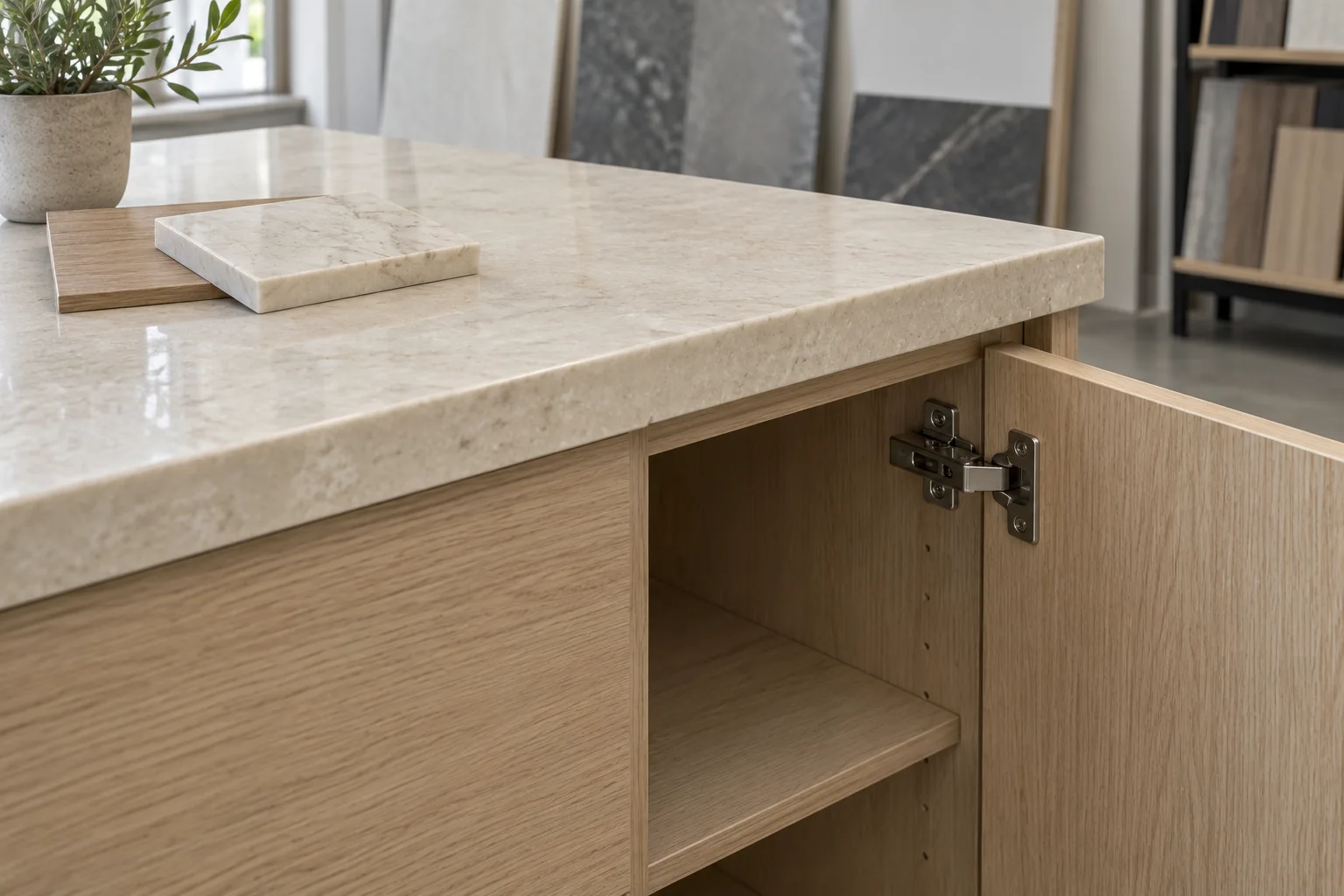
The custom cabinet range illustrates this distinction. A cabinet quotation should state whether it includes internal accessories, exposed end panels, fillers, handles and installation components. Room names alone do not specify those items. List appliances and countertop interfaces separately when their details are still changing.
Keep revisions visible through negotiation
Assign a document revision, issue date and approval purpose. A design review set can support a provisional quote without authorizing manufacture. When the buyer updates an elevation, record affected BOQ lines, finish samples and delivery assumptions. Confirm that the supplier has withdrawn the superseded information from active production planning.
Requests for alternatives should carry the same revision references. Otherwise, a lower offer may quietly assume a different material thickness, fitting arrangement or packaging scope. Ask for an exclusions and substitutions schedule alongside the revised price. Procurement can then distinguish a genuine saving from a transferred task.
Before accepting a quotation, obtain a response to open questions and reconcile the totals against the same issued package. Keep the comparison editable so approved changes remain traceable through the final order.

How can the buyer check manufacturing responsibility?
Review the product path by category
Ask the building materials supplier to explain the path from approved specification to completed item. For custom cabinetry, that path may include board procurement, cutting, edging, assembly and hardware fitting. For stone, it may involve slab reservation, layout approval, cutting, edge finishing and protective packing. Check the actual product path proposed for the order.
For doors and windows, request the complete assembly specification rather than a collection of disconnected component claims. Profile, glass, hardware, seals and installation details work together. A photograph of one component cannot establish performance of every finished size or configuration.
Partner production can be appropriate when responsibilities remain clear. Ask who approves the partner’s materials, who records inspection and who handles rejected work. Procurement should know whether an agreed substitution can be made locally by a production team or requires the buyer’s written approval.
Request inspectable records
Useful evidence connects the proposed product with a current process or document. Ask for relevant technical sheets, an example inspection record with private details removed, sample identification methods and a description of production hold points. Avoid treating a general brochure as proof of a specific project’s capacity or certification.
Discuss the delivery schedule using the proposed quantities and customization requirements. Identify dependencies such as sample approval, material reservation and shop drawing sign-off. A supplier can explain its plan without promising a fixed duration before those inputs exist.
When reviewing furniture manufacturing options, separate standard catalog supply from project-specific modifications. Changes to dimensions, upholstery, fittings or assembly may affect the evidence needed. Ask which approved reference will control the modified product and how replacements will match it later.
Record the answer by category. A single statement about factory capability gives procurement little help when a particular package reaches an approval or replacement problem.
What should samples and mock-ups prove?
Assign a purpose to each sample
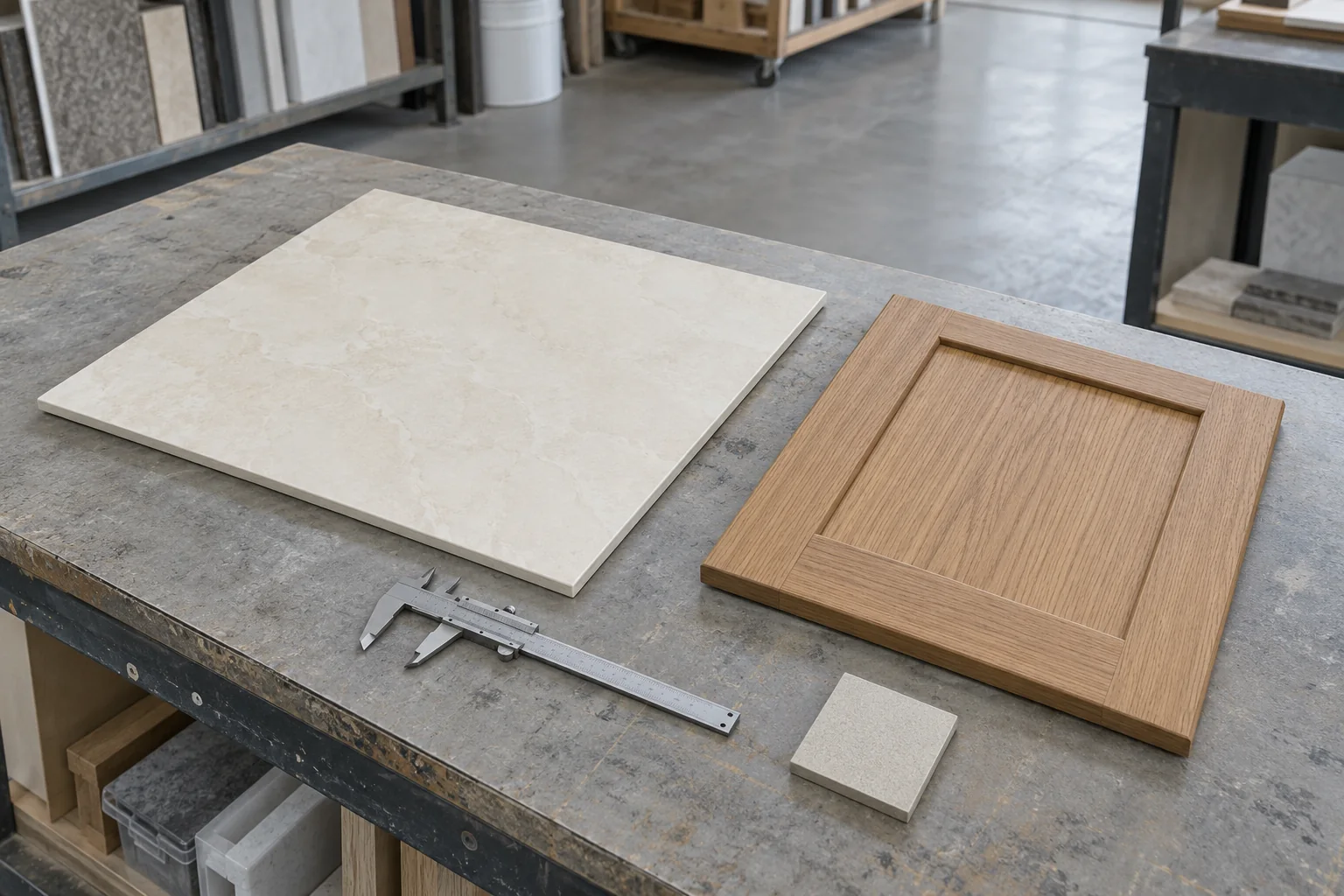
A finish chip helps compare appearance. A material sample can establish an agreed reference within a stated variation range. A component sample may demonstrate a fitting or edge detail. A full-size mock-up examines interfaces and function. Write the question each sample must answer before requesting it.
For stone selection, a small sample may show one part of a natural appearance range. Ask how the proposed batch will be reviewed and how slab layout or piece selection will be approved. Do not assume that every delivered piece will reproduce the sample’s exact veining.
Identify approved samples with a reference, date and related specification revision. Keep a supplier reference and buyer record that can be compared during inspection. Record acceptable variation and any unresolved performance questions separately. Visual approval alone does not establish a test result.
Use a mock-up to examine interfaces
Select a representative combination where several trades meet. A bathroom mock-up might examine cabinetry, basin, countertop, fittings and access. A room mock-up might examine furniture, lighting, curtains and wall finishes. Include the site’s relevant installation conditions in the review rather than assessing isolated products only.
For lighting fixture coordination, confirm that mounting, power and control questions have named reviewers. Decorative appearance does not establish electrical suitability or compatibility with the project’s dimming system. Keep those technical decisions with the qualified parties responsible for them.
Issue a mock-up record listing observations, changes and approval limits. Explain which details may proceed and which remain on hold. If the sample arrangement changes afterward, review the affected interfaces again. Approval should attach to an identifiable configuration rather than a general impression of quality.
How should a building materials supplier explain cost and lead time?
Compare the package on its complete basis
Break the offer into product scope, development work, agreed inspections, packaging and logistics responsibilities. State where duties, destination handling, storage or installation sit outside the supplier’s quoted scope. An attractive item price can coexist with an incomplete project budget.
Check material alternatives against the design and installation requirements before accepting a saving. A different finish, fitting or product format can require revised drawings, extra samples or a new installation method. Compare those consequences with the purchase-price change. Procurement should approve the complete effect of an alternative.
The tile range is a useful place to consider this trade-off. Format, layout, trims, batch planning and substrate conditions may affect order quantities and installation work. A product comparison that ignores those inputs can make unlike solutions appear equivalent.
Build the schedule around approval dependencies
Ask for the sequence from document review through sample approval, material procurement, production, inspection and packing. Add consolidation, booking, transport and site receiving separately. Use dated dependencies instead of treating a single production estimate as a complete arrival commitment.
Review long-lead components early, but record what can be reserved before final approval and who accepts the associated risk. Starting every category together may create storage or change exposure. Delaying a critical interface item may stop later work even when most products are ready.
Discuss staircase coordination against finished-level information and erection access. Fabrication may depend on inputs that arrive later than furniture selections. A coordinated supplier schedule should show that difference rather than hiding it inside one package deadline.
Request an updated schedule after each material change. Keep the approval effect, production effect and shipment effect distinct so the buyer can decide whether to change the specification, phase the order or revise the installation plan.
How should inspection and delivery responsibilities connect?
Define evidence before packing
Agree the checks with your building materials supplier: dimensions, appearance, functions and documents. Identify the reference for each check and who can release the goods. Inspection photographs help when they identify the item and check. They do not replace agreed technical reports or demonstrate features outside the image.
Separate sample approval from bulk acceptance. The inspection plan should address quantities, batch references, assembly details, finish consistency and included accessories as relevant. Define how the buyer receives findings and how corrections are confirmed before affected items are packed.
For soft furnishing coordination, labels and room references help connect curtains, carpets and other items with their intended locations. Appearance consistency also depends on an approved reference and a defined variation range. Packing labels cannot establish that the fabric or installation meets every project requirement.
Match packing with the receiving plan
Ask for protection suited to the product and handling route. Stone edges, glass assemblies, finished cabinet panels and upholstered furniture have different damage risks. Review lifting, stacking and unpacking considerations with the parties handling delivery rather than relying on the phrase export packing.
Where wood packaging is proposed, ask the supplier and forwarder to confirm applicable destination requirements and the actual packaging material. Treatment or marking questions depend on that scope. Do not assume every wooden-looking crate or processed panel has identical requirements.
Use room, floor or installation-stage labels where they help receiving. Check whether a mixed shipment leaves urgently needed items behind less urgent crates. Confirm the packing list, spare parts, installation references and claims procedure before dispatch. Decide how site shortages, damage or nonconformities will be recorded without losing the relationship between item, carton and approved specification.

When can you approve a building materials supplier’s package?
Convert observations into release decisions
Approval should follow the evidence available for the proposed package. A supplier may be suitable for one category while another still needs clarification. Record that distinction. A partial technical approval does not need to become an unconditional award for every line.
Use the following decisions to close specific gaps before making a commitment.
| Observed condition | Project consequence | Buyer decision | Next evidence |
|---|---|---|---|
| Several items lack scope owners | Interfaces may be omitted | Hold affected scope | Signed category responsibility register |
| Quotes use different revisions | Totals cannot be compared fairly | Reissue pricing package | Reconciled BOQ and exclusions |
| Visual sample approved only | Functional questions remain open | Limit approval to appearance | Relevant mock-up or technical review |
| Alternative changes an interface | Adjacent products may need revision | Review before substitution | Updated drawings and approval record |
| Inspection and packing plans align | Release can be evaluated clearly | Approve within defined scope | Completed findings and release record |
These are procurement actions, not universal test criteria. The authorized project reviewer must establish applicable acceptance requirements. A release decision should identify its scope and any conditions that remain open.
Preserve the baseline after award
Attach the agreed specification, drawings, approved references, exclusions and delivery responsibilities to the order record. Define how changes will be requested, reviewed and costed. Keep the current baseline accessible to the supplier and buyer so later messages do not silently replace it.
Use the building material supply system as a starting point for discussing category coordination, then request the records applicable to your own package. A service description helps identify the conversation to have; the project agreement defines what will actually be delivered.
Before issuing the purchase order, check that open questions have an owner and a consequence. An unresolved decorative selection may be manageable within an agreed approval window. An unresolved structural, electrical or wet-area interface can require a production hold. Record those differences so commercial momentum does not outrun the information needed for fabrication.
Conclusion
Approve a building materials supplier when the proposed package has a clear scope, a coordinated information baseline and an inspectable path from selection to delivery. Start by assigning category owners and identifying site inputs. Compare quotations on the same revisions, then use samples and mock-ups to resolve the interfaces that individual product descriptions cannot explain.
Keep appearance approval, technical acceptance and shipment release separate. Each decision needs a stated object, reviewer and record. Where evidence remains incomplete, hold the affected scope or define the limited approval that can safely proceed. Avoid turning a showroom impression into an open-ended production commitment.
For a multi-category enquiry, organize your room list, BOQ, drawing revisions, finish references and intended delivery phases before requesting project material sourcing support. That package gives the supplier a practical basis for identifying missing inputs, explaining responsibilities and preparing an offer that your procurement and engineering teams can review together.
Frequently Asked Questions
Can one supplier coordinate products made by several factories?
Yes, provided the agreement names the responsible party for each category and defines specification control, inspection and replacement. Ask how the coordinating team approves partner work and manages changes. A single communication channel does not establish that every product is manufactured internally.
What should we send before requesting a project quotation?
Send the available plans, room schedule, BOQ, elevations, finish requirements and delivery priorities. Mark provisional information clearly. Include the document revision and ask which missing inputs prevent comparable pricing or production approval. Site measurements and specialist design information may still be required later.
Does approving a showroom sample authorize bulk production?
Only within the scope stated in the approval. A visual sample can establish appearance without confirming dimensions, function or installation interfaces. Connect it with the relevant specification and review any mock-up or technical documents needed before releasing the affected products.
How can we compare suppliers without reliable delivery dates yet?
Compare their proposed sequence, dependencies and responsibilities. Ask what must be approved before material procurement, production, inspection and shipment. Treat unconfirmed durations as planning information and request an updated schedule once quantities, specifications and approval dates are defined.
What should remain attached to the final order?
Keep the agreed scope, exclusions, current drawings, BOQ, approved sample references, inspection requirements and delivery responsibilities. Include the change procedure and release authority. This baseline helps both teams identify whether a later request changes the product, its price, its schedule or its installation requirements.