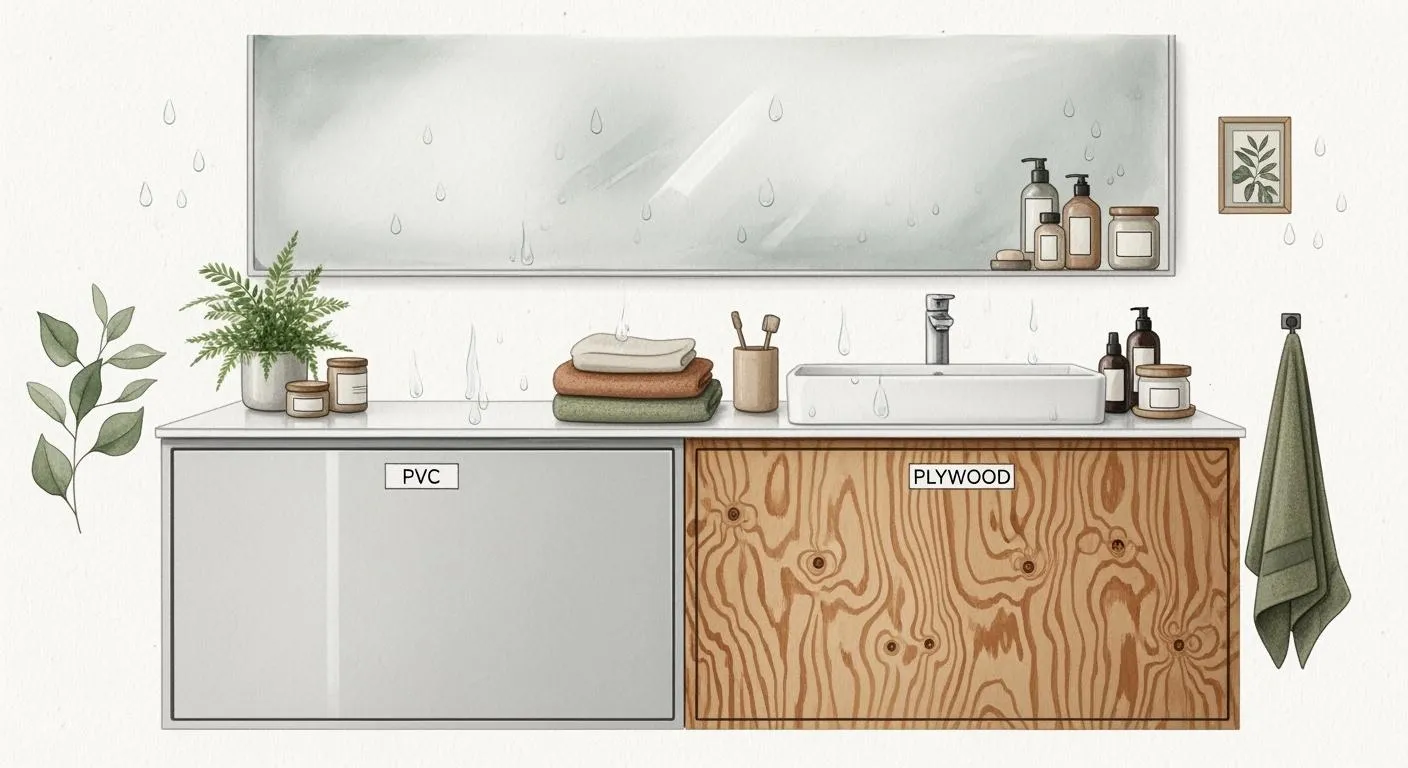
For bathroom cabinets in humid interiors, compare PVC and plywood as complete cabinet systems. I check panel grade, joint protection, hardware fixing and site ventilation before recommending a material. Neither material compensates for an unresolved plumbing leak.
| Factor | PVC foam-board system | Plywood system |
|---|---|---|
| Water exposure | Low absorption in the board; check data and assembly details | Specify a suitable bond class and protect edges |
| Strength | Depends on density, thickness, fixings and reinforcement | Depends on grade, thickness, joints and support |
| Maintenance | Clean according to finish instructions; repair leaks | Protect finishes and repair exposed edges and leaks |
| Cost | Compare the complete cabinet specification | Compare the complete cabinet specification |
| Installation | Verify fixings, support and wall condition | Verify fixings, support and wall condition |
Share your bathroom layout, expected exposure and countertop specification with us. We can discuss material options and the details needed for a cabinet proposal. For a coordinated bathroom order, review Sibolla Building’s material supply alongside the cabinet specification. Compare custom cabinets before submitting room drawings and hardware requirements.
Key Takeaways
- Check PVC-board water-absorption data and complete assembly details rather than assuming a waterproof cabinet.
- Specify plywood grade, surface finish and protected edges. Inspect damaged areas and repair leaks promptly.
- Installation depends on construction, fixings, wall condition and countertop support, not material name alone.
- Compare maintenance and replacement needs using the same dimensions, hardware and finish specification.
- For frequent splashing, assess the board and every joint, fixing and attached component. Keep cabinets outside persistent water exposure where practicable.
Bathroom Cabinets: PVC vs Plywood Comparison
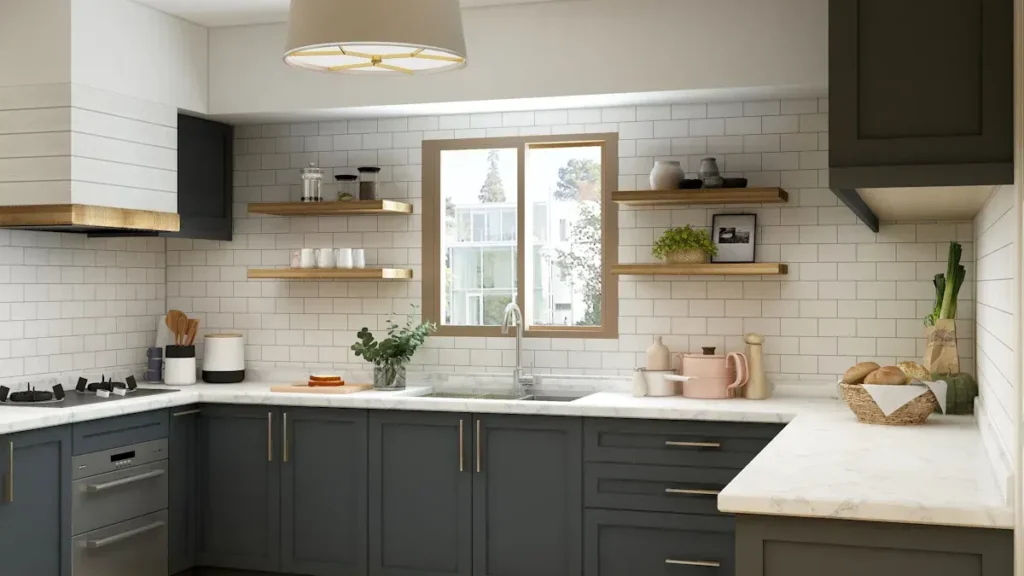
Image Source: unsplash
Key Differences
PVC foam board is a cellular plastic panel with grade-dependent properties. Plywood uses bonded wood veneers. Evaluate the exact grade and assembly; moisture resistance and structural capacity are separate requirements.
Here’s a quick look at how they stack up:
| Factor | PVC foam-board system | Plywood system |
|---|---|---|
| Water exposure | Low absorption in the board; check data and assembly details | Specify a suitable bond class and protect edges |
| Strength | Depends on density, thickness, fixings and reinforcement | Depends on grade, thickness, joints and support |
| Maintenance | Clean according to finish instructions; repair leaks | Protect finishes and repair exposed edges and leaks |
| Cost | Compare the complete cabinet specification | Compare the complete cabinet specification |
| Installation | Verify fixings, support and wall condition | Verify fixings, support and wall condition |
PVC-board systems can suit humid interiors when fixings and support are properly designed. Plywood systems need suitable bonding and protected edges. Both need ventilation and leak control.
Ask for board specifications and assembly details before comparing moisture performance.
Pros and Cons
Let’s break down the main pros and cons for each:
- PVC foam board: Low water absorption can help, but verify density, screw holding, span and surface durability.
- Plywood: Can offer useful rigidity and screw holding, but specify grade, bonding and protected edges.
Sibolla Building offers both PVC and plywood options for custom bathroom vanity range. You can choose the material that fits your needs and style. Our team helps you pick the right one for your project, whether you want a modern, low-maintenance cabinet or a classic, sturdy design.
Water Resistance of Bathroom Cabinets
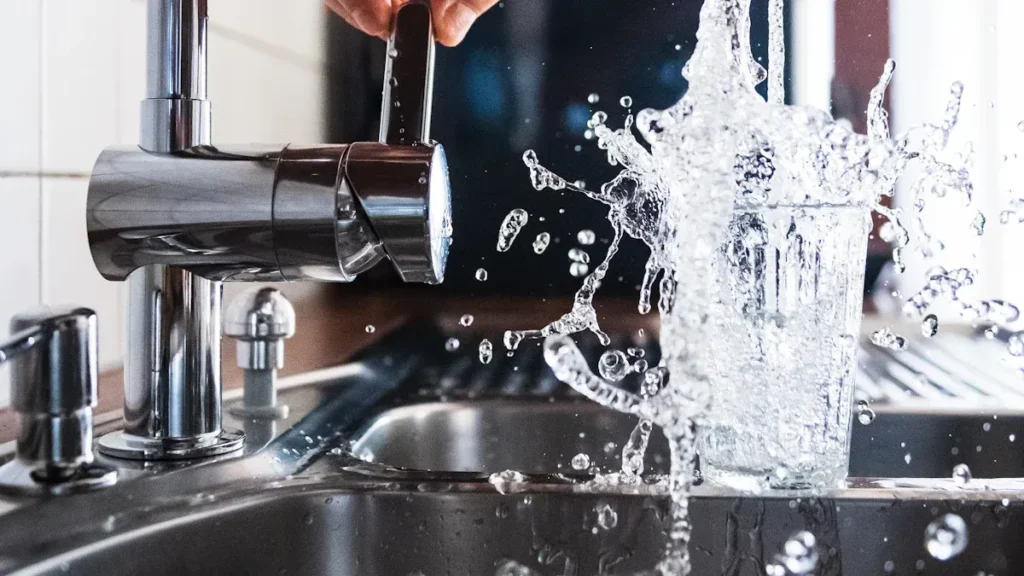
Image Source: unsplash
PVC in Humid Bathrooms
PVC foam board can reduce moisture absorption in the panel. It does not make hinges, coatings, joints or surrounding surfaces immune to water damage or mould. Check the specified product data.
Let’s look at why PVC stands out:
- Check the board’s measured water absorption and test conditions.
- A plumbing leak still needs prompt repair, even with a moisture-resistant board.
- Inspect joints, coatings, attached materials and hardware as part of maintenance.
For a humid resort bathroom, review exposure, cleaning products, hardware and countertop support together. Approve a material sample and assembly detail before repeating the design.
PVC foam board may suit frequent-splash areas, but confirm structural capacity and fixings. Discuss a complete bathroom cabinet specification with us before ordering.
Plywood Performance
A suitable exterior or marine bond classification describes adhesive durability under moisture exposure. It does not make the wood itself waterproof or decay-proof. Verify the panel’s grade and intended use. See [1].
For plywood, verify these details:
- Bond classification suitable for the expected exposure
- High structural strength
- Protected cut edges and plumbing openings
Water entering damaged finishes or exposed edges can affect plywood. Inspect cutouts, joints and plumbing areas; repair damage and leaks promptly.
Protect plywood surfaces, edges and cutouts as specified for the coating system. Ask us to state the proposed board grade, finish and inspection scope.
Compare likely moisture exposure with structural and maintenance requirements. Neither a plastic board nor an exterior-bonded plywood label establishes complete cabinet performance.
Bathroom Cabinets: Durability and Strength
It is important for bathroom cabinets to last a long time. Humid air can make cabinets warp, rot, or break. You want cabinets that stay strong for many years. Let’s see how PVC and plywood compare in strength.
PVC Cabinet Longevity
PVC-cabinet durability depends on board density, component design, fixings, coating and exposure. Low board absorption does not establish a fixed lifespan or load capacity.
Avoid assuming a service life from material name alone. Review warranty terms, construction and repair access for the specified system.
For a custom PVC-board cabinet, agree the board specification, reinforcement, fixings and inspection points. Confirm support for heavy basins or countertops.
Plywood Cabinet Durability
Plywood rigidity and durability depend on grade, thickness, bonding and exposure. Moisture-resistant (MR) and exterior or marine grades are not interchangeable; verify the stated standard.
Prolonged wetting can damage exposed wood-based components. Bond class, edge protection and ventilation matter; do not infer performance from an unspecified research claim.
Ask us to identify the plywood grade and sealing details in the proposal. Protect cut edges and plumbing holes according to the finish specification.
Bathroom Cabinets: Maintenance and Care
Cleaning PVC Cabinets
You’ll love how easy it is to keep PVC bathroom cabinets clean. PVC does not soak up water or stains, so you can wipe away messes in seconds. Here’s how you can keep your cabinets looking fresh:
- Use a soft, damp cloth for daily cleaning.
- For tougher spots, add a drop of mild dish soap to warm water.
- Wipe spills right away to avoid sticky buildup.
- Dry the surface with a clean towel for a streak-free shine.
Tip: Avoid using harsh chemicals or rough scrubbers. These can scratch the surface. Stick to gentle cleaners and soft cloths.
Cleaning and surface maintenance depend on the coating as well as the board. Follow the supplier’s instructions and inspect joints and hardware.
Maintaining Plywood Cabinets
Plywood cabinets need a little more care, but you can keep them looking great with the right routine. Water is the main thing to watch out for. Here’s what you should do:
- Wipe up water and splashes as soon as you see them.
- Clean with a soft cloth and mild soap. Avoid soaking the wood.
- Check edges and corners for chips or scratches. Seal any exposed wood right away.
- Every few months, check the finish. Reseal or touch up if you see wear.
Note: Keeping plywood dry helps prevent swelling and warping. A quick check every week can save you from bigger problems later.
Confirm the finish and inspection requirements before ordering. After installation, check plumbing areas and repair damaged coatings or exposed wood promptly.
Bathroom Cabinets: Cost and Installation
Price Comparison
You probably want to know how much these cabinets will cost. Let’s break it down in a simple table:
| Quotation detail | PVC-board cabinet | Plywood cabinet |
|---|---|---|
| Board | Density, thickness and reinforcement | Grade, bond class and thickness |
| Assembly | Fixings, joints and countertop support | Fixings, joints and countertop support |
| Finish | Coating and cleaning limits | Coating and edge protection |
| Total price | Include hardware, delivery and installation scope | Include hardware, delivery and installation scope |
Neither material is always cheaper. Compare quotations with identical dimensions, hardware, finish and support requirements.
When you think about value for money, you need to look past the sticker price. Here’s what you get with each:
- Plywood cabinets are stable and moisture-resistant. They work well in most bathrooms.
- You can keep plywood looking good with simple care—just dust weekly and clean with mild soap once a month.
- PVC-board systems may reduce some moisture-related maintenance, but actual costs depend on the assembly and exposure.
- Both options last for years if you take care of them.
Compare expected maintenance and repair access rather than assuming either material guarantees lower lifetime cost.
Installation with Sibolla Building
Before production, confirm measured dimensions, basin interfaces, board specification and fixings. Agree any assembly checks, labels and installation information in the order scope.
Confirm the manuals, packing information and remote support included with the order. The installer must verify the wall, plumbing and countertop support.
Resolve installation responsibilities and interface details before approving the cabinet drawings.
Bathroom Cabinets: Environmental Considerations
PVC Sustainability
Assess PVC sourcing, additives, service life and local end-of-life options. Its environmental impact cannot be judged from moisture resistance alone.
Here are some facts about PVC:
- Request documentation for the specified board, coating and additives.
- Use approved local disposal or recycling routes; do not burn cabinet waste.
- Compare product-specific emissions and environmental evidence where your project requires it.
Check any indoor-emissions certification against the exact product and certificate scope. EPA Safer Choice concerns approved chemical products; it is not a general cabinet certification.
| Evidence | What it covers |
|---|---|
| GREENGUARD or equivalent product listing [4] | Specified product’s emissions within the listed scope |
| Board and coating documentation | Composition, performance and available environmental information |
| End-of-life information | Applicable local reuse, recycling or disposal arrangements |
Tip: Ask your supplier about these labels if you care about air quality.
Plywood and Eco-Friendliness
For plywood, verify timber sourcing and emissions requirements separately. A wood-based product is not automatically environmentally preferable.
Here are some eco-friendly things about plywood:
| Aspect | Evidence to request |
|---|---|
| Timber sourcing | Valid sourcing and chain-of-custody documents for any certification claim |
| Emissions | Applicable composite-wood compliance and product reports |
| Environmental comparison | Product-specific data using comparable scope and assumptions |
| End of life | Local options, considering coatings and adhesives |
FSC concerns certified wood sourcing and chain of custody. EPA TSCA Title VI addresses formaldehyde in covered composite wood products. These are different checks. [2] [3]
| Reference | Scope |
|---|---|
| FSC | Check the claimed wood product and chain-of-custody scope |
| EPA TSCA Title VI | Check applicable composite-wood formaldehyde requirements |
| Coating certification | Check the specific coating; do not treat a paint label as cabinet certification |
Ask us which supporting documents are available for the specified materials. Confirm mandatory destination requirements with the responsible project team.
Choosing Bathroom Cabinets for the Project
When to Choose PVC
Consider PVC foam board where low panel water absorption suits the exposure. Check board density, fixing strength and any reinforcement. Prevent standing water and repair plumbing leaks.
For hotels and rental properties, review cleaning chemicals, hardware corrosion, repair access and repeated-use loads before approving a PVC-board system.
PVC also fits well in modern designs. If you like a sleek, simple look, you will love how PVC blends in. You can choose from many colors and finishes to match your style.
When to Choose Plywood
Consider suitable plywood where rigidity, screw holding or a wood-based finish suits the design. Protect edges and plumbing openings and keep the assembly out of persistent wetting.
Here are some reasons to pick plywood:
- Check structural support for the specified countertop and basin load.
- It holds screws tightly, so your hardware stays secure.
- Confirm site dimensions, tolerances and assembly details.
- With good sealing, plywood resists everyday bathroom moisture.
If you love natural wood grain and want cabinets that support heavy loads, plywood is a smart choice. Just remember to keep edges sealed and check for scratches.
Custom Solutions by Sibolla Building
Every project is different. You may need cabinets for a luxury villa, a busy hotel, or a commercial restroom. Sibolla Building helps you choose the right material for your space. Our team listens to your needs and recommends the best option—PVC, plywood, or a mix of both.
We can review project-specific cabinet requirements using your drawings. Confirm dimensions, finish, board grade, countertop support and inspection scope before approval.
Agree the custom cabinet scope in writing, including supplied components and installation responsibilities.
Send me your bathroom drawings, quantities and destination so we can compare the proposed cabinet systems.
Choose the complete cabinet system for the expected exposure and loading. Use this checklist when comparing proposals:
| Priority | Check before approval |
|---|---|
| Moisture exposure | Board properties, joints, edge protection and leak control |
| Appearance | Approved facing, coating and colour sample |
| Countertop support | Designed spans, reinforcement and fixing details |
| Budget | Like-for-like quotation and maintenance assumptions |
Include basin and countertop details with your drawings so we can identify unresolved interfaces before quotation.
Bathroom Cabinets FAQ
PVC foam board can have low water absorption, but the cabinet assembly still contains joints, hardware and coatings. Verify product data and repair leaks promptly.
You need to seal plywood edges and surfaces. Wipe up water quickly. Check for scratches and reseal if needed. With regular care, plywood cabinets last a long time.
Both can be cleaned with suitable mild products. Follow the finish instructions; avoid abrasive cleaners, prolonged soaking and wet joints.
Yes. Share your layout, quantities, expected exposure and countertop specification. We can discuss options and confirm the proposed materials in the quotation.
References and Sources
- APA — Plywood and bond classifications ↩
- Forest Stewardship Council — Chain of custody ↩
- U.S. Environmental Protection Agency — Formaldehyde standards for covered composite wood products ↩
- UL Solutions — GREENGUARD Certification: chemical emissions ↩
Sources checked on 27 September 2026. Standards and guidance apply within their stated scope; project recommendations are Kyle’s procurement judgment.