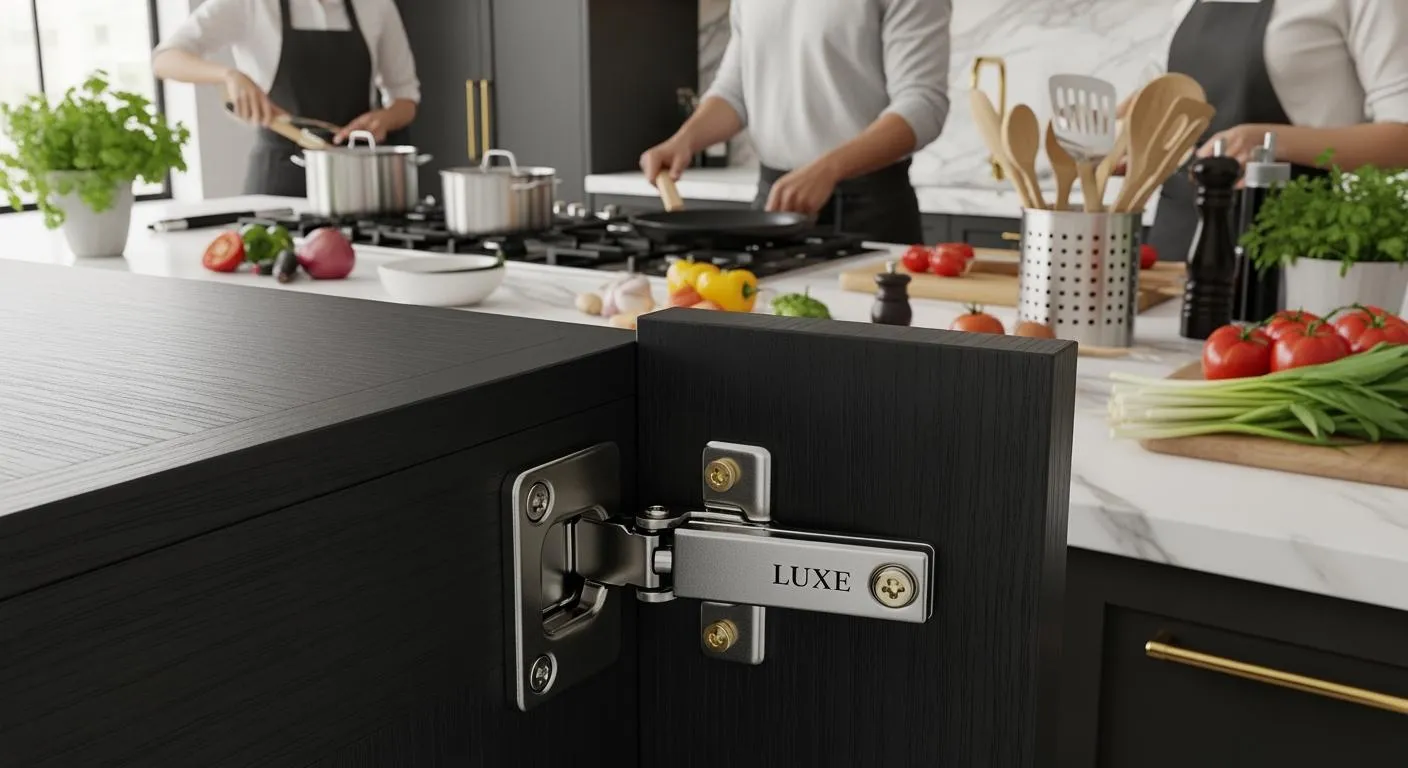
Durable cabinet hinges need matching door loads, secure fixings and suitable corrosion protection. I recommend checking the exact hardware model before approving a cabinet order. Material names and cycle claims alone do not predict field performance.
| Aspect | Impact on Durability and Maintenance |
|---|---|
| Corrosion Resistance | Good finishes help stop rust from forming. |
| Durability | Stronger materials make durable cabinet hinges last longer. |
| Maintenance Frequency | You do not need to replace strong hinges often. |
These checks can reduce avoidable hinge failures. Installation quality, door loading and maintenance still affect warranty outcomes.
Key Takeaways
- Choose hinges with documented performance for the specified door and use.
- Compare the complete hinge design and corrosion suitability, including coated-steel options.
- Check how much weight the hinges can hold for your doors.
- Request cycle-test evidence for the exact hinge model and relevant cabinet-hardware test method.
- Use special finishes to stop rust and damage in wet places.
- Choose concealed or exposed hinges for the required mounting, operation and appearance; visibility does not determine strength.
- Check and care for hinges often to find problems early and make them last longer.
- Verify applicable test reports or certification listings against the exact model.
Durable Cabinet Hinges: Key Criteria
For durable cabinet hinges, confirm door weight, height, width, material and fixing details. Ask us to identify the proposed model and inspection scope. Review Sibolla Building’s project supply service if hinges are part of a wider cabinet and hardware order.
Material Options
The material of the hinge matters for how long it lasts and how well it works. Stronger materials resist bending, rust, and daily wear. In busy kitchens, choosing premium hinge materials reduces repairs, keeps doors aligned, and improves long-term cabinet performance.
Stainless Steel
Stainless-steel hinges can offer corrosion resistance, but alloy, finish and environment still matter. Check the model’s load guidance and corrosion-test conditions, especially for coastal projects.
Brass
Brass may suit decorative exposed hinges. For concealed mechanisms, compare the manufacturer’s complete hinge system rather than selecting by metal alone.
Match the hinge system to door construction, use and moisture exposure. Suitable plated steel can also be a valid option.
| Material option | What to verify |
|---|---|
| Stainless steel | Alloy, design, load guidance and corrosion suitability |
| Brass | Suitability for the intended hinge type and fixing details |
| Coated steel | Coating specification and product-specific durability evidence |
Load Capacity & Cycle Ratings
You need hinges that can support cabinet doors properly and perform reliably every day. In busy kitchens, hinges may open and close hundreds of times each week. Choosing the correct load capacity prevents sagging doors, loose screws, and alignment issues. High cycle ratings show the hinge has been tested for long-term repeated use and dependable performance.
Weight Limits
Use the manufacturer’s selection chart for door size, weight and hinge quantity. Check screw holding, cup drilling and mounting-plate details for the specified cabinet board.
Cycle Testing
Cycle tests evaluate repeated operation under defined conditions. They do not predict a fixed number of service years. Compare reports using the same method, load and acceptance criteria.
| Evidence | What to compare |
|---|---|
| Cycle test | Standard, tested load, cycles and pass criteria |
| Door selection chart | Height, width, weight and required hinge quantity |
| Fixing instructions | Board type, screw specification and mounting details |
| Tested model | Exact hinge, plate and damper combination |
Match the test conditions to your cabinet application before comparing cycle figures.
Corrosion Resistance
Corrosion suitability depends on metal, finish, cleaning products and exposure. Request the exact model’s test information instead of judging by appearance.
Protective Finishes
Protective finishes help stop rust and damage. Some good finishes are:
- Nickel or other plated finishes: Verify coating quality and suitability for the exposure.
- PVD finishes: Check the tested product and substrate rather than assuming complete corrosion protection.
- Other coatings: Confirm compatibility with the moving mechanism and cleaning conditions.
Moisture Suitability
If your kitchen is humid, you need hinges that can handle it. Without the right finish, hinges can rust, squeak, or peel. Stainless steel and brass work well in these places, especially with the right coating.
| Exposure | What to check |
|---|---|
| Humid interior | Corrosion data, ventilation and cleaning limits |
| Coastal interior | Salt exposure, alloy and finish suitability |
| High-use kitchen | Wear, alignment, fixing security and damper operation |
Salt-spray testing compares corrosion behaviour under specified laboratory conditions. It does not translate directly into years of use.
Practical Selection Criteria
When picking durable cabinet hinges, remember these steps:
- Pick hinges based on the weight and size of your cabinet doors.
- Select the complete hinge system using documented performance and door requirements.
- Make sure the hinge fits your kitchen’s environment.
- Look for high cycle ratings for long-lasting hinges.
- Use standard hardware to make repairs easier.
Ask us to include the hinge model and agreed functional checks in the cabinet inspection plan.
Durable cabinet hinges are worth the money. They help you avoid expensive repairs and keep your kitchen working well.
Hinge Types for High-Traffic Kitchens
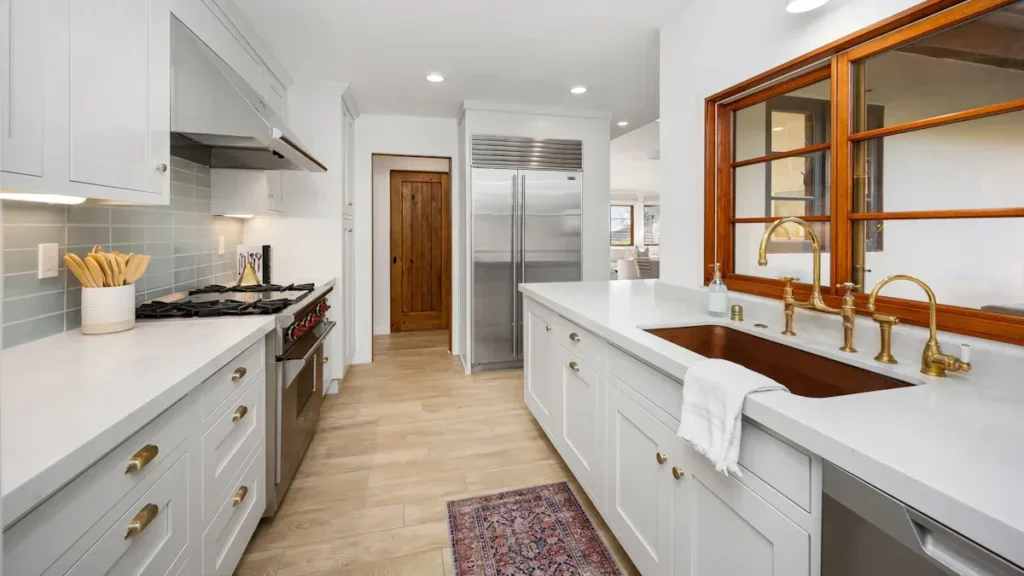
Image Source: unsplash
When you pick hinges for your kitchen, think about how much you use it. You also need to know which hinge type is best for you. Sibolla Building Custom Cabinets has many hinge choices. These choices help your cabinets last longer and work better.
Concealed vs. Exposed Hinges
There are two main types of cabinet hinges. They are concealed and exposed. Each type has good and bad points.
Concealed Pros & Cons
Concealed hinges provide a hidden appearance and may offer adjustment, clip-on mounting or soft-close options. Check the exact model; these features are not universal.
Concealed hinges are great for busy kitchens. They make opening and closing quieter and smoother. Soft-close features stop slamming and protect your cabinet doors.
| Concealed-hinge detail | What to verify |
|---|---|
| Load suitability | Manufacturer’s door-size and hinge-quantity guidance |
| Maintenance | Model-specific cleaning instructions; do not add oil without approval |
| Replacement | Availability of compatible hinge and mounting plate |
Exposed Pros & Cons
Exposed hinges remain visible when the door closes. Their strength and serviceability depend on design, fixings and model, rather than visibility.
| Exposed-hinge detail | What to verify |
|---|---|
| Load suitability | Rated application and required quantity |
| Replacement | Fixing pattern, dimensions and compatible finish |
Use exposed hinges where their mounting and appearance suit the design. Confirm load suitability in the same way as a concealed system.
| Hinge type | Selection checks |
|---|---|
| Concealed | Mounting, adjustment, load guidance and optional damping |
| Exposed | Mounting, fixing strength, operating clearance and appearance |
Soft-Close & Self-Closing Mechanisms
Busy kitchens need hinges that protect cabinet doors. These hinges also make using the kitchen easier. Soft-close and self-closing features help with this.
Benefits for Busy Kitchens
Soft-close mechanisms damp movement near closure. Self-closing hinges pull a door shut, but do not necessarily slow it. Specify damping separately and check performance with the proposed door weight.
- Soft-close stops slamming and keeps doors safe.
- The hydraulic damper makes the door close softly and quietly.
- This helps cabinets stay strong and last longer.
Gentle closing helps cabinets last longer. This is important for making hinges last.
Durability of Mechanisms
Closing springs and dampers have their own wear characteristics. Check compatibility, adjustment and test evidence; adding soft-close does not automatically extend hinge life.
- Self-closing action does not replace a soft-close damper.
- Less stress means you need fewer repairs.
For custom cabinets, agree the closing mechanism and model before ordering. Verify its operation on the approved door sample.
Evaluating Quality & Warranty
When you pick cabinet hinges for a busy kitchen, you want them to last. You also want them to be good quality. You can check this by looking for certifications. You should also learn about the company that makes the hinges.
Certification Standards
ANSI/BHMA
Use standards relevant to cabinet hardware. Building-door and fire-door standards are not substitutes for a cabinet-hinge performance specification. See [1]. [2]
| Reference | Application and limit |
|---|---|
| ANSI/BHMA A156.9 | Cabinet hardware; verify the hinge model and relevant requirements |
| EN 15570 | Furniture hinges with a vertical rotation axis; verify scope and edition |
| ASTM B117 | Salt-spray test method; agree duration and acceptance criteria |
| Product instructions | Door dimensions, hinge quantity, fixings and care for the exact model |
Read the report scope and acceptance criteria. A test-method reference alone is not proof of certification or a guaranteed lifespan.
Certification Labels
Verify any certification in the issuer’s listing and match the model number with the supplied hinge.
- Labels that show the hinge passed safety and performance tests.
- Model number, tested application and certificate or report reference.
- Laboratory report identifying the test method, product and result.
Ask for relevant test reports and verify the product model, laboratory, method and result. A document with an unrelated scope does not demonstrate hinge performance.
Manufacturer Reputation
Sibolla Building Quality Assurance
Ask us to provide the proposed hinge specification and agree assembly or functional inspection points. The inspection plan should state whether checks are sampled or complete.
| Supplier check | Evidence to request |
|---|---|
| Hardware specification | Manufacturer and model; compatible mounting plate |
| Selection | Door-size and hinge-quantity guidance |
| Assembly | Drilling, fixings and alignment instructions |
| Quality control | Agreed inspection plan and recorded results |
| Supply | Availability and replacement compatibility |
| After-sales | Written warranty and support arrangements |
Matching hardware, documented checks and correct installation can reduce avoidable failures. warranty coverage depends on the written terms.
Warranty Policies
You should always read the warranty before you put in your hinges. Here are some steps you can follow:
- Read the warranty to know what is covered and what is not.
- Make sure you put in and take care of the hinges the right way. This keeps your warranty good.
- Remember, mistakes when putting in the hinges or too much water can make your warranty not work.
Note: A good warranty helps you feel safe and protects your money when you buy strong cabinet hinges.
Installation & Maintenance Tips
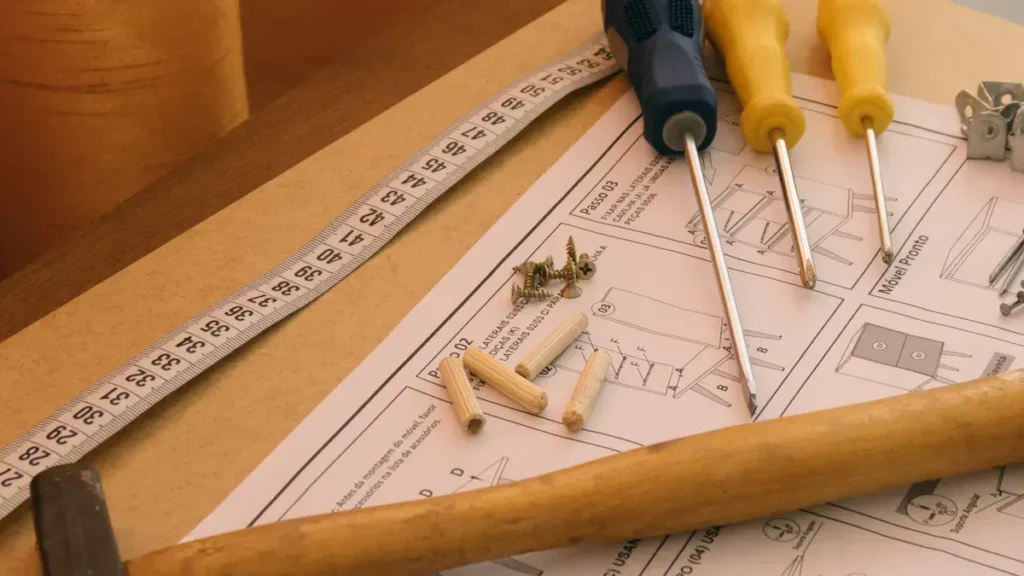
Image Source: pexels
Install the specified hinge system using its drilling and mounting instructions. Confirm which cabinet installation information is included with the order.
Installation Techniques
Tools & Best Practices
You need the right tools and steps to put in cabinet hinges. Good methods help your cabinets work well and last longer.
- Use a screwdriver or drill with the right bit.
- Have a level and tape measure to check if things are straight.
- Pick soft-close hinges if you want quiet doors.
- Verify hinge-cup drilling depth and fixing positions.
- Use screws suited to the cabinet board and mounting plate.
- Support the door during installation and check operating clearances.
Check your kitchen’s climate before you start. Humid air or salty air can change which hinge you need. Clean the spot before you put in the hinge so dirt does not get inside. Make sure the hinge is strong enough for how much you use your kitchen.
| Consideration | Description |
|---|---|
| Climate exposure | Look for humidity, salt, or pollution. |
| Cleaning method | Know how and when you will clean the hinges. |
| Traffic and load | Pick hinges that match how much you use them. |
| Aesthetic needs | Make sure hinges look good in your kitchen. |
| Common mistakes | Do not pick cheap hinges or forget about the kitchen’s air. |
| Maintenance best practices | Clean hinges often and check if they resist rust. |
Stainless steel can corrode under some conditions. Compare alloy, finish and test evidence for the expected humidity and salt exposure.
Common Mistakes
Some mistakes can cause problems and make you need more repairs. Try not to do these things:
- Using screws that are too big or too small, or making them too tight.
- Not lining up the hinges right.
- Not thinking about how heavy the doors are.
- Not drilling holes first, which can crack the wood.
- Picking hinges just because they cost less.
- Not checking if the kitchen is wet or humid.
| Warranty detail | What to confirm |
|---|---|
| Coverage | Defects covered, duration and claim process |
| Exclusions | Installation, alteration, misuse and exposure limits in the actual terms |
| Maintenance | Required care and approved adjustment methods |
Maintenance Practices
Inspection Schedules
Set an inspection interval that suits usage and the manufacturer’s guidance. Check alignment, loose fixings, corrosion and abnormal closing behaviour; do not overtighten adjustment screws.
| Inspection task | Timing |
|---|---|
| Alignment and fixings | At handover and thereafter according to use and product guidance |
| Cleaning | When dirt or residue appears; use the approved method |
| Lubrication | Only if the manufacturer specifies a lubricant and procedure |
Note: Checking your hinges often helps you find small problems before they get worse.
Lubrication & Adjustments
Do not apply oil or spray on a fixed timetable. Some hinges are factory-lubricated, and cleaners or lubricants can affect dampers and finishes. Follow the exact model’s instructions.
- Wipe hinges with a dry cloth and brush.
- Lubricate only where the manufacturer expressly permits it.
- Fix hinges if the doors do not line up.
Taking care of your Sibolla Building Custom Cabinets keeps them working for many years. You will save time and money by stopping hinge problems early.
Compare hardware models by load suitability, compatible fixings and documented test evidence. Keep the agreed specification and warranty terms with the cabinet order.
| Feature | Benefit |
|---|---|
| Soft-close hinges | Less damage and smoother movement |
| Quality hardware | No drooping and easier to use |
| Proactive maintenance | Hinges last longer and look better |
Send me your cabinet door sizes, weights and board specification. We can review the proposed hinge selection and any information still needed for approval.
FAQ
Durability depends on hinge design, load suitability, fixings, corrosion protection and tested operation. Compare complete models rather than metal names alone.
Follow the manufacturer’s guidance and adjust the interval for usage. Inspect at handover and whenever doors sag, bind or close abnormally.
Soft-close reduces closing impact, but does not guarantee a longer service life. Check damper suitability and the tested hinge system.
You can put in hinges with simple tools like a screwdriver and level. Follow the steps in the instructions. Make sure the hinges line up and use the right screws.
Select the alloy and finish for the exposure, supported by product-specific evidence. Stainless steel is corrosion-resistant, not immune to corrosion.
Clean and adjust according to the manufacturer’s instructions. Avoid unauthorized oil or spray, particularly around soft-close dampers.
Request the exact model’s relevant cabinet-hardware reports or certification, such as ANSI/BHMA A156.9 where specified. Test methods and standards are not interchangeable certificates.
Ask us to state the hinge model, inspection plan, installation information and after-sales terms in the cabinet proposal.
References and Sources
- Builders Hardware Manufacturers Association — ANSI/BHMA A156.9 Cabinet Hardware ↩
- DIN Media — DIN EN 15570: Furniture hardware, strength and durability of hinges ↩
Sources checked on 27 September 2026. Standards and guidance apply within their stated scope; project recommendations are Kyle’s procurement judgment.