
A one-stop building solution can reduce coordination gaps across materials, drawings and delivery. I recommend checking responsibilities before consolidating orders. A single contact helps only when approvals, inspections and shipment planning have clear owners.
For coordinated material sourcing and delivery planning, explore Sibolla Building’s project services.
For international property developers, those problems are amplified. You’re coordinating more stakeholders, more suppliers, more shipments, more approvals—and more opportunities for a small gap to become an expensive delay.
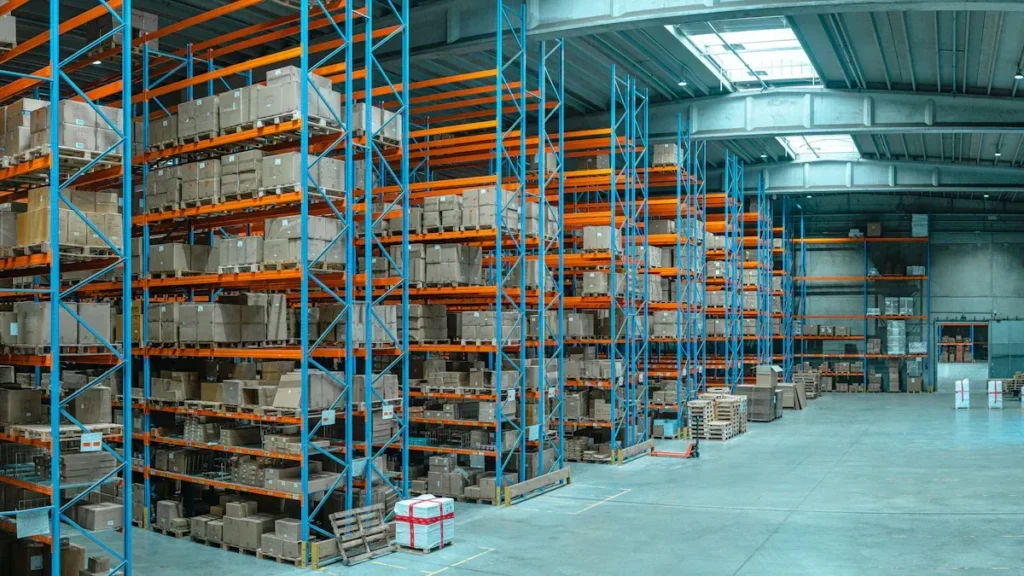
A one-stop building solution coordinates several material categories under an agreed procurement scope. It can combine specification support, production follow-up and logistics planning. Confirm which services are included in the quotation.
Consolidation also creates concentration risk. If the partner lacks visibility into production or supplier performance, problems can spread across several product categories.
Use the checks below to compare coordination capability, quality records and commercial responsibilities before placing a combined order.
The hidden math of global procurement: every supplier adds interfaces
Most developers intuitively understand that more suppliers means more emails and more meetings. But the bigger issue is interface risk.
Every time scope crosses a boundary—between designer and fabricator, fabricator and shipper, shipper and site team—information has to transfer cleanly. That’s the essence of construction supply chain risk: interfaces create failure points.
For background on delivery responsibilities, risks and costs, review ICC’s Incoterms 2020 introduction. State the agreed rule and named place explicitly in the project contract.
Information has to transfer cleanly:
- specifications
- dimensions and tolerances
- finish samples
- lead times
- packaging requirements
- delivery windows
- install responsibilities
If you have 12 separate vendors across kitchens, wardrobes, doors, windows, flooring, bathroom fixtures, lighting, and furniture, you’re not managing 12 relationships.
You’re managing dozens of interfaces.
Each handoff needs a named owner, a current drawing revision and a recorded approval.
What a “one-stop building solution” actually means (and what it doesn’t)
Before we talk about advantages, it helps to define the term.
Construction procurement includes planning, sourcing, contracting and delivery management. For a material package, define these responsibilities before comparing supplier prices.
A one-stop building solution is best understood as a procurement model where one partner coordinates a broad package of building materials and related services—so you get a single integrated flow instead of a dozen disconnected ones.
Typical scope (varies by partner and project)
A legitimate one-stop partner may cover several (not necessarily all) categories:
- kitchens (cabinets, countertops, hardware)
- wardrobes / built-ins
- interior doors and trim
- windows and exterior doors
- flooring and wall finishes
- bathroom fixtures and sanitaryware
- stair components and railings
- furniture packages (especially for hospitality or multifamily)
Typical services that make it “one-stop” (not just “one invoice”)
The services are what determine whether the one-stop model reduces risk or simply bundles it:
- design coordination and specification support
- shop drawings / submittals packaging
- sampling and mockups
- production tracking and lead-time management
- quality control (QC) checkpoints
- packaging design (to reduce damage and site sorting)
- labeling and packing lists aligned to site sequencing
- logistics coordination and documentation readiness
What it doesn’t mean
- It doesn’t automatically mean “cheapest.”
- It doesn’t eliminate the need for clear specs and approvals.
- It doesn’t remove your responsibility to manage risk.
- It doesn’t guarantee schedule certainty.
A one-stop partner can reduce coordination overhead—but only if they actually own the coordination work.
One-Stop Building Solution: Managing Supplier Interfaces
Why it matters:
In global projects, you’re always managing uncertainty: shipping variability, production constraints, late design decisions, changing site readiness. The more suppliers you have, the more ways uncertainty turns into rework.
A one-stop model reduces the number of handoffs:
- fewer parties interpreting the same drawing
- fewer vendors making independent assumptions
- fewer “we thought it was your scope” moments
How it works in practice:
A strong one-stop partner treats your package like a coordinated system:
- They standardize how they interpret drawings.
- They consolidate submittals so approvals happen in a controlled sequence.
- They coordinate interfaces between categories (e.g., door jamb details vs. flooring height; cabinet panels vs. appliance specs).
What failure looks like:
If a coordinating supplier lacks technical oversight:
- submittals come in inconsistent formats
- interface coordination is still on your team
- you get one invoice, but not one system
Ask who resolves cross-category conflicts and how approved changes reach each production team.
Request a sample submittal register and inspection plan before consolidating orders. One invoice alone does not prove coordination capability. Check the scope of any quality-management certification; it does not replace product-specific conformity evidence. See [1].
Advantage 2: Cleaner submittals and approvals (the quiet schedule saver)
Why it matters:
Approvals are a major driver of “invisible delays.” Work can be ready on site, crews can be available, but if a key submittal isn’t approved—or if it’s approved but conflicts with another trade—you lose time.
Because procurement is a process (not a purchase), the quality of submittals is part of procurement performance.
How it works in practice:
A one-stop partner can package approvals as a sequence rather than a flood:
- early samples for critical finishes (so the design language stabilizes)
- shop drawings bundled by area or unit type
- interface details highlighted (not buried)
- a single revision log that ties changes back to the reason (design change vs. feasibility vs. cost)
What failure looks like:
- You receive hundreds of pages of drawings with no version control.
- RFI answers don’t flow back into the submittal set.
- Approvals happen, but production doesn’t match what was approved.
A one-stop partner should reduce approval chaos, not centralize it.
One-Stop Building Solution: Quality Control Across Categories
Why it matters:
Quality failures don’t just create punch-list work. They create cascading costs:
- rework that blocks downstream trades
- replacement lead times that break sequencing
- reputational damage with end clients
- claims and disputes between parties
With multiple vendors, QC becomes fragmented:
- each vendor has their own standard
- inspection criteria vary
- documentation is inconsistent
How it works in practice:
A one-stop model can make QC consistent by using:
- standardized inspection checklists
- pre-shipment QC checkpoints
- consistent sampling and approval records
- controlled packaging and labeling to reduce site damage and loss
What failure looks like:
- QC exists only as marketing language.
- Inspections are reactive (after problems show up).
- Defects are blamed on “shipping” rather than prevented through packaging and handling design.
Developer takeaway: ask where QC happens (factory? consolidation warehouse? before container loading?) and what artifacts you get (photos, checklists, sign-offs).
One-Stop Building Solution: Coordinating Site Deliveries
Why it matters:
Global projects introduce logistics variables you don’t face with local sourcing:
- longer lead times and more points of delay
- higher damage risk due to multiple handling steps
- customs and documentation requirements
- storage constraints on site
And because many categories arrive in overlapping windows, logistics becomes a coordination problem—not a shipping problem.
How it works in practice:
A strong one-stop partner coordinates logistics to support the installation sequence:
- packing lists aligned to zones/units
- labels that match your site naming convention
- packaging designed for repeated handling
- consolidation planning (so you’re not receiving partials that clog storage)
What failure looks like:
- “Everything shipped” but nothing is install-ready.
- hardware is mixed or missing.
- labels don’t map to your schedule.
- delivery arrives in the wrong sequence and forces re-handling.
Developer takeaway: if your project is schedule-driven, installation readiness matters more than shipment departure dates.
Advantage 5: Better change control (because one change doesn’t create ten separate renegotiations)
Why it matters:
Change is inevitable in development:
- value engineering decisions
- late client preferences
- regulatory or inspection-driven adjustments
- site-condition surprises
With many suppliers, a single change can trigger a web of downstream impacts:
- revised drawings
- revised pricing
- revised lead times
- revised logistics
- revised installation requirements
How it works in practice:
A one-stop partner can manage change as a single controlled process:
- one change log
- one revision set
- coordinated impact assessment across categories
What failure looks like:
- change requests disappear into email.
- you get pricing changes without schedule impact clarity.
- vendors claim “not my scope” because interfaces weren’t mapped.
Developer takeaway: ask how change is documented, approved, and translated into production.
Advantage 6: A more predictable procurement process (and a simpler governance model)
Why it matters:
When procurement is scattered, your governance model becomes heavy:
- more vendor onboarding
- more contract administration
- more payment tracking
- more performance monitoring
Monitoring delivery milestones and supplier performance remains part of procurement after the purchase order is signed.
A one-stop model can simplify governance by consolidating:
- reporting cadence
- milestone tracking
- issue escalation paths
- documentation standards
What failure looks like:
- You lose transparency because everything is “inside the supplier.”
- You can’t see critical-path items and their status.
- You don’t get early warning signals.
Developer takeaway: consolidation should reduce admin without reducing visibility.
One-Stop Building Solution: Accountability and Risk Allocation
A one-stop building solution is often sold as “single point of responsibility.”
A single point of contact needs authority over the agreed scope and access to:
- design coordination inputs
- production capacity (or at least production oversight)
- QC checkpoints
- logistics preparation and documentation
Risk allocation depends on the contract, insurance and each party’s actual responsibilities. Coordination alone does not transfer every procurement risk.
One-Stop Building Solution Trade-Offs
Choose this model when coordination benefits outweigh supplier concentration and transparency risks.
One-stop can be a poor fit when…
- Your project is highly specialized (unique facade systems, high-performance labs) where deep domain specialists matter more than coordination.
- You already have a mature procurement machine and strong preferred suppliers with proven interface management.
- You need extreme cost transparency (e.g., certain public procurement contexts).
- Regulatory or certification requirements demand highly specific provenance and documentation that a general one-stop partner can’t provide.
Key trade-offs to manage
- Concentration risk: disruption at one partner can affect several material categories.
- Transparency risk: consolidated packages can hide markups and performance issues.
- Complacency risk: teams may stop doing due diligence because “it’s one vendor.”
A one-stop model reduces vendor count—but it increases the importance of choosing well.
How to Evaluate a One-Stop Building Solution
Here’s a practical framework you can use whether you’re sourcing locally or globally.
1) Capability: can they actually coordinate across categories?
Ask for evidence of:
- standardized submittal templates
- version control processes
- interface checklists (doors↔flooring, cabinets↔appliances, windows↔waterproofing, etc.)
- a clear escalation path for technical decisions
Red flag: “We’ll figure it out as we go.”
2) QC system: where do inspections happen and what do you receive?
Look for:
- pre-production samples
- in-process inspection checkpoints
- pre-shipment inspections
- documented defect handling and replacement process
Red flag: QC is described only in generic terms with no artifacts.
3) Logistics readiness: can they make delivery install-ready?
Assess:
- packing list structure
- labeling conventions
- consolidation planning
- damage prevention methods
Red flag: logistics is treated as “shipping booking,” not a readiness process.
4) Commercial clarity: how do changes, contingencies, and payment milestones work?
Insist on:
- change-order process in writing
- payment milestones tied to deliverables
- clear scope boundaries (what’s included, what isn’t)
Red flag: vague scope language and unclear deliverables.
5) Transparency: will you have visibility into schedule and critical items?
Ask:
- what the weekly reporting looks like
- how lead times are tracked
- how issues are surfaced early
Require a current report showing approvals, production milestones, unresolved issues and expected delivery dates. This gives your team evidence for schedule decisions.
Red flag: “Don’t worry, we’ve got it” without a reporting structure.
Ask the partner to explain one documented project timeline, including revisions, inspections and delivery issues. Check the records behind the explanation.
One-Stop Building Solution: From Design to Delivery
Below is a high-level workflow that works whether you’re using a one-stop partner or coordinating multiple suppliers.
Step 1: Freeze the “decision hierarchy” early
Not every decision needs to be made on day one, but you do need to define:
- what finishes must be locked early (to avoid a late domino effect)
- what can remain provisional
- who has final approval authority
Step 2: Convert design intent into a procurement-ready package
This includes:
- clear specifications (materials, finishes, performance)
- quantities by area/unit type
- acceptance criteria (what counts as a defect)
- delivery sequencing requirements
Link material approvals and delivery milestones to the installation programme. Record who can approve substitutions and when decisions become binding.
Step 3: Run samples and mockups as risk reduction, not decoration
Samples should answer:
- “Is this the finish we want?”
- “Does it meet durability and maintenance requirements?”
- “Does it work with adjacent materials under real lighting?”
Step 4: Submittals + approvals with version control
Require:
- a clear revision log
- a single source of truth for “approved for production” status
- documentation that ties approvals back to sample codes
Step 5: Production tracking with critical-path visibility
Treat long-lead items as a project inside your project.
You’re looking for early warning, not last-minute apologies.
Step 6: QC checkpoints before shipping
Minimum expectation:
- visual inspection
- dimensional checks on critical items
- hardware count and packaging verification
Step 7: Packing and labeling built for installation
Good packaging reduces:
- damage
- missing parts
- site sorting time
Step 8: Delivery, receipt, and site verification
On arrival:
- verify against packing list
- photograph any damage immediately
- quarantine questionable items
- confirm storage conditions (humidity/temp) for sensitive materials
One-Stop Building Solution FAQ
Not necessarily. “Turnkey” often refers to a delivery model where one contractor delivers a completed project. A one-stop building solution usually refers to consolidating procurement of building materials and related coordination services.
It can reduce waste and rework costs, but it doesn’t guarantee the lowest unit price. The value is often in fewer delays, fewer defects, and less coordination overhead.
Concentration risk and transparency risk. If you consolidate everything under one partner, your due diligence has to be stronger—not weaker.
Compare the supplier’s stated role with technical staff, production access, inspection records and reporting. A sourcing intermediary can still add value when responsibilities are transparent.
References and Sources
Sources checked on 27 September 2026. Standards and guidance apply within their stated scope; project recommendations are Kyle’s procurement judgment.