Release bathroom fixtures when the selected product schedule matches actual water-supply, waste and installed-access conditions. A complete list of basins, faucets and toilets can still leave their connections, supporting work or service paths unallocated. Resolve those relationships before a coordinated appearance becomes an order assumption across different products and trades.
For project buyers, collect room and fixture identities, current drawings, selected component information and responsible plumbing inputs. Ask suppliers to identify what they provide and what another party completes. The schedule should connect actual products with their interfaces rather than imply that a matching collection has been reviewed as a working installed system.
Sibolla’s bathroom fixture range provides the product context. This guide concerns supply and drainage coordination before release. It supplies no universal pipe size, pressure, waste slope, connection adapter, electrical detail or performance acceptance value for an unspecified project.
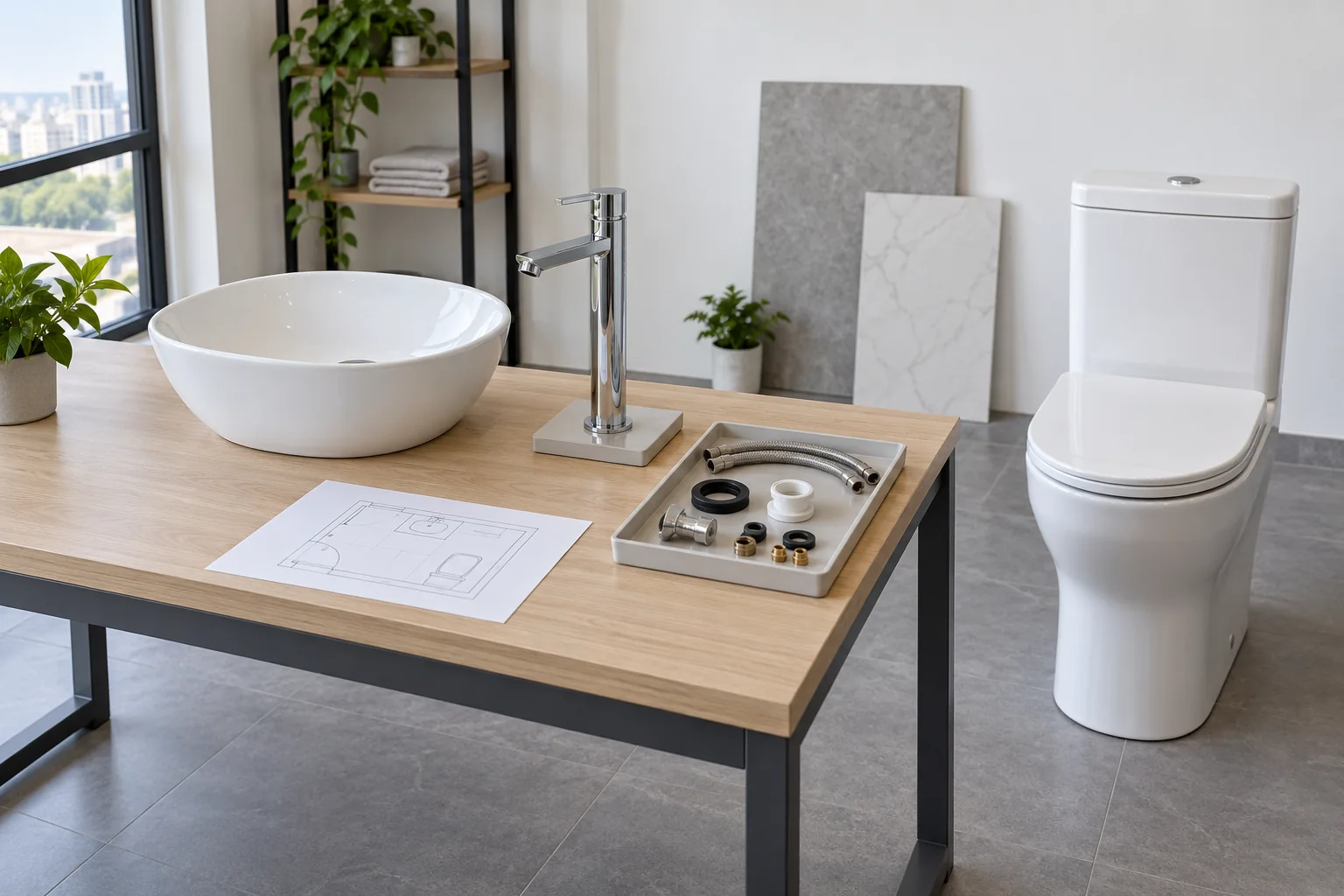
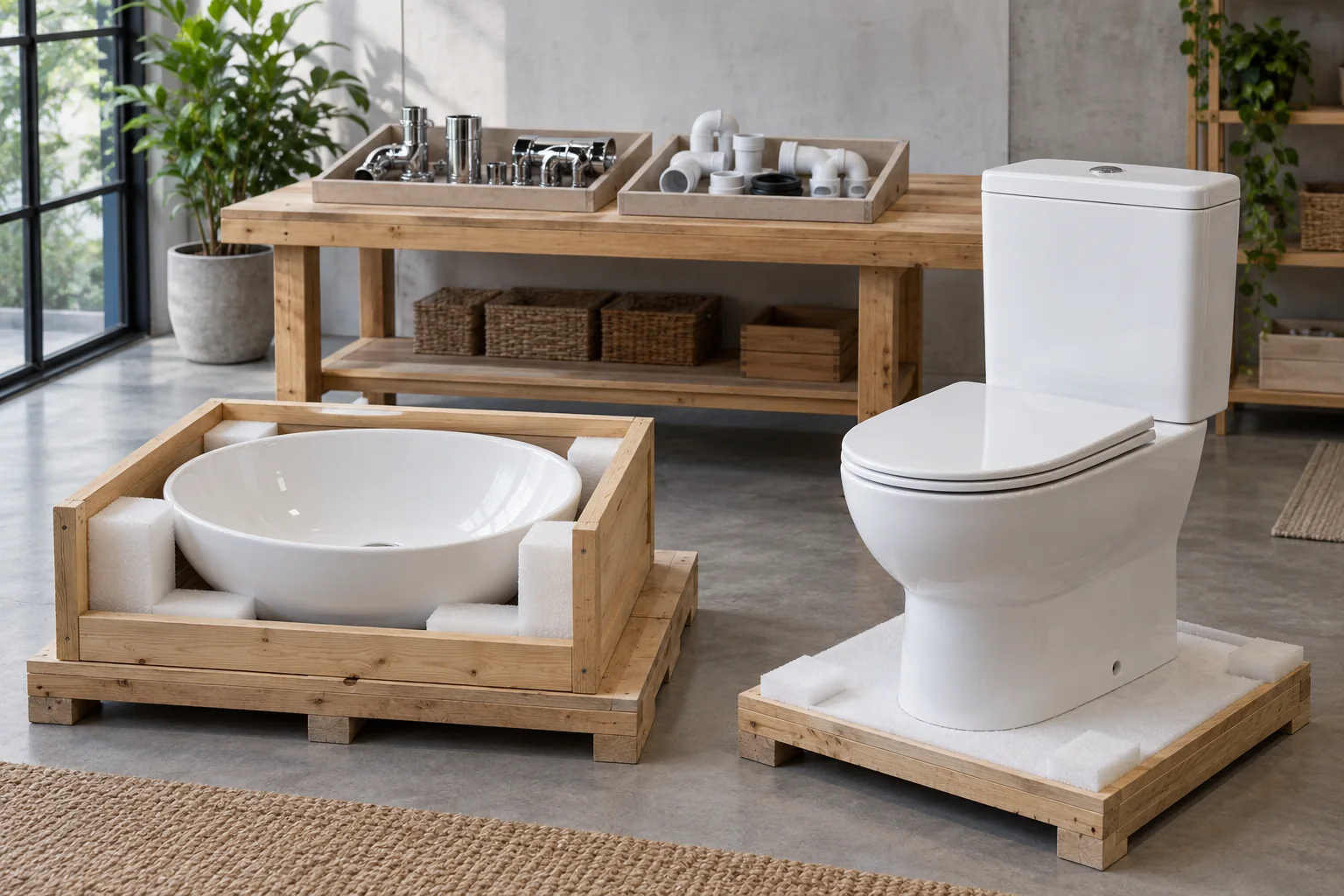
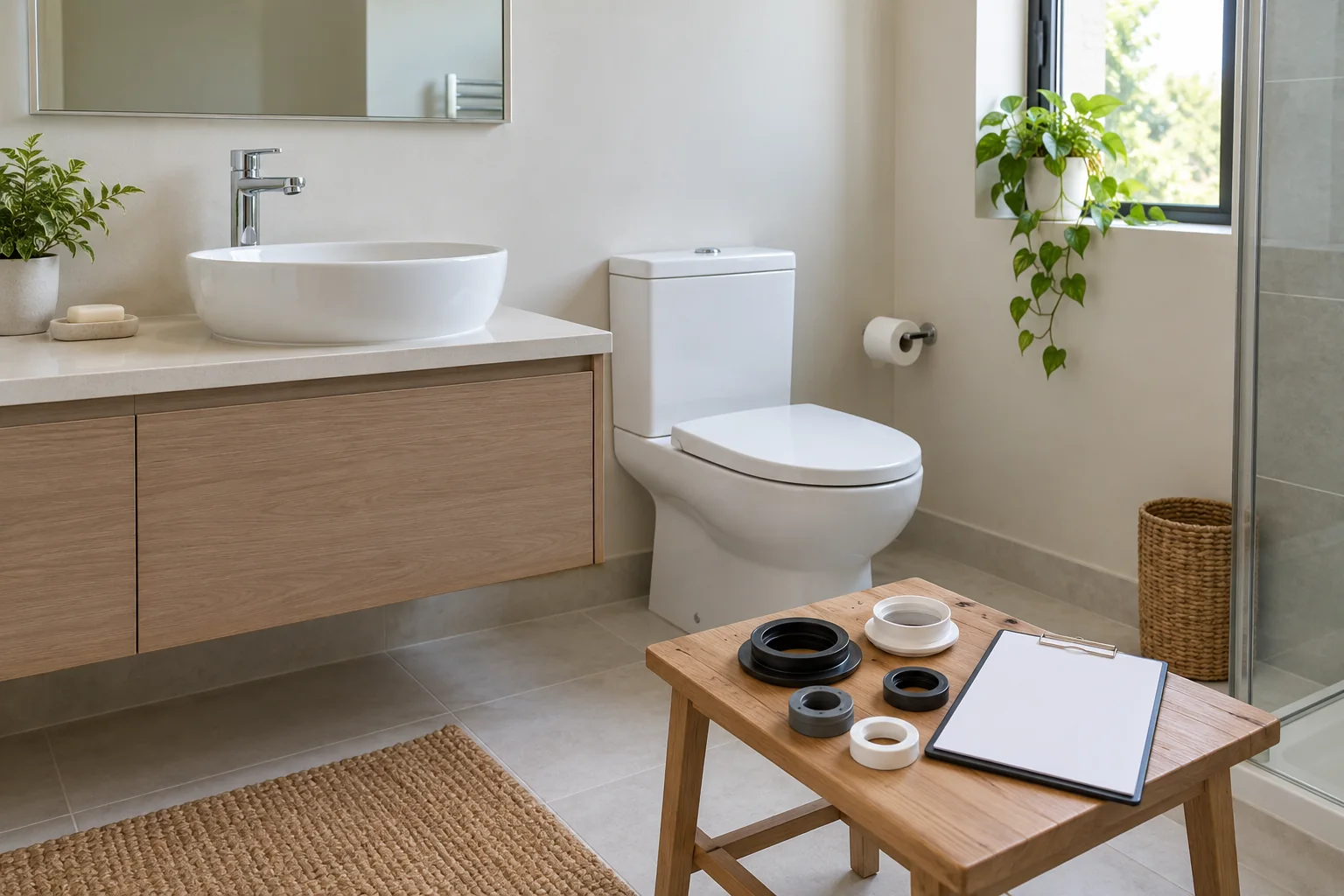
AI-generated illustration of schedule objects; no compatible plumbing system, material certification or tested drainage is established.
Which bathroom fixtures and components does the schedule identify?
Give each room and fixture a complete subject
Assign the actual product, configuration and location to each schedule line. A basin label can leave its mounting, waste and faucet selection unclear; a toilet label can omit its cistern or other flushing components. The buyer needs the complete offered scope before repeated quantities are treated as interchangeable room packages.
Separate visible fixtures, connection components, concealed equipment and site-supplied work where their owners differ. A supplied accessory bag may include some fittings while leaving others outside the quotation. Ask what each item is intended to connect to rather than assume that every loose part forms a complete compatible kit.
Record actual room variants within the project. An otherwise repeated guest-room package can meet a different wall, floor or service condition. Keep the exception attached to its room and fixture identity so the coordinator does not extend one appearance or sample approval to every installation without the relevant response.
Preserve individual product decisions within coordination
For bathroom basins, retain the actual mounting, outlet and selected waste information. For bathroom faucets, identify the offered control, mounting and supply arrangement. Their relationship needs review even when both products share a decorative collection or finish.
A toilet proposal has its own rough-in, flushing and service objects. A bathtub selection can introduce another waste, overflow where present and support scope. Keep those records identifiable rather than allow a room-level plumbing approval to conceal an unresolved product-specific interface.
A shower enclosure concerns another construction and water boundary. Its visual agreement cannot identify the water-supply fittings or approve drainage outside its own supplied scope. Name which trade owns the enclosure junction and which party retains the underlying plumbing or wet-area records.
What site and service inputs must match the bathroom fixtures?
Reconcile supply and drainage as different networks
For bathroom fixtures, obtain relevant water-supply conditions and component application information from responsible project personnel. Identify required hot or cold connections where present, controls and any other actual service dependency. A product’s flow description does not establish the site’s available conditions or complete compatibility with another selected fitting.
Map each relevant waste outlet and receiving drain relationship through actual drawings. The fixture outlet, waste fitting and building pipe connection are different subjects. A nominal size written against one component should not automatically become a complete matching statement across all three without their selected information.
Use this register to prepare the fixture-schedule decision.
| Input | Required record | Responsible party | Approval boundary |
|---|---|---|---|
| Room and configuration | Location, selected fixtures and variant identities | Buyer and designer | Check each fixture configuration despite a shared finish |
| Water supply | Actual conditions and selected component requirements | Plumbing reviewer and suppliers | Check the selected fitting’s requirements against actual site supply |
| Waste interfaces | Outlet, waste and receiving drain identities | Fixture suppliers and plumber | Match fixture outlet, waste fitting and receiving drain |
| Mounting and support | Current construction and preparation scope | Supplier and building reviewer | Review mounting and support separately from visible product fit |
| Final access | Controls, service tasks and neighboring objects | Designer and operator | Check controls and service tasks in the installed room |
| Included work | Components, site tasks and verification owners | Coordinator and authorized parties | A complete product count can still leave site connections unassigned |
Where fixtures share supply or operating periods, ask the plumbing reviewer which actual conditions the coordination must represent. A single-product reference can remain useful while leaving the intended combined use unreviewed. Record that input through the project rather than assume an isolated display reproduces the room network.
Use actual finish and reference information
Identify current wall and floor faces used by the selected drawings. A concealed service location measured before finishing can meet another relationship after build-ups change. Give provisional conditions to their confirmation owners and hold dependent preparation where the actual agreement has not accepted those inputs.
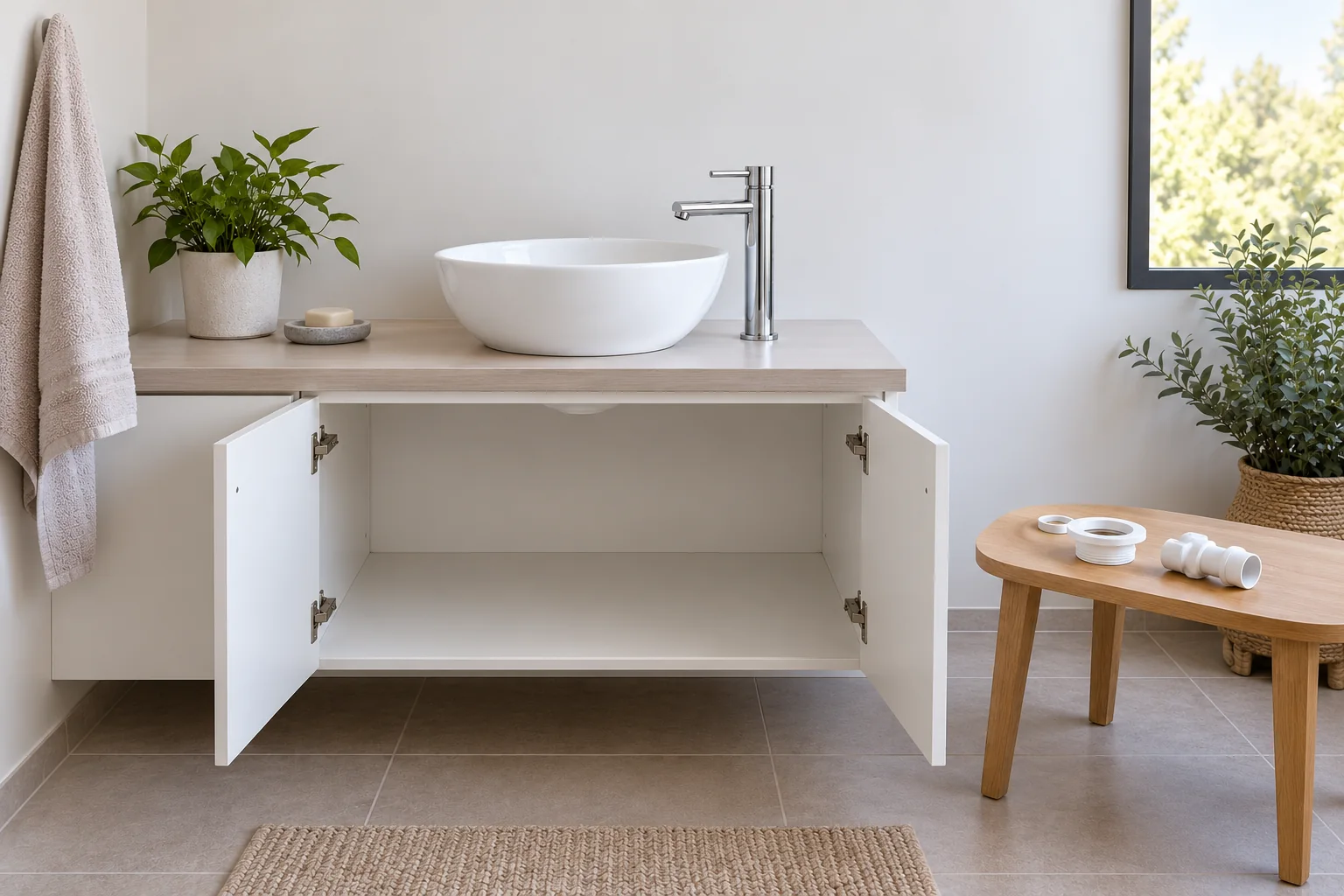
Coordinate bathroom cabinets with basin depth, fitting occupation and access requirements. A cabinet can accept the visible basin while an internal drawer or shelf conflicts with a selected component. Ask the relevant suppliers to review the complete arrangement before manufacture fixes both products independently.
Show actual tile build-ups where they affect levels, mounting faces or access openings. A tile-category selection cannot provide the entire dimensional or water-interface basis. The contractor and plumbing team should acknowledge the relevant completed condition rather than infer it from a decorative room rendering.
Which product interfaces need a specific compatibility response?
Connect the complete selected parts
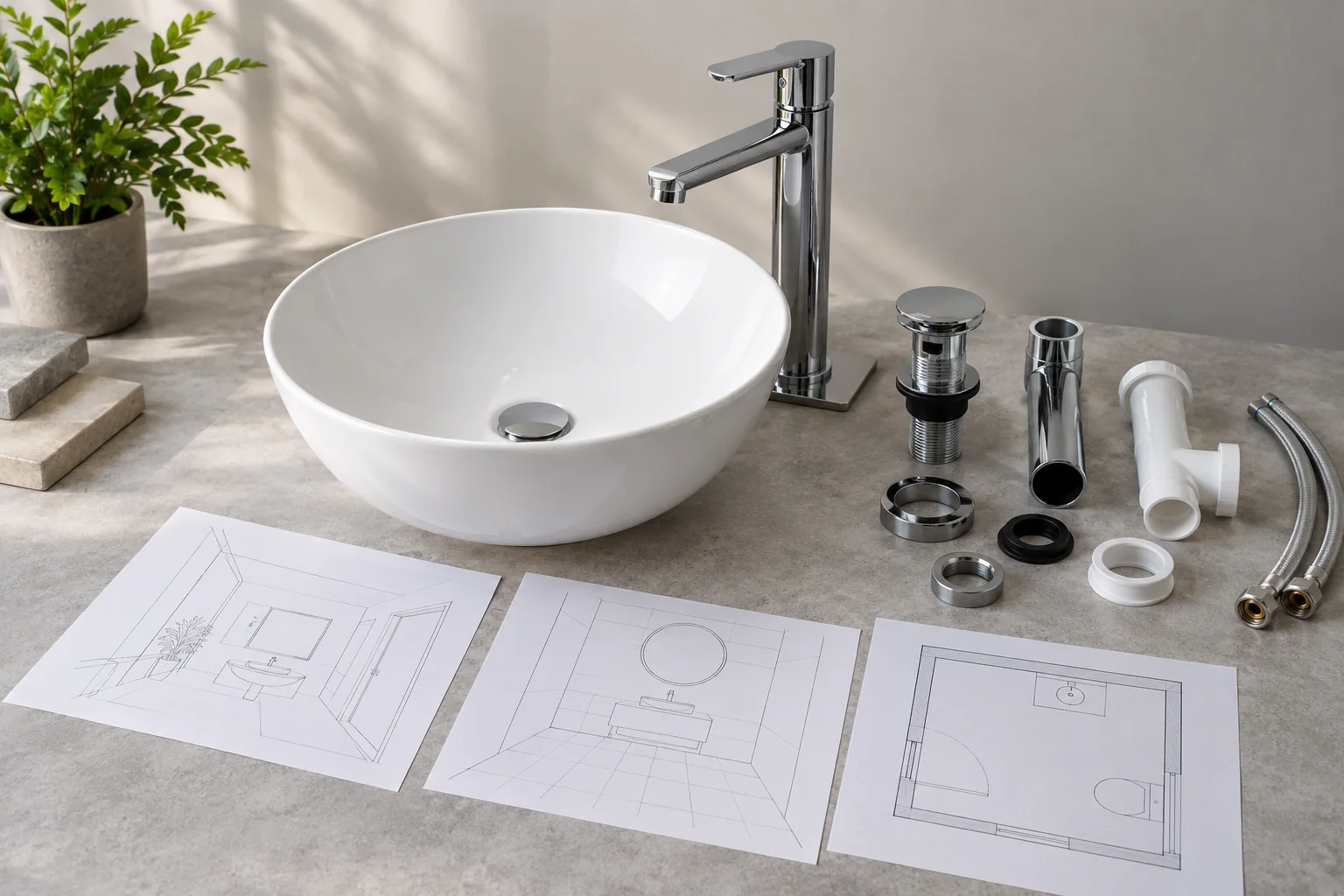
For the basin and waste, identify the selected outlet construction, any relevant overflow arrangement and the proposed matching assembly. Ask the responsible suppliers to confirm their actual application together. A shiny drain cover or nominal component name cannot establish the hidden fit, connection and included sealing scope.
For faucet and mounting, obtain the actual fixing and supply information alongside the selected basin or countertop preparation. Location, thickness and surrounding occupation can affect the reviewed combination. Procurement should preserve the selected drawings rather than ask the installer to improvise holes or adapters from an apparent showroom match.
For concealed or separately supplied equipment, identify its configuration, support and interface responsibilities. A fixture can occupy its final visible position while another required object is missing from the schedule. Retain the relationship between supplied and site-completed parts before accepting a complete-looking product photograph as evidence of the whole installation.
Where a selected fitting includes electronic control, identify its actual power, sensor and service dependencies alongside the hydraulic components. Allocation should name the responsible electrical and plumbing parties. A faucet outline or finish approval cannot supply missing instructions for another control configuration or establish its installed readiness.
Keep evidence subjects and operating conditions clear
Request the actual product or assembly evidence appropriate to the intended application. An efficiency label, material certificate or isolated flow value can address its stated subject while leaving installed connections and building conditions unknown. Ask which offered model and configuration are represented before extending the evidence across the schedule.
Private-room and public-use applications can have different product, operation or project requirements. Obtain the responsible designer’s actual criteria and applicable supplier response. Do not transplant another market’s faucet program, pressure value or plumbing rule into the order merely because the product categories share a bathroom setting.
Keep site water and drainage acceptance with the responsible plumbing reviewers. Complete-product information is useful, but it cannot identify an unmeasured site condition or unknown receiving pipe. The coordinator should collect those separate records and show the remaining gap rather than issue a broad compatible-fixtures statement.
Can bathroom fixtures be used and serviced in the final room?
Review control and component occupation together
Show actual control positions, doors and neighboring objects that affect ordinary operation. A faucet handle can move differently from the spout outline, while a cabinet or enclosure door can occupy another part of the space. The designer should review the combined room condition within the actual requirements before installation is committed.
Include relevant bathroom accessories where they affect use, mounting or component access. Decorative agreement does not establish each supporting condition. Keep their attachment and occupied-space decisions identifiable so another trade cannot close a needed service area through an isolated accessory layout.
Coordinate bathroom mirrors and any selected powered features through their own actual product records. They can affect the room layout while electrical responsibilities remain separate. A fixture schedule can collect those dependencies without becoming an improvised wiring or complete electrical-approval document.
Assign service tasks before access is concealed
Ask how selected valves, waste parts, controls and concealed equipment are inspected or serviced under applicable instructions. Identify the actual access object and appointed personnel where required. An attractive closed cabinet or uninterrupted wall can leave the operating plan incomplete when its service provisions are unknown.
Distinguish ordinary cleaning and use from technical servicing or replacement. The tasks may involve different objects, access and responsibilities. A product that can be wiped visibly does not automatically have a workable component-removal route. Obtain the relevant supplier and project information without prescribing a universal removal sequence.
What should a representative matching review close?
Give the representation an identifiable scope
Choose a selected sample, drawing or agreed mock-up around the unresolved relationship: component fit, cabinet occupation, control reach or a service opening. Record the actual fixtures, fittings, finishes and surroundings represented. A display omitting the receiving drain cannot establish every installed drainage condition.
Where functional verification is needed, agree an applicable method and acceptance basis with the suppliers and responsible reviewers. Keep water conditions, components and observation subjects identifiable. A wet surface, empty outlet or appearance check cannot substitute for a complete test of an unrepresented configuration.
Match observed gaps with the next evidence
Use this table to decide the record or change needed before release.
| Observation | Unresolved consequence | Buyer decision | Next evidence |
|---|---|---|---|
| Schedule names only the visible fixture | Included assembly remains unclear | Resolve complete scope | Actual component and responsibility list |
| Supply record refers to another operating condition | Selected application may not match | Review the affected product | Site inputs and applicable supplier response |
| Waste name substitutes for actual outlet matching | Physical connection is unconfirmed | Hold dependent preparation | Selected outlet, fitting and receiving detail |
| Cabinet occupies a required service area | Operating plan is incomplete | Recoordinate the interface | Combined room and task representation |
| Finish build-up changes a concealed reference | Previous preparation basis may differ | Reconcile completed faces | Current drawing and responsible site response |
| Trial omits the intended fitted component | Observation has limited coverage | Define and recheck the difference | Production-configuration verification |
Keep the outcome attached to its actual fixture and room. A component-fitting observation cannot settle an unreviewed water-supply condition. A plumbing response cannot close an unrelated supporting or electrical question. The buyer should see which acceptance is complete and which owner still needs to respond.
After an accepted correction, update product, component and site information where affected. Obtain acknowledgement before dependent manufacture or installation. A temporary adjustment made only to the demonstration should become an identifiable detail rather than the sole reason the combined package was approved.
How should procurement preserve matched bathroom fixtures?
Freeze the correct combinations and included work
Connect each released quantity of bathroom fixtures with its active room configuration and matched components. Identify limited commitments and remaining dependencies through the actual agreement. A confirmed color or price cannot authorize a basin preparation or concealed connection against provisional information that another owner has yet to accept.
Compare quotations at the included-work boundary. A fixture-only offer and one containing specified fittings can require different site tasks. Request the missing identities and owners before treating the totals as equivalent. This comparison does not establish supplier quality or predict a cost saving without actual commercial evidence.
Through Sibolla’s material supply system, retain the active fixture and responsibility records. Coordination can collect relevant inputs while plumbing and other reviewers keep their technical decisions. A consolidated product list cannot establish a complete installed system when its connections or acceptance tasks are still unallocated.
Allocate supplied parts before installation
Identify fixtures, fitting sets and variant parts against the room schedule. Similar finish can conceal another connection or configuration. Receiving staff should preserve those identities and supplied records before allocation rather than combine available-looking components into an unreviewed package.
Obtain actual packing, protection and handling information for ceramic surfaces, finishes and loose parts. A grouped-products illustration does not establish the shipment count, compatible kit or permitted lifting method. The receiving team needs the actual supplied-object information and agreed responsibility to plan its work.
For whole-house coordination, keep bathroom-specific supply, drainage and service exceptions beside common material choices. A room or finish change should reach the affected suppliers and project reviewers before another trade treats it as independent of the fixture release.
What should installed acceptance and handover retain?
Compare actual products with their matched references
Inspect room allocation, visible identities, accessible connections and ordinary operation through the actual agreed process. Record the selected verification outcomes separately from appearance. An intact fixture or one local observation cannot settle all concealed connections, building drainage or required complete-system acceptance.
Record a mismatch against room, fixture and affected interface before selecting the response. Distinguish supplied-product difference from site variation or installation observation. The corrective record should identify the product, plumbing or supporting decision that needs reopening rather than assume every issue can be closed through a replacement fitting.
Leave the operator usable component and service information
Provide active fixture and fitting identities, applicable instructions, accepted site changes and the agreed care and service arrangements. The owner should locate the selected component record after samples and packaging disappear. A general collection brochure cannot identify every matched configuration or concealed dependency supplied for the project.
For later repairs or substitutions, obtain the review applicable to the changed part and site condition. Confirm actual remedy and supply terms without promising permanent stock or universal interchangeability. A retrievable schedule lets the owner request a specific response and recognize when former approval no longer describes the installed combination.
Conclusion
Release bathroom fixtures when selected products, water-supply inputs and drainage interfaces describe the same current room configuration. Identify mounting, matched components and service responsibilities beside the visible fixtures. Keep product evidence, appearance and required installed-system verification within their respective accepted scopes.
Ask the coordinator to close the least certain connection or access relationship before manufacture. Hold undefined fitting combinations, provisional finish references or unallocated site work against the affected fixture. Use representations for their stated purposes and retain their limits. Carry accepted changes into supplier acknowledgements and room records, then preserve actual component and operator information at handover.
Sibolla’s procurement service process provides a reference for preparing the package. Send the room schedule, selected product drawings, supply and waste inputs, and unresolved interface questions together so suppliers can respond to a defined release decision.
Frequently Asked Questions
Does a matching collection establish plumbing compatibility?
Identify the actual fixtures, fittings, supply conditions and receiving connections. Shared color or collection name cannot establish their complete application together. Obtain the relevant supplier and project responses before treating the room package as technically matched.
Is nominal pipe size enough to approve a connection?
It describes its stated object. Fixture outlets, waste fittings and receiving pipes can have different connection subjects. Retain selected drawings and actual component identities instead of extending one name across the complete installation.
Can an efficiency label approve the installed bathroom system?
It addresses its specified product and criteria. Actual supply, drainage, mounting and service conditions still need their applicable reviews. Keep the represented model and application identifiable rather than treat a product label as whole-room acceptance.
What if the cabinet blocks a service component?
Identify the selected component and applicable task, then review the actual cabinet and room arrangement. Obtain an accepted interface or service response before closing access. A visible fixture fitting the countertop cannot establish that concealed work remains possible.