Bulk discounts matter when buying office furniture from overseas, but service quality matters too. You want good prices and service when buying office furniture from other countries. Careful planning helps you make clear goals. It also helps you use facts to get better deals. You can look at price, service, and sharing risks to save money. Good vendor partnerships give you more choices and special solutions. Many procurement managers use supplier tools to watch orders and save money each month.
Key Takeaways
- Look up suppliers carefully. Use sites like Alibaba and Global Sources to find good manufacturers.
- Check supplier backgrounds. Look at business licenses and ask for references. This helps you know if they are good and trustworthy.
- Learn about market prices. Compare prices, but also think about quality and service. Do not just pick the cheapest option.
- Make your project needs clear. Tell them what materials, sizes, and delivery times you want. This helps stop confusion.
- Say what you expect clearly. Tell them your quality needs and when you need things done. This keeps talks going well.
- Use big orders to get discounts. Ask for better prices if you buy more or order many times.
- Watch out for extra costs. Add up all costs, like shipping and customs, so you do not go over budget.
- Try to build good relationships. Trust your suppliers for better deals, faster service, and help in the future.
Preparing to Negotiate Bulk Discounts
Researching Overseas Manufacturers
Identifying Reliable Suppliers
You must find suppliers you can trust before talking about deals. Begin by looking on online platforms. Sites like Alibaba, Global Sources, and Vietnam Export Directory let you sort suppliers by what they sell, where they are, and their certifications. If you are in the U.S., ThomasNet lists vendors from other countries too. Global Database gives you detailed company profiles. OpenCorporates shows basic company facts. Services like V2W help you meet good manufacturers. Always check if the information is current. Pick suppliers who have done well in the past.
Evaluating Credentials
Check each supplier’s credentials before moving ahead. Look for business licenses, export certificates, and quality systems. Ask for references from their old customers. Check if they can make what you need and if they have done similar jobs before. For example, Sibolla Building’s Custom Cabinets and doors and windows show product details, certificates, and project experience on their website. This helps you see if a supplier can do your job.
Market Pricing Insights
Benchmarking Prices
Compare prices from many suppliers to learn about the market. Do not just pick the lowest price. Think about what each supplier gives you in quality, service, and support. Sibolla Building shows clear prices for Custom Cabinets and doors and windows, so you can see what you get for your money. Use online tools and ask for quotes to make a price range for your project.
Cost Structure Analysis
You should know what makes up the total cost. The table below lists the main things that change the price of overseas office furniture:
| Factor | Description |
|---|---|
| Material Selection and Grade | Better materials cost more but last longer. |
| Design Complexity | Harder designs need more work and skill, so they cost more. |
| Dimensions, Quantity, and Scale | Bigger items use more resources, but big orders can lower the price per item. |
| Finishing and Upholstery | Fancy finishes add more steps and cost extra. |
Think about the total cost to own, not just the first price. Look at how long it lasts and how much care it needs when you compare.
Defining Project Needs
Product Specifications
Write down what you want before you talk to suppliers. List the materials, sizes, finishes, and hardware you need. For example, Sibolla Building’s Custom Cabinets come in MDF, plywood, and solid wood, with soft-close hardware and special finishes. Their doors and windows have choices in aluminum, glass, and custom systems. Clear specs help you get the right quotes and stop mistakes.
Volume and Delivery
Decide how many pieces you need and when you want them. Measure your rooms, doors, and halls to make sure the furniture fits. Make layout plans and think about delivery. Sibolla Building uses a step-by-step plan to manage global supply and deliver on time. You should also ask for contracts that include green standards and warranty details.
Tip: Always get everything in writing. This keeps you safe and makes sure both sides know what to expect.
Discussing Bulk Discounts with Manufacturers
Initial Supplier Contact
Professional Introduction
When you start talking to a supplier, make a good first impression. Tell them who you are and what your company does. Say your job and what you want for your project. Be polite and show you respect their skills. You can talk about your company’s history and the work you do. This helps the supplier know what you need and take you seriously.
Company Profile Presentation
Give the supplier some facts about your company. Tell them how big your company is and where you sell things. Share what projects you have done before. You can send a short file or a website link. If you work with brands like Sibolla Building, talk about how you plan and work with others around the world. Show what products you want, like Custom Cabinets or doors and windows. This helps the supplier see what you expect.
Setting Expectations
Quality and Service Requirements
You need to tell the supplier what quality and service you want before talking about price. Here are some good steps:
- Send pictures with notes to show what you want.
- Give real samples if you can.
- Have video calls for important talks, then write down what you agree on.
- Keep a file with all deals, samples, and reports.
- Write down every change with a Change Order.
- Use three checks to look at materials and work at different times.
These steps help stop problems and keep you safe.
Forecasts and Timelines
Tell the supplier early how many things you want and when you need them. Give details about your project plan. Ask the supplier to say how much they can make and how long it will take. You can ask for a chart or plan that shows the timeline. This helps both sides get ready and not be late.
Tip: Always get written proof of timelines and quality rules. This helps your project stay on track.
Building Trust
Transparent Communication
You build trust by being open and honest. Tell the supplier your goals and any problems. Ask them to share too. Use simple words and do not use confusing terms. Keep all messages and deals in a safe place. If you use a service like Sibolla Building, you get one person to talk to and clear updates for your project.
Supplier Responsiveness
See how fast the supplier answers your questions. Quick replies show they care about your business. Ask for news about making and shipping your order. If the supplier answers fast and fixes problems, you can trust them more. Procurement Managers like suppliers who give updates and solve problems quickly.
Negotiation Strategies for Bulk Discounts

Image Source: pexels
Getting the best price for office furniture takes smart planning. You can save money if you know how to talk about order size, payment, and extra services. Here are ways to get more value from overseas manufacturers.
Volume Discount Tactics
Tiered Pricing
Manufacturers give bigger discounts when you buy more. This is called tiered pricing. You can use this to pay less. The table below shows how discounts get better as your order grows:
| Pricing issue | Request |
|---|---|
| Order quantities | Supplier’s actual quoted tiers |
| Repeat orders | Written commercial terms |
| Extra services | Separate cost and scope |
| Landed cost | Freight, duties, inspection and installation |
You can see how discounts grow in this chart:
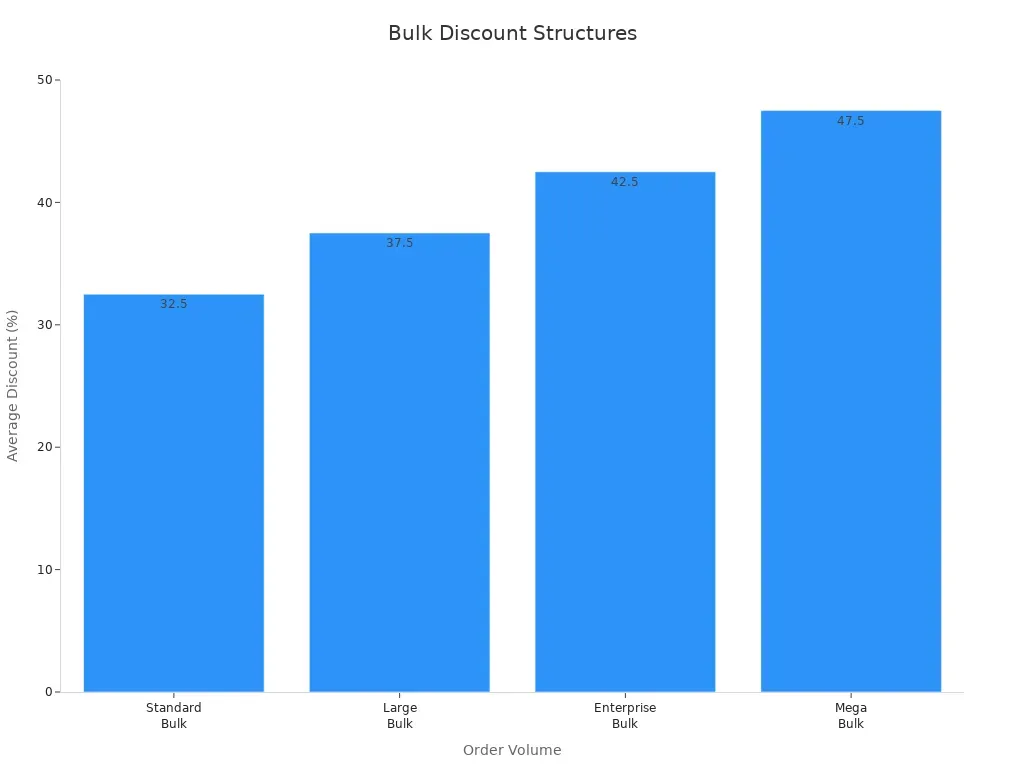
When you talk to suppliers, ask them to show their discount levels for different order sizes. If you plan a big project, like furnishing a hotel or office building, you can reach higher discount tiers. Sibolla Building offers these kinds of structured discounts for Custom Cabinets and doors and windows, making it easier for you to plan your budget.
Multi-Order Leverage
You can get better deals by promising to buy several times. This is called multi-order leverage. Suppliers like steady business. If you agree to buy in stages, they may give you a better price. Here is how this works:
| Concept | Explanation |
|---|---|
| Volume Leverage | You use your buying power to get better terms. Suppliers offer more discounts for bigger or repeat orders. |
| Predictable Revenue | Suppliers like knowing they will get more orders. This helps them plan, so they give you better deals. |
- Know what the supplier needs.
- Build a strong relationship with the supplier.
- Use your promise of more orders to get bigger discounts.
Sibolla Building works with clients on long-term projects. They reward repeat business with better pricing and extra services. You can use this approach to get more value for your company.
Payment Terms for Bulk Discounts
Favorable Schedules
Payment terms can change the total cost of your project. You should always ask for terms that help your cash flow. Here are some common payment schedules in the construction industry:
| Industry | Typical Terms |
|---|---|
| Construction | 30 – 90 days |
| Retail | 3 – 7 days |
| Professional Services | 14 – 75 days |
You can ask for 30, 60, or even 90 days to pay after you get your goods. This gives you time to check the products and manage your money. Sibolla Building often works with flexible payment schedules for large orders, which helps you control your budget.
Secure Transactions
Safe payments protect both you and the supplier. Here are some common ways to pay:
- Cash in Advance: You pay before the supplier ships the goods.
- Cash on Delivery: You pay when you get the goods.
- Letters of Credit: Your bank promises to pay the supplier when they meet the order terms.
- End of Month (EOM): You pay by the end of the month after you get the invoice.
Letters of Credit are very safe. They make sure the supplier only gets paid if they deliver what you ordered. Always write down your payment terms in the contract. Sibolla Building uses secure payment methods and gives you clear records for every transaction.
Service Add-Ons
Samples and Prototypes
Before you order a lot, ask for samples or prototypes. This lets you check the quality and see if the product fits your needs. Many suppliers will send you a sample for a small fee or even for free if you order in bulk. Sibolla Building provides samples of Custom Cabinets and doors and windows so you can test materials and finishes before you commit.
Tip: Always check samples with your team. This helps you avoid mistakes and surprises.
Customization Options
Extra services can add value to your order. Ask about custom sizes, finishes, or hardware. Suppliers like Sibolla Building offer many options for Custom Cabinets and doors and windows, such as special colors, handles, or energy-saving glass. You can also ask for special packaging, installation guides, or after-sales support.
- Ask for detailed drawings or 3D pictures.
- Ask for installation manuals.
- Check if the supplier can label and organize parts for easy setup.
These add-ons make your project easier and help you get the most from your investment.
Note: Good negotiation is not just about price. It is about getting the right product, on time, with the support you need.
By using these strategies, you can get better deals and more value from overseas office furniture manufacturers. You can also build strong partnerships that help your projects succeed.
Bulk Discounts: Quality Assurance and Risk Avoidance

Image Source: unsplash
You need to keep quality high and avoid risks. This is very important when you buy from overseas office furniture manufacturers. If you make clear steps for checking samples, use outside inspectors, and watch for warning signs, you can stop big mistakes.
Sample Evaluation
Approval Process
Always ask for samples before you make a big order. Look at these samples with your team. Check if the finish, color, and hardware are what you want. Sibolla Building checks Custom Cabinets and doors and windows before they ship. Each piece is put together and checked to make sure it is right. This helps you not have problems when you install the furniture.
Specification Comparison
Check the sample against your list of needs. Make a checklist with things like material, size, and finish. If something is not right, talk to the supplier fast. This helps you find problems early and keeps your project going well.
Third-Party Inspections
Pre-Shipment Checks
Outside inspectors give you more trust in your order. They check your goods before they leave the factory. Inspectors look at how many items there are, what kinds, and the packaging. They make sure everything matches your order. Here is a table that shows what different inspections check:
| Inspection Type | Criteria |
|---|---|
| Final Product Inspection | Appearance, structure, function, and safety |
| Packaging & Labeling | Packaging quality, labeling accuracy, protective measures |
| Pre-Shipment Inspection | Quantity, product mix, container condition |
Regular checks help you avoid risks and keep your workplace safe. Checks before shipping and during making sure quality is good before delivery. Use checklists that are ready for audits to track each step.
Factory Audits
A factory audit checks capability and process controls; product requirements depend on destination and scope. An Indian furniture Quality Control Order is not a general US office-furniture standard. Identify the actual applicable tests, regulations and evidence before approval.
Spotting Red Flags
Payment Issues
Look for warning signs when you talk about deals. Some red flags are:
- Suppliers who will not give references or certificates
- Prices that are too low to be true
- No business registration or company history
- Not giving samples before big orders
If you see these signs, stop and ask more questions.
Communication Delays
Good communication is very important. If a supplier takes too long to answer or is not clear, this can cause big problems. For example:
A common but costly mistake in China sourcing: undefined responsibility. One shipment was delayed because the supplier did not finish production on time. The result was missed loading, canceled containers, and penalty fees. The main problem was not the delay, but the lack of clear agreement.
Always make clear rules in your contract. This helps you avoid confusion and keeps your project moving.
Tip: Procurement Managers who do quality checks and talk clearly have fewer risks and better results.
Bulk Discounts: Accounting for Logistics and Hidden Costs
You need to know about logistics and hidden costs when buying office furniture from overseas manufacturers. These extra costs can change your budget and slow down your project. Sibolla Building uses global shipping skills and strong packaging for Custom Cabinets and doors and windows. This helps you avoid surprises and keeps your project running smoothly.
Incoterms and Shipping
FOB, CIF, EXW
Incoterms are rules that tell who pays for shipping and who takes the risk. You must pick the best Incoterm for your project. EXW means you do everything after the goods leave the factory. FOB means the seller brings the goods to the port, then you take over. CIF means the seller pays for shipping to your port, but you take the risk once the goods are with the carrier.
| Incoterm | Description | Risk Transfer | Example |
|---|---|---|---|
| EXW | Buyer does it all | Buyer takes full responsibility from seller’s location | Buying food at a takeaway counter |
| FOB | Seller delivers to port | Buyer takes over after goods reach port | Picking up goods at the dock |
| CIF | Seller pays for transport | Risk shifts to buyer upon handover to carrier | Seller ships goods to your port |
You should learn these terms so you can plan your costs and know your job.
Risk Transfer
Risk transfer is when the goods move from the seller to you. For CIF, the seller pays for shipping, but you take the risk when the goods are with the carrier. For DDP, the seller does everything, even customs. Pick the Incoterm that fits your shipping skills and project needs.
Tip: Always check who pays for shipping, insurance, and customs. This helps you avoid hidden costs.
Landed Cost Calculation
Duties and Taxes
You need to add up all costs to find the real price of your furniture. Duties and taxes can change depending on where you ship. Customs fees, tariffs, and broker fees can add up fast. Check your country’s rules and ask the supplier for help.
Freight and Insurance
Freight and insurance are big parts of your landed cost. You pay to ship the furniture from the factory to your place. Insurance protects you if something bad happens. Sibolla Building uses strong packaging to keep Custom Cabinets and doors and windows safe during shipping.
| Component | Description |
|---|---|
| Product Cost | Factory price of the furniture |
| Sourcing & QC Costs | Costs for samples, audits, and inspections |
| Logistics & Shipping Costs | Origin charges, freight, and destination charges |
| Customs Costs | Duties, tariffs, and brokerage fees |
| Financial Costs | Transaction fees and cost of capital |
| Total Landed Cost | Sum of all the above components |
Watch out for hidden fees like container storage, special certificates, and warehouse labor. These can make your costs go up if you do not plan ahead.
Delivery Coordination
Lead Times
You need to plan your delivery schedule. Lead times show how long it takes to get your furniture. You can use local suppliers to get faster shipping. You can also use fewer suppliers to make things easier. Sibolla Building uses global shipping to deliver Custom Cabinets and doors and windows on time.
Handling Delays
Delays can happen if you do not manage delivery well. Talk to your supplier often and check for updates. Good communication helps you avoid mistakes and keeps your project moving. You can help your team and do some work yourself for better control.
Note: Always ask for clear delivery dates and check for hidden fees. This helps you manage your budget and finish your project on time.
Building Supplier Partnerships for Bulk Discounts
When you work with a supplier for a long time, you get many good things. You can pay less money, get faster help, and have more control over your work. If you pick a trusted supplier like Sibolla Building, you also get one person to help you and answer your questions during your project.
Ongoing Benefits for Procurement Managers
Loyalty Discounts
Suppliers like to thank customers who buy from them a lot. They give special deals to people who keep coming back. These deals can be:
- Bigger discounts if you buy more or order again
- Special sales just for big buyers
- Extra rewards if you renew your contract early
You should check your supplier deals often. Make sure you still get a good price and do not pay more than new buyers. Checking your deals helps you keep your prices low.
Priority Production
If you work with a supplier for a long time, your orders may go first. This means your furniture gets made faster. Suppliers might give you:
- Quicker delivery for repeat buyers
- A special manager for big jobs
- First chance to try new products or custom choices
These things help you finish your work on time and stop delays.
Here is a table that shows the main good things about working with a supplier for a long time:
| Benefit | Description |
|---|---|
| Cost-effectiveness | You save money by using both local and global ideas. |
| Reliability | You get good quality and clear answers from people you trust. |
| Predictable procurement | You do not get surprises and your work stays on schedule. |
Forecasting Demand for Bulk Discounts
Demand Projections
Good planning stops you from running out of furniture or having too much. Try these steps to make better guesses:
- Think about different ways your project could go
- Use outside facts to see what makes people buy
- Ask your team what they think you will need
- Sort and name your data so it is easy to read
- Fix mistakes in your data
- Try new tools to guess what you need right now
These steps help you get ready for the future and make smart choices.
Flexible Orders
Suppliers who want to work with you for a long time let you change your orders. You can ask for more or less furniture or change when it comes. This helps you if your project changes or you need something fast. Sibolla Building lets you change your orders, so your project stays on track.
Sustainable Pricing
Price Adjustments
Fair prices help you and your supplier for a long time. You do not have to worry about prices going up too fast. Suppliers might change prices if the market changes, but they try to keep things fair for you.
Market Monitoring
Suppliers use many ways to watch prices and set fair deals. They might:
- Watch what happens in local and world markets
- Use computers to change prices fast
- Get facts from surveys and online news
- Look at what customers say and what other companies charge
These ways help suppliers give you good prices and keep your project on budget. Picking strong, good furniture also saves you money later and helps your company’s goals for being green and keeping workers happy.
Tip: Working with a good supplier gives you more than just low prices. You get better help, on-time delivery, and support for your success in the future.
Continuous Improvement
Performance Reviews
You should check how your supplier is doing often. These checks help you see if they meet your needs. You can use scorecards or easy checklists for this. Look at things like quality, delivery speed, and how they fix problems. Sibolla Building gives you one person to talk to. This makes it easy to get help or ask questions.
You can use a table to keep track of important practices for getting better:
| Practice | Description |
|---|---|
| Vendor Evaluation | You check quality, reliability, and support after the sale. |
| Building Vendor Relationships | You focus on value, not just price. You look at many things, not only cost. |
| Quality Control | You make sure all items meet your needs before installation. |
| Clear Responsibilities | You give each team member a job. This helps finish projects on time and to high standards. |
You should look at these areas every few months or after big projects. If you find a problem, talk to your supplier right away. Ask them to help fix it and set goals to get better. Sibolla Building helps you with reviews during your project. This keeps your standards high and your work on track.
Tip: Use simple charts or lists so your team can do reviews easily.
Feedback Initiatives
You can make your supplier relationship better by sharing feedback. Give your supplier honest comments about what was good and what needs work. Ask your team to write down their thoughts after each delivery or setup. You can use surveys or short meetings to get ideas.
Sibolla Building listens to your feedback and uses it to improve their service. They ask for reviews at the end and stay involved for future work. This helps you trust them and get better results over time.
Try these steps for strong feedback:
- Have short meetings after each part of the project.
- Use easy forms for your team to share their thoughts.
- Ask your supplier to answer your feedback and suggest changes.
You can start a cycle of getting better. Your supplier learns from your feedback and makes changes. You get better products and service next time.
Note: Getting better is not just about fixing mistakes. It is about working together to reach higher goals and do well for a long time.
You can get better deals if you follow easy steps.
- Know your BATNA and ZOPA before you start talking.
- Collect facts about how the supplier does their job.
- Use teamwork when you talk and check facts with data tools.
- Do not make mistakes like only thinking about price or forgetting about shipping.
Working with suppliers for a long time helps you get lower prices and better quality. Talking openly and checking how things are going helps you trust your supplier.
| Feature | Description |
|---|---|
| Training Courses | Learn how to set goals and negotiate |
| Learning Tools | Use tools to plan and work with others |
Try these ideas to get more value and look for classes to learn more skills.
Bulk Discounts FAQ
Ask for business licenses and export certificates. Get quality assurance reports too. Ask for references from old clients. Check product specifications and certifications. These papers help you know if the supplier is reliable.
Ask for samples or prototypes. Compare them to your project needs. Use third-party inspectors for checks before shipping. Sibolla Building does pre-assembly inspections for Custom Cabinets and doors and windows.
You might pay extra for shipping, customs duties, insurance, and storage. Look at all Incoterms and landed cost calculations. Ask suppliers for a list of all costs.
Tip: Always ask for a full cost summary before you sign any contract.
Ask for longer payment periods, like 30 or 60 days. Use safe ways to pay, such as Letters of Credit. Try to get terms that help your cash flow and protect you.
Send reminders and keep records of all messages. If delays keep happening, escalate the issue or switch suppliers. Clear communication helps you avoid project risks.
Set clear lead times in your contract. Track shipments with digital tools. Pick suppliers with strong logistics, like Sibolla Building. Regular updates help you manage schedules.
Yes, you can ask for custom sizes, finishes, and hardware. Suppliers like Sibolla Building offer many customization choices for cabinets and doors. Ask for detailed drawings and installation guides.