Compare furniture manufacturers against an agreed product and service package before comparing their prices. A manufacturer may quote finished furniture while another includes drawings, samples, packing development or replacement parts. Those proposals can look similar until installation exposes the missing work. Buyers assembling a residential, hotel or commercial furniture order need a common scope, named responsibilities and evidence for each proposed product family.
Start with room schedules, intended use, quantities, site conditions and approval dates. Then ask each supplier to state what its proposal includes and what remains with the buyer or contractor. Sibolla’s furniture category introduces the broad range; this guide addresses supplier selection for a defined package. It does not assume that one factory makes every item, that residential specifications satisfy commercial use, or that a showroom sample proves production readiness.
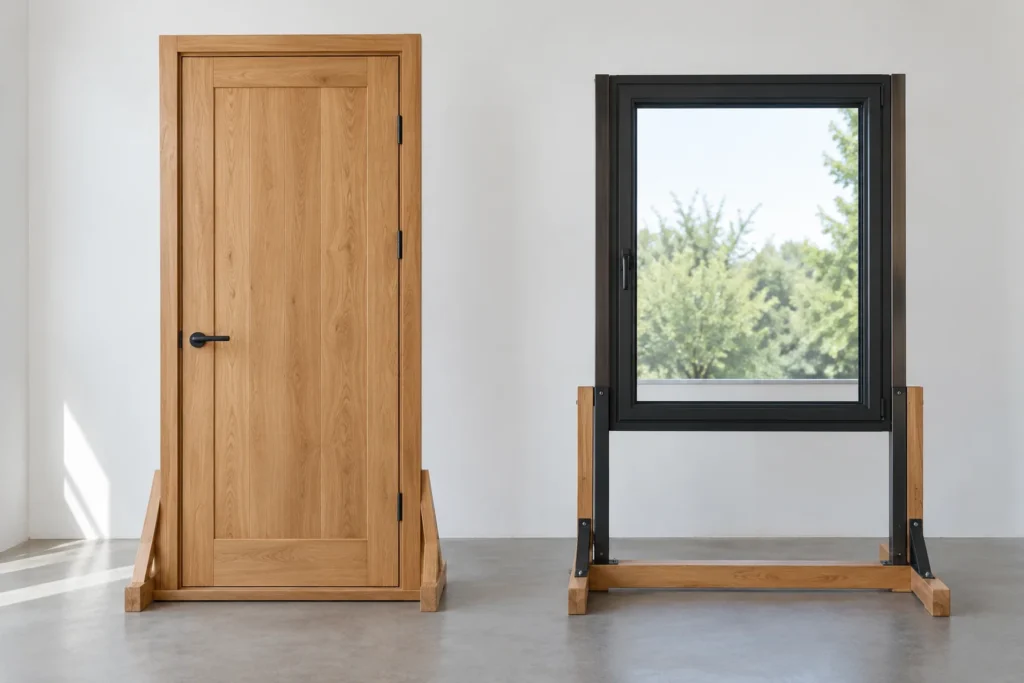
AI-generated illustration of different furniture product families; it represents no supplier showroom or actual collection.
What scope should furniture manufacturers quote?
Define a comparable line-item package
Give every item a stable identifier tied to a room type, location and quantity. A description such as bedroom furniture leaves room for different interpretations about mattresses, headboards, bedside pieces and loose accessories. State which components belong to the furniture contract and which come from another vendor. Use a separate decision for optional items so they do not obscure the base comparison.
For hotel furniture, include operator input about cleaning, access and replacement. A mock-up room may reveal that a drawer interferes with a curtain or a housekeeping trolley cannot reach the area around the bed. These are procurement inputs because they can change dimensions and construction before production. Record the room-layout revision used by each bidder.
Build the boundary between supply, installation and site preparation. A wall-mounted item can require backing, anchors, cable routing or final adjustment. Ask who surveys the wall, who designs the fixing and who supplies the installation components. A supplier offering the furniture does not automatically accept responsibility for the building condition behind it. The contractor should identify unresolved interfaces before award.
Separate items by use location. Office furniture may need different operating functions from guestroom furniture, while outdoor furniture needs a separate exposure specification. A shared visual style does not make their material and performance requirements interchangeable. Compare suppliers within the actual application, and ask for exclusions wherever the proposal relies on assumptions.
Which records make furniture manufacturers comparable?
Ask for evidence by product family and service task
A factory profile can identify a business, but it does not describe the construction of a proposed chair or the packing of a particular sideboard. Request an evidence package connected to the quoted items. The supplier should identify which work it performs, which it coordinates and which is excluded. This gives the buyer a practical route for inspecting and resolving problems without inventing a requirement that every component come from one facility.
Use the following register to organize comparable proposal inputs.
| Comparison input | Requested evidence | Supplier responsibility | Buyer approval boundary |
|---|---|---|---|
| Item and quantity | Room schedule and itemized proposal | Identify every included component | Confirm scope and quantities |
| Construction | Material and hardware schedule | Describe the proposed product | Review against intended use |
| Dimensional interfaces | Drawings and survey assumptions | Identify unresolved dimensions | Authorize the measurement basis |
| Samples | Sample plan with object and revision | Explain what will be demonstrated | Approve stated attributes only |
| Packaging | Packed configuration and component list | Show protection and reassembly method | Review route and receiving needs |
| Service and spares | Written inclusions and parts list | State support obligations | Accept the contractual scope |
This register does not establish that a supplier has passed an inspection. It defines what the buyer needs to check. Mark missing evidence as open instead of assuming a familiar supplier name settles the issue. A proposal can be commercially shortlisted while a technical or packaging item remains on hold.
For dining tables, ask what supports the top and how the base is assembled. For chairs, identify the frame, joints, seat and replaceable contact parts. Those questions create a more useful comparison than broad labels such as premium quality or contract grade without a defined reference.
Does the proposed construction suit daily use?
Evaluate the product where its failure would occur
Describe the use scenario in practical terms. How often will the furniture move, how will staff clean it, which surfaces contact luggage or equipment, and what needs to remain accessible? A supplier cannot select an appropriate construction from the word hotel alone. A quiet suite and a busy public lounge may impose different wear, movement and maintenance conditions.
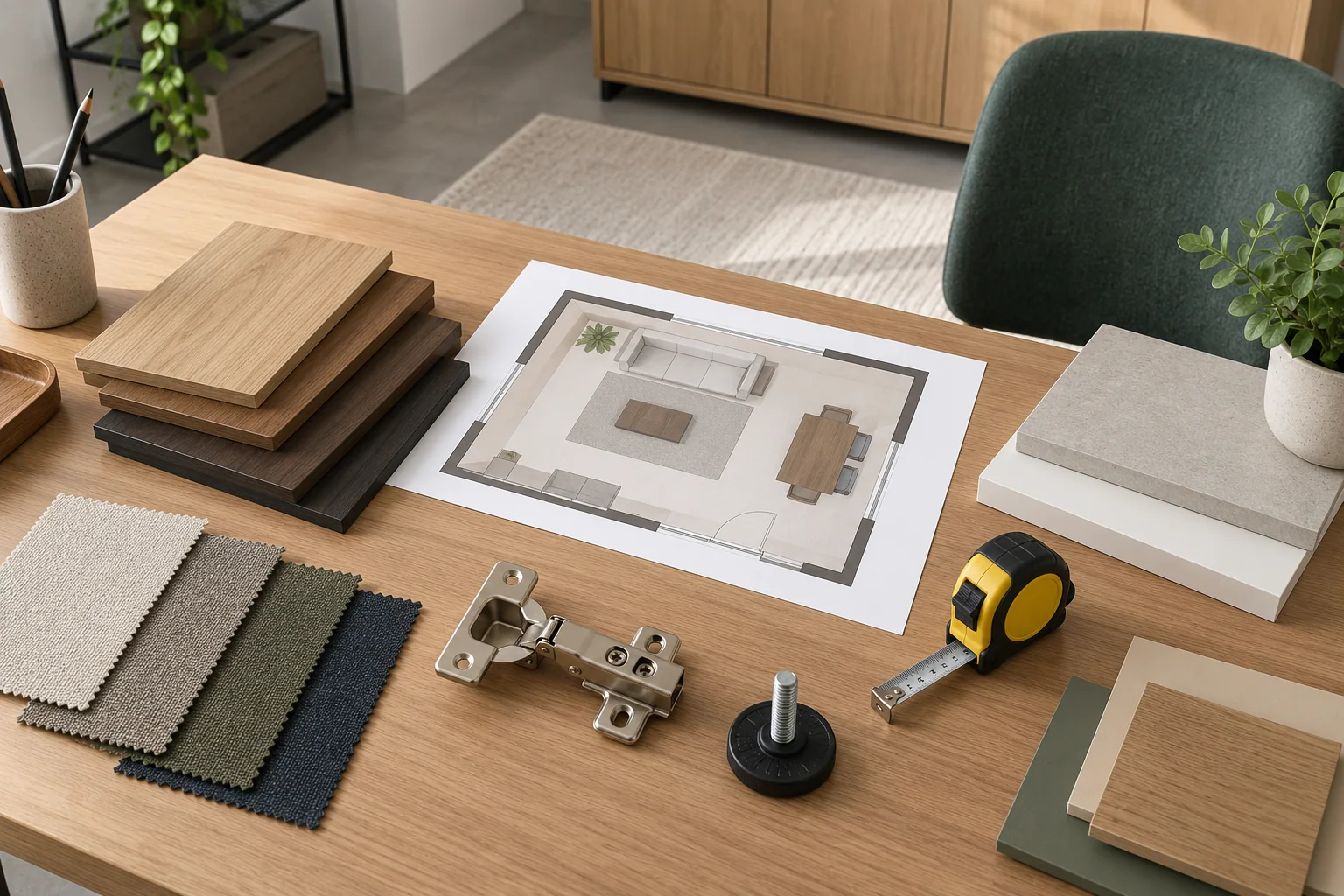
Ask for material identity below the visible finish. A wood appearance may be solid wood, veneer over a substrate or another decorated panel. Request the construction at edges, joints and fixing points, including the material used where hardware transfers force. A beautiful finish chip proves colour and texture at that chip; it cannot reveal how an entire cabinet behaves when its drawers are used.
Check movable functions on the proposed configuration. Door and drawer operation, leveling, folding or modular connections should be demonstrated with the relevant load and geometry addressed in the supplier’s records. Any required test should identify its method, object and applicability. A report for a different product family should prompt a question about coverage rather than become automatic approval of the quoted item.
Apply the same discipline to sofa construction. Upholstery appearance, frame construction and seating support are separate review objects. A fabric abrasion value does not prove complete-sofa durability or a service life. Ask for the selected material’s applicable evidence and the whole product’s construction information. Market-specific requirements remain a separate check once the destination and application are known.
The supplier should list permissible substitutions and the process for approving them. Changing a runner, substrate, foam or fabric can affect function even when the visible shape remains similar. Require the changed item to be identified in the revised schedule and reviewed before it enters production.
Reconcile commercial allowances with the technical schedule
Ask furniture manufacturers to identify provisional choices and their effect on each proposal. An allowance for unspecified hardware can make a price look complete while the construction remains unresolved. Place the allowance beside the relevant item code, then request the final component and any change to scope before award. The comparison should show which costs are fixed for the agreed specification and which depend on a later choice.
Review exclusions with the same discipline. Freight, receiving, assembly, fixings, storage or replacement delivery may sit outside a quoted unit price. Assign those tasks to a named party and include their effect in the project comparison. This does not require the manufacturer to supply everything. It allows the buyer to compare the total work needed for the agreed result and to avoid discovering uncovered tasks when the furniture arrives.
What should furniture manufacturers demonstrate with a prototype?
Give every sample a limited and explicit approval job
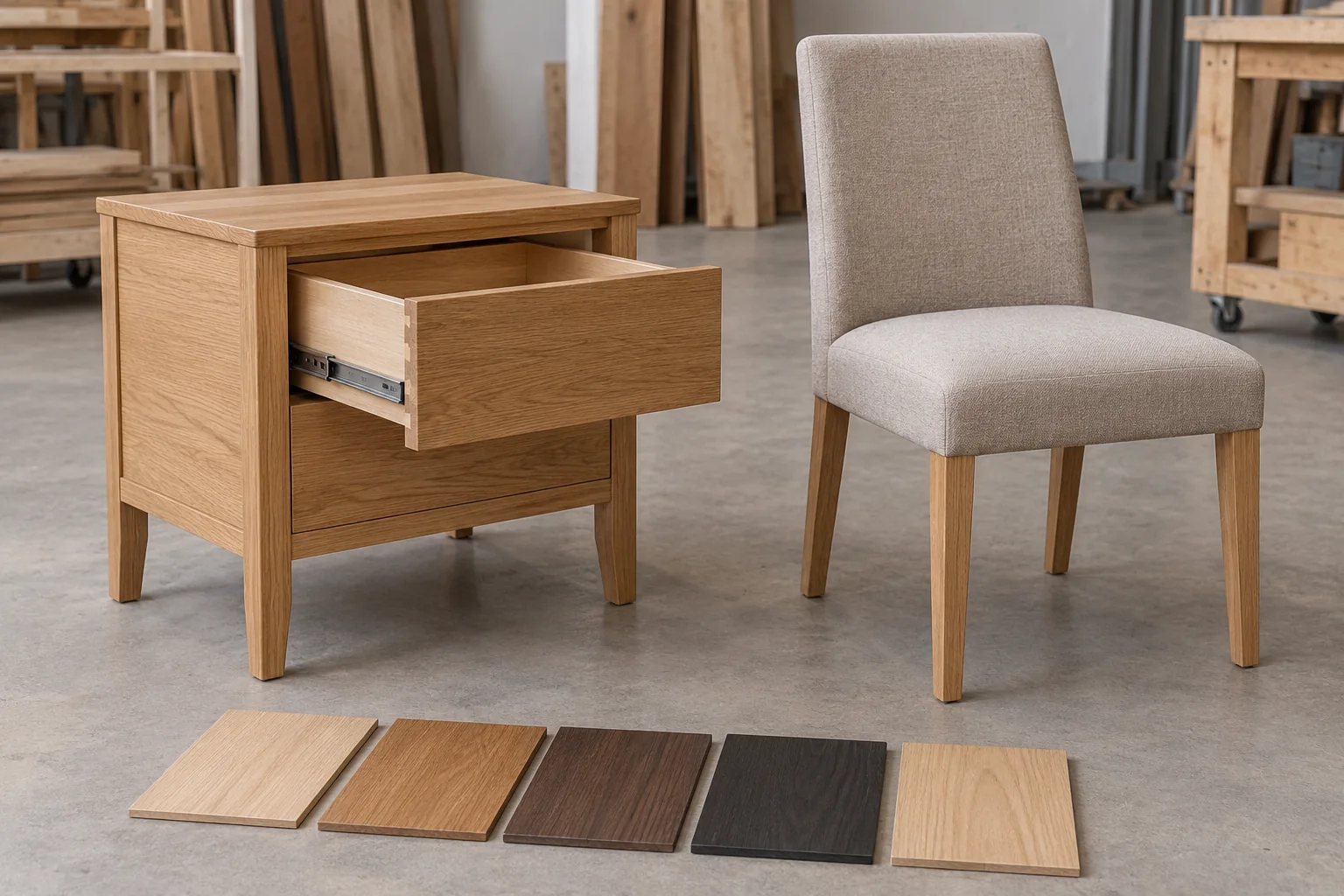
Choose samples around the uncertain decisions. A finish range can establish acceptable variation. A working drawer unit can demonstrate operation. A complete bed frame can check its relationship with the selected mattress and the assembled room. Use a full-size prototype when an interface or construction decision cannot be judged from a small material sample.
The sample plan should state which attributes will be inspected, who attends and what records are retained. Include operations or installation staff when their tasks affect the approval. A designer may accept proportions while an installer identifies inaccessible screws. Record both outcomes instead of converting the meeting into a single undifferentiated sample-approved message.
Inspect the prototype with its intended components. Different drawer hardware or an easier substitute fabric can make an early sample useful for development while leaving production approval incomplete. Ask furniture manufacturers to list prototype deviations from the quoted construction. A sample that deliberately explores an option should remain a development sample until those differences are resolved.
Keep the approved reference identifiable. Record its item code, revision, materials, finish range and changes required for production. Photographs help preserve visible attributes, but important functions need a demonstration record or physical reference. A signed approval should show what was accepted and what was excluded, particularly where later tests or packaging review remain necessary.
Finally, agree how production will be compared with the reference. A one-time prototype decision cannot demonstrate consistency across all ordered units. Inspection instructions should identify checks relevant to the product and a contractually agreed sampling approach. The supplier should explain how deviations will be contained and submitted for disposition.
What do furniture manufacturers include in packing and assembly?
Compare the proposed packed unit with the installation plan
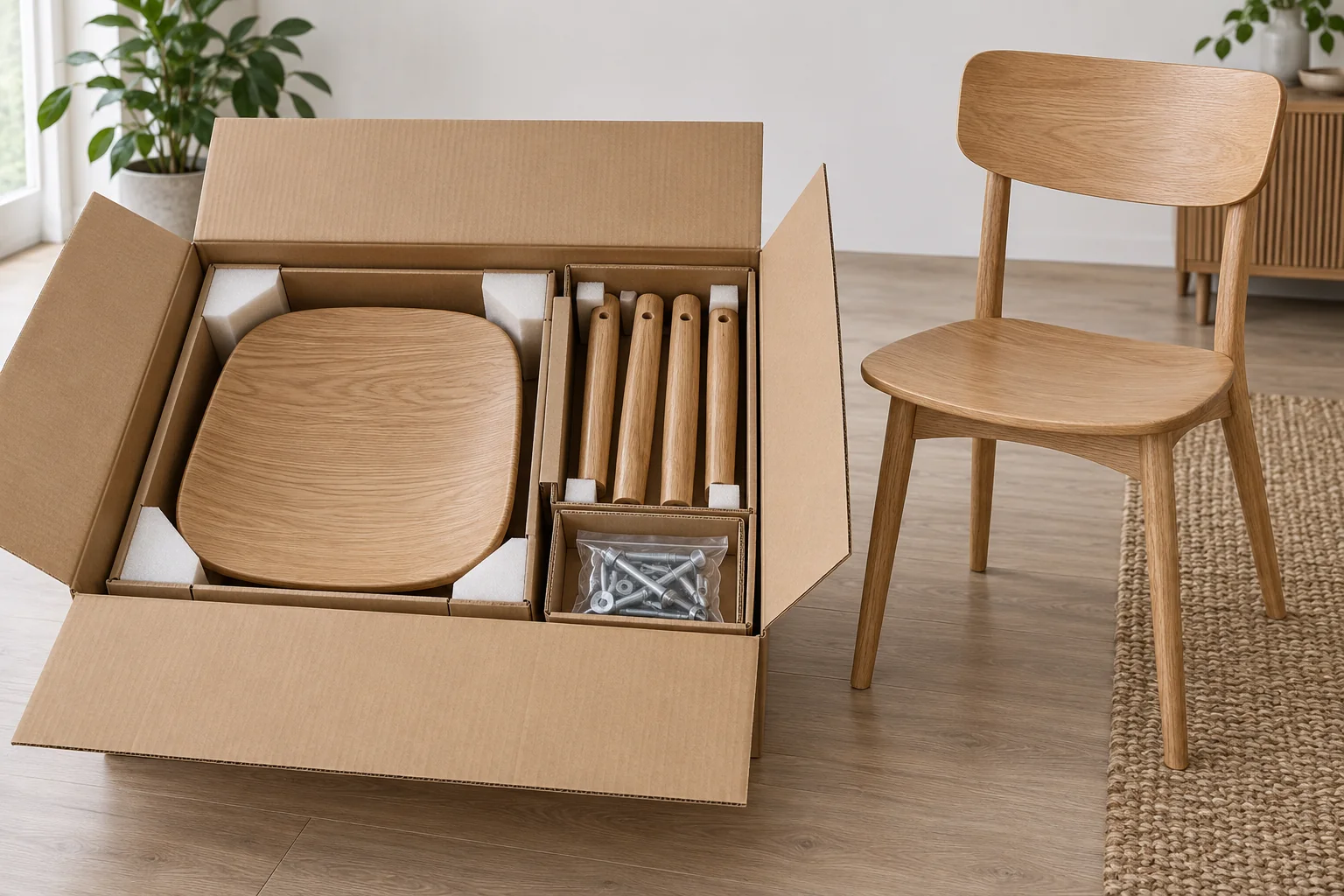
Packaging belongs in supplier selection because it can alter product construction and receiving work. Detachable legs may reduce the size of a carton while moving assembly tasks to the site. Ask the supplier to identify the shipping configuration for each product, including carton count, protected components, hardware location and assembly instructions. Do not infer packed dimensions from the dimensions of finished furniture.
The actual packed sample can be measured and unpacked to test the proposed sequence. Ask receiving staff whether parts can be identified without exposing vulnerable finishes. Confirm that loose hardware is kept separate from surfaces it could damage. A partial packing photograph can reveal component separation, but it does not prove that the complete kit, distribution risks or assembly method have been validated.
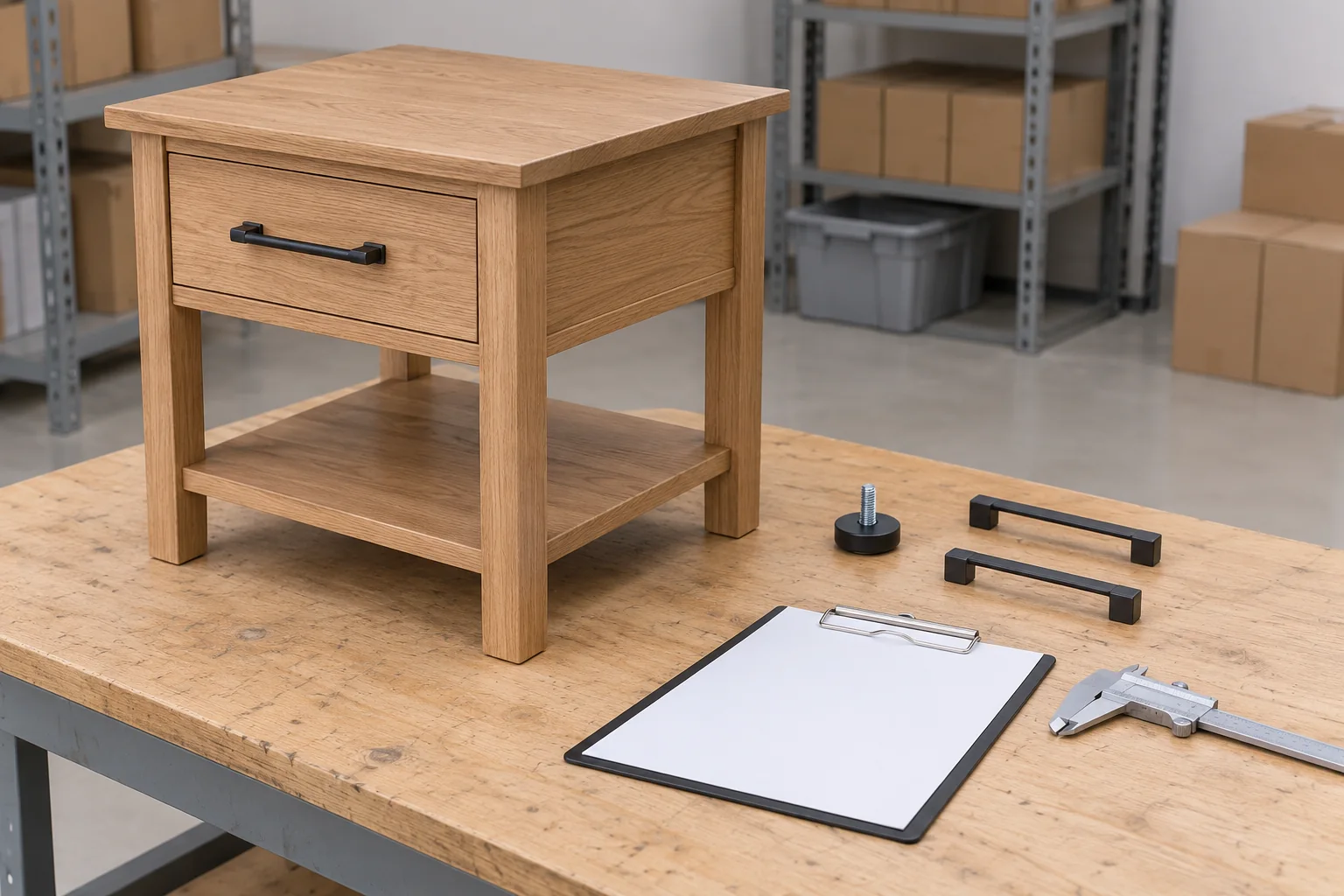
For a sideboard package, the review may focus on drawer restraint, handles, corners and weight distribution. For end tables, detachable legs and finish contact may be more relevant. Each item needs a packing plan suited to its form. One shared phrase such as export packing does not define those different arrangements.
Ask logistics and site teams to review access, storage and delivery sequence. Finished dimensions, packed dimensions and the dimensions of the largest unpacked component answer different questions. The shipment plan should connect each carton group to the item and room, especially where similar furniture serves several room types. State who unloads, stores, unpacks, assembles and removes packaging.
Where formal package testing is specified, identify the actual packaged product and intended distribution method. Changes that can affect performance should trigger a documented review of whether retesting is necessary. A previous report for an unchanged-looking chair does not automatically cover a revised carton, heavier component or different route.
How should gaps change the supplier decision?
Distinguish a manageable clarification from a release blocker
Evaluate open items by their consequence and the stage at which they must close. A missing finish reference can prevent aesthetic approval; an unknown fixing arrangement can prevent installation. Do not rank every gap equally or let an attractive price hide an item that makes the product unusable. Ask for a written response with the responsible party and the evidence needed to close it.
Use this table during proposal review and before moving to production authorization.
| Proposal observation | Exposure | Buyer decision | Required next record |
|---|---|---|---|
| Material identity omitted | Construction cannot be compared | Request clarification | Item-specific material schedule |
| Installation excluded without an owner | Assembly work may remain uncovered | Allocate scope before award | Responsibility agreement |
| Sample uses different hardware | Function may differ in production | Hold affected approval | Production-equivalent demonstration |
| Packing dimensions remain estimates | Route and freight plans are uncertain | Review a packed sample | Measured packed-unit record |
| Performance report covers another item | Required evidence may be missing | Verify applicability | Product and method coverage statement |
| Replacement components unspecified | Repair may require whole-item replacement | Resolve service scope | Identified parts and supply terms |
A gap does not automatically disqualify a supplier. The relevant question is whether it can be resolved before the decision it affects. Keep shortlist, sample, production and shipment approvals separate. If the supplier cannot produce an applicable record, the buyer can revise the specification, arrange an appropriate verification or choose another proposal for that item.
For mixed orders, compare the actual responsibility and evidence route under each sourcing arrangement. Split scope needs clear interface owners; a coordinating supplier needs explicit inclusions.
What service commitments belong in the award?
Make repair and change handling concrete
Ask how a missing part, damaged finish or function problem will be reported. Define the evidence the supplier needs, the person receiving the claim and the process for agreeing a disposition. Commercial remedy terms belong in the agreement. A general promise of after-sales service leaves the buyer uncertain about which components, shipping costs or site tasks are covered.
Specify replacement parts that matter to the order. A glide, runner, handle, cushion or modular connector should be identifiable by the supplied item’s revision. Record compatibility and any conditions for reordering. Availability, quantities, prices and response periods need written supplier terms; they should not be assumed from a website’s broad service description.
Require revised costs and milestones for buyer-requested changes. A dimension change after prototype approval can affect materials and packaging. Link the amended quotation to current drawings so price, construction and service scope refer to the same revision.
Ask for a milestone plan tied to actual approvals and unresolved inputs. Production readiness depends on more than a payment date: the material, prototype, drawings and packing decisions need to be sufficiently defined. Do not import another manufacturer’s lead-time numbers into the enquiry. Review the schedule offered for the specific package and record its assumptions.
At handover, retain assembly instructions, care information, item references and the agreed service documents. This allows the operator to identify the supplied product when an issue arises. Supplier selection becomes more defensible when the award describes both what arrives and how the buyer will manage it afterward.
Conclusion
Select furniture manufacturers through a shared item schedule, a documented construction proposal and a service scope that reaches the intended handover. Compare evidence by product family. Material samples, prototypes, performance records and packed-unit reviews each answer a different question, so keep their approval boundaries visible.
Award the package when the inclusions, installation responsibilities and open technical items have a clear route to resolution. Hold production where the reference product differs from the quoted construction or where an unresolved interface can make the furniture unsuitable. Include packing, assembly, replacement parts and change handling in the agreement rather than leaving them as informal expectations.
A useful enquiry through Sibolla’s procurement service process includes the room schedule, intended use, drawings, sample priorities and requested service boundaries. Those inputs support a specific comparison and help identify which decisions still require buyer, designer, operator or contractor approval.
Frequently Asked Questions
Must every furniture item come from one factory?
The appropriate arrangement depends on the products and responsibilities. Ask which items the supplier manufactures and which it coordinates, then identify the inspection and defect-resolution route for each. Multiple manufacturing sources can be workable when construction references, item tracking and commercial accountability remain clear.
Can a supplier be shortlisted before all samples arrive?
Yes, if the shortlist decision states its conditions. Keep technical, aesthetic and packing approvals open until the relevant evidence is reviewed. A shortlist should not authorize production by default. Specify which records must close before the order moves to its next stage.
How should buyers compare different warranty offers?
Compare the covered items, exclusions, claim evidence, remedy process and responsibility for freight or site work. Ask how customer-supplied materials are treated. The duration alone cannot describe the practical service received, and any required market protection should be checked for the destination.
Does a room mock-up replace packaging review?
A room mock-up can demonstrate fit, function and operational interfaces in the assembled setting. Packaging review examines protection, shipping configuration, part identification and reassembly. Use both when the order needs both decisions, and record changes between the mock-up and packed production reference.