Knock-down design affects how office cabinets are packed, shipped and assembled. High ocean freight costs make things hard for many teams in Bulk Office Cabinet Procurement. You must watch shipping costs closely to stay on budget. The Drewry Container Index says container prices went up a little at the end of 2025. Prices might go down in 2026 if supply and demand change, but no one knows for sure.
Image Source: pexels
| Statistic | Details |
|---|---|
| Container Shipping Rates | The Drewry Container Index shows a small price rise at the end of 2025. Prices may stay the same or drop in 2026 if supply and demand get weaker. |
| Main Impacts | Too many containers and unclear trade rules can lower shipping amounts and container prices. This can change how much you pay for office cabinets. |
Sibolla Building has a clear plan to help you save money with smart design and good shipping choices.
Key Takeaways
- Knock-down design lets cabinets ship as flat parts. This saves space and lowers shipping costs a lot.
- Modular components make cabinets easy to put together. They also let you change parts fast if needed.
- Smart packaging uses tight packing and strong materials. This keeps cabinets safe and cuts freight costs.
- Always read labels and instructions before you build. This helps you avoid mistakes and makes installation easy.
- Picking lightweight materials lowers shipping weight. Cabinets stay strong and last long.
- Work closely with suppliers for good quality and fast delivery. You can also change cabinets to fit your project.
- Plan logistics well to load containers better. This helps you avoid delays in getting cabinets.
- Check costs often and compare choices to save money. This makes your buying process better and more efficient.
Knock-Down Design in Bulk Office Cabinet Procurement

Image Source: pexels
Definition and Features
When you start Bulk Office Cabinet Procurement, you might hear about knock-down design. Knock-down design means cabinets come in parts, not as one big piece. You get panels, shelves, doors, and hardware packed flat in boxes. You put the cabinets together at your project site.
This design has many helpful features. Flat-packed parts are easier to move and store than built cabinets. You can fit more cabinets in each shipment. Each package comes with labels and instructions. This makes it easy to put the cabinets together and helps you make fewer mistakes.
Sibolla Building uses a strong manufacturing and supply network for knock-down design. Each cabinet gets checked before packing. The team tests hardware and checks all connection points. You get packages with labeled parts. This helps you save time when installing and lowers the chance of missing pieces.
Tip: Always look at the labels and instructions before you start. This step helps you avoid mistakes and work faster.
Freight Cost Impact
Knock-down design changes your shipping costs a lot. Flat-packed cabinets use less space in each shipping container. You can fit more cabinets in one shipment. This means you pay less for each cabinet you ship.
Freight cost is important in Bulk Office Cabinet Procurement. Built cabinets take up more space. You ship fewer cabinets per container, so your cost per unit goes up. Knock-down design helps you keep these costs down.
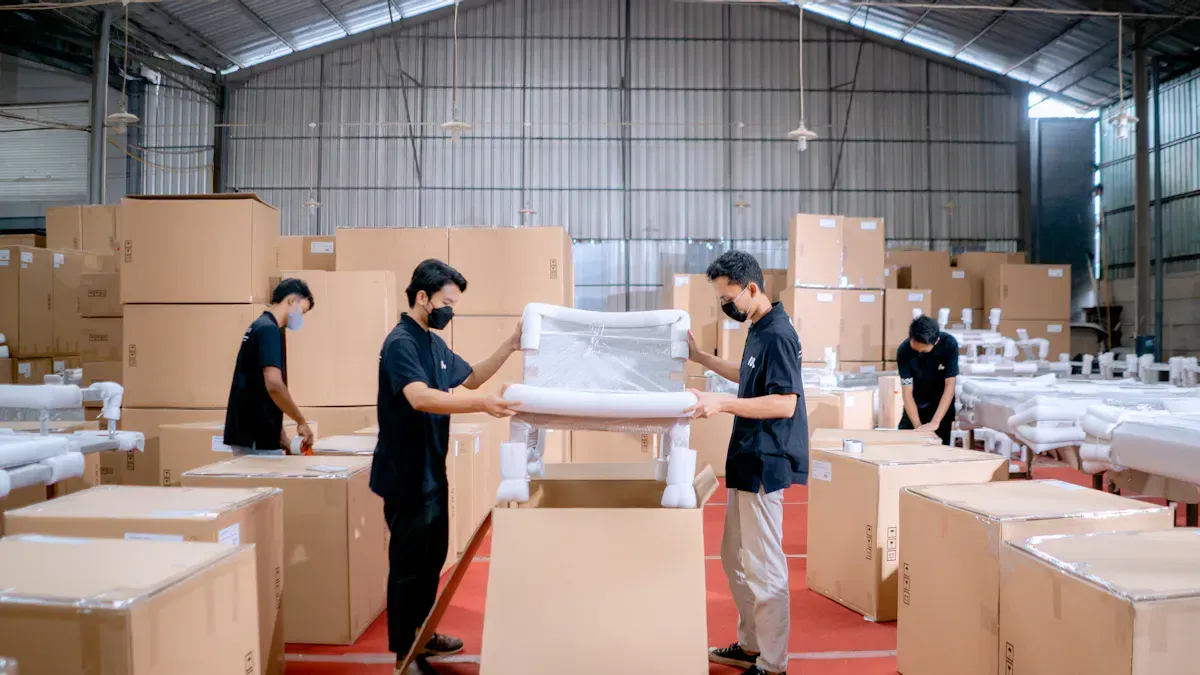
Sibolla Building’s supply network packs parts tightly and uses strong protection. The team arranges parts to use all the space. You get tough packaging that keeps cabinets safe during long ocean trips. This method stops damage and keeps your project on track.
You save more money when you order in bulk. Lower freight costs let you spend more on better materials or other needs. Knock-down design helps you manage your budget and get the best value from your procurement process.
Knock-Down Design: Improving Flat-Pack Efficiency
You can make shipping easier and cheaper by improving flat-pack efficiency for custom cabinets. Sibolla Building gives you smart ways to save space and keep your cabinets safe during shipping. You get cabinets that are simple to put together and arrive safely.
Reducing Package Volume
Component Arrangement
You can make boxes smaller by putting cabinet parts in a smart way. Modular and flat-pack designs let you stack panels, shelves, and doors close together. This way, there is less empty space in each box. You can fit more cabinets in each container. Many brands changed their furniture to use flat-pack packaging. Compare actual quotations and project records before claiming a percentage improvement.
- Stack panels and shelves flat to use less air.
- Match box sizes to pallets so you do not waste space.
- Use modular parts that fit together well.
Tip: Always check how parts are arranged before packing. This helps you use all the space and keeps shipping costs down.
Labeling and Organization
You can make building cabinets easier by labeling and sorting each part. Sibolla Building uses clear labels and good instructions for every box. You get boxes with parts sorted by type and room. This system helps you find parts fast and makes fewer mistakes.
- Label each panel, shelf, and hardware piece.
- Group parts by cabinet type or room.
- Put step-by-step instructions in every box.
Note: Organized boxes save time and lower the chance of missing parts.
Material Selection
Lightweight Options
Picking the right materials helps you lower shipping weight and costs. Many makers use light materials for custom cabinets. These materials keep cabinets strong but make them easier to ship. You can see some common choices in the table below:
| Material | Properties | Typical Applications |
|---|---|---|
| HDPE | Great at stopping water, hits, and chemicals. | Outdoor cabinets, garage storage, utility shelving. |
| Expanded Foam PVC | Light, stiff, easy to cut, and good for laminates. | Decorative cabinet parts, inside panels, shelf inserts. |
| Polycarbonate | Very strong and clear. | Cabinet doors, equipment covers, protective inserts. |
| Acrylic | Very clear and smooth for a nice look. | Display cabinets, retail or showroom use. |
You can use these materials to make cabinets lighter and easier to move. Sibolla Building has many material choices, so you can pick what you need.
Durability Balance
You need to balance strength and weight when picking materials. Makers often use plywood for cabinet frames because it is strong and does not get wet easily. MDF is good for doors and panels because it is smooth and costs less. Many companies use both. They use plywood for strength and MDF for looks. This way, you get cabinets that last long and are still light for shipping.
- Use plywood for strong parts.
- Pick MDF for panels and doors to keep weight low.
- Mix materials to get the best mix of strength and cost.
Tip: Ask your supplier about material choices. You can get cabinets that fit your needs and budget.
Packaging Standards and Export-Grade Protection
Check ISPM 15 requirements for regulated solid-wood packaging. Fully processed packaging such as plywood can be exempt; confirm the destination rules, approved treatment and marking where applicable.
- Use heat-treated or cleaned wood packaging for shipping overseas.
- Make sure packaging has ISPM-15 stamps and papers.
- Pick strong boxes and pallets for extra safety.
Note: Following export rules stops delays and keeps your cabinets safe until they get to you.
You can make flat-pack efficiency better in Bulk Office Cabinet Procurement by using smart part arrangement, clear labels, light materials, and export-grade packaging. Sibolla Building helps you get cabinets that arrive safe, are easy to build, and save you money on shipping.
Knock-Down Design: Modular Components and Packaging
If you want to save money and time, use modular design and smart packaging in Bulk Office Cabinet Procurement. Modular standardization helps cabinets fit together and ship safely. Sibolla Building uses engineering to make sure all parts work together. This makes your project easier and helps you avoid mistakes.
Modular Components
Interchangeable Parts
You can use interchangeable parts to make cabinets easy to build. Each part, like panels, shelves, and doors, fits with other parts. You do not need special tools or skills. If a piece breaks, you can swap it out fast. This system lets you keep extra parts and cuts down on waste.
- You can order more of the same part if you need it.
- You can use the same hardware for different cabinet types.
- You can fix or change cabinets quickly on site.
Simplified Assembly
Modular design makes building cabinets simple. You get clear instructions and labeled parts. You put cabinets together step by step. Sibolla Building checks each part before shipping, so everything fits. This saves you time and lowers mistakes.
- You follow easy steps to build each cabinet.
- You do not need to guess where parts go.
- You finish installation faster and with fewer problems.
Packaging and Palletization
Compact Packaging
You need compact packaging to fit more cabinets in each shipment. Sibolla Building uses strong boxes that protect your cabinets from bumps and water. The team follows BIFMA-certified packaging rules, so your packages are safe. Compact packaging means less wasted space and lower shipping costs.
Pallet Optimization
You can pick different ways to load cabinets for ocean freight. Some companies use loose cartons, which fill the container well but take longer to unload. Others use palletized cargo, which is safer and faster to move with a forklift, but you lose some space because of the pallets.
| Technique | Advantages | Disadvantages |
|---|---|---|
| Loose Cartons (Floor Loaded) | Can fit more boxes into the container (maximizing space) | Takes longer to unload, higher labor costs, more damage risk |
| Palletized Cargo | Very safe, quick unloading with a forklift | Loses some space in the container due to pallets |
You can also stack boxes in different ways. Column stacking gives strong support for heavy loads. Brick stacking stops boxes from moving during shipping. Hybrid stacking uses both ways for the best results.
- Column stacking supports heavy loads.
- Brick stacking keeps boxes from moving.
- Hybrid stacking combines both for safety and strength.
Sibolla Building’s team plans the best way to load your cabinets. You get safe, organized shipments that arrive on time and in good shape.
Tip: Ask your supplier about packaging and pallet options. The right choice can save you money and protect your cabinets.
By using modular parts and smart packaging, you make Bulk Office Cabinet Procurement easier and cheaper. You get cabinets that are simple to build, safe to ship, and ready to install.
Knock-Down Design: Calculating Freight Savings

Image Source: pexels
You want to know how much you can save by choosing knock-down cabinets instead of assembled ones. You can use simple steps to compare the shipping volumes and costs. Sibolla Building has helped many clients see big savings by using this method.
Assembled vs. Knock-Down Volumes
Volume Comparison
You can start by measuring the space that each cabinet takes up. Assembled cabinets come in one piece. They take up more room in a shipping container. Knock-down cabinets come in flat boxes. You can stack these boxes and fit more into the same space.
Here is a simple way to compare:
| Cabinet Type | Volume per Unit (m³) | Units per 40′ Container | Container Fill Rate |
|---|---|---|---|
| Assembled | 0.45 | 60 | 95% |
| Knock-Down | 0.18 | 150 | 98% |
You can see that knock-down cabinets let you ship more units in one container. You use the space better and reduce the cost for each cabinet.
Tip: Always ask your supplier for the packing list and volume details before you order. This helps you plan your shipping and budget.
Cost Calculation
You can use the volume numbers to find your shipping cost per unit. First, get the total cost to ship one container. Then, divide that cost by the number of cabinets you can fit inside.
For example:
- Shipping cost for one 40′ container: $3,000
- Assembled cabinets: 60 units per container
- Knock-down cabinets: 150 units per container
Cost per unit:
- Assembled: $3,000 ÷ 60 = $50 per cabinet
- Knock-Down: $3,000 ÷ 150 = $20 per cabinet
You save $30 on each cabinet by choosing knock-down design. If you order 600 cabinets, you save $18,000 on shipping alone.
Note: These numbers are examples. Your actual savings may be higher or lower based on your cabinet size and shipping rates.
Real-World Examples
Project Case Study
Sibolla Building worked with a hotel developer who needed 1,200 custom wardrobes for a new project. The team first looked at shipping fully assembled wardrobes. They found that only 55 wardrobes fit in each 40′ container. The shipping cost per unit was $54.
The Sibolla team suggested a knock-down design. With flat-pack boxes, they fit 140 wardrobes in each container. The shipping cost per unit dropped to $21. The developer saved over $39,000 in total shipping costs.
The project also finished on time. The clear labels and instructions made assembly easy for the local team. There were no missing parts or delays.
Lessons Learned
You can learn from this case. Here are some key points:
- Always compare assembled and knock-down options before you order.
- Ask for detailed packing lists and container loading plans.
- Use suppliers like Sibolla Building who check and label every part.
- Plan for easy assembly on site with clear instructions.
Callout: You can use these steps in your own Bulk Office Cabinet Procurement process. You will save money, reduce risk, and keep your project on schedule.
You can see that careful planning and the right design make a big difference. Sibolla Building’s experience shows that you can achieve real savings and smooth project delivery.
Knock-Down Design: Procurement Implementation Steps
You can make your Bulk Office Cabinet Procurement easier by following simple steps. Sibolla Building helps you with every part of the project, from design to delivery. You get help with working with suppliers, checking quality, and planning shipping.
Supplier Collaboration
Working with your supplier closely gives you better cabinets. You should focus on these things:
- Pick quality first when choosing a supplier. Good cabinets last longer and look nicer.
- Choose suppliers with good customer service. Talking well helps you fix problems fast.
- Ask about ways to customize. You want cabinets that fit your project.
Design Feedback
Share your design ideas with your supplier early. Give clear feedback about cabinet sizes, finishes, and hardware. This helps the supplier match your needs and stops mistakes. Meet or call often to keep everyone updated.
Cost Analysis
Check costs at every step. Ask your supplier for detailed prices. Compare costs for different materials and designs. Keep vendor information in one place to track prices and suppliers easily. This helps you get the best deal for your order.
Quality Control
Check quality at every stage. Use these checkpoints to make sure your cabinets are good:
| Quality Control Aspect | Description |
|---|---|
| Quality assurance checkpoints | Check quality at many points during production. |
| Raw material sourcing | Know what materials go into your cabinets, like hardwoods or MDF. |
| Compliance with certifications | Make sure your supplier meets standards like KCMA or CARB2. |
| Final inspection processes | Ask for a full inspection before shipping. |
| Manufacturer transparency | Choose suppliers who share their quality rules and processes with you. |
Assembly Testing
Ask your supplier to test-assemble cabinets before shipping. This finds problems early. It also makes sure all parts fit and work well. Sibolla Building does a dry-fit and hardware test for every cabinet.
Packaging Checks
Check that packaging protects your cabinets. Look for export-grade boxes and pallets. Make sure packaging meets rules like ISPM-15. Good packaging keeps cabinets safe during long trips.
Logistics Planning
Planning shipping and delivery keeps your project on track. Centralized project management helps you avoid delays and mistakes.
| Evidence Description | Impact on Procurement Efficiency |
|---|---|
| Centralized vendor information allows for easy price comparison and supplier tracking | You can negotiate better prices and reduce costs for bulk orders. |
| Integration with inventory management software provides shipment tracking | You can track shipments and avoid bottlenecks, keeping your project on schedule. |
| Consolidation into a unified platform avoids fragmented systems | Your team gets the same up-to-date information, which increases efficiency. |
| Centralized data entry reduces redundancy | You reduce errors and keep data accurate, which is important for large orders. |
Container Loading
Plan how to load cabinets into containers. Work with your supplier to pick the best way, like palletized or floor-loaded. Good planning uses space well and keeps cabinets safe.
Schedule Coordination
Set a clear delivery schedule. Use project management tools to track shipments and deadlines. Sibolla Building’s logistics team helps you coordinate delivery and avoid delays.
Tip: Keep all your project data in one place. This makes it easier to manage orders, track shipments, and solve problems fast.
By following these steps, you can make your Bulk Office Cabinet Procurement process more efficient and reliable. Sibolla Building’s project management and logistics support help you save time, cut costs, and keep your project running smoothly.
Avoiding Common Pitfalls
When you order knock-down cabinets in bulk, you want to avoid mistakes. These mistakes can slow your project or cost more money. You can learn from other teams and use smart steps. This helps keep your project moving. Sibolla Building’s quality control system helps you avoid problems. You finish your project without trouble.
Assembly Complexity
Building cabinets may look easy, but small errors can cause big issues. You must balance simple steps and making cabinets work well.
Simplicity vs. Functionality
If you skip steps or rush, your cabinets may not be stable. Here are mistakes you should watch for:
- Not reading instructions. You might miss a step and make the cabinet weak.
- Not checking all parts first. Missing screws or panels can stop your work.
- Building on uneven floors. This makes cabinets crooked.
- Using wrong tools. This can break parts.
- Not making cabinets square. Doors and drawers will not line up.
- Tightening screws too much. This can ruin the threads and make joints weak.
- Skipping glue or dowels. These keep the cabinet strong.
- Not leveling before installing. Unlevel cabinets cause door and drawer problems.
- Not anchoring cabinets to studs. This can make cabinets unsafe.
- Rushing the job. You may miss important details if you go too fast.
Tip: Always read instructions and check all parts before you start. Take your time and use the right tools.
You can avoid problems by planning ahead. Choose and order cabinets early. Book installers before the cabinets arrive. Make sure the area is ready for installation. Talk with your supplier often to get updates and avoid surprises.
Packaging Oversights
You need strong packaging to protect cabinets during shipping. If you miss steps, cabinets can get damaged before they reach your site.
Transit Protection
Here are packaging mistakes that can cause damage:
- Not using enough anti-corrosion protection. Moisture can ruin cabinet parts.
- Lifting boxes the wrong way. This can cause dents or cracks.
- Not securing boxes tightly. Loose boxes can bend or break.
- Poorly sealed crates. Water can get in and damage cabinets.
- Incomplete packing lists. Missing parts can delay your project.
Sibolla Building uses export-grade packaging and checks every box before shipping. The team follows strict quality control steps to keep cabinets safe.
| Quality Control System | Purpose |
|---|---|
| Quality Management Systems | Make sure every shipment has good quality |
| Training Management | Teach staff how to pack and check cabinets |
| Audit Management | Find problems and fix them quickly |
| Supplier Quality Management Systems | Make sure suppliers meet high standards |
| Procurement Quality Control Guidelines | Give clear steps for quality checks |
Note: Always ask your supplier about their quality control process. Good checks help you avoid mistakes and keep your project on schedule.
By watching for these common pitfalls, you can make your bulk cabinet procurement smoother and more successful. Sibolla Building’s quality control system gives you peace of mind from start to finish.
You can make Bulk Office Cabinet Procurement better by using easy steps.
- Use automation to make your work faster and easier.
- Put all buying tasks in one place for more control.
- Look at what you spend to find ways to save money.
- Pick the best suppliers by using smart sourcing.
- Make clear rules and check how well suppliers do.
- Work together and link your systems for better results.
| Benefit | Description |
|---|---|
| Centralized systems | Let you see savings right away and help build trust. |
| Structured savings management | Makes it easy to track savings with clear goals. |
You can team up with Sibolla Building to get services that help you save money and work better.
Knock-Down Design FAQ
A knock-down cabinet comes in separate parts. You assemble it at your site. This design helps you save space during shipping and makes moving cabinets easier.
You can fit more flat-packed cabinets in each container. This reduces the cost for each unit. You also lower the risk of damage during transport.
No. You get clear instructions and labeled parts. Most people can assemble them with basic tools. Sibolla Building checks each part before shipping to make assembly easier.
You can pick from MDF, plywood, melamine, PET, lacquer, veneer, or solid wood. Each material has different strengths. Sibolla Building helps you choose the best option for your project.
Always check that your supplier uses export-grade packaging. Look for ISPM-15 stamps on wood packaging. Ask for a packing list and check for strong, sealed boxes.
Yes. You can order custom sizes, finishes, and hardware. Sibolla Building offers many options to match your project needs.
Most orders take 4 to 8 weeks. The time depends on your order size and design. Sibolla Building gives you updates during production and shipping.
You get installation guides, spare parts, and on-call help. Sibolla Building’s team supports you from delivery to final installation.