Tile suppliers should be compared through identified offers that connect actual products, formats, batch appearance and installation evidence. A collection photograph or quotation total can leave several different selections behind the same descriptive name. The buyer needs those objects and their applicable records visible before deciding which response is ready for an order commitment.
For a project buyer, the immediate decision is whether competing offers answer the same tile and application scope, or require another identified review. Suppliers provide actual product and supply information. Designers establish appearance and layout intent, while qualified project personnel confirm the applicable site and installation requirements.
Build the comparison around the exact offered selection and its area allocation. Keep retained appearance, product evidence and installed-system acceptance distinguishable. This guide assumes no universal variation grade, grout joint, waste allowance, friction threshold, reorder match, price or delivery period for an unknown tile package and destination.
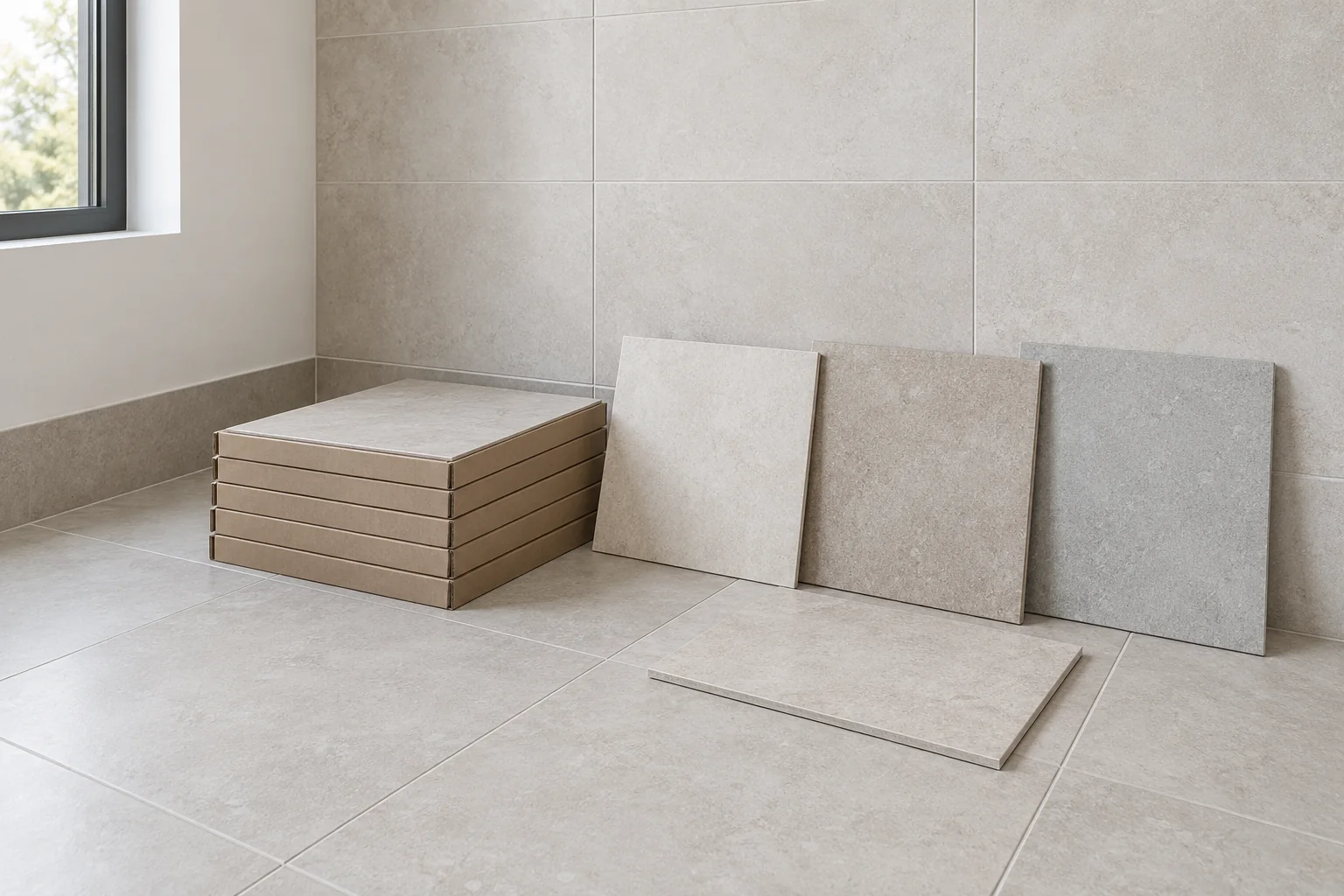
AI-generated tile-supply context illustration; no actual supplier, material identity, inspected order or accepted floor performance is represented.
Which tile suppliers are answering the same product scope?
Identify each actual offered selection
Give the enquiry an area and product reference, actual material or construction identity, selected finish and relevant document revision. Ask each supplier to identify the selection it proposes. A shared decorative collection name cannot establish that two replies cover the same tile, edge, format or application.
Use the tile sourcing category to frame the enquiry. Attach the intended areas and scope, then request the supplier’s identified response. A category page does not establish an actual product’s factory, stock, test evidence, commercial terms or acceptance for the project.
For natural-stone selections, retain the actual material and relevant finish or processing information. A ceramic appearance reference and a stone product can ask different questions despite similar decorative language. Keep their identities clear rather than compare names or photographs as if they described interchangeable constructions.
Make included objects and differences visible
Record the actual sizes, finish, edge and relevant trim or accessory objects included in each offer. Identify what another party provides and what remains assumed. A quoted tile area can leave transitions, special pieces or installation-related objects outside the supplier’s response.
Ask a proposed alternative to list the actual differences beside its identity. The buyer should locate what changes in appearance, format, construction, evidence or application before deciding whether the offer is acceptable. A response described as equivalent should not hide those separate comparison objects.
Retain the quantity units, area allocations and calculation basis used by each reply. Identify provisional quantities and the party responsible for confirming them. A similar total does not establish that suppliers included the same format, area or separately required object in the offered package.
What sample and batch records should tile suppliers provide?
Identify what the reference actually represents
Retain the relevant physical samples and state whether they represent a design direction, a particular product or material proposed for supply. Ask the supplier to identify their relationship with the offered selection and available batch information. A convenient sample cannot prove the complete appearance range of an unidentified delivery.
For gray tile selections, retain the actual style, finish and relevant comparison conditions. A single color name can describe several appearances. The buyer should approve the actual relationship and scope rather than assume all products described as gray are visually equivalent.
Use the offer register to expose the independent fields needed for a meaningful comparison.
| Offer input | Record to retain | Comparison question | Confirmation owner |
|---|---|---|---|
| Actual product | Material, style, finish and current identity | Are replies describing the same object? | Supplier and buyer |
| Format and included parts | Applicable sizes, edges and companion pieces | Which complete scope is offered? | Supplier and designer |
| Batch appearance | Identified sample and relevant supply linkage | What does the reference represent? | Supplier, buyer and designer |
| Area and quantity | Units, allocation and calculation basis | Which application and amount are compared? | Designer and responsible project team |
| Product and installation evidence | Actual configuration and applicable records | Which requirements are addressed? | Makers and appointed reviewers |
| Change and receiving | Identity, exclusions and disposition route | How will the accepted selection be preserved? | Buyer and coordinator |
An unresolved field should stay attached to the decision it prevents. The register organizes enquiry information without declaring a supplier qualified, a batch uniform or the complete installed package accepted.
Keep variation and batch linkage distinguishable
Ask which appearance information applies to the actual product and what it represents. A stated variation description can help the design discussion without identifying every piece or supply batch. Keep the retained reference, observed range and offered material linkage as separate records.
If another batch or product is proposed, obtain its identity and appearance response before extending the earlier decision. A similar named finish can leave another visual relationship unreviewed. The supplier should describe the actual alternative without promising that a later order automatically matches the retained specimen.
Retain relevant identifiers and sample records for later comparison. Ask what supply allocation the seller can actually confirm and record its limitations. This article does not supply a universal single-lot guarantee, batch reservation, overage percentage or replacement-stock promise for every supplier.
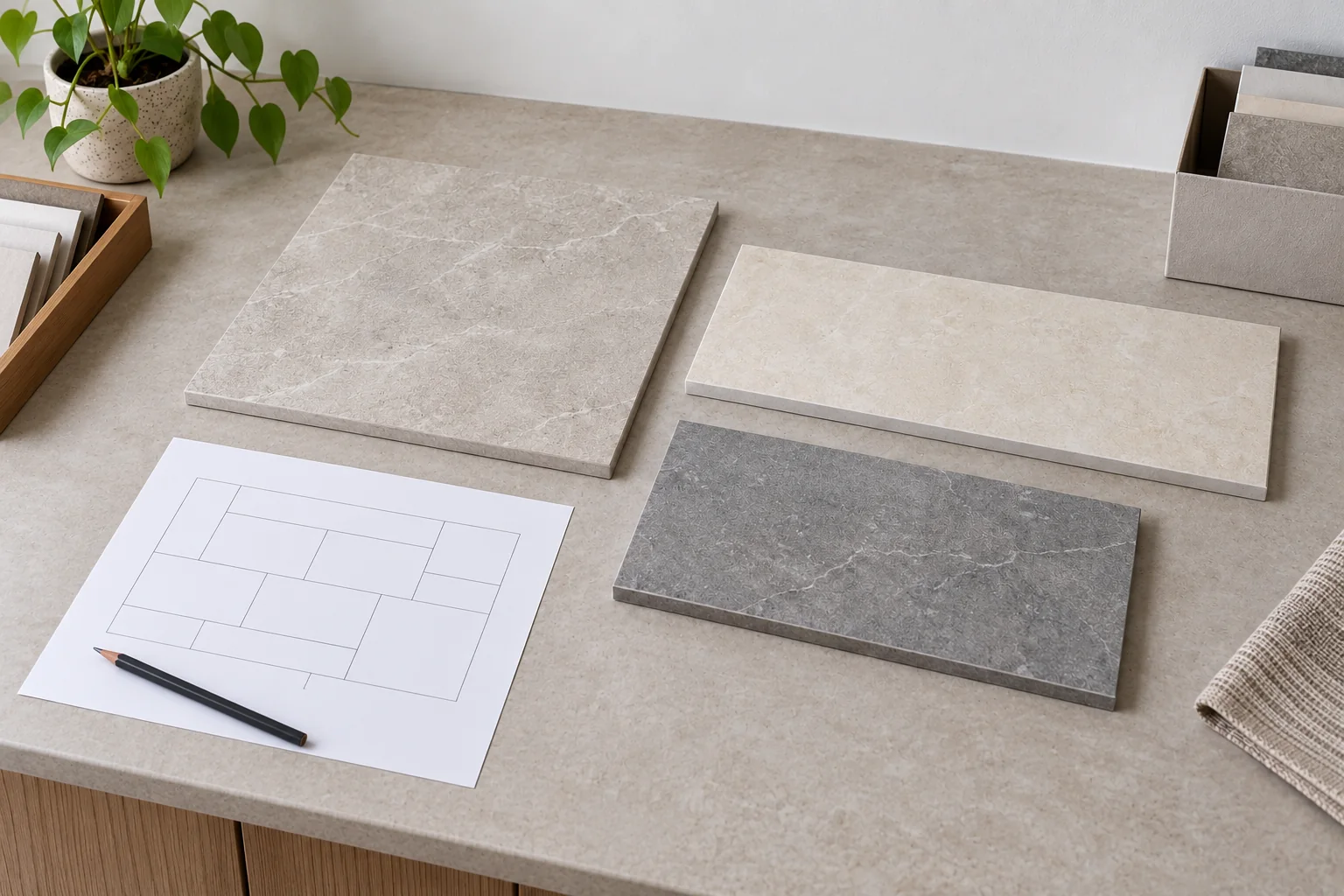
What should formats and companion pieces establish?
Compare the applicable geometric objects
Ask tile suppliers for the offered product’s size and edge information alongside the layout used for project review. Identify nominal descriptions and the actual geometric information required for comparison. A catalog format name can support selection without establishing every supplied dimension or installation relationship.
For subway tile enquiries, retain the actual rectangular product, finish and intended arrangement. A familiar visual style does not settle the edge, format or layout. Ask the supplier and responsible installer which information the selected configuration needs before an alternative is treated as equivalent.
Where several formats share an area, identify their actual relationship and relevant manufacturer information. A repeating pattern symbol can leave the proposed pieces and joints unconfirmed. Keep the maker and installation response with the selected products rather than invent a universal layout or dimensional allowance.
Identify complete module and trim scope
For glass tile selections, obtain the actual construction, supplied form and relevant mounting information. A sheet-like sample can contain several objects requiring their own review. A broad glass label cannot establish the complete backing, module or installation conditions of an unidentified offer.
Identify applicable trim, corner, edge and transition pieces beside the field tile. Ask which actual products are offered and what relationship the designer must approve. Similar names or finish descriptions cannot establish a dimensional or visual match to every companion object.
If a size, edge or module changes, locate the affected layout, quantity and installation questions. Obtain the relevant response before a revised product name reaches the order file. A matching color photograph cannot preserve geometry that the actual alternative does not share with the accepted selection.
Which application and installation evidence should tile suppliers identify?
Define the actual intended use
Give suppliers the destination, area and relevant application information needed for the enquiry. Ask appointed project personnel to identify applicable acceptance criteria. A broad compliant description cannot establish which requirement or configuration an actual product record addresses at an unidentified site.
For bathroom tile applications, identify the actual position, selected tile and relevant wet-area interfaces. A pleasing room image can leave another surface or complete construction unreviewed. Retain product and project responsibilities separately rather than treat one tile document as acceptance of the whole bathroom.
For outdoor tile applications, state the actual exposure, site and intended use for the responsible reviewers. An exterior label or rough-looking finish cannot establish every applicable requirement. Keep the selected product evidence and site comparison connected without transferring a universal friction or weather threshold.
Review the actual tile assembly and conditions
Request the product and installation information applicable to the exact tile, setting components and relevant substrate. Give those records to the responsible installation reviewers with actual site inputs. A tested tile can leave mortar, grout, support or another adjoining object outside its evidence scope.
Read each report or classification for the product, method, configuration and conditions it covers. Ask the supplier to explain applicability where the offered selection differs. A recognizable standard name or laboratory logo cannot establish that every variant in a collection carries the same evidence.
If a material is distinctive or its dimensional appearance differs from another offered product, obtain selected-maker and installation confirmation for that actual construction. Do not infer an exemption from project or assembly requirements. The buyer needs the applicable response, without prescribing universal grout widths, mortar coverage or installation procedures.
What should a represented mock-up and care record resolve?
Bound the visible acceptance question
Choose a represented observation around a named uncertainty: appearance range, pattern, joint relationship or adjoining finish. Identify the actual tiles, layout and relevant components used. A sample can resolve one visible question while leaving the complete product, site or installation evidence unconfirmed.
For marble tile selections, retain the actual material and supplied-finish references where they govern the comparison. An attractive small specimen can leave the full represented range unreviewed. Ask which actual selection and conditions the appearance observation covers before using it for release.
Record any stand-in or difference between the mock-up and proposed supply. A favorable comment should state its scope rather than approve an unidentified replacement by implication. An image of the observation cannot become measured friction, water absorption, strength, durability or installed-system acceptance evidence.
Keep material-specific care distinguishable
For wood-look porcelain selections, retain actual product identity and applicable care information rather than infer construction from the image’s grain. Similar appearance language can conceal a different material. The operator needs records for the actual supplied product and installed arrangement.
Ask relevant makers and the operator to assess the proposed routine for the selected tile, grout, treatments and adjoining materials. Identify unresolved compatibility questions before handover. A tile-care response should not silently approve another coating, joint or surrounding surface.
This guide supplies no universal cleaner, sealer, chemical resistance or maintenance interval. Retain the applicable product limitations and responsible response with the actual selection. A decorative material sample cannot establish that an unidentified routine preserves every condition behind the accepted evidence.
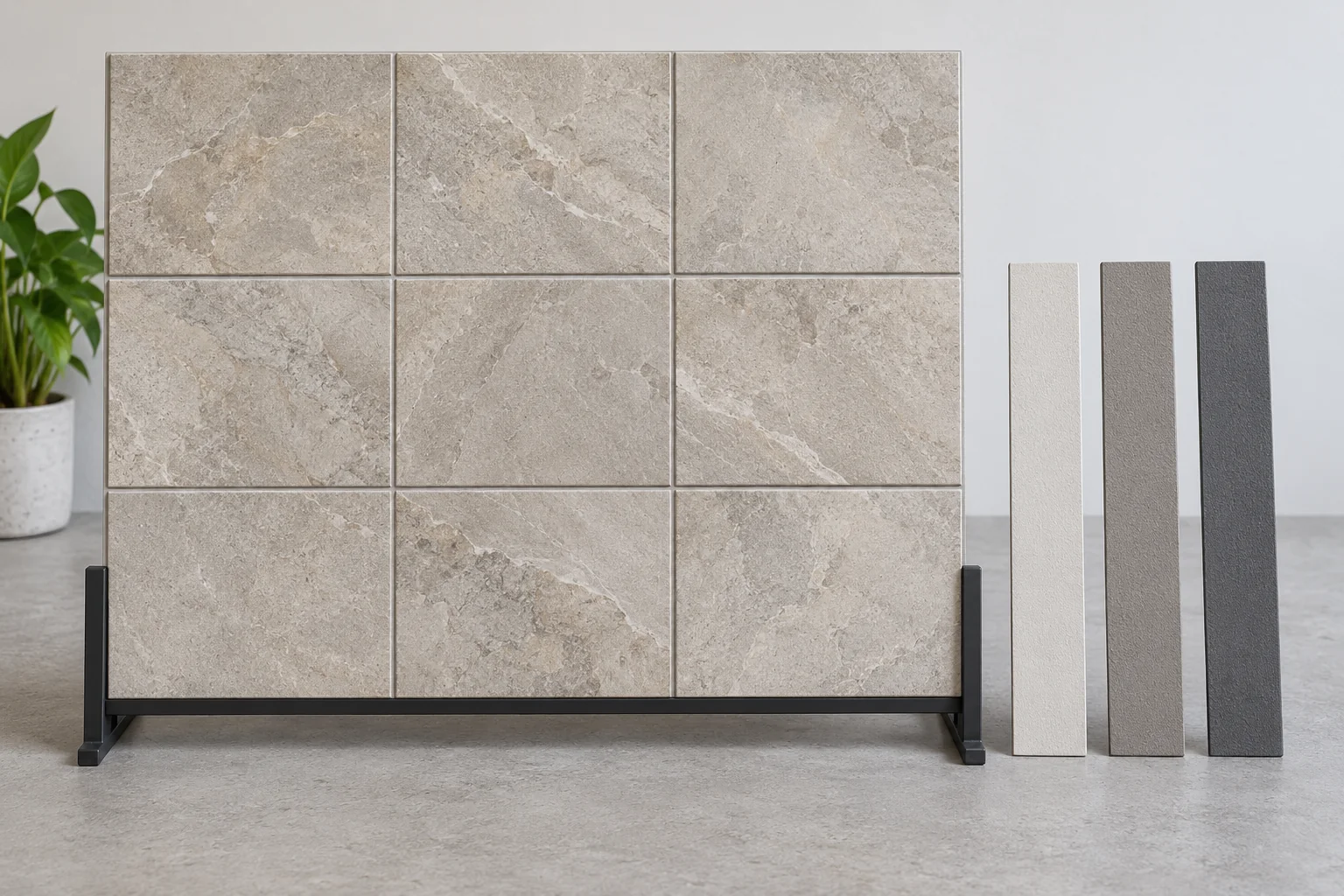
How should delivery preserve the compared offer?
Retain product and area allocation identities
Agree with tile suppliers how selected tiles, batch or format identifiers and companion objects remain traceable through delivery. Keep the actual order scope and area allocation with those records. Similar-looking pieces should not be distributed solely by appearance before the accepted product linkage is available.
Use the supply coordination context to establish who receives, checks, stores and transfers the package. Ask the supplier to explain its actual proposed protection and relevant evidence. A padded carton cannot establish available stock, a complete delivered order or a transport-test result.
Compare relevant delivered identities, included objects and visible condition through the agreed receiving process. Retain affected packaging and observations when a discrepancy appears. A correct total tile count cannot close a changed finish, format or component that formed part of the reviewed offer.

Reconcile changes before installation
Ask the responsible team to identify changed products, area allocations or relevant site conditions before they become undocumented substitutions. Give actual information to the supplier and appointed reviewers. The response should locate which appearance, geometry, evidence or installation decision needs reconsideration.
For whole-house material coordination, connect the active tile references with current room and adjoining-work records. A changed level or surface should reach the reviewer whose decision it affects. Shared scheme or programme approval cannot establish every product and installation prerequisite.
Retain the accepted product documents, applicable installation responses and agreed commercial scope together. Confirm actual terms directly where they affect the purchase. A technically useful comparison should not become an invented supplier commitment on price, availability, delivery, replacements or customer outcomes.
When are tile suppliers’ offers ready for order approval?
Match differences with their decision consequences
Read actual products, batch appearance, formats, area allocations and applicable evidence together. A preferred supplier or visual direction can advance while another prerequisite remains open. Define the commitment permitted by the available records and identify the selection or area needing another response.
| Observed condition | Comparison gap | Buyer response | Evidence needed next |
|---|---|---|---|
| Replies use the same style name for different constructions | Product scope is uncertain | Reconcile actual identities | Current offered-product records |
| Sample has no clear supply relationship | Appearance approval is unbounded | Obtain the relevant linkage and limits | Identified reference and offered selection |
| Alternative format or trim changes the layout | Earlier geometry may not apply | Review the affected combination | Revised pieces and installation response |
| Evidence describes another variant or application | Acceptance coverage is unclear | Obtain applicable product/project review | Requirement and configuration-linked records |
| Delivered product or allocation differs from the offer | Accepted package identity is incomplete | Review before distribution or use | Order, area and receiving linkage |
| Required records and scoped responses agree | Defined offer release can be considered | Authorize the identified package | Retained basis and change route |
These actions organize procurement without assigning universal appearance grades, dimensional tolerances, installation values or contractual remedies. The actual products, project and agreement determine applicable criteria and release authority.
Leave a usable basis for later comparison
At handover, retain installed product and area identities, accepted appearance references, relevant documents and required review outcomes. Keep any open condition and owner beside the permitted release. A collection photograph cannot replace the evidence needed when another supply or material is proposed later.
For repairs or extensions, identify the actual retained product and available material before requesting a comparison. Ask the supplier what can be established and what remains uncertain. A matching descriptive name cannot prove that a later offer shares the earlier batch, format or installation evidence.
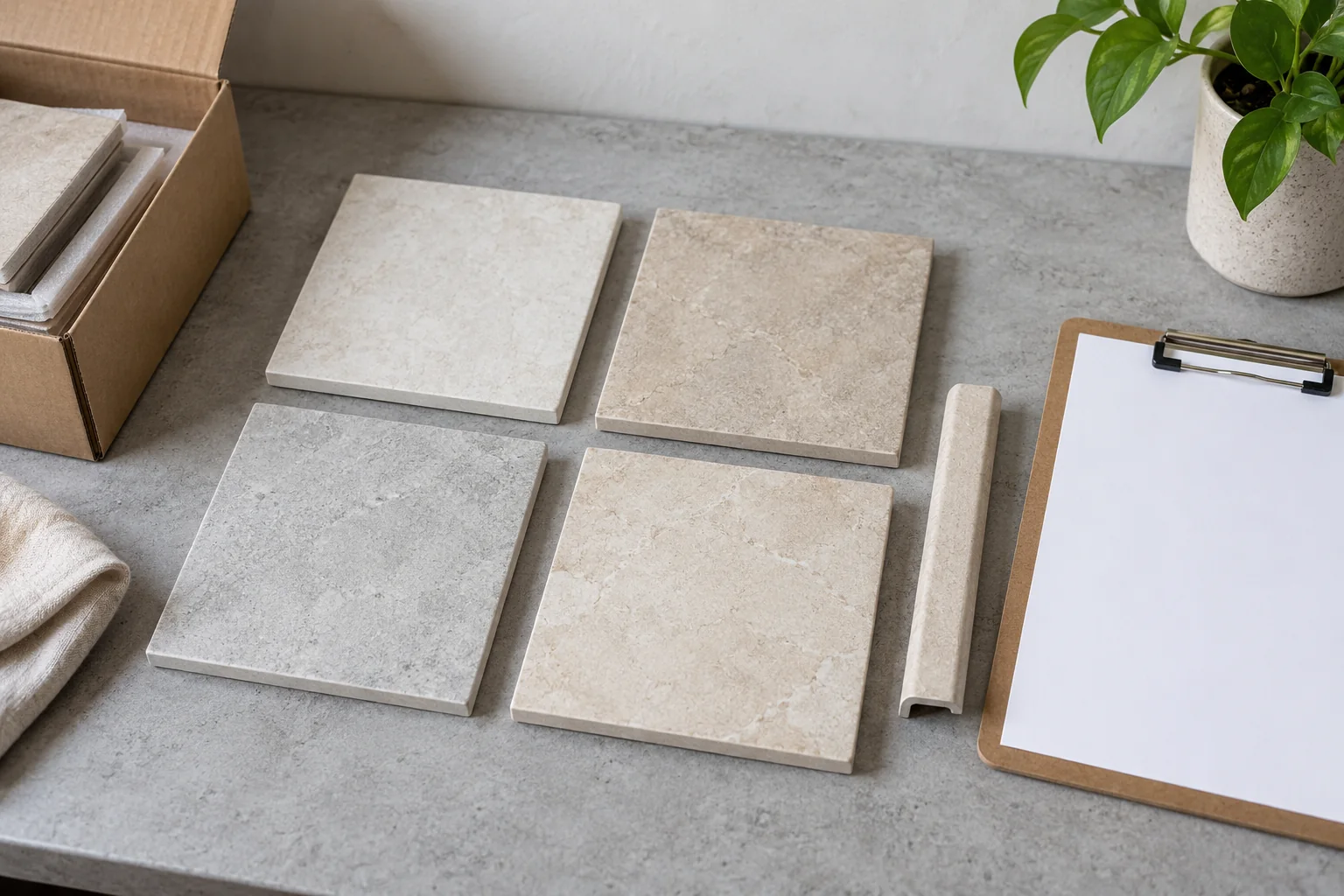
Conclusion
Compare tile suppliers through actual identified offers and the records relevant to their proposed application. Keep construction, formats, included objects and sample-to-supply relationships visible. A shared collection name, attractive photograph or similar quotation total cannot establish that suppliers answered the same complete scope.
Read product evidence and installation responses for the configurations and conditions they cover. Bound represented appearance observations, then reconsider affected decisions when batch appearance, formats, components or site inputs change. Preserve product and area identities through receiving, and retain applicable care and technical records for the actual installed selection.
Prepare the tile and area schedule, retained references, identified supplier differences and open evidence or installation questions when requesting tile sourcing support. Ask which complete selection the supplier offers and what confirmation permits its release. That creates a clear, retrievable basis for procurement and later comparison.
Frequently Asked Questions
Does the same tile collection name make offers equivalent?
Identify actual construction, finish, format, included objects and applicable evidence in each reply. A shared name can conceal different selections. Retain the stated differences and relevant comparison response before treating the offers as the same scope.
Can a variation description identify the supply batch?
Ask what the description and retained sample represent, and obtain the actual offered-product linkage. Appearance information can support the design decision without identifying every piece or batch. Keep its scope and supply confirmation distinguishable.
Does an approved mock-up establish all installation evidence?
Record the actual products, layout and conditions represented by the observation. It can resolve its stated visible question while technical or site requirements remain open. Obtain applicable selected-product and project responses separately where required.
Will a later tile order automatically match the first one?
Identify the original product, retained material and the actual alternative before comparison. Ask the supplier what batch, format and appearance information can be confirmed. A matching descriptive name does not guarantee unchanged supply or installation scope.