Soft furnishings should be released from an identified room schedule that connects each selected object with its use, appearance reference and physical interfaces. A coordinated mood board can leave construction, dimensions, mounting, care and allocation undecided. The buyer needs those separate records reconciled before a preferred scheme becomes a committed package.
For a residential or commercial interior, the immediate decision is which item and room combinations are ready to freeze and which depend on another input. Designers establish the intended arrangement and comparison context. Suppliers identify their offered objects, while responsible project personnel confirm applicable installation and performance requirements.
Build the schedule around actual room variants and named components rather than an assumed complete set. Keep decorative approval, product evidence and site acceptance distinguishable. This guide assumes no universal fabric durability, fire rating, acoustic result, price, delivery period or cleaning method for an unknown package and destination.
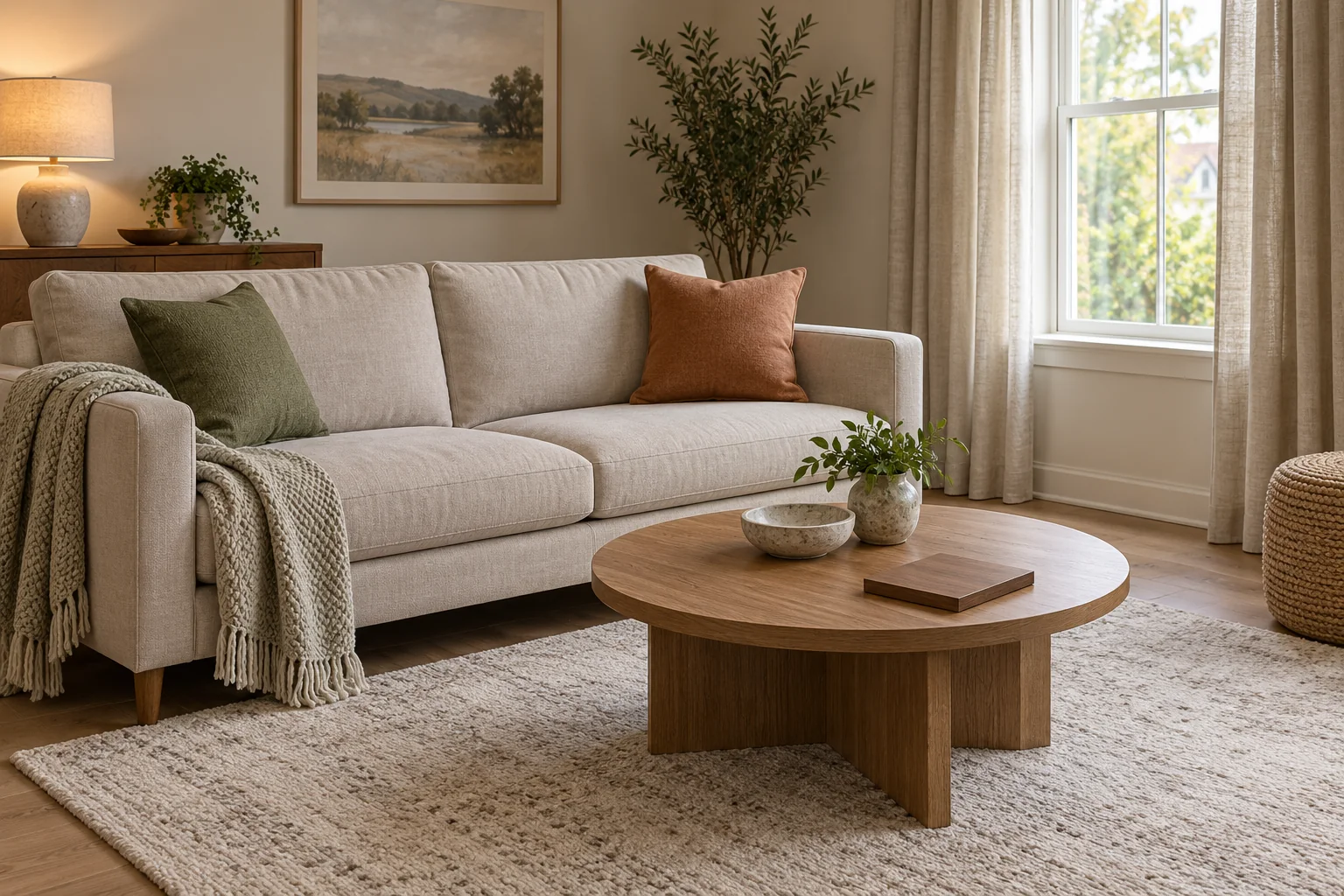
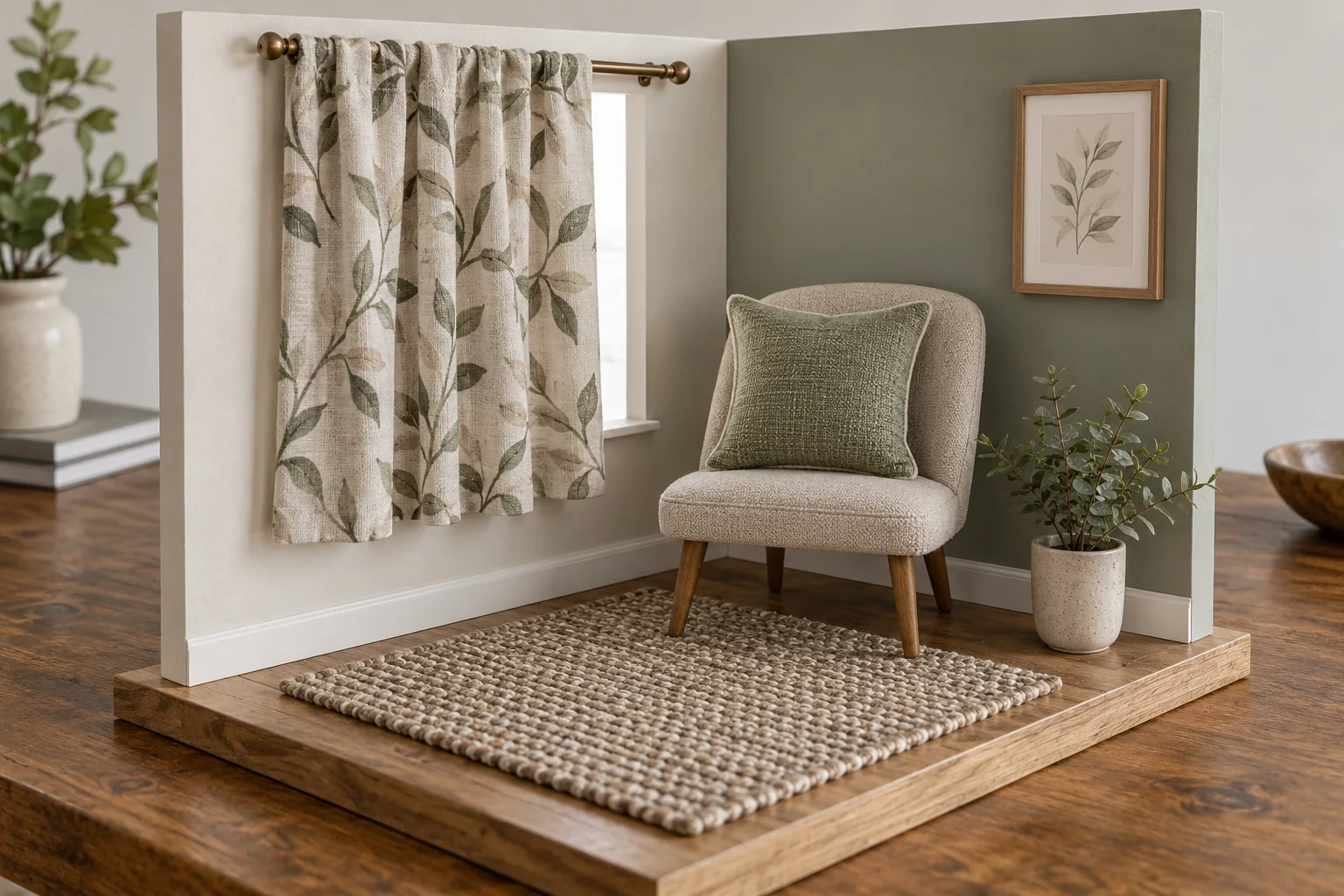
AI-generated room illustration; no actual supplied scheme, material identity, measured performance or completed project is represented.
Which soft furnishings belong in the room schedule?
Give each object an identifiable selection
Assign an item reference to the proposed furnishing, maker, exact product or construction and relevant document revision. Record fabric, finish, included parts and room allocation where they affect the decision. A coordinated collection name can communicate intention without identifying what the supplier must actually deliver.
Use the soft furnishing category to frame the enquiry. Attach the intended rooms and item schedule, then ask the supplier to identify its offer. A category route does not establish that every pictured object is included, available or technically accepted for the project.
Distinguish the complete furnishing from its separately selected material or accessory. A cushion cover, filling and complete cushion can be different supply objects. Keep the actual construction and included-component boundary visible before an appearance sample is taken as approval of a fully assembled item.
Locate room variants and exclusions
Record which room, zone or position uses each item. Similar room names can conceal different openings, furniture arrangements and operating conditions. Identify the actual variation so one favorable scheme observation is not silently applied to rooms that the review did not represent.
For hotel furniture coordination, connect each furnishing with its relevant room type and use. A repeated guestroom image can support early direction without confirming every actual variant. Retain the room and product relationship before quantities are accumulated into a broad package request.
State which items and work another party provides. The schedule should expose omitted tracks, mounting components, fitted surfaces or installation responsibilities where relevant. A broad furnishing quotation cannot establish a complete interior scope when the supplier and contractor are still relying on different assumptions.
What use and evidence should the soft furnishings schedule record?
Define the actual application
Identify the intended position, ordinary use and surrounding conditions for each selection. A textile chosen for a decorative vertical surface can ask different questions from a frequently handled furnishing. The responsible designer should identify the actual requirement rather than transfer a broad commercial-grade label between unrelated applications.
For sofa and upholstery relationships, retain the actual assembled object and relevant textile selection. A flat swatch can show appearance without establishing seams, edges, filling or complete furniture performance. Keep the fabric and whole-object evidence linked but distinguishable.
The schedule register makes the independent inputs and their owners visible.
| Schedule input | Record to retain | Decision it supports | Confirmation owner |
|---|---|---|---|
| Item identity | Actual product, construction and included parts | Define the offered object | Supplier and buyer |
| Room and use | Position, variant and intended task | Establish the application | Designer and project team |
| Appearance | Retained sample and comparison conditions | Bound the finish decision | Buyer and designer |
| Interfaces | Relevant dimensions, mounting and adjoining records | Resolve dependent work | Suppliers and responsible installers |
| Evidence and care | Applicable product documents and limitations | Review actual use and handover | Makers and appointed reviewers |
| Allocation and change | Room/item linkage and revision owner | Preserve the accepted scope | Buyer and coordinator |
An open field should remain attached to the item and commitment it prevents. The register is an information basis, not proof that a product meets every criterion or that the supplier has accepted the complete package.
Separate product evidence from visual language
Request evidence for the actual material or complete item and the requirement it must address. Identify the relevant method, configuration and document scope with the responsible reviewer. A document title, collection logo or attractive finish description cannot establish acceptance for every product carrying a similar appearance.
An abrasion test result addresses its stated textile and method; it should not be translated into a complete furnishing lifetime. Ask which other construction, application and care conditions matter to the proposed object. Keep a larger cycle figure distinguishable from a supported service-life or whole-product claim.
For wall-panel selections, keep the complete assembly and installation conditions with any performance question. A fabric or facing specimen can leave the backing, joints and mounting unrepresented. Each selected item should carry the evidence appropriate to its actual role.
How should soft furnishings be compared across rooms?
Retain a sample with a defined role
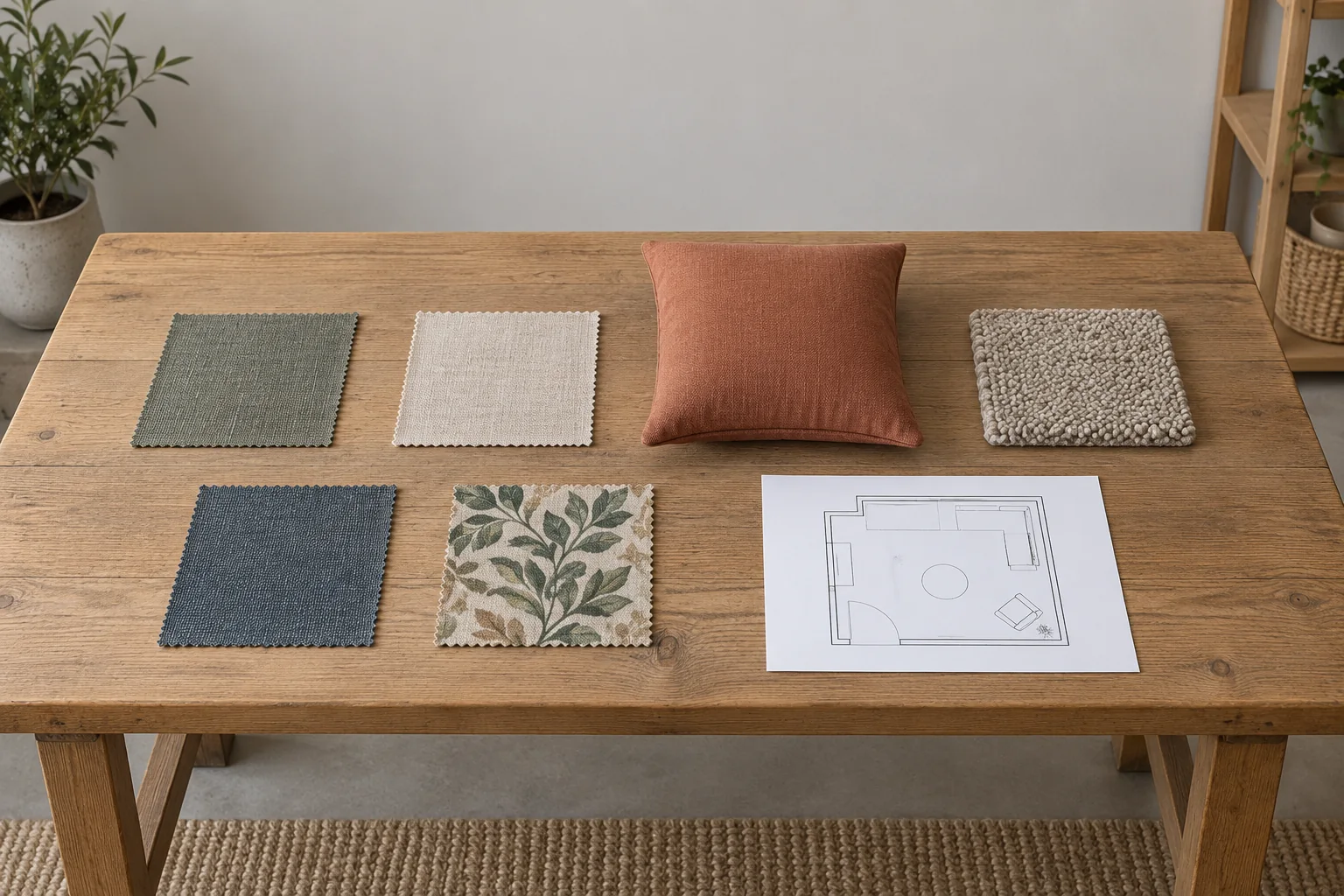
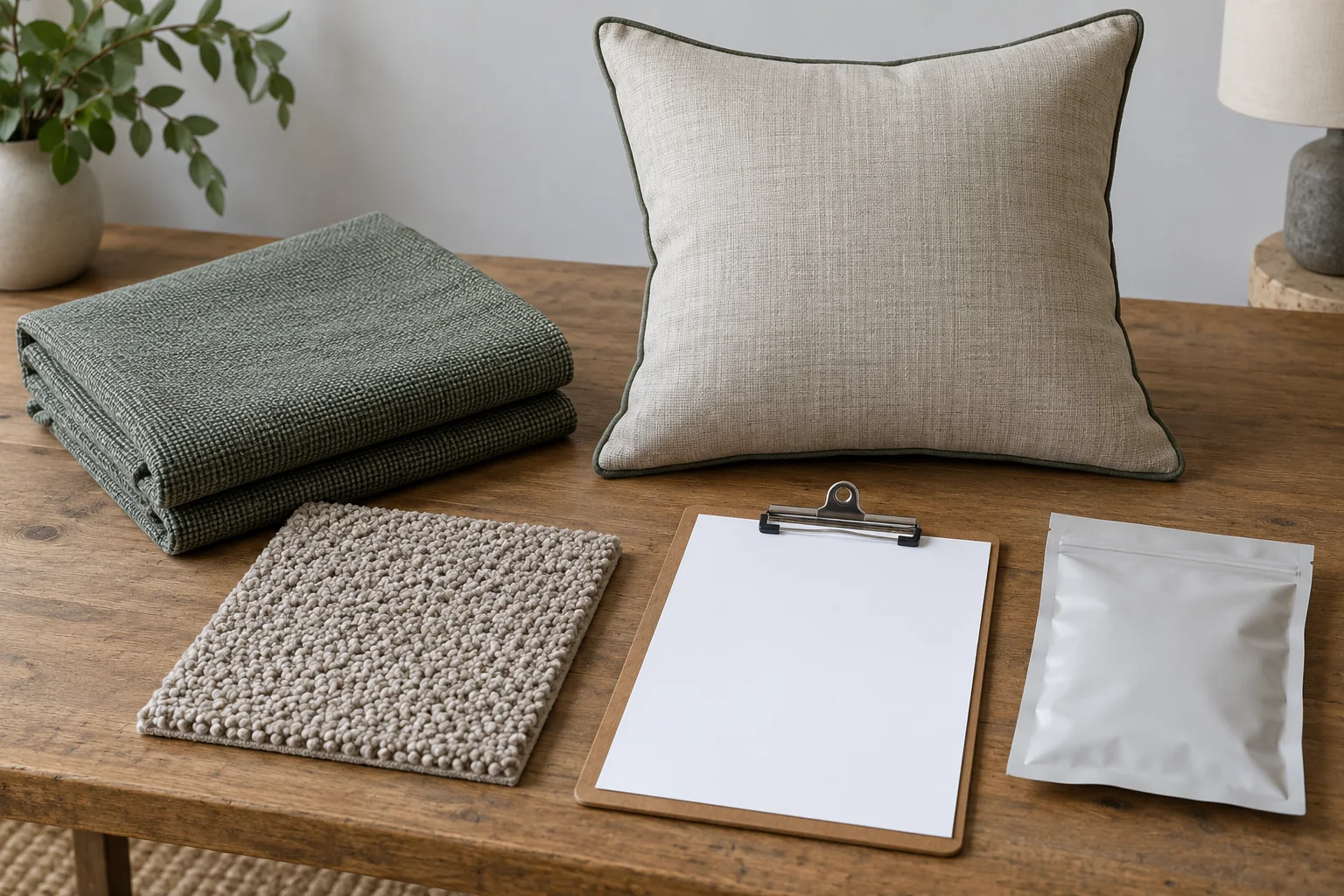
Identify which physical sample represents the selected color, texture, pattern and construction. State whether it is an appearance reference, development specimen or example of the complete proposed object. A convenient material piece can remain useful without approving a different filling, heading or backing by implication.
Agree the comparison conditions relevant to the appearance decision, including adjoining references and represented lighting. Keep the sample identity and observation together. A screen image can communicate direction while leaving the physical appearance and actual room relationship open to the buyer and designer.
For carpet appearance coordination, retain the relevant product, layout and viewing context. A small pile specimen need not show the full pattern or installed orientation. Ask which additional representation the designer needs before the floor relationship becomes part of the frozen scheme.
Make variation an explicit decision
Identify where the design requires a consistent appearance and where a deliberate difference is acceptable. A single color name can describe several materials with different texture or sheen. The buyer should approve the actual relationship rather than assume that matching descriptions require identical visual outcomes.
If a supplied sample changes, retain the old reference and explain which item or room uses the replacement. Ask whether the change affects construction, dimensions, evidence or care as well as appearance. A new swatch should not enter the order file without its revised complete-object identity.
For lighting within the furnished room, identify the relevant selected fixtures and observation states where they govern the finish comparison. A daylight sample discussion can answer a different question from the proposed evening arrangement. Preserve the scope rather than invent a universal color-matching threshold.
Which physical interfaces need a common revision?
Connect furnishings with actual geometry
Give relevant suppliers and installers the current opening, finished-face and furniture references. Identify where dimensions remain provisional and who confirms them. A scheme can look coherent while a furnishing still depends on a ceiling recess, usable tabletop or finished-floor position that another trade has not settled.
For curtains and window treatments, identify the actual rail, heading, operating form and opening relationship. Fabric choice alone cannot define the occupied stack or complete mounting arrangement. Keep the furnishing selection connected to the applicable supplier and site records.
Coordinate doors and windows where their movement or finished geometry affects the room arrangement. An opening symbol should not replace the actual installed relationship. The responsible reviewers need current information before a changed reveal or operating envelope inherits an earlier furnishing decision.
Keep different support objects separate
For bed and bedside relationships, record the actual furniture and occupied references where they affect selected textiles or room accessories. A repeated decorative arrangement cannot establish fit for every bed variant. Identify the affected item before a changed furniture specification reaches production.
For chairs and their furnished use, distinguish a loose decorative textile from the complete selected seat construction. A cushion or covering sample should not imply compatible attachment, supported loading or unchanged furniture function. Give the appropriate makers the actual intended combination for review.
Where an installed furnishing conceals or uses a support, define the relevant backing and mounting responsibility. Procurement should request the selected-product and site comparison without inventing universal anchors, adhesive methods or support values. A beautiful surface is a different object from the accepted installation behind it.
How should the schedule govern sequencing and protection?
Identify what the next commitment requires
Link each relevant furnishing release to the input it actually depends on. A complete-item order can require a different confirmation from retaining an appearance option. The coordinator should identify which site or design record authorizes dependent work and which object remains provisional.
For whole-house interior coordination, connect furnishing revisions with the actual furniture and finish schedule. A changed floor, opening or room allocation should reach the supplier whose item it affects. Shared programme approval cannot establish that every dimensional or installation prerequisite has been accepted.
If only part of the room schedule is ready, issue its accepted scope explicitly. Identify the item references and unresolved dependencies before discussing the remaining package. A partial approval should not become implicit permission to apply one furnishing or finish decision throughout every room.
Protect identities as well as surfaces
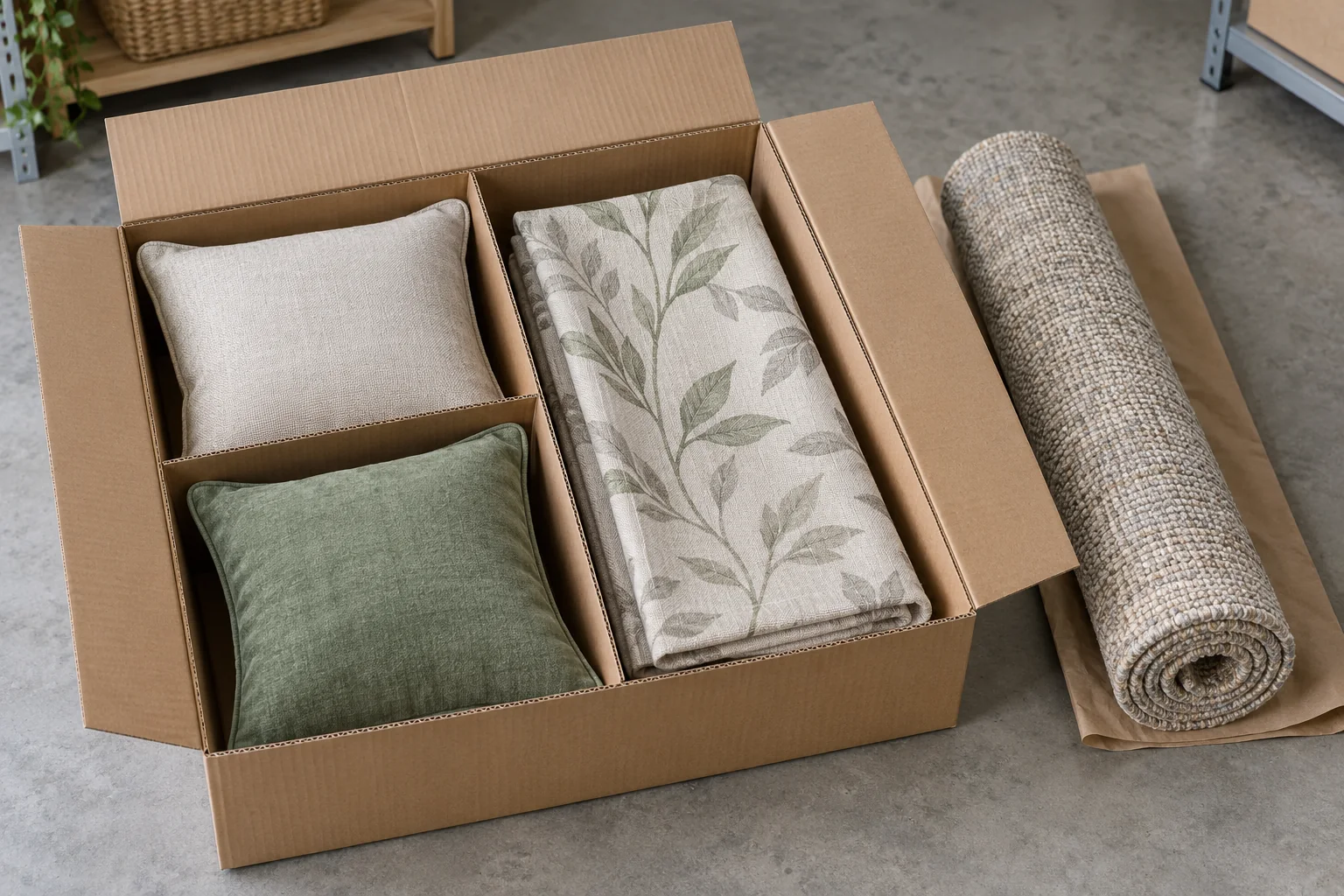
Ask the supplier how complete soft furnishings, material references and included accessories will remain identifiable through packing. A folded textile, shaped cushion and rigid finish specimen can require different protection objects. Obtain the actual proposed method without inferring transport performance from a padded example.
Use the supply coordination context to define who receives, stores, allocates and passes the objects to installation. Keep the actual room/item identities available before packaging labels disappear. A matching quantity total cannot establish that the correct construction or variant reaches each position.
Agree how later trade occupation and storage will be reviewed against the selected products’ applicable information. The buyer should retain the protection responsibility and relevant limitations. This guide does not prescribe a universal covering, conditioning duration or storage environment for a mixed furnishing package.
Which receiving and care decisions preserve the soft furnishings scheme?
Compare the identified items with the schedule
Record receiving observations against the actual room, item and accepted product reference. Compare relevant visible condition, construction identity and included parts through the agreed process. Several objects can share a decorative palette while belonging to different complete selections, so visual resemblance should not replace that linkage.
For office furniture and furnishing arrangements, keep the relevant workstation or area identities with the delivered items. A furnishing intended for one task can require another review when allocated elsewhere. Ask which actual room and use the acceptance file covers before redistributing the package.
When a discrepancy appears, retain the affected object, packaging identity and observation before requesting a disposition. State what is known without inventing a defect cause or supplier history. The response should identify whether appearance, construction, allocation or another requirement needs reconsideration.
Make care usable for the actual materials
Request operation and care information for the selected soft furnishings and materials. Identify which product each record covers and what responsibility the operator must retain. A generic room cleaning sheet can leave a textile, coating, filling or adjoining finish outside its actual scope.
Ask the makers and operator to assess the proposed routine against the complete selections. Keep unresolved material compatibility questions visible at handover. A removable-looking cover cannot establish a washing procedure, and an upholstery-care response should not silently approve a floor or panel treatment.
For later replacements, retain the installed item and room identity with the proposed alternative. Ask which differences affect appearance, construction, interfaces or care. Confirm actual replacement terms directly rather than assume that a coordinated original package guarantees continuing stock or interchangeable components.
When can the soft furnishing schedule be frozen?
Match each finding with its affected release
Read item identities, actual rooms, appearance references, physical interfaces and product evidence together. A preferred scheme can advance while one dependent object remains open. State what the available records permit and which item or room still needs a response before the next commitment.
| Observed condition | Approval gap | Buyer response | Evidence needed next |
|---|---|---|---|
| Mood board substitutes for complete-item identity | Offered construction is undefined | Reconcile included objects | Current item and component schedule |
| One room observation covers unrepresented variants | Application scope is unclear | Locate the actual differences | Room-linked selection and observation |
| Replacement swatch changes more than appearance | Earlier configuration may not apply | Review the complete alternative | Revised construction and relevant evidence |
| Finished geometry remains provisional | Dependent furnishing interface is open | Hold the affected commitment | Accepted site and selected-product references |
| Care or allocation information is missing | Handover basis is incomplete | Obtain the item-specific response | Applicable records and room identities |
| Required references and scoped decisions agree | Defined schedule freeze can be considered | Authorize the identified package | Retained basis and change route |
These actions organize procurement without assigning universal dimensions, test values, material life or contractual remedies. The actual selections, project and agreement determine applicable criteria and release authority.
Leave the accepted scheme retrievable
Retain the frozen item schedule, room variants, sample identities and accepted interface responses with the relevant product documents. Identify open conditions and owners beside the permitted commitment. A decorative portfolio image cannot replace the records needed when an operator asks what was actually supplied.
Preserve later changes against the same room and item references. The next reviewer should locate the difference and the response without reconstructing the original design conversation. A useful freeze records a defined selection and its conditions, with a clear route for changes that affect those conditions.
Conclusion
Freeze soft furnishings against identified room and item combinations, with complete construction and included-component boundaries. Keep retained appearance references connected to actual use, physical interfaces and applicable product information. A coordinated palette or mood board cannot establish every dimension, performance or installation condition within a mixed package.
Release the commitments supported by the available records while keeping unresolved dependencies attached to their owners. Reconcile changes to rooms, samples, construction or adjoining work against the affected items. Preserve product and allocation identities through receiving, and give the operator care information appropriate to the actual selections.
Prepare the current room schedule, complete furnishing identities, retained samples and open interface or care questions when requesting soft furnishing sourcing support. Ask which objects the supplier offers and which confirmation permits the schedule freeze. That gives procurement and later replacement a clear, retrievable basis.
Frequently Asked Questions
Does a mood board establish the complete furnishing order?
Identify each actual product, construction, included components and room allocation. A mood board can communicate appearance direction while those supply objects remain unresolved. Retain the accepted scope before treating the scheme as a complete purchase specification.
Can one room approval cover every furnishing variant?
Record which rooms and conditions the observation represents. Different openings, furniture, operation or product configurations can leave another relationship unreviewed. Obtain the affected confirmation rather than extend a general scheme comment to every variant.
Do higher abrasion cycles establish longer furnishing life?
Read the tested textile and method with its scope. A cycle result alone cannot predict complete furnishing lifetime. Construction, application and care need their own applicable evidence and review where they matter to the selection.
What should follow a changed furnishing sample?
Identify whether it changes appearance, complete construction, interfaces, evidence or care. Keep the revised product and room linkage with the relevant review response. A similar color description should not allow an undefined alternative to inherit the earlier release.