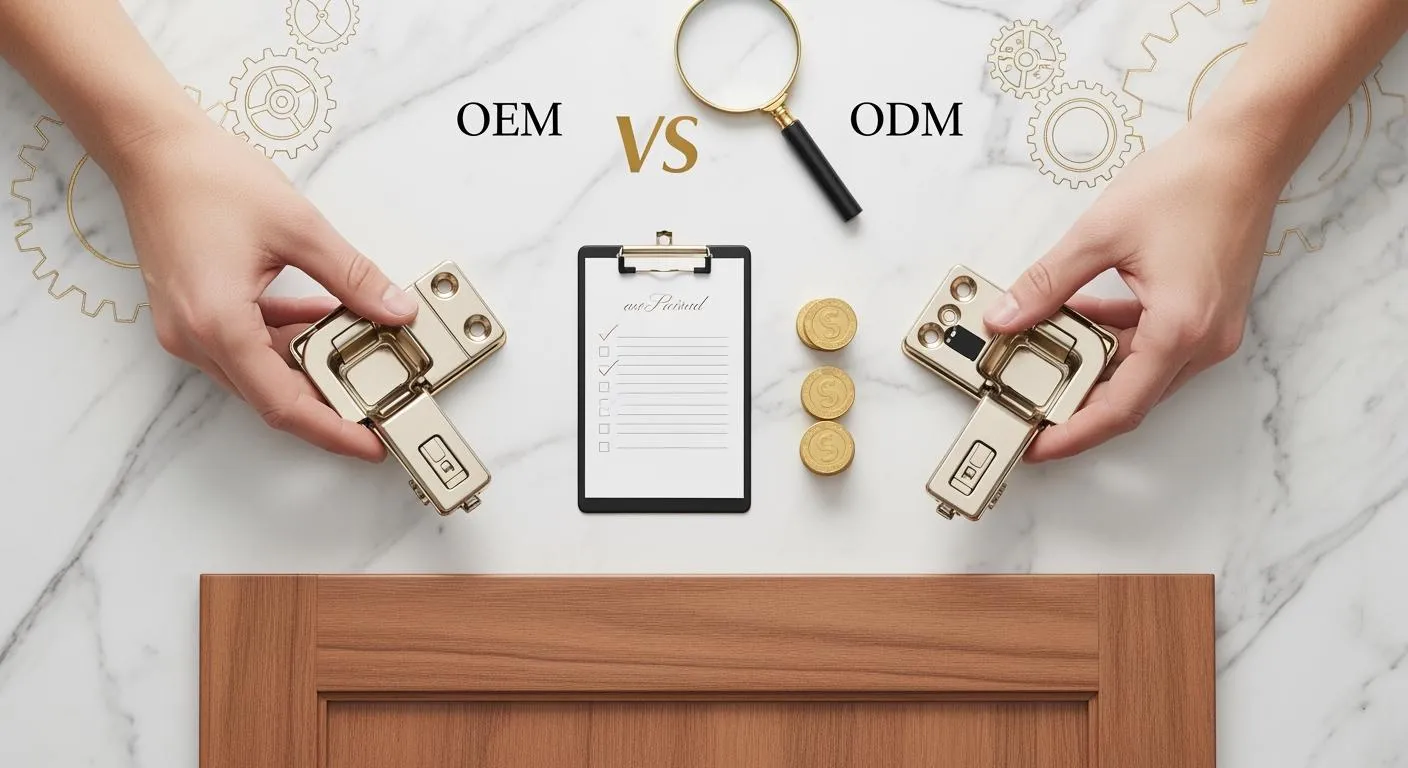
For cabinet hardware such as concealed soft-close hinges, OEM and ODM describe different design and supply arrangements. Neither is inherently cheaper or higher quality. I compare the actual hardware model, testing, tooling rights, quantities, lead time and complete quotation. See Sibolla Building for related project options.
Key Takeaways
- Know the difference: OEM lets you control the design. ODM gives you faster choices but less customization.
- Pick OEM for special projects: If you want unique features or sizes, OEM is best for custom hardware.
- Choose ODM for speed and price: ODM delivers faster and costs less at first. It works well for regular projects.
- Sibolla Building uses both models: They help you with design and production. You can pick what fits your project.
- Quality checks matter: Both OEM and ODM are tested to make sure hinges last and work well.
- Confirm the supplier’s engineering scope and retain any project engineering needed for approval.
- Plan your project carefully: Think about your budget and time. Decide if OEM or ODM is right for your cabinet hardware.
- Get support all the way: Sibolla Building helps from design to installation. They make your project go smoothly.
OEM vs ODM: Definitions & Key Differences
OEM Model Overview
You might hear about OEM when shopping for custom cabinet hardware. OEM means Original Equipment Manufacturer. In this way, you give your own designs and details. The factory follows your plans and makes products that fit your needs. You get to control the design and keep the technical information. The OEM process has a few steps:
| Step | Description |
|---|---|
| Design | You make the design to match your project. |
| Prototyping | The factory makes samples so you can check how they work and fit. |
| Manufacturing | The factory uses special tools and machines to make your order. |
OEM lets you change many things. You pick the materials and finishes you want. You spend more time and money at first, but you get hardware that fits your cabinets just right. You also keep the rights to your design, so it stays yours.
ODM Model Overview
ODM means Original Design Manufacturer. Here, the factory owns the design and plans. You pick from products already made and can change small things, like the brand or color. You do not have to pay for design or special tools. The ODM process is quicker and safer for you.
| Characteristic | Description |
|---|---|
| Manufacturer’s ownership of design | The factory makes and owns the main design. |
| Limited customization options | You can change the brand, color, or box. |
| Reduced time-to-market | You get products fast since they are already made. |
| Lower financial risk | You do not spend a lot on design or making new tools. |
ODM is good if you want hardware that works well without spending much time or money. You get good products that are ready to use. You can spend more time on branding and selling instead of making new designs.
Application in Custom Cabinet Hardware
When you look at OEM and ODM for custom cabinet hardware, you see big differences. OEM lets you make hinges and hardware that fit your needs. You can pick every part and get something special. ODM gives you fast access to designs that already work. You can add your logo or pick a color, but the main parts stay the same.
For concealed soft-close hinges, OEM is best if you want special features or sizes. ODM is better if you need quick delivery and normal performance. Many builders use ODM to save time and money. You can pick the way that matches your project. Sibolla Building uses ODM to give cabinets with good soft-close hinges and easy setup. This helps you finish jobs faster and keeps the quality the same.
Tip: If you want special hardware for a unique job, OEM gives you full control. If you need fast and easy solutions for many cabinets, ODM is the best choice.
Sibolla Building’s Approach
You want cabinets that fit well and last long. Sibolla Building helps you by using both OEM and ODM. These models give you choices for design, speed, and quality. You pick what works best for your project.
Sibolla Building follows a clear process. You share what you need for your project. The team listens and gives you good hardware ideas. You can use ready designs or change them a bit. You do not wait a long time for new designs. You save time and get cabinets that match your plans.
You get help from a trusted manufacturer. Sibolla Building checks each batch for quality. You get cabinets that work well every time. The hinges and hardware move smoothly. You do not worry about parts breaking or causing delays.
Agree which engineering tasks Sibolla supports and which remain with the project designer. Supplier advice does not automatically replace the responsible engineering team.
Ask which design, tooling and development charges are included. ODM does not universally eliminate those costs.
You can ask for special designs. Sibolla Building lets you pick unique features, colors, and materials. Your cabinets look different. You build a brand that others cannot copy. This gives you more power to set prices and win jobs.
Here is a table showing how Sibolla Building uses OEM and ODM to make your cabinet hardware better:
| Benefit | Explanation |
|---|---|
| Faster product launches | You get new designs quickly without waiting for long assembly lines. |
| Exclusive designs | You can ask for special features, colors, and materials that fit your project. |
| Stable quality | Every batch meets strict standards, so you get consistent results. |
| Better cost control | You pay less for development and get good prices for your cabinets. |
| Engineering expertise | You receive help from skilled engineers without hiring your own team. |
| Unique offerings | Your cabinets have features that set them apart from others in the market. |
You notice the difference when you compare OEM and ODM. Sibolla Building uses both models to give you cabinets that are strong, stylish, and affordable. You get an easy process from design to delivery. Your cabinets come ready to install, saving you time and lowering risks.
Note: Sibolla Building’s way helps you finish projects faster, control costs, and get cabinets that fit your needs. You get help at every step, from design to after-sales service.
Cost Factors for Custom Cabinet Hardware
Design & Development Costs
Design and development costs are important for custom cabinets. If you pick OEM, you must pay for your own designs. You pay for drawings, samples, and engineering checks. This gives you control, but costs more at first. You also wait longer before making the cabinets.
ODM uses designs that are already made and tested. You do not pay for new drawings or tools. This saves money and helps you start faster. You can change small things like color or logo. You do not pay big costs to make new designs.
Customization Impact
Changing things affects your budget. OEM lets you change every part, like hinge size or finish. This is good for special projects, but costs more. You pay for special molds, extra checks, and longer wait times. ODM gives you standard choices with some changes. You can pick finishes or add your logo. The main design stays the same. This keeps costs low and makes delivery faster.
Tip: OEM is best for special features. ODM is good for reliable hardware at a lower cost.
Sibolla Building’s Value
Sibolla Building helps you balance cost and changes. You can use OEM or ODM. The team listens and helps you pick the best way. You do not need to work with many suppliers. You do not worry about hidden costs. Sibolla Building gives design help, checks, and inspections. This lowers mistakes and saves money when installing.
Tooling & Production Expenses
Tooling and production costs depend on your order size and model. OEM needs special tools and molds for each new design. This costs more, especially for small orders. ODM uses tools that are already made. You do not pay extra for these.
Volume & Efficiency
Order size changes your cost per item. Big orders help you save money. Factories make more parts at once. This is called economies of scale. You get better prices when you order more.
| Key Aspect | Details |
|---|---|
| Order Volume | Bigger orders mean lower costs for each item. |
| Material Selection | Zinc alloy die-casting is strong and good for big jobs. |
| Production Process | Standard ways of making parts save time and money. |
Sibolla Building lets you order small or big amounts. You can buy stock products in small orders. You can order lots for big projects. You get updates on your order in real time. This helps you plan and avoid delays.
- Big orders let customers see how production is going.
- All customers get real-time updates.
- Small orders are allowed for stock products.
- Order sizes can be small or big for any project.
Long-Term Value & Support
Long-term value is important for your project. OEM suppliers often build long partnerships. You get help, custom solutions, and support for future jobs. ODM suppliers focus on fast delivery and standard products. You get good hardware, but the relationship is more about buying and selling.
After-Sales Service
Sibolla Building gives strong support after you buy. You get help with installation and clear manuals. The team answers your questions quickly. You get spare parts and trims if needed. You also get help managing your project, so you do not solve problems alone.
| Feature | OEM Support | ODM Support |
|---|---|---|
| Customization Options | Custom sizes, finishes, and packaging | Custom sizes, inside parts, finishes |
| Project Support | Full support for many uses | Flexible help for project batches |
| Long-term Relationship | Partnerships for ongoing support | Usually more about buying and selling |
Sibolla Building’s service makes buying easier. You work with one team from start to finish. This saves time, lowers risk, and keeps your project on budget.
Note: Picking the right model helps you control costs and get support. Sibolla Building’s way makes the process easy and efficient.
Cabinet Hardware Testing and Quality Assurance
Image Source: pexels
Testing Standards for Hinges
You want hinges that work well and last long. Manufacturers use strict tests to check concealed soft-close hinges. These tests show if the hardware will last in your cabinets.
| Test area | Specify |
|---|---|
| Cycle testing | Actual method, test load and acceptance criteria |
| Corrosion | Applicable method, duration and rating |
| Load | Door mass, hinge quantity and mounting conditions |
| Operation | Defined soft-close and adjustment criteria |
| Dimensions | Approved drawing and manufacturing tolerance |
Durability & Cycle Life
Durability is important for cabinets. Cycle life testing shows how long hinges last. Hinges are opened and closed thousands of times. Manufacturers check if hinges stay strong and smooth. Corrosion resistance testing shows if hinges survive in wet places. Load bearing tests show if hinges hold heavy doors without breaking.
Tip: Ask for hinges that pass cycle life and corrosion resistance tests. These tests show the hardware will last in real projects.
OEM vs ODM Testing Methods
OEM and ODM factories use different ways to test hardware. OEM factories follow your custom needs. They test each batch to match your design. ODM factories use their own designs and test to meet industry rules. Both use advanced tests to make sure hardware is safe and works well.
Manufacturers use many tests to check hinges:
| Test Type | Purpose |
|---|---|
| SGS Testing and Certification | Checks materials and how products are made. |
| SGS CP65 Testing | Makes sure products follow California rules for dangerous substances. |
| REACH Compliance Assurance | Checks that products do not have harmful chemicals. |
| Surface Treatment Testing | Checks if coatings last and look good. |
| Visual Inspection | Finds surface problems and checks if parts look the same. |
| Hardness Testing | Checks if hinges resist scratches and wear. |
| Film Thickness Testing | Checks if coatings are thick enough to protect. |
| Adhesion Testing | Checks how well coatings stick to metal. |
| Corrosion Resistance Testing | Tests for rust in tough conditions. |
You get hardware that passes these tests. OEM factories can add extra tests if you need special features. ODM factories use standard tests to keep quality steady. Both help you get safe and reliable cabinet hardware.
Sibolla Building’s Inspection Process
You want cabinets that fit and work right the first time. Sibolla Building uses careful checks for every cabinet and hinge before delivery. The team checks each part for quality and accuracy.
Pre-Assembly & Hardware Testing
Sibolla Building dry-fits each cabinet in the factory. The team installs hinges and hardware, then checks if doors open and close smoothly. They test soft-close mechanisms to make sure they work every time. Engineers check connection points and measure sizes. If they find problems, they fix them before packing.
You get cabinets with labeled parts and clear instructions. The team packs each cabinet to keep it safe during shipping. You receive hardware that passed cycle life, corrosion resistance, and load bearing tests. You save time during installation because cabinets fit and work as expected.
Note: Sibolla Building’s inspection process helps you avoid mistakes and delays. You get cabinets that meet strict standards and pass all key tests.
You see the difference when you compare OEM and ODM. Sibolla Building uses advanced testing and careful checks. You get cabinets that last longer and work better in real projects.
OEM vs ODM: Pros & Cons Table
Cost Comparison
You need to think about cost when you choose cabinet hardware. OEM gives you full control over design, but you pay more at the start. You pay for drawings, engineering, and special tools. These costs can reach $2,000 to $5,000 for each new design. You also need to order at least 200 pieces for each style. This can make your budget tight, especially for small projects.
ODM helps you save money. You do not pay for design or special tools. You can start with as few as 50 pieces. You get your hardware faster, usually in 30 to 45 days. This helps you finish your project on time. You also lower your risk because you do not need to keep a lot of extra stock. If you want to change small things, like the color or size, you pay a small fee. This makes ODM a smart choice for most projects.
Tip: If you want to keep costs low and avoid long waits, ODM is the better path for most custom cabinet jobs.
Mechanical Testing Comparison
SGS is a testing organisation and BIFMA develops furniture standards. Specify the relevant hinge method, model, loads and acceptance criteria instead of treating either name as a universal hinge test.
ODM uses standard tests that fit most needs. You get hardware that passes cycle life, corrosion, and load tests. You may not get as many custom checks, but you still get safe and strong hinges. ODM hardware often comes with a basic warranty. You get what you need for most homes, hotels, or offices.
Note: Both OEM and ODM can give you good quality. OEM is best if you need special tests or long warranties. ODM is best if you want fast, reliable results.
Summary Table
Here is a table to help you compare OEM vs ODM for cost and mechanical testing:
Indicative comparison only: confirm currency, date, specification and scope through current supplier quotations before budgeting.
| Factor | OEM Path | ODM Path |
|---|---|---|
| Lead Time | 60-90 days (custom engineering) | 30-45 days (catalog selection) |
| Initial Costs | $2,000-$5,000 per design | $0 (no design/tooling fees) |
| Minimum Order Quantity | 200+ units | 50-100 units |
| Customization Level | Full control (size, finish, features) | Limited (color, logo, minor tweaks) |
| Testing & Warranty | Custom SGS/BIFMA, 2-3 year warranty | Standard tests, basic warranty |
| Inventory Risk | Higher (large orders needed) | Lower (smaller orders allowed) |
| Delivery Speed | Slower (custom builds) | Faster (ready designs) |
| Cost Efficiency | Lower for small jobs, better for large | Higher for most projects |
You can use this table to pick the best model for your project. Think about your budget, timeline, and quality needs. Sibolla Building helps you choose the right path and supports you from start to finish.
Decision Guide for Project Managers
Budget & Quality Considerations
You need to balance your budget with the quality you expect. Start by looking at your project’s size and the level of customization you want. If you have a tight budget and need reliable hardware, you can choose standard designs. This helps you save money and get fast delivery. If you want special features or unique finishes, you may need to invest more at the start.
Clarify engineering responsibilities, tooling ownership and pricing. Supplier support and shared design platforms do not remove every engineering cost or guarantee a lower price.
Tip: Write down your must-have features and your budget. This helps you pick the right model for your project.
Project Scope & Timeline
You should match your choice to your project’s scope and timeline. If you have a large project with many units, you may want to use custom designs. This gives you full control over every detail. If your project is small or you need hardware quickly, you can use ready-made designs. This helps you finish on time and avoid delays.
Use this table to help you decide:
| Project Type | Best Model | Why Choose It? |
|---|---|---|
| Large developments | OEM | Full control, unique features |
| Fast renovations | ODM | Quick delivery, lower costs |
| Small batches | ODM | Volume pricing, easy ordering |
| High-end projects | OEM | Custom finishes, special hardware |
You can talk to Sibolla Building’s team about your timeline. They help you plan your order and keep your project on track.
Choosing Sibolla Building for Custom Cabinets
You get many advantages when you choose Sibolla Building for your custom cabinet hardware. You do not need to manage many suppliers. You get one team that handles design, production, and delivery. You receive cabinets that fit your space and pass strict quality checks.
Here are some key benefits you enjoy:
- You get engineering expertise without hiring your own team.
- You pay less for tooling because costs are shared across projects.
- You receive volume pricing, even for small orders.
- You get support from design to after-sales service.
- You save time with pre-assembled and tested cabinets.
You can trust Sibolla Building to guide you through the OEM vs ODM decision. The team helps you choose the best path for your budget, timeline, and quality needs. You finish your project with cabinets that look great and last long.
Note: When you work with Sibolla Building, you make smart choices for your project’s success.
You now know how OEM and ODM change cost, quality, and speed. Sibolla Building gives you help from experts and products you can trust. For what to do next, you can:
- Look at ways to customize with other partners.
- Check out marketing help like photos and info sheets.
- Find out how these services help hardware brands get bigger.
FAQ
You control the design with OEM. You choose from ready-made designs with ODM. OEM costs more and takes longer. ODM saves money and delivers faster.
You receive cabinets that pass pre-assembly checks. Engineers test hinges and hardware. You get clear instructions and labeled parts. This makes installation easier and lowers mistakes.
You can change colors, logos, and packaging. You cannot change the main design. ODM gives you quick options for simple changes.
You usually wait 4 to 8 weeks. The timeline depends on your project size and design choices. You get updates during production.
You get hinges that pass cycle life tests. Manufacturers open and close them thousands of times. This shows the hinges last in real use.
You save money with ODM. You do not pay for new designs or special tools. You can order smaller batches. This helps you control your budget.
You get help with installation. The team answers your questions. You receive spare parts if needed. You get ongoing support for your project.