
You start every luxury design project by asking for careful bookmatching and slab cutting. Bookmatching makes rooms look fancy and balanced. Good slab cutting helps the pieces fit perfectly. Picking the best supplier changes how your project turns out. Sibolla Building uses smart tools and skilled teams to help your ideas come true. Think about these things when you pick a supplier:
- Great marble makes luxury spaces look even nicer.
- Trustworthy suppliers help finish projects on time.
- Local experts know what kinds of stones people like.
Key Takeaways
- Bookmatching makes marble look nicer and more fancy. It gives any room a balanced and pretty style.
- Pick suppliers you can trust. This helps your project finish on time. It also makes sure you get good materials.
- Cutting slabs the right way stops gaps from showing. It helps the marble fit together well. This makes the design last longer.
- Look at the supplier’s past work to see their skills. This helps you know if they can do luxury designs.
- Ask for a dry-lay preview or a 3D picture. This lets you see how the marble will look before it is put in.
- Talk often with your supplier to avoid confusion. This keeps your project moving the right way.
- Always check for quality control steps. Look at inspection reports and papers to make sure the marble is good.
- Visit the site to check the slabs yourself. This helps you make sure they fit and look right before they are installed.
Bookmatching and Slab Cutting in Luxury Design
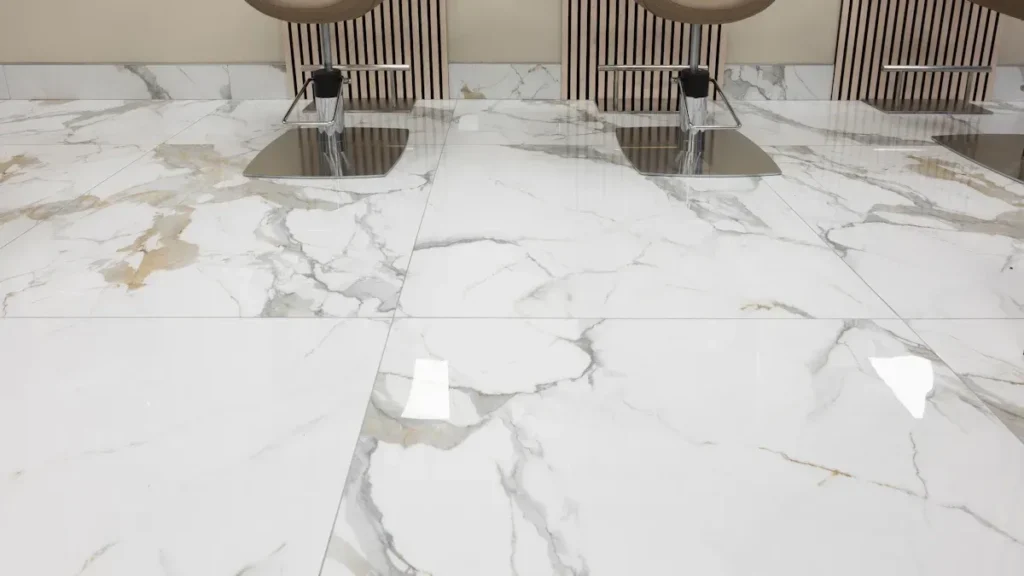
Image Source: unsplash
Bookmatching Defined
Bookmatching turns stone into something special. This happens when two slabs from the same block are placed side by side like pages in a book. The lines and shapes in the stone match up and look like a mirror. This makes rooms look fancy and exciting. Bookmatching is different from regular tiles because it stands out and looks more dramatic.
| Feature | Bookmatch Tiles | Regular Tiles |
|---|---|---|
| Aesthetic Appeal | Looks fancy and has matching lines | Looks simple and not as bold |
| Visual Flow | The design continues smoothly | The design is random and broken |
You can use bookmatching for walls, floors, and countertops. It takes good planning and careful work to do it right.
Slab Cutting Accuracy Explained
Slab cutting accuracy means each piece fits just right. There are no gaps or uneven spots. In luxury design, cutting the stone perfectly is important for looks and strength. It helps the stone last longer and stay strong. Here is what you get with accurate slab cutting:
- Slabs fit together with no gaps
- Surfaces are strong and last longer
- Seams look neat and smooth
- Less chance of breaking during installation
Experts use special CNC machines to cut the stone very carefully. Sibolla Building uses these machines to make sure every project looks great.
Why Precision Matters for Luxury Projects
Precision is very important in luxury design. Every stone is a little different. You need to plan and cut carefully to keep the design looking good. Even small mistakes can mess up the mirror effect or make problems you can see. Here is why you need to be precise:
- Stones are all different, so accuracy stops mistakes
- Small changes in thickness can show flaws
- Planning the lines keeps the design even
- CNC cutting and edge work make the stone look better
- Controlling the finish makes it look good in any light
- Doing things the same way every time keeps the project on track
Sibolla Building uses skilled workers and smart machines. This gives you perfect bookmatching and slab cutting every time.
Bookmatching Audit Criteria for Sibolla Stone
Image Source: unsplash
Pattern Continuity & Symmetry
Seamless Visual Flow
You want the marble slabs to look smooth together. Pattern continuity means the lines and colors move without stopping. Seams should be in places that are hard to see. This keeps the design neat and does not cut important veins. When you plan, seams become part of the look. Tight joints and careful work help make it seamless. Sibolla Building uses smart CNC machines and skilled workers. They make sure every joint fits just right.
Mirror-Image Effects
Mirror-image effects make rooms feel balanced and fancy. You put two slabs next to each other so their patterns match like a book. This makes the design bold and special. You must check that the veins and colors match on both sides. If lines do not match, you need to fix the layout. Sibolla Building’s team looks at every slab before putting it in. This makes sure the design is even and looks good.
Vein Alignment & Consistency
Multi-Slab Matching
You need to match veins across many slabs, especially in big rooms. Sibolla Stone uses the dry-lay process for this. The team puts all slabs out in the factory before sending them. You can see the whole design and check if the veins line up. Each slab gets a number so you know where it goes later. Inspectors check the background color and make sure the veins keep going. This helps you avoid problems at the job site.
Large-Scale Installations
Big projects need extra care. You must blend colors and match veins across lots of slabs. The dry-lay check lets you find problems early. If a slab does not fit, you can fix it before it leaves the factory. Sibolla Building’s careful work makes sure your project looks neat and professional. You get a space where the marble flows well, even in large areas.
Surface Finish & Edge Quality
Polishing Standards
You can pick from different surface finishes. Each finish gives a new look and feel:
- Polished finish is shiny and makes colors stand out. It is good for dry rooms.
- Honed finish is soft and not shiny. It works well in busy places.
- Acid-washed finish is rough and looks old. It helps stop slips in wet rooms.
- Leathered finish is soft and does not stain easily. It is good for kitchens and bathrooms.
You choose the finish based on what the room needs and how you want it to look.
Imperfection Checks
Edge quality is as important as the surface. You can pick from different edge shapes:
- Bullnose edge shows off the marble’s shine.
- Ogee edge gives a classic, fancy look.
- Waterfall edge lets the pattern go down the side.
- Eased edge is simple and shows the stone.
- Beveled edge can break the pattern, so use it with care.
You check every slab for chips, cracks, or rough edges. Sibolla Building’s team checks each piece before it ships. This makes sure you get marble that is perfect for luxury spaces.
Portfolio Review & Case Studies
You want to see what a supplier can do before you trust them. Looking at their portfolio shows you their skills and how careful they are. Sibolla Building shares finished projects that show bookmatching changes spaces. You can check pictures and drawings to see how patterns move across walls, floors, and countertops.
When you look at case studies, you see how each project uses bookmatching for a special look. For example, a hotel lobby might have big marble slabs with mirror-image effects. The veins match from one slab to another, making the space feel grand and balanced. In a luxury villa, you might see a bathroom with marble walls that flow smoothly. The patterns match at every joint, showing careful planning and expert cutting.
Sibolla Building uses advanced CNC machines for every project. These machines cut stone very accurately. You get tight seams and smooth edges. This technology removes gaps and keeps the design strong. Skilled workers check every detail to make sure the slabs fit perfectly. You can see this in Sibolla’s portfolio, where each installation looks flawless.
Tip: Always ask for a dry-lay preview or 3D rendering before production. This helps you see how the bookmatched slabs will look in your space.
You can also find case studies where Sibolla Building solved hard design problems. For example, in a commercial project with many slabs, the team used careful numbering and layout checks. This kept the veins lined up across a big area. The result was a space that looked elegant and consistent.
When you check a supplier, look for these signs in their portfolio:
- Clear photos of bookmatched installations
- Examples of both small and big projects
- Proof of advanced CNC cutting and skilled work
- Case studies that explain the process and results
A strong portfolio shows the supplier can handle luxury design. You feel sure your project will meet high standards.
Slab Cutting Audit Criteria for Luxury Design
Slab Cutting: Dimensional Precision
Thickness & Length Tolerances
You must check that each marble slab is the right size. In luxury design, small mistakes can mess up the look. They can also make it hard to install the slabs. You want slabs that are the same thickness and length. This keeps seams tight and surfaces flat. Sibolla Building uses special tools to measure every slab. They check each one to make sure it fits the rules.
Here is a table that shows the usual size limits for slabs:
| Tolerance Type | Specification | Value |
|---|---|---|
| Factory Tolerance | ASTM C503 / C568 | ±3 mm |
| Installation Precision | ANSI A108 / TCA F113 | Joint alignment variation ≤ ±1 mm |
| Uniform Module Size | Across batches | typically within ±1 mm |
| Square, Calibrated Edges | Maintain visual grid | Yes |
Sibolla Building does even better than these rules. Their slabs are 20mm thick with only ±0.3mm difference. The team checks that big slabs are flat. They cut 10mm off all edges for a neat look. They also make sure there are almost no cracks or chips. Inspectors look at the slabs and sometimes break one to test its strength.
| Aspect | Specification |
|---|---|
| Nominal thickness | 20mm |
| Thickness tolerance | ±0.3mm |
| Flatness control | Controlled for large format |
| Edge preparation | Remove 10mm from all edges |
| Defect limits | Strict limits on cracks, chips |
| Inspection method | Visual plus random destructive testing |
Slab Cutting Equipment and Technology
CNC Cutting Standards
You want marble slabs that fit well and look great. Sibolla Building uses top CNC machines to cut the stone. These machines can make hard shapes and keep edges sharp. CNC technology helps you get the design you want for your project.
CNC machines have changed how people cut stone. Now, they can make designs that are too hard to do by hand.
The best machines for fancy stone work are:
| Machine Model | Key Features | Applications |
|---|---|---|
| KSSJ-M/G Series | High motor power, precision, and flexibility | Quarry mining operations for luxury stones |
| DSY-XJ3011 | Efficient cutting, precision with narrow gaps | Large-scale stone slab cutting for luxury stone |
| YXSJ Series | Precision cutting, 360° capabilities, CNC tech | Custom stone cutting and luxury stone crafting |
You get slabs with smooth edges and the right size. CNC cutting also helps the stone stay strong and last longer. It makes the marble easier to clean and care for.
Maintenance Protocols
You want machines that always work well. Regular care keeps CNC machines in good shape. Sibolla Building cleans, checks, and fixes their machines often. This stops mistakes and keeps your project moving. Good machines help you avoid delays and make sure every slab is perfect.
Quality Control Processes
Inspection Steps
You need a supplier who checks everything. Sibolla Building has a step-by-step plan to find problems before slabs leave the factory. Here is how they check quality:
| Step | Description |
|---|---|
| Random Sampling of Slabs / Tiles | Samples are chosen based on AQL standards from different bundles and various positions in crates. |
| Surface Quality Inspection | Check for surface finish, gloss consistency, visible defects, natural variation, and pattern matching. |
| Edge & Corner Quality Check | Examine edge cutting precision, corner sharpness, and consistent edge finish. |
| Thickness Measurement | Measure tile and slab thickness for uniformity. |
| Size & Diagonal Accuracy | Measure length, width, and diagonal accuracy for consistency. |
| Backside Quality Check | Inspect the back for proper calibration, mesh backing quality, and cleanliness. |
| Color & Shade Variation Evaluation | Assess shade matching and grain direction across slabs. |
| Gloss / Polish Consistency Test | Test gloss level and uniform polish for polished surfaces. |
| Crack Detection & Structural Integrity | Perform tapping tests and visual inspections for cracks. |
| Packaging & Export Safety Check | Verify packaging quality and safety measures. |
| Final Inspection Report | Compile a detailed report including photos, size charts, and inspector comments. |
You get a report with photos, charts, and notes from the inspector. This helps you know that every slab is right for your project.
Documentation
You need clear records for every step. Sibolla Building keeps track of each slab from the quarry to your site. The team writes down block picking, cutting, polishing, checking, and packing. You get papers for customs, insurance, and delivery. This makes it easy to find any slab and fix problems fast.
| Step | Process | Description |
|---|---|---|
| 1️⃣ | Block Selection | Quarry sourcing by experienced inspectors. |
| 2️⃣ | Cutting & Polishing | CNC shaping, edge profiling, and fine polishing. |
| 3️⃣ | Inspection | Each piece checked for crack lines, tone deviation, and gloss. |
| 4️⃣ | Packaging | ISPM-15 heat-treated wooden crates with waterproof lining. |
| 5️⃣ | Export & Documentation | Customs clearance, Bill of Lading, HS code (6802.91), and insurance. |
Tip: Always ask for full inspection reports and shipping documents. This helps you keep track of your materials and ensures accountability.
You can trust Sibolla Building’s system for supply and quality checks. This keeps your project on time and makes sure the results are perfect.
Handling & Labeling
Slab Identification
You must know where each marble slab goes in your project. Proper slab identification stops confusion and mistakes when installing. Each slab needs a special label that matches your project drawings. The label shows the block number, slab number, and where it should be placed. You find this information on a waterproof tag or sticker on the slab’s edge.
Sibolla Building uses a digital tracking system for every slab. The team gives each slab a barcode or QR code. You can scan the code to see details like size, finish, and its spot in your design. This system helps you track all slabs from the factory to your job site. It also makes matching slabs easy during dry-lay previews or final installation.
Tip: Always check the labels before you install. This step saves time and stops expensive mistakes.
Safe Transport
Safe transport keeps your marble safe and protects your investment. Marble slabs are heavy and break easily. You want them to arrive without damage. Sibolla Building uses strong wooden crates with moisture barrier lining and plastic wrapping inside. This setup keeps out water and protects the stone’s surface.
The team puts slabs in reinforced A-frame wooden bundles. These bundles hold slabs at a slight angle. This spreads the weight and stops slabs from sliding or tipping. Internal bracing and high-density foam inserts give extra protection. Special straps keep slabs secure and stop tiny cracks during long ocean trips.
Sibolla Building follows international shipping rules. The company uses ISPM-15 heat-treated wooden crates for customs. Polyethylene plastic wrapping shields the marble from water damage. Every crate gets a clear label with handling instructions and destination details. The logistics team checks each package before loading to make sure nothing moves during transport.
| Packaging Feature | Purpose |
|---|---|
| Reinforced A-frame crate | Stops slabs from shifting and supports weight |
| Moisture barrier lining | Blocks water and humidity damage |
| Plastic wrapping | Protects surface from scratches and stains |
| Internal bracing/foam | Stops movement and absorbs shocks |
| ISPM-15 compliance | Meets global customs and safety standards |
You can trust your marble will arrive ready to install. Careful handling and labeling keep your project on track and maintain high standards for luxury design.
Slab Cutting: Supplier Evaluation Checklist
Bookmatching Points
You want your marble to look great and match well. Use this checklist to see if your supplier does good bookmatching. Each point helps you stop mistakes and keeps your project going.
| Comparison Factor | What You Check | Why It Matters | Risk If Ignored |
|---|---|---|---|
| Quarry Access | Direct quarry relationship or block reservation | Controls future material supply | Supply interruption |
| Production Capacity | Machine lines and fabrication systems | Supports your project deadlines | Late delivery |
| Batch Consistency | Slab grading and storage control | Ensures visual consistency | Color mismatch |
| Export Experience | Packaging and shipment control | Protects your delivery schedule | Breakage and claims |
Bookmatching makes marble veins look like a mirror. You see this in fancy walls, hotel lobbies, and big stairs. Always ask your supplier for dry-lay previews or 3D pictures before they start.
Slab Cutting Points
You need slabs that fit well and follow the rules. Use this table to check if your supplier cuts slabs the right way. Each thing on the list changes how your marble looks and how strong it is.
| Factor | Details |
|---|---|
| Origin | Italian Carrara, Turkish Tundra Grey, Chinese Haisa Grey—each has unique color and style |
| Physical Properties | Tested for strength, density, and water absorption (ASTM C503) |
| Finishing | Polished, honed, brushed, or leathered finishes for different looks |
| Dimensions | Standard slabs: 2400×1200mm; Jumbo slabs: 3000mm+ for large spaces |
| Product & Certification | Thickness: 20mm, 30mm; Certifications: ASTM C503, CE Marking, ISO 9001/14001 |
| Performance & QC | Dry-lay inspections, flexural strength, slip resistance |
| Packaging for Export | Wooden crates, moisture barriers, plastic wrapping |
| Compliance | Traceability, carbon footprint, recycling of waste slabs |
Tip: Ask your supplier for test reports and certificates. This shows the marble is good and fits your project.
Documentation & Communication
You need clear papers and quick news for every order. Good records and talking help you stop mix-ups and waiting.
- Ask for a full inspection report for each batch. It should have photos, size charts, and inspector notes.
- Make sure each slab has its own label or QR code. This helps you follow every piece from the factory to your site.
- Ask for shipping papers, like customs forms and insurance. These keep your marble safe when it travels.
- Tell your supplier to give you updates often. You should know when your slabs are cut, packed, and shipped.
- Check all drawings and plans before they start. This helps you find mistakes early.
Note: Sibolla Building uses digital tracking and clear messages. You always know where your marble is and what will happen next.
If you use this checklist, you set clear rules and lower risks. You get the quality and service your luxury project needs.
On-Site Inspection
You need to see the stone in person before you approve it for your project. On-site inspection gives you control over quality and helps you avoid surprises. When you visit the supplier’s factory or warehouse, you can check every detail yourself. Sibolla Building welcomes clients for on-site inspections and supports you with clear procedures.
Start your inspection with a checklist. This keeps you focused and helps you cover all important points. Here is a simple guide you can use:
- Check the Dry-Lay Preview: Ask the supplier to lay out the slabs in order. Walk along the line and look at the pattern flow. Make sure the veins match and the colors stay consistent. If you see a problem, ask for adjustments before approval.
- Inspect Surface and Edges: Run your hand over the surface. Feel for chips, cracks, or rough spots. Look at the edges and corners. They should be smooth and even. Use a flashlight to check for hidden flaws.
- Measure Dimensions: Bring a tape measure or caliper. Check the thickness, length, and width of several slabs. Compare your results with the supplier’s size chart. Write down any differences.
- Review Labels and Documentation: Each slab should have a label or QR code. Scan the code to see the slab’s details. Match the labels with your project drawings. This step helps you avoid mix-ups during installation.
- Test Packaging: Ask to see how the slabs are packed for shipping. Look for strong wooden crates, foam padding, and moisture barriers. Good packaging protects your investment during transport.
Tip: Take photos and notes during your visit. These records help you track changes and solve problems later.
Here is a quick table to help you organize your inspection:
| Inspection Item | What to Look For | Action if Issue Found |
|---|---|---|
| Pattern Matching | Veins align, colors consistent | Request re-layout |
| Surface Quality | No chips, cracks, or stains | Mark for replacement |
| Edge Finish | Smooth, even, no rough spots | Ask for re-polishing |
| Dimensions | Matches drawings and specs | Note and discuss |
| Labeling | Clear, matches project plan | Correct before shipping |
| Packaging | Strong, moisture-proof | Improve before shipment |
You should always communicate with the supplier’s team during the inspection. Ask questions and request changes if needed. Sibolla Building’s project managers stay with you during the visit. They answer your questions and make sure your standards are met.
On-site inspection gives you peace of mind. You see the real product, not just photos. You make sure the stone fits your vision for luxury design. Sibolla Building’s open process and expert support help you get the best results every time.
Slab Cutting: Supplier Selection Pitfalls
Pattern Variation Risks
When you pick marble, you might see pattern variation risks. Marble comes from nature. Each slab can look different in color or veins. If you only check one sample, other slabs may not match. This can make your space look messy.
You can stop these risks by doing a few things:
- Ask for photos or videos of the whole batch before it ships. This lets you see the real color and pattern.
- Request Factory Production Control (FPC) reports or quality certificates. These papers show the marble is good.
- Ask for clear price quotes that list all costs. This helps you avoid extra charges.
- Never skip quality certification. If you do, you might be unhappy later.
- Plan the installation time carefully. Rushing can cause cracks or glue problems.
- Make sure the base under the marble is strong. If it moves, the marble can break.
Tip: Always check the whole batch, not just one sample. This helps your design stay the same.
Equipment Limitations
You need modern machines to get perfect bookmatched marble. Old machines cannot cut marble as well. If your supplier uses old machines, you may see bad vein alignment or rough edges.
Here is what you should check:
- Advanced machines are needed for good cutting and making. This gives you neat veins and smooth surfaces.
- Elite milling machines work with tight rules, sometimes as close as ±0.1mm. This accuracy is important for luxury projects.
- Factory dry-lays let you check the veins before shipping. This step helps stop mistakes during installation.
If your supplier cannot show their machines or dry-lay process, ask more questions. Sibolla Building uses top CNC machines and always does a dry-lay preview. You get the quality you want.
Quality Control Gaps
You may find quality control gaps if your supplier skips careful checks. Some suppliers use old samples that do not match new slabs. Others forget to check the floor under the marble, which can cause problems later.
Common gaps include:
- Using old samples that do not match the batch
- Forgetting to check the floor under the marble
- Skipping careful inspection steps
You can fix these problems by picking a supplier with strong quality checks. Sibolla Building uses step-by-step inspections and keeps good records. You get reports, photos, and updates at every stage.
Note: Always ask your supplier about their inspection steps. Good quality checks mean fewer surprises and better results for your project.
Communication Issues
Good communication is very important for your marble project. Many problems happen when you and your supplier do not talk enough. If you do not share information, mistakes can happen. These mistakes can cause delays or wrong materials. You need to tell your supplier what you want from the start.
Here are some common problems with communication:
- Sometimes you get quotes that are not clear or missing details. This makes it hard to pick a supplier or plan your money.
- Your supplier might not tell you about production or shipping. You do not know when your marble will be ready.
- Drawings or changes might not go to the right people. This can make mistakes when making or installing the marble.
- Language problems or different time zones can slow down answers. You have to wait longer for replies or approvals.
- You may not get enough photos or samples. You cannot check if the marble is good or matches your design.
You can stop these problems by making a good plan for talking. Sibolla Building has a system to keep you updated all the time. You get one project manager who helps you with everything. This person checks your order, gives you news, and answers your questions fast.
Tip: Always ask for a plan for updates. Getting news often helps you find problems early and keeps your project moving.
Here is a table that shows how good communication helps your project:
| Communication Step | What You Gain |
|---|---|
| Clear Quotes | Accurate budgeting |
| Regular Progress Updates | Confidence in timelines |
| Shared Drawings & Specs | Fewer mistakes in production |
| Photo & Video Previews | Better quality control |
| Fast Response Times | Quick decisions and fewer delays |
You should use digital tools to send files, drawings, and feedback. Sibolla Building uses online tracking and cloud systems. You can see your project’s progress any time you want. This makes things clear and helps you make choices quickly.
When your supplier talks with you often, you do not get surprises. You feel sure your marble will come on time and look just right for your design.
You can make a perfect luxury design if you focus on bookmatching and slab cutting accuracy. Use clear rules to check how the patterns flow, if the veins line up, and if the slabs are cut right. Sibolla Building’s team helps your project from the beginning to the end.
Use these rules to lower risks and make beautiful spaces.
Keep choosing good suppliers so your projects get better and stay successful.
Slab Cutting and Bookmatching FAQ
Bookmatching makes the marble look like a mirror. It shows off the stone’s beauty. Your room looks fancy and smooth. The design feels special and high-end.
Sibolla Building uses smart CNC machines and skilled workers. You get slabs that are the right size. The edges are smooth and the thickness stays the same. This makes installation easy and neat.
Yes, you can see a dry-lay preview or a 3D picture. This lets you check the pattern and colors before work starts. You can ask for changes early if you want.
You can pick polished, honed, acid-washed, or leathered finishes. Each finish gives the marble a different look and feel. Choose what fits your room and style.
Your marble comes in strong wooden crates with foam and moisture barriers. Each slab has a label so you can track it. This packaging keeps the marble safe from damage.
You look at the real slabs for pattern, color, and quality. On-site inspection helps you find problems early. You can ask for fixes before the marble is installed.
You get inspection reports, shipping papers, and slab labels. These papers help you follow your order and check quality. Always ask for clear records for each batch.
You check photos or videos of all the slabs. You can ask for a dry-lay preview to see if the colors and veins match. This step helps you avoid surprises when installing