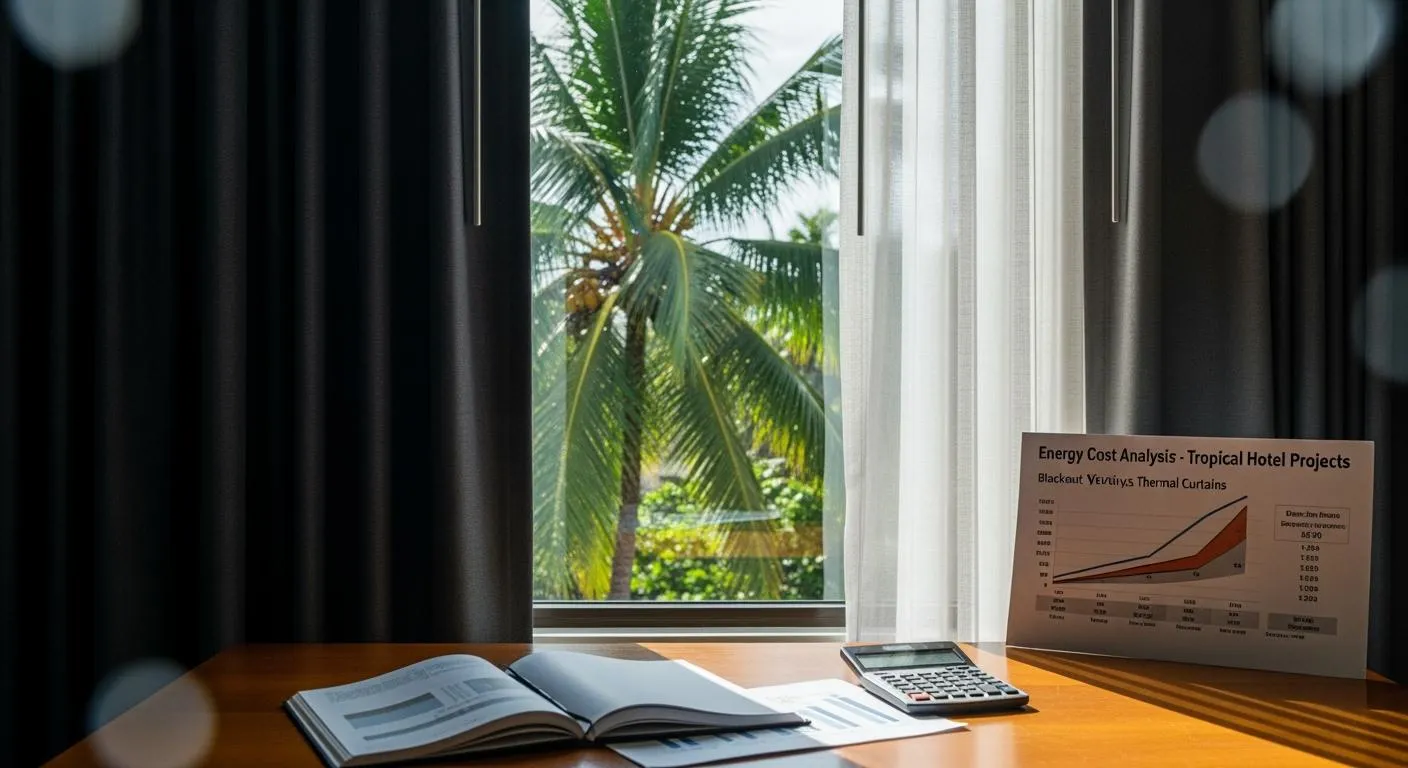
You want your tropical hotel to thrive. Thermal curtains are more effective than blackout curtains for enhancing energy efficiency and saving money over time. The type of curtain you choose impacts how much cooling your hotel requires. It also influences guest comfort and your overall revenue. In hot and humid locations, selecting the right curtain aids the hotel in utilizing less energy while keeping rooms cooler at a lower cost.
Key Takeaways
- Pick thermal curtains to save energy in tropical hotels. They help rooms stay cool and lower air conditioning bills.
- Blackout curtains block light and give privacy. But they do not keep heat out as well as thermal curtains.
- Think about both the starting and future costs of curtains. Thermal curtains might cost more at first. But they help you save money on energy bills later.
- Check and take care of your curtains often to make them last longer. This stops problems like fading and mold.
- Work with suppliers like Sibolla Building to get curtains that fit your hotel’s look and weather needs.
- Use blackout and thermal curtains together for the best comfort and energy savings in hotel rooms.
- Buy smart tools, like curtain smart switches, to help save energy and control costs.
- Check your hotel’s energy plans often to find ways to improve and save more money.
Curtain Types for Tropical Hotels
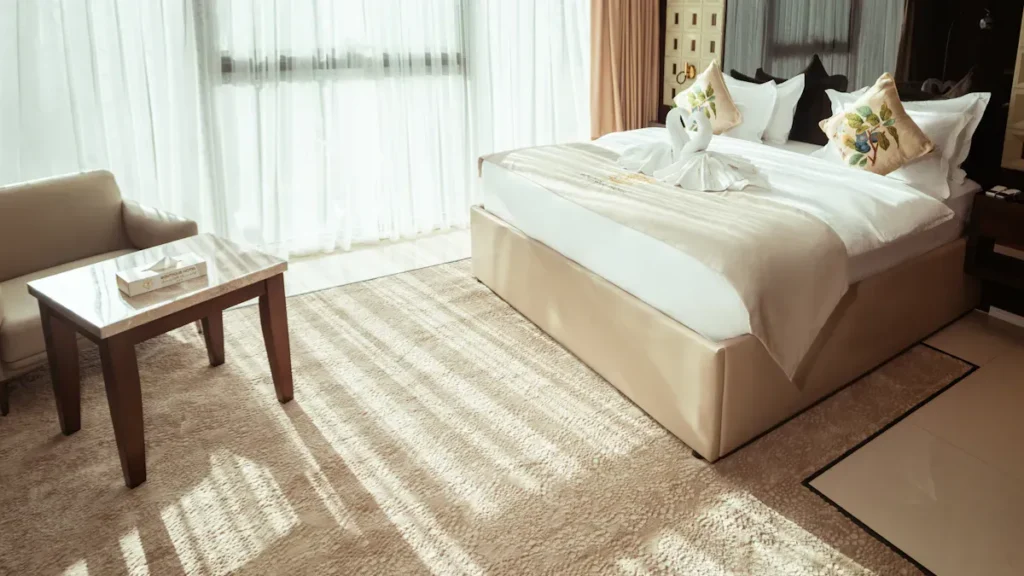
Image Source: pexels
Blackout Curtains Overview
Materials and Construction
Blackout curtains use thick fabrics. These fabrics are often synthetic or tightly woven. Some have a foam or rubber layer to block sunlight. This helps keep rooms dark and stops heat from coming in. Hotels like blackout curtains because they last long and are simple to clean. You can pick many colors and textures to fit your hotel’s style.
Main Functions in Hotels
Blackout curtains do many things in tropical hotels. They stop sunlight, so guests sleep better. They also give privacy and make rooms look nice. The table below lists what blackout curtains do in hotels:
| Characteristic/Application | Description |
|---|---|
| Light Control | Stops sunlight and helps guests sleep well. |
| Privacy | Makes guests feel private in their rooms. |
| Temperature Insulation | Keeps rooms comfortable in humid weather. |
| Aesthetic Impact | Makes hotel rooms look more attractive. |
| Typical Application | Used in guest rooms for comfort and better sleep. |
Thermal Curtains Overview
Insulation and Material Properties
Thermal curtains have special fabrics that trap air. This stops heat from moving in or out. Many thermal curtains have several layers and an insulating lining. Some use IFR linen-like fabric for better insulation and sound control. These curtains work well in hotels with big windows or glass walls. They help keep rooms cool and lower the need for air conditioning.
Differences from Blackout Curtains
Thermal curtains are made to insulate more than block light. Blackout curtains mostly stop light, but thermal curtains keep heat out and cool air in. You can use both types together for the best results. In hot and humid places, thermal curtains help save energy by needing less cooling.
Importance of Curtain Choice
Impact on Indoor Climate
The curtain you pick changes your hotel’s indoor climate. Blackout curtains help keep rooms cool in summer and warm in winter. They do this by stopping heat from moving. Thermal curtains add even more insulation and help with noise. Both types help make rooms comfortable for guests.
Guest Comfort and Energy Use
Curtains are important for guest comfort and saving energy. The right curtain makes your HVAC system work less. This means you use less energy and spend less money. The table below shows how different curtain materials help in hot and humid places:
| Curtain Type | Features Addressing Hot-Humid Climates |
|---|---|
| Silk | Needs special cleaning, blocks UV rays, good for controlled rooms. |
| Linen | Breathes well, keeps away moisture, stops mold, great for sunny or beach rooms. |
| Synthetic | Strong, resists moisture, easy to clean, good for busy areas. |
Sibolla Building gives custom soft furnishings for your hotel. You can pick blackout or thermal curtains made for tropical weather. Sibolla’s team helps your project look good and work well.
Lifecycle Cost and Energy Efficiency
Initial and Installation Costs
Cost Comparison by Curtain Type
You need to think about the price and installation cost. Blackout curtains usually cost less at first. They use simple materials and are not complicated. Thermal curtains cost more because they have extra layers. These layers help keep rooms cool and save energy later.
Hotels pick curtains that look good and save energy. Sibolla Building sells both blackout and thermal curtains. You can choose what fits your hotel and budget best.
Factors Affecting Installation
Many things can change how much you pay to install curtains. The table below lists the main things:
| Factor | Description |
|---|---|
| Material properties | Thicker, better curtains cost more but last longer and insulate better. |
| Energy efficiency | Curtains that block heat help lower cooling costs and make rooms comfy. |
| Aesthetic considerations | You can pick styles for your hotel’s brand, but special looks may cost more. |
You should talk to your supplier about these things before you buy. Sibolla Building helps you match curtain types and styles to your project, so you get the best deal.
Maintenance and Durability
Cleaning and Upkeep
You want curtains that are easy to clean and last long. Many thermal curtains can go in the washing machine. You can dry them at home, which saves time and money. Blackout curtains often need dry cleaning. This costs more and takes longer.
Here is a quick look at how each type compares:
- Thermal curtains: You can wash them in a machine and care for them easily.
- Blackout curtains: They often need to be cleaned by a professional.
Lifespan in Humid Climates
Hotels in hot, humid places need curtains that handle moisture and lots of use. The table below shows how long each type usually lasts:
| Type of Curtain | Average Lifespan (Years) |
|---|---|
| Blackout Curtains | 5-8 |
| Blackout Blinds | 8-12 |
Thermal curtains can last as long as blackout curtains if you clean and dry them often. Sibolla Building makes curtains for humid places, so they stay strong and look nice for years.
Energy Efficiency Analysis
Cooling Load Reduction
Curtains help control how much energy your hotel uses. Thermal curtains keep cool air inside and block heat from the sun. This means your air conditioner does not work as hard. Blackout curtains help too, but thermal curtains do more to keep rooms cool.
You can save money on cooling by picking the right curtain. Sibolla Building’s soft furnishings include thermal curtains that help save energy and money.
Measured Energy Savings
Hotels with thermal curtains save real money. Rooms stay cooler, and guests feel better. You use less electricity for air conditioning. Over time, these savings grow. You also help the planet by using less energy.
Tip: Ask your supplier for proof of energy savings from other hotels. Sibolla Building can show examples and help you pick the best curtain for your hotel.
When you focus on energy efficiency, your hotel becomes greener and makes more money.
Replacement and Sustainability
Replacement Frequency
Hotels want curtains that last a long time. Blackout curtains usually need to be replaced every 5 to 8 years. Thermal curtains can last just as long if you take care of them. Hot and humid weather can make curtains wear out faster. Sunlight and moisture can damage the fabric. You should check your curtains every year for fading or mold. If you see problems, plan to get new curtains soon. Sibolla Building makes curtains for tropical weather. These curtains last longer and need fewer replacements.
Thermal curtains have strong linings and good stitching. This helps them handle daily use and lots of cleaning. High-quality curtains mean you do not need to buy new ones often. This saves money and helps your hotel be more sustainable.
End-of-Life Considerations
When curtains get old, you need to decide what to do next. Some curtain materials are hard to recycle. Others break down naturally or can be used again. The table below shows what you can do with each type:
| Curtain Type | End-of-Life Considerations |
|---|---|
| PVC-coated curtains | Difficult to recycle |
| Polyester curtains | May be recyclable in specialized textile programs |
| Natural fiber curtains | Biodegradable if free from heavy coatings |
| Repurposing options | Can be used as insulation layers, drop cloths, or moving blankets |
You help the environment by picking curtains that are easy to recycle or reuse. Sibolla Building can help you choose the right materials for your hotel’s sustainability goals. You can ask about programs to take back old curtains or ways to use them again. This helps your hotel stay green and makes less waste.
Total Cost of Ownership
Five- and Ten-Year Projections
When you plan for your hotel, you need to think about all curtain costs. The price you pay at first is only one part. You also need to think about cleaning, repairs, replacements, and energy savings. Over five years, thermal curtains may cost more to buy. But they save you money on cooling bills. Over ten years, these savings get even bigger.
Here is an easy way to look at the costs:
- Initial cost: Blackout curtains cost less at first. Thermal curtains cost more because they have extra layers.
- Maintenance: Thermal curtains are easier to clean and last longer in humid weather.
- Replacement: Both types last about the same, but good thermal curtains may last longer.
- Energy savings: Thermal curtains save more on cooling bills than blackout curtains.
You can ask Sibolla Building for a cost plan for your hotel. Their team can help you see how much you save in five or ten years by picking the right curtain.
Sensitivity to Energy Prices
Energy prices can change fast. When prices go up, your hotel pays more for energy. Curtains that improve Energy Efficiency help you control these costs. Both blackout and thermal curtains give insulation. This means your air conditioning and heating do not have to work as hard.
The tables below show how curtains help you save money when energy prices change:
| Aspect | Description |
|---|---|
| Energy Savings | Blackout curtains provide insulation, reducing reliance on heating and cooling systems. |
| Impact of Energy Prices | Fluctuations in local energy prices directly affect the savings achieved through the use of these curtains. |
| Aspect | Description |
|---|---|
| Insulation | The curtains moderate indoor temperatures, preventing heat loss in winter and blocking heat in summer. |
| Energy Consumption | This moderation reduces the need for heating and cooling, thus lowering energy bills affected by price changes. |
Thermal curtains give better Energy Efficiency. This protects your hotel from higher energy costs. Sibolla Building’s soft furnishings help you plan for these changes. You can keep your hotel comfortable and control costs, no matter what happens with energy prices.
Tip: Check your curtain choices every few years. Ask your supplier about new materials or designs that improve Energy Efficiency and save even more money.
Case Studies and Real-World Data
Image Source: Pixabay
Blackout Curtains in Practice
Energy Use Before and After
You can look at real hotel numbers to see how blackout curtains work. One tropical hotel checked energy use before and after adding blackout curtains. The rooms got darker and cooler during the day. The air conditioning did not run as much. The hotel paid a little less for electricity. Blackout curtains stopped sunlight and kept out some heat. But, the money saved was not as much as with thermal curtains.
Guest and Staff Feedback
Guests slept better and liked the privacy. They said rooms felt quieter too. Housekeeping staff thought blackout curtains were easy to use. Some staff said blackout curtains needed more cleaning in humid weather. You might see blackout curtains help with comfort, but they do not always save the most energy.
Thermal Curtains in Practice
Cooling Cost Reductions
Estimate curtain effects using the actual glazing, orientation, room use and HVAC operation. Estimate savings from the actual building, rated product and operating baseline.
Durability and ROI
Thermal curtains last a long time if you take care of them. Many types can be washed in a machine. Hotels saw that thermal curtains kept their shape and color, even in humid places. The return on investment got better because the curtains saved money and lasted for years. Sibolla Building’s clients needed fewer replacements and had less damage.
Comparative Results
Key Metrics: Energy, Cost, Comfort
You can use key numbers to compare blackout and thermal curtains:
- Both types block heat, but thermal curtains do a better job.
- Blackout curtains block more light than thermal curtains.
- Estimate savings from the actual building, rated product and operating baseline.
- Both types last, but thermal curtains need fewer replacements.
- Both make guests comfortable, but thermal curtains help more with noise and temperature.
| Curtain requirement | Check |
|---|---|
| Flame performance | Relevant textile method and tested construction |
| Blackout | Fabric and installed edge details |
| Thermal effect | Actual glazing, orientation and operating conditions |
| Durability | Cleaning compatibility and relevant fabric tests |
Lessons Learned
You can learn a few things from these case studies:
- Thermal curtains save the most energy in hot, humid places.
- Blackout curtains help with sleep and privacy but save less energy.
- Hotels with thermal curtains pay lower bills and have happier guests.
- You should check curtain quality, cleaning needs, and if they fit your hotel’s weather.
Tip: Work with a supplier like Sibolla Building to get curtains that fit your hotel. You will save more energy, make guests happy, and spend less money over time.
Recommendations for Hotel Projects
Choosing the Right Curtain
Selection Criteria
You want curtains that help your hotel save energy. Curtains also need to keep guests comfortable. Start by thinking about these important points:
- Pick curtains with strong insulation. Thermal curtains block heat and keep cool air inside.
- Choose materials that last in humid weather. Look for fabrics that resist mold and fading.
- Think about how easy it is to clean the curtains. Machine-washable curtains save time and money.
- Match the curtain style to your hotel’s brand and room design.
A simple table helps you compare your options:
| Criteria | Blackout Curtains | Thermal Curtains |
|---|---|---|
| Insulation | Good | Excellent |
| Light Blocking | Excellent | Good |
| Durability | Good | Excellent |
| Energy Savings | Moderate | High |
| Maintenance | Moderate | Easy |
Project-Specific Factors
Every hotel is different. You should think about:
- The size and direction of your windows.
- How much sunlight your rooms get each day.
- Your local climate and humidity levels.
- Your budget for buying and maintaining curtains.
You can ask your supplier for advice based on your hotel’s needs.
Maximizing Energy Efficiency
Implementation Tips
You can boost your hotel’s energy efficiency with smart curtain choices and technology:
- Use thermal curtains to cut cooling costs.
- Install a Curtain Smart Switch. Estimate savings from the actual building, rated product and operating baseline.
- Connect curtains to your Building Management System. This helps you control room temperature and save more energy.
- Plan your curtain setup using local climate data and your building’s layout.
- Check and adjust your curtain system often to keep saving energy.
Estimate savings from the actual building, rated product and operating baseline.
Working with Suppliers
You get better results when you work closely with your curtain supplier:
- Pick thermally insulated curtains to keep rooms comfortable and lower energy use.
- Choose eco-friendly materials like organic cotton or recycled fabrics.
- Set up a maintenance plan to keep curtains clean and lasting longer.
- Ask for samples and test how the curtains look and feel in your rooms.
Sibolla Building Solutions
Integrated Soft Furnishing Packages
Sibolla Building gives you complete soft furnishing packages. You get curtains, bedding, carpets, and more. All items match for style and function. Their team customizes every detail to fit your hotel’s brand and climate needs. You can trust their products to work well in tropical and humid places.
Project Management and Support
Sibolla Building helps you from start to finish. Their experts help with design, production, and delivery. You get one point of contact for your whole project. They track your order, manage quality, and offer after-sales help. This makes your project smooth and keeps your hotel running on time and on budget.
Note: Sibolla Building’s solutions help you save energy, reduce costs, and create a better guest experience. You get reliable support and products built for your hotel’s success.
You now know that thermal curtains give you the best energy efficiency and cost savings for tropical hotels. They help you lower cooling bills and keep guests comfortable. To move forward, you should:
- Review your energy strategies often.
- Use smart room controls and better zoning.
- Audit your hotel for energy waste.
- Invest in smart thermostats.
- Treat energy as a key part of your hotel’s success.
Sibolla Building can help you reach these goals with tailored, reliable solutions.
FAQ
Blackout curtains stop light from coming in. Thermal curtains keep heat and cold out. You use blackout curtains to make rooms dark. Thermal curtains help save energy and keep rooms cool.
Thermal curtains keep cool air inside the room. They also block hot air from outside. Your air conditioner does not have to work as much. This means you pay less for electricity every month.
Yes, you can use both at the same time. You get darkness and better insulation together. Many hotels do this for more comfort and to save energy.
Look at your curtains every year to check for problems. Change them every 5 to 8 years, or sooner if you see fading, mold, or damage. Good curtains last longer if you take care of them.
Yes. Sibolla Building makes curtains for hard weather. The materials fight mold, fading, and moisture. Your curtains stay strong and look nice for many years.
Think about how well the curtain insulates and how long it lasts. Check if it is easy to clean and matches your hotel’s style. Pick curtains that fit your weather and brand. Ask your supplier for samples and tips.
Yes. Sibolla Building makes curtains to fit your hotel’s size, style, and weather needs. You get help from design to delivery.