I select upholstered-furniture fire testing from the destination, occupancy and project brief. TB 117-2013, the historical TB 133 method and European ignition tests have different scopes. None is a universal global approval. See Sibolla Building for related project options.
Key Takeaways
- Fire testing for upholstered furniture is very important. It helps keep people safe in places like hotels and offices.
- Learn how CA TB-117-2013, TB-133, and European standards are different. Each one uses its own way to test and has its own safety rules.
- CA TB-117-2013 checks if furniture can resist smoldering. TB-133 tests the whole furniture with open flames.
- Always get test reports and certificates from your suppliers. These show the furniture follows fire safety rules.
- Pick materials that follow your local fire safety laws. This stops legal problems and keeps everyone safe.
- Work with experts like Sibolla Building. They help you pick safe furniture and understand the rules.
- Keep learning about fire safety rules in other countries. Rules can change and may affect your project.
- Keep all your fire safety papers in order. This helps with inspections and solves problems fast.
Fire Testing Standards Overview
Image Source: pexels
Purpose and Importance
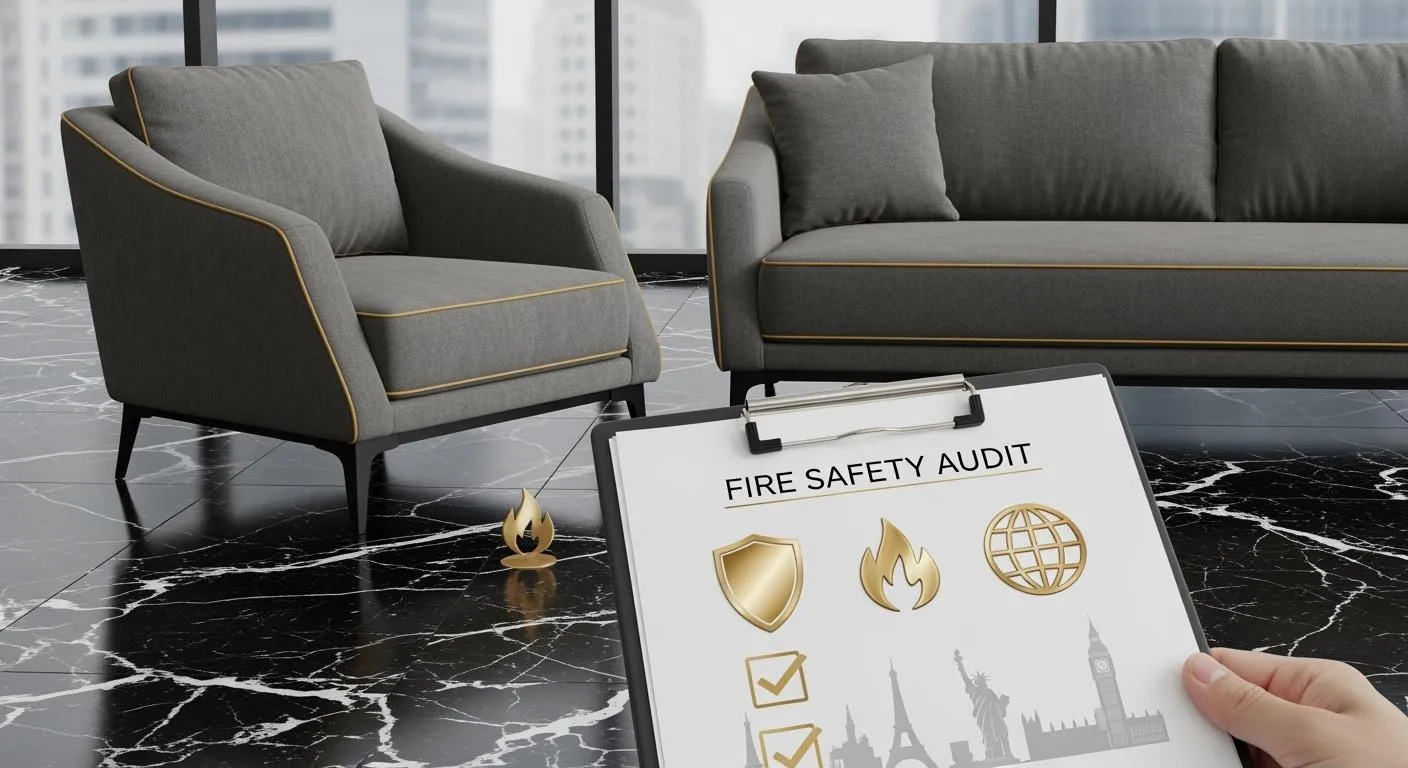
It is important to know why Fire Testing is needed. Fire Testing checks how furniture acts when there is a fire. This helps keep people safe in places like hotels and offices. You want to pick furniture that does not catch fire fast. This matters most in busy places with lots of people.
Here is a table that lists the main goals of Fire Testing standards for upholstered furniture:
| Objective | Description |
|---|---|
| Safety | Makes sure furniture is safe and meets fire rules for different commercial spaces. |
| Ignition Resistance | Checks if the materials in furniture can resist catching fire in public places. |
| Differentiated Ratings | Gives different fire ratings for different public spaces, based on how busy they are and what might start a fire. |
Fire Testing is more than just seeing if something burns. It helps you choose the best furniture for each place. You can match the safety level to what your project needs. This keeps your building safer and helps you follow the law.
Sibolla Building gives you furniture that meets these safety rules. They help you pick materials and designs that pass Fire Testing. This keeps your project on schedule and helps you avoid mistakes.
Regulatory Landscape
You have to follow rules from different countries when you buy or use upholstered furniture. These rules make sure the furniture is safe for everyone. Many groups around the world make and enforce fire safety rules for commercial spaces. Here are some examples:
- The U.K. Furniture and Furnishings (Fire) (Safety) Regulations set rules for how easy it is for furniture to catch fire in commercial spaces.
- These rules are for many people, like manufacturers, importers, and retailers. This makes sure everyone follows the rules.
- The rules say that filling materials must meet certain fire tests. Upholstery composites must also not catch fire from cigarettes.
Fire Testing standards are not the same in every place. Each area has its own rules and tests. You need to know these differences for global projects. Sibolla Building helps you understand these rules. You get furniture that meets the standards in each country, so your project is safer and easier to manage.
CA TB-117-2013 Standard
Scope and Use Cases
For covered US upholstered furniture, 16 CFR part 1640 incorporates TB 117-2013 smolder-resistance requirements. Confirm product scope, labeling and any additional project requirements. [1]
Here is a table that shows where CA TB-117-2013 is used:
| Region | Specification |
|---|---|
| United States (Residential) | California TB117-2013 (smolder resistance) |
| Contract / Commercial Projects | Compliance available based on project scope |
Identify the applicable US product requirements and any additional contract specification before choosing test evidence.
Fire Testing Methods
CA TB-117-2013 uses Fire Testing to see how furniture materials resist smoldering. The tests look at cover fabrics, filling materials, and other parts. A lit cigarette is used as the ignition source. You watch how fast the material burns or if it stops burning by itself. The goal is to make sure the furniture does not catch fire easily.
You need to pay attention to the materials used. If the fabric or filling fails the test, you must add a barrier material. Sometimes, flame retardant chemicals are used, but these have their own rules. You should look for clear test results and performance data before picking furniture for your project.
Compliance Steps
You must follow steps to make sure your furniture meets CA TB-117-2013. Here is a simple list:
- Upholstery cover fabrics, filling materials, and other materials must pass smolder resistant requirements.
- If these parts do not meet flammability standards, a barrier material must be added.
- Flame retardant chemicals can be used, but they have their own rules.
- Manufacturers who do not follow the rules may get fines and must pay for more testing.
Check model and material identification in the test evidence. TB 117-2013 uses component tests; it does not universally require a full-item open-flame certification or a UL/FM listing.
Tip: Always ask for test reports and certifications before you buy furniture for your project. This helps you avoid fines and keeps your space safe.
TB-133 Standard
Application in Commercial Spaces
California repealed its TB 133 requirement effective 22 January 2019. A project may still specify an open-flame method contractually, but occupancy alone does not establish a current TB 133 obligation. [2]
- Hotels and hospitality lobbies
- Hospitals and healthcare waiting rooms
- Schools and universities
- Airports and transportation terminals
- Office buildings with large meeting areas
Ask the authority and project consultant which requirements apply. Do not infer a TB 133 obligation solely from occupant numbers.
Testing Protocols
TB-133 uses a strict Fire Testing process. The whole piece of furniture is tested, not just the fabric or filling. This makes the test more like real life in public spaces. The test checks how the furniture reacts to open flames and heat. The furniture goes in a special room and a burner starts a fire. People watch for smoke, flames, and how fast the fire spreads.
Here are some ways TB-133 testing is different:
- TB-133 tests the whole furniture item, while CA TB-117-2013 only checks parts.
- The test uses open flames, not just smoldering items like cigarettes.
- TB 133 is a full-item open-flame test; it is not a cigarette smolder test.
You get a clear idea of how safe the furniture is in real life. This helps you pick the right products for your project.
Compliance and Certification
If the contract specifically calls for TB 133, verify the applicable method and report. Do not present it as a universal current legal requirement.
Here is a simple checklist for compliance:
- Ask for TB-133 test reports from your supplier.
- Check that the reports match the furniture you want to use.
- Make sure the certificates are current and good for your project’s location.
- Work with trusted partners who know TB-133 and can help you.
Note: Picking certified furniture helps you avoid delays and keeps your project safe for everyone.
When you work with a supplier like Sibolla Building, you get help at every step. You get advice on picking, testing, and certifying furniture for your space. This support makes your project easier and safer.
European Standards (EN 1021, BS 5852)
Image Source: pexels
Scope and Applicability
It is important to know where EN 1021 and BS 5852 are used. These rules help you check if furniture is safe in places like hotels and offices in Europe. The standards look at how furniture reacts to small fires. You can see the main parts of these rules in the table below:
| Standard | Description | Ignition Sources |
|---|---|---|
| EN 1021-1 | Assessment of ignitability – Smouldering cigarette | Smouldering cigarette |
| EN 1021-2 | Assessment of ignitability – Match-flame equivalent | Match-flame equivalent |
| BS 5852-1 | Upholstered seating – Smoldering cigarette | Smouldering cigarette |
| BS 5852-2 | Upholstered seating – Butane flame | Butane flame |
You use these rules for many kinds of commercial furniture. This includes sofas, chairs, and benches in hotels and offices. The rules help you make sure furniture does not catch fire from things like cigarettes or matches.
Fire Testing Procedures
You need to know how Fire Testing works. The tests use real fire sources, like a cigarette or a small flame. For EN 1021-1, you put a cigarette on the furniture and watch if it burns. For EN 1021-2, you use a small flame, like a match, to see if the fabric or filling burns. BS 5852 uses these ways too but also tests with a butane flame.
You must check both the cover and the filling. If either fails, the furniture does not pass. The tests look at how fast fire spreads, how much smoke comes out, and if the fire stops by itself. You get a good idea of how safe the furniture is in real life.
Tip: Always ask your supplier for test reports that show the furniture passed these tests. This helps you make safe choices for your project.
Compliance Requirements
European furniture requirements depend on the destination and product scope. EN 1021 evidence addresses specified ignition sources; it does not alone demonstrate every obligation under the General Product Safety Regulation.
Here is a table that shows the main compliance rules:
| Issue | Required check |
|---|---|
| Consumer safety | Applicable destination legislation and product scope |
| Fire testing | National and contract requirements |
| EN 1021 reports | Specified ignition-source evidence, not complete EU approval |
You should always ask for certificates and test reports from your supplier. This helps you prove your furniture meets the rules. If you work with a partner like Sibolla Building, you get help with picking, testing, and certifying furniture for any European project.
Comparing Global Fire Testing Standards
Methods and Stringency
TB 117-2013 addresses smolder resistance. TB 133 uses an open-flame full-item method. EN 1021-1 addresses a smoldering cigarette and EN 1021-2 a match-flame equivalent; BS 5852 has its own ignition-source methods.
Here is a table that shows the main differences:
| Method | Scope |
|---|---|
| TB 117-2013 | Component smolder resistance; incorporated by 16 CFR part 1640 |
| TB 133 | Full-item open flame; California requirement repealed in 2019 |
| EN 1021-1/-2 | Cigarette and match-flame-equivalent ignition sources |
| BS 5852 | Separate ignition-source methods; check the required source |
Different ignition sources and specimen arrangements prevent a simple universal ranking of the standards. A Class I material classification is not interchangeable with furniture test results.
Impact on Furniture Design
Fire safety rules change how you design and pick furniture. The rules decide what materials and finishes you can use. TB-133 may need special fabrics or barrier materials. CA TB-117-2013 lets you use regular materials if they pass the smolder test. European standards want fabrics and fillings that resist both cigarettes and small flames.
Here are some ways fire standards affect your choices:
- You must pick materials that meet strict fire rules for hotels, restaurants, and schools.
- You may need flame-retardant fabrics or fire barriers inside the furniture.
- You must balance safety and style. Compliance markers help you make spaces that look good and stay safe.
- You need to check test reports and certifications before buying or installing furniture.
Choosing upholstery for commercial spaces depends on fire safety rules. Your space must meet safety needs and keep its design. Sibolla Building helps you match materials and finishes to your project. You get furniture that fits your space and meets fire safety rules.
Compliance Challenges
Meeting fire standards in different places can be hard. Manufacturers cannot test every furniture setup. There are too many types. Sometimes, the furniture in real life is not exactly like the tested sample. This can cause confusion and delays.
Here are some common challenges:
- You may not know which standard to use if your project is in more than one country.
- Testing labs can be busy. You might wait longer for test results, which can slow your project.
- Setting up compliance systems costs money and takes time. Small companies may find this hard.
- Maintenance is important. If you do not keep fire protection systems in good shape, they may not work when needed.
Ask Sibolla which model-specific test records and coordination services are available. Agree the evidence required for the destination and contract.
Tip: Always work with partners who know fire safety rules in every region. This helps you avoid mistakes and keeps your spaces safe.
Practical Considerations for Project Furniture
Selecting Compliant Furniture
When you pick furniture, you need to think about more than looks. You must check that each piece follows fire safety rules for your area. This keeps people safe and helps you pass inspections.
Here is a table that shows what to check when picking furniture for public spaces:
| Criteria | Description |
|---|---|
| Fire Safety Compliance | Make sure the furniture meets the strictest fire codes, especially in places like hospitals. |
| Inherently Flame-Retardant Materials | Choose materials, such as Trevira CS, that stay flame-retardant even after washing. |
| Mandatory Fire-Resistant Furniture | Use fire-resistant furniture in healthcare settings. This is not just a choice—it is a rule. |
You should always ask your supplier for test reports and certificates. These papers prove the furniture passed Fire Testing and follows the rules for your project.
Sibolla Building’s Approach
Sibolla Building helps you pick furniture that fits your fire safety needs. They help you from the first design to the last delivery. The team looks at your drawings and project type. They suggest materials that follow local fire codes. You can see fabric samples and test data before you choose. This helps you make good choices without guessing.
Request relevant reports and confirm the product identity, tested materials and any restrictions. Delivery planning and paperwork do not support agreed delivery and document coordination.
Navigating Regional Compliance
Each country has its own fire safety rules for furniture. You need to know these rules before you order or install anything. Some places want special coatings or fabrics. Others need proof that your furniture passed certain tests.
Here is a table with tips to help you follow fire safety rules in different places:
| Evidence | Description |
|---|---|
| Fire Retardant Coatings | Learn how to use fire retardant coatings. These help your furniture meet local fire safety requirements. |
| Documentation Importance | Keep all your test reports and certificates in one place. Good records make inspections easier. |
| Product Selector Guide | Use a product selector guide to check if your materials meet local codes, like California Title 19. |
| Key Standards | Know important standards, such as NFPA 701, for textiles in public spaces. |
You should work with suppliers who know these rules. They can help you pick the right materials and get the paperwork you need. This saves you time and helps you avoid mistakes.
Tip: Always keep your fire safety papers up to date and easy to find. This makes inspections faster and helps you fix problems quickly.
Define the destination and contract requirements before approving upholstered furniture. Specify the tested materials, control substitutions and confirm labeling; do not substitute a general flame-retardant claim for evidence.
- Watch for new rules in every country.
- Always get clear test reports and certificates.
- Work with experts like Sibolla Building for help.
| Country | Change Description | Effective Date | Implications |
|---|---|---|---|
| Ireland | Does not use UK fire safety rules anymore; must follow Irish rules. | April 2021 | Importers need test reports that show Irish rules, not UK ones. |
| UK | Plans to stop using the old ‘match test’ rule. | TBD | They know the old test has problems and want safer, chemical-free choices. |
You should keep learning about new fire safety rules. This helps keep your projects safe and protects your money.
FAQ
TB 117-2013 uses component smolder testing. TB 133 is a historical full-item open-flame method; California repealed its requirement in 2019, although a contract may separately specify it.
You might need European standards if your project is in Europe or for European clients. Some worldwide projects use these rules for extra safety. Always check where your project is and what your client wants.
Request the relevant test evidence and applicable labels for the destination. A generic label naming several standards is not proof of every required test.
No, you should not use home furniture in public spaces. Hotels and offices need furniture that passes stricter fire tests. This keeps people safe and helps you pass inspections.
Sibolla Building checks your project needs and suggests safe materials. They give you test reports and help from start to finish. This makes your project safer and easier.
You must pick new materials or add fire barriers. Your supplier can help you find things that pass the test. Never use furniture that does not meet fire safety rules.
References and Sources
Sources checked on 27 September 2026. Apply each standard within its stated scope and verify current requirements for the project destination.