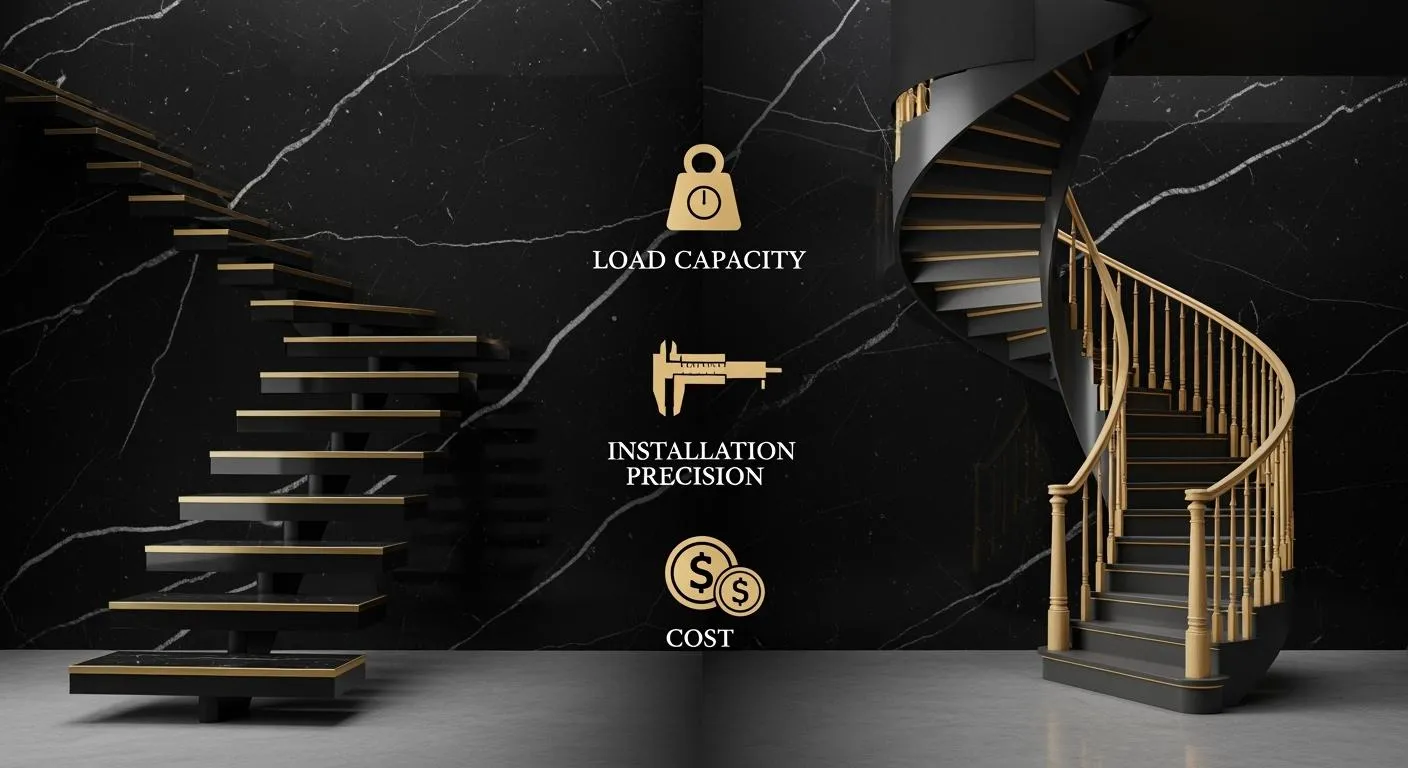
You want a staircase that is strong, accurate, and not too expensive. Floating staircases are popular in modern homes, embodying the principles of Modern Minimalism with their strong yet simple and clean design. They create an illusion of steps hanging in the air, enhancing the aesthetic appeal of any space. Spiral staircases, with their cool shapes and wide, smooth curves, showcase the new trend for natural and flowing designs, making them a stylish choice for those looking to embrace Modern Minimalism. Sibolla Building provides expert assistance, helping you select a staircase that not only looks good but also prioritizes safety.
Key Takeaways
- Floating staircases make rooms look bigger and more open. They help spaces feel friendly and bright.
- Spiral staircases save space and look special. They add a cool design to your home or office.
- You can pick different materials for both types. Choose wood, metal, or glass to match your style.
- Safety is very important. Both floating and spiral staircases are built to hold a lot of weight. They also follow safety rules.
- Experts must install these staircases. Make sure your space is ready and the measurements are right. This helps you avoid expensive problems.
- Think about how much money you want to spend. Floating staircases can cost more because they are harder to build and install.
- Think about what you will need later. Pick a staircase that looks good now and will work well in the future.
- Sibolla Building helps you choose and install your staircase. They make sure it looks nice and works well.
Modern Minimalism in Staircase Design
Minimalist Principles
Modern Minimalism is seen in many new homes and buildings. This style uses straight lines, open rooms, and simple shapes. There are no extra decorations or busy designs. You see calm colors and smooth surfaces everywhere. Every part of the room has a reason to be there. When picking a staircase for a minimalist space, you want it to look simple and work well.
Sibolla Building helps you choose a staircase that matches these ideas. You can pick floating or spiral staircases that fit Modern Minimalism. Sibolla Building uses glass, wood, and metal for their staircases. These materials make the design look clean and strong. Your staircase will feel light and open, not heavy or crowded.
Staircase as a Design Anchor
A staircase can be the main feature in a room. It connects living spaces to private areas. It does more than just help you go up and down. It can also make the room feel special and different.
- Staircases are both useful and look like art in a home.
- They catch your eye and make a strong impression.
- In open rooms, staircases show where spaces change without closing them off.
- A sculptural staircase can be the most important part of your home.
- Wide staircases in public places can help people meet and talk.
Sibolla Building makes staircases that do all these things. You can pick a floating staircase for a light look. Or you can choose a spiral staircase for a soft, round shape. Both styles work well with Modern Minimalism. Sibolla Building helps you make sure your staircase fits your space and what you need. You get a staircase that is pretty and useful.
Sibolla Building Staircase Types
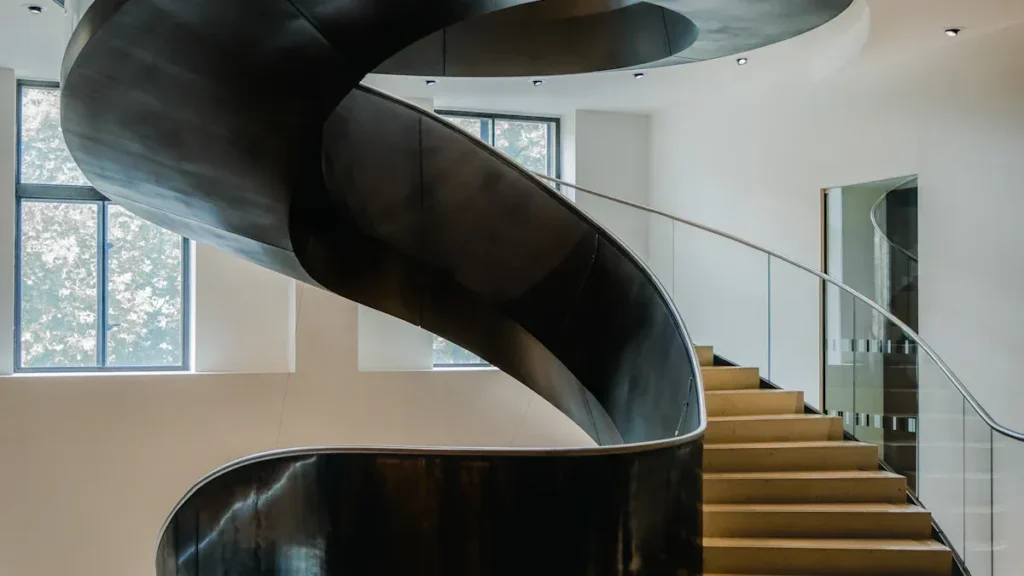
Image Source: unsplash
Sibolla Building gives you many staircase options for your modern minimalist project. You can choose floating staircases or spiral staircases, each with unique features. Both types fit well in homes, offices, and public spaces. You get to decide what works best for your space and style.
Floating Staircase Features
Floating staircases create a sense of openness and lightness. You see each step as if it floats in the air. This design makes your room feel bigger and less crowded. You can use floating stairs in small city lofts or large homes that want a bold look. Offices and new buildings also use floating stairs for a modern touch.
Material Options
You can pick from many materials for your floating staircase. Sibolla Building offers steel, wood, cable, and glass. These materials give you both strength and style. Tempered glass and slim railings keep the look clean and simple. You can match the staircase to your floors, walls, or other design elements. Custom handrails and non-slip surfaces help keep your family safe, even if you have children or seniors at home.
Tip: Choose tempered glass or powder-coated steel for a modern, durable finish that matches minimalist interiors.
Structural Spine
The structural spine is the backbone of your floating staircase. It holds each step in place and keeps the staircase strong. Sibolla Building can design straight runs, L-shaped stairs, U-shaped switchbacks, or even spiral variations. You get a staircase that fits your room perfectly. The design team checks your space and makes sure the staircase works with your layout. You do not have to worry about safety or fit.
Spiral Staircase Features
Spiral staircases give you a stylish way to save space. They wind around a central column, so they need much less floor space than regular stairs. You can use them in small apartments, lofts, or any area where space matters. Spiral stairs also add a sculptural look to your room.
Space Efficiency
Spiral staircases help you use your space wisely. You do not need a long hallway or a big open area. The stairs go up in a tight circle, making them perfect for places with limited room. You can use spiral stairs for secondary access or as a main feature in a compact home.
- Spiral stairs use less horizontal space than traditional stairs.
- You can fit them in corners or tight spots.
- They work well in lofts, small apartments, and even offices.
Style Variations
You can customize your spiral staircase to match your style. Sibolla Building offers many material choices, such as wood, metal, or glass. The helical shape adds a unique touch without making the room feel busy. You can pick a simple look or add details that fit your taste. The design stays clean and modern, perfect for minimalist spaces.
- Spiral staircases can look bold or subtle, depending on your choices.
- The central column and curved steps create a soft, flowing look.
- You can add custom railings or lighting for extra style.
Sibolla Building helps you design a staircase that fits your needs and your space. You get safety, style, and smart use of space in every project.
Load Capacity Comparison
Image Source: unsplash
When you pick a staircase, you want it to be safe. Load capacity means how much weight the stairs can hold. Both floating and spiral staircases from Sibolla Building are built to be strong. They follow strict engineering rules. You can trust these staircases in homes, offices, and public places.
Floating Staircase Strength
Engineering Details
Floating stairs need an engineered load path from treads and connections into the supporting building structure.
| Stage | Check |
|---|---|
| Engineering | Project-specific loads, deflection, vibration and load path |
| Fabrication | Approved structural components and connections |
| Building coordination | Verified supports and anchorage |
| Installation | Approved details, guards and inspection |
Approve structural calculations, connections, guards and installation inspections before use.
Real-World Examples
You can see floating staircases in homes, hotels, and offices. For example, a floating staircase in a hotel lobby can hold many people at once. In a house, the stairs hold kids, adults, and heavy things. Sibolla Building uses safety standards from around the world. Your staircase will last for a long time.
Spiral Staircase Strength
Structural Reliability
Spiral staircases have a strong center column. This column holds most of the weight. Sibolla Building engineers check every part to make sure it is safe. The table below shows what makes spiral staircases strong:
| Characteristic | Description |
|---|---|
| Central Support Column | The main part that holds the weight of the stairs. |
| Compact Design | Fits in small spaces but still supports daily use. |
| Load Distribution and Stability | Engineers check the forces to make sure the stairs stay stable and safe. |
| Compliance with Building Codes | All parts, like handrails and guards, meet safety rules. |
You can use spiral staircases in small apartments, lofts, or offices. The strong center column lets people use the stairs all day.
Practical Use Cases
Spiral staircases work well in many places. The table below shows their strengths and limits:
| Strengths | Limitations |
|---|---|
| Space efficiency: occupy less ground space | May not provide enough width for comfort |
| Aesthetic appeal: serve as a focal point | Can be hard for moving large items |
| Structural integrity: strong and durable | Limited headroom in some designs |
| Versatile: fit many environments | May not fit all minimalist design ideas |
You get stairs that save space and look cool. Think about how you will use the stairs. Spiral stairs are great for a loft or small office. They are not the best if you need to move big things.
Pros and Cons
You want to choose the best staircase for your project. Here is a simple list to help you compare floating and spiral staircases:
- Floating Staircase Pros:
- Strong and safe for daily use
- Clean, open look fits Modern Minimalism
- Easy to walk up and down
- Works well in large or open spaces
- Floating Staircase Cons:
- Needs careful planning and strong walls or supports
- May take more time to install
- Spiral Staircase Pros:
- Saves space in small rooms
- Unique shape adds style
- Strong central column supports weight
- Good for tight spots or as a second staircase
- Spiral Staircase Cons:
- Steps can be narrow
- Harder to move big items up and down
- May not fit every design
Confirm the destination code and permitted use of the proposed stair type, especially where escape routes are involved.
Installation Precision
Floating Staircase Installation
Expertise Required
You need experts to put in a floating staircase. This kind of staircase needs careful work at every step. The area must be ready before starting. Walls have to be strong enough for the stairs. Floors must match the plan. Even small mistakes can cause big trouble later.
Here is a table that shows what you need to check before putting in a floating staircase:
| Requirement Type | Details |
|---|---|
| Structural Integrity | The site must have strong walls and the right floor height. |
| Alignment | All sizes and spots for attaching must match the plans. |
| Tread Installation | Each step must be the same thickness and height for safety and a neat look. |
You want every step to feel the same when you walk. This keeps your stairs safe and nice to look at.
Common Challenges
You might run into problems when installing. Sometimes, the wall is not as strong as you thought. The floor could be thicker or thinner than the plan says. Openings can move during building. These changes can make the stairs not fit right.
Here are some common problems and what they mean for your project:
| Challenge | Description |
|---|---|
| Structural dependency | The stairs need the building to hold them up. |
| Tolerance stacking | Small mistakes can add up to bigger problems. |
| Trade coordination | Framing, steel, wood, and railing teams must work together. |
| Sequence matters | The order of steps is important to stop extra work. |
| Site readiness | Old buildings can have surprises that slow things down. |
Tip: You can lower risks if Sibolla Building checks your plans and the site before you start.
Spiral Staircase Installation
Process Overview
You follow clear steps to put in a spiral staircase. Each step must be done with care so the stairs are safe and fit well.
| Step | Description |
|---|---|
| Site Assessment | Check the space to see if the stairs will fit. |
| Precise Measurements | Measure everything carefully for a good fit. |
| Material Selection | Pick the right materials for strength and style. |
| Assembly | Put the stairs together as the plans show. |
| Final Securement | Make sure the stairs are steady and safe to use. |
Skilled workers are very important for this job. They plan ahead and measure everything to stop mistakes.
Coordination Needs
Good teamwork is needed for a smooth job. Installers must follow safety rules and do good work. Planning ahead helps stop mistakes like things not lining up. When everyone works together, your spiral stairs will look good and last a long time.
Sibolla Building Support
Sibolla Building helps you a lot during installation. Their team checks floor heights, wall strength, and step details before making anything. They make drawings that show every part of the stairs. This helps find and fix problems early.
Sibolla Building also matches materials and finishes to your project. They make sure railings fit the stairs just right. Their project managers talk to all teams, so your stairs fit your space and needs. You get stairs that are safe, stylish, and built to last.
Note: With Sibolla Building, you have fewer risks and avoid costly mistakes. Their expert help lets you finish your project on time and on budget.
Cost Analysis
When you plan a staircase for your project, you need to think about cost. Both floating and spiral staircases have different price ranges. You can find options for every budget, but the final price depends on materials, design, and installation needs. Sibolla Building helps you understand these costs and make smart choices.
Floating Staircase Costs
Material and Labor
Floating staircases can cost more than other types because of their special look and structure. The price depends on what materials you pick and how hard the installation is. Here are some things that affect the cost:
- Material choices change the price. Glass, hardwood, and powder-coated steel each have different costs.
- Some materials need more time to make and finish.
- Labor costs go up if your space is hard to reach or if you need to remove old stairs.
- You pay for careful installation, which includes making sure every step is safe and straight.
- Sometimes, you need extra work to make the walls or floors strong enough for the new stairs.
You can see the price ranges for floating staircases in the table below:
| Type | Price Range (USD) |
|---|---|
| Floating Stairs (Budget-Friendly) | 5,000–10,000 and up |
| Floating Stairs (Mid-Range) | 15,000–25,000 and up |
| Floating Stairs (High-End) | 30,000–50,000 and up |
Labor usually includes taking out old stairs, protecting your floors and walls, putting in the new stairs, and fixing any marks or holes around the opening. If your project needs special engineering or extra support, the cost can go up.
Customization Impact
Customization changes the price a lot. If you want a simple, straight staircase, you pay less. If you want curves, open risers, or built-in lights, the price goes up. Special materials like glass treads or custom railings also add to the cost.
Price a floating staircase from the approved geometry, structural work, finishes, transport and installation scope. A generic price range is not a project budget.
Tip: If you want to control costs, choose a simple design and standard materials. Sibolla Building can help you find the right balance between style and price.
Spiral Staircase Costs
Budget-Friendly Options
You can find many spiral staircases that fit a smaller budget. Some of the most affordable choices are modular stair kits. These kits work well for do-it-yourself projects and can fit many ceiling heights and floor sizes. They are a good choice for lofts or small spaces.
Modular Stair Kits: These adjustable kits are ideal for DIY projects and can fit various ceiling heights and floor areas, making them a cost-effective choice for loft access. They can be styled to match modern or traditional aesthetics.
Spiral Stairs: These compact designs wrap around a central column, providing a full stair experience in a small footprint, with diameters starting at 3’6″. They offer built-in safety features and customizable materials for a modern or warm look.
Compare a spiral stair quotation with the same specification and installation scope; costs vary with dimensions, finishes and site work.
Maintenance Factors
You need to think about long-term costs, not just the price to buy and install. Some spiral staircases need more care than others. For example:
- Wooden spiral stairs may need sealing or staining every year.
- Metal or composite stairs need less upkeep, which saves you money over time.
- Pressure-treated wood stairs need refinishing every few years.
- Aluminum spiral stairs need very little maintenance, which helps lower costs in the long run.
If you pick the right materials, you spend less time and money on repairs. Sibolla Building can help you choose materials that last and look good for years.
Value with Sibolla Building
Sibolla Building gives you more than just a staircase. You get a full package that includes design help, engineering checks, and project management. Their team helps you pick the right materials and design for your budget. They also make sure your staircase fits your space and meets all safety rules.
You save money because Sibolla Building manages everything from start to finish. You do not need to work with many suppliers or worry about mistakes. Their process helps you avoid delays and extra costs. You get a staircase that matches Modern Minimalism and adds value to your project.
Note: Plan your budget early. Talk to Sibolla Building about your needs and style. They can show you real cost ranges and help you make smart choices for your home or business.
Modern Minimalism: Choosing the Right Staircase
Assessing Project Needs
You want your staircase to match your space and your style. Before you choose, think about what you need most. Ask yourself these questions:
- What is the main style of your home or building? Floating stairs work well for modern, minimalist spaces. Spiral stairs can fit many styles but also add a unique look.
- How much space do you have? Floating stairs make rooms feel open and bright. Spiral stairs save space and fit in tight spots.
- What is your budget? Floating stairs can cost more because they need special engineering and careful installation. Spiral stairs often cost less, especially if you use a simple design.
- Who will use the stairs? Both types are safe, but floating stairs with open risers may not be best for homes with small children or lots of visitors.
- What materials do you like? You can pick wood, steel, or glass for both types. High-quality materials make your staircase look and feel better.
You can talk to Sibolla Building for help. Their team will look at your space, listen to your needs, and suggest the best options for your project.
Expert Recommendations
You can choose from many staircase types and materials. Each one has its own look and feel. The table below shows some popular choices and what makes them special:
| Staircase Type | Description |
|---|---|
| Oak Staircase | Gives a warm, natural look. Works in both modern and classic homes. |
| Steel Staircase | Looks strong and modern. Fits open spaces and gives you many design choices. |
| Concrete Staircase | Feels solid and clean. Great for high-end minimalist homes. |
| Custom Design Staircase | Lets you pick your own features and materials. Always follows building rules for safety. |
Sibolla Building can help you design a staircase that matches your vision. Their experts know how to blend style, safety, and function. You get a staircase that fits your project and meets all rules.
Actionable Tips
You can make smart choices for your staircase project. Here are some tips to help you:
- Start with a clear plan. Know your space, your needs, and your budget.
- Choose materials that last and match your style.
- Ask for 3D drawings or samples before you decide.
- Work with experts like Sibolla Building. They offer design help, engineering checks, and project management.
- Make sure your staircase meets all safety codes.
- Think about the future. Pick a design that will look good and work well for many years.
Tip: Early planning and expert advice help you avoid mistakes and save money.
You can trust Sibolla Building to guide you. Their team will help you find the right staircase for your modern minimalist project.
You want a staircase that matches Modern Minimalism and is strong, accurate, and fits your budget. The table below shows how floating stairs are different when it comes to how much weight they hold, how carefully they are built, and how much they cost:
| Aspect | Floating Stairs | Spiral Staircases |
|---|---|---|
| Load Capacity | Built to hold a lot of weight using smart engineering. | Not specified |
| Installation Precision | Made with robots and checked by machines for perfect building. | Not specified |
| Cost | Costs more at first, but new tech can make it cheaper. | Not specified |
Sibolla Building helps you with each step:
- Check all sizes and measurements
- Use math to make sure stairs are safe
- Decide how the stairs will be held up
- Make sure materials work well together
- Plan how railings will fit
- Draw detailed plans for building
- Set the order for putting everything together
When building stairs, being clear at the start helps make sure everything works well in the end.
Pick Sibolla Building if you want a custom staircase that is safe and fits your modern style.
FAQ
You can change many parts of your staircase. Sibolla Building lets you pick the materials, shapes, and railings. You choose how your stairs look and fit your home.
You send your floor plans or ask for someone to measure. Sibolla Building checks your space to make sure the stairs fit. This helps people move around your home easily.
You get strong steps and safe railings. Sibolla Building makes floating staircases that follow safety rules. Anti-slip treads and the right handrail height help keep everyone safe.
Request a programme including design approval, fabrication, delivery and installation rather than assuming every stair takes 3–6 weeks.
Hardwood, tempered glass, and powder-coated steel last a long time. You can pick what matches your style and needs. Sibolla Building helps you choose strong and lasting materials.
You get help and advice after your stairs are installed. Sibolla Building tells you how to care for your staircase. You can ask for help or order new parts if you need them.