Curtains should be released against the selected rail, heading, operating arrangement and actual finished-level measurement basis. A chosen fabric can look right beside a window while the recess, occupied stack and finished drop remain undefined. The buyer needs those relationships reconciled before a decorative selection becomes a fabrication instruction.
For a residential or hospitality project, the immediate decision is which curtain configuration and dimensions the supplier must provide. The designer establishes the intended opening and appearance relationship. Makers identify their actual rail and fabric objects, while responsible project personnel confirm the mounting, site references and any relevant electrical requirements.
Build the enquiry around the complete hanging arrangement and its room allocation. Keep fabric evidence, dimensional acceptance and represented operation distinguishable. This guide assumes no universal fullness, stack percentage, recess depth, floor clearance, blackout result or care method for every curtain and destination.
AI-generated opening illustration; no measured drop, accepted rail, blackout result or completed project is represented.
Which curtains and hanging configurations are offered?
Identify the complete selection
Give each curtain a room and opening reference, actual fabric identity, selected construction and relevant document revision. Identify lining, heading and included components where they affect the offered object. A fabric color name should not settle the complete curtain that the supplier intends to fabricate.
Use the curtain category to frame the enquiry. Attach the intended openings and operation, then ask the supplier to identify its proposed configuration. A category route does not establish an actual rail’s acceptance, fabric availability or complete supplied hanging system.
Distinguish the source fabric from the finished curtain and the selected track or pole. Ask which maker provides each object and which accessories are included. A photograph can display a coherent assembly without establishing that the quotation covers its complete heading, gliders, support and operating components.
State the opening and operating form
Record whether the arrangement uses one or several curtain layers, and identify the intended opening direction and stopping positions. A broad double-curtain description can leave the actual rail and fabric occupation unclear. Keep the layer and operating references together before quantities are accumulated into a package.
Connect the soft furnishing room schedule with each actual curtain selection. A coordinated palette can support the appearance decision without accepting every opening or room variant. Retain the item and location identity rather than extend one display observation throughout the scheme.
Clarify what the early approval permits. A preferred fabric or heading can remain selected while dimensions or site support receive confirmation. Identify the actual next commitment and its prerequisites so a favorable swatch comment does not become permission to fabricate against a provisional hanging basis.
What finished references make the dimensions reviewable?
Define the measured object and datum
Ask the responsible measuring party to identify the actual reference used for the curtain’s finished drop. A ceiling, track face, glider or hanging point can be a different dimensional object. The maker needs the applicable reference for the selected configuration rather than an unexplained room-height figure.
Record the relevant finished floor and opening condition at measurement. Identify which surfaces are complete and which additions remain assumed. An unfinished structural level can support early planning without establishing the final relationship the buyer intends to accept at the curtain hem.
Use the register to connect geometry and complete-system inputs with their decision owners.
| Measurement input | Record to retain | Question it resolves | Confirmation owner |
|---|---|---|---|
| Opening identity | Room, location and active revision | Which curtain is affected? | Buyer and designer |
| Suspension reference | Actual rail/heading and measured datum | What governs the finished drop? | Curtain maker and surveyor |
| Finished levels | Floor and surrounding surface state | Which conditions remain provisional? | Contractor and measuring party |
| Recess and stack | Available envelope and proposed arrangement | What space is occupied during operation? | Designer and system supplier |
| Mounting and controls | Applicable components and site inputs | Which interfaces require review? | Responsible installers and qualified reviewers |
| Fabrication release | Accepted dimensions and acknowledged scope | What can the maker commit? | Buyer and coordinator |
An open entry should remain attached to its location and affected commitment. The register organizes information without prescribing a measuring procedure or universal allowance for every curtain system.
Reconcile changes in the room
For doors and windows, obtain the relevant installed frame, reveals and moving geometry. A nominal opening width can leave its actual finished boundaries unrepresented. Give the curtain maker the current reference before a frame or handle change inherits an earlier dimensional decision.
For carpet and finished-floor relationships, identify the accepted floor selection and relevant level where it affects the drop. A later flooring change can alter the intended hem relationship. The responsible team should retain what changed and which curtain dimensions require reconsideration.
If only some locations have confirmed finished references, issue that accepted list explicitly. Keep provisional openings distinguishable from released items before the maker repeats a dimension elsewhere. A partial survey should not become implicit permission to treat every room with a similar window as settled.
How should the rail and recess be coordinated?
Review the full occupied envelope
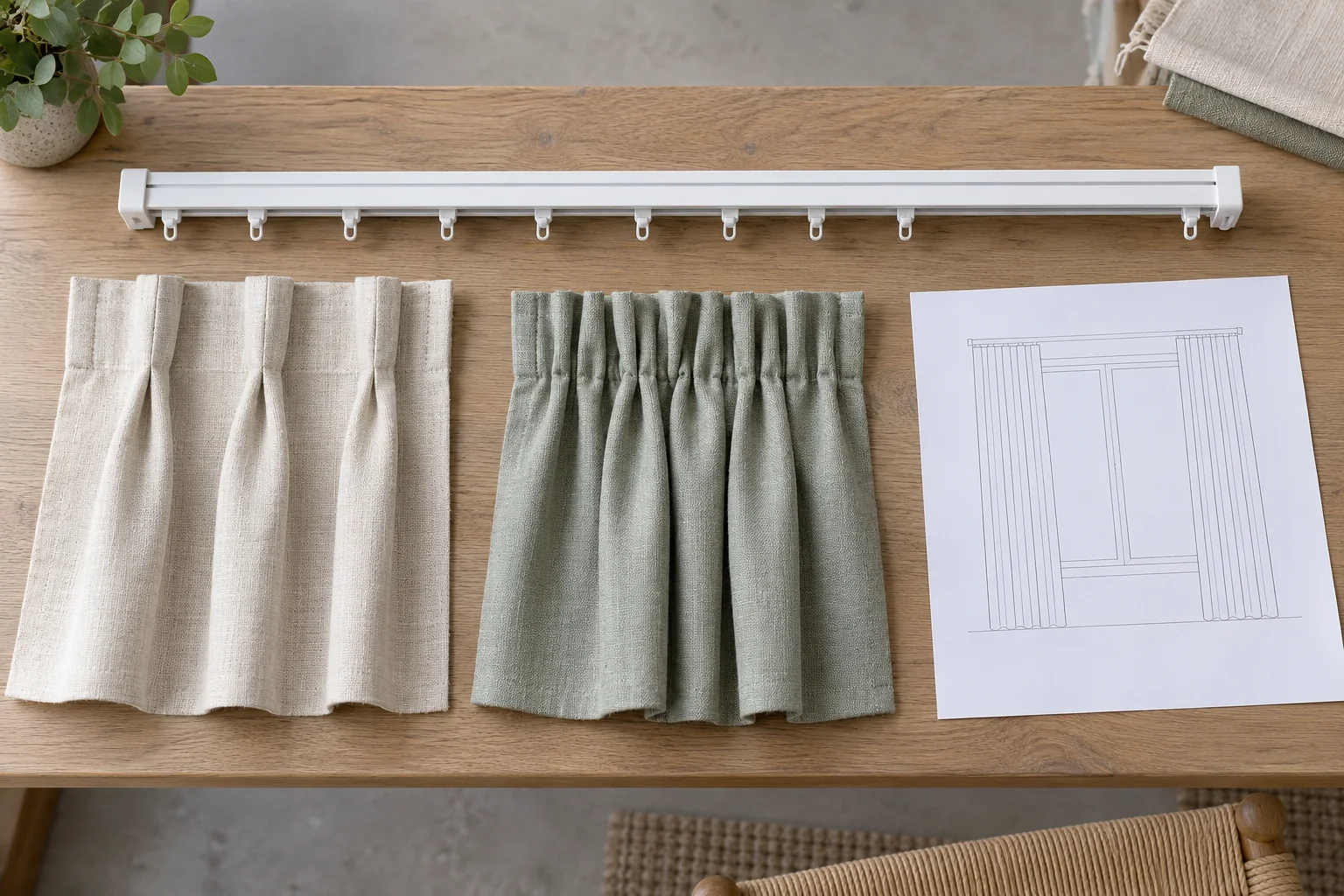
Obtain the selected rail or pole’s applicable information together with the heading and layer arrangement. Identify the relevant mounting and operating objects in the proposed recess. A slim visible rail can leave fabric folds, brackets or other parts outside the geometry considered by an early ceiling drawing.
Ask the system supplier and designer to compare that arrangement with the actual available space. Different headings and multiple layers can occupy different envelopes. Procurement should retain the identified configuration and accepted reference rather than choose a universal recess size from a decorative image.
For wall-panel and finished-face interfaces, retain the actual wall and relevant ceiling relationship. A changed build-up can alter the location or envelope previously reviewed. Give affected suppliers and installing trades the same active reference before adjoining work is committed.
Keep support and neighboring systems separate
Identify the actual backing, support and selected-system mounting information for the intended position. Ask the responsible installer and qualified reviewer which arrangement is applicable. A finished ceiling or recess face should not be treated as complete evidence of the concealed support behind the curtain system.
For ceiling-light coordination, include relevant fixture and service occupation where it shares the overhead area. A curtain recess can fit the visual design while another system requires its own access or mounting relationship. Retain both selected objects before accepting their combined position.
If the rail, support or recess changes, identify which dimensional and installation responses need reconsideration. An unchanged fabric can hang from another system with different relevant references. Keep the revised complete configuration with the maker’s response before treating the alternative as equivalent to the released arrangement.
What should stack-back and operation observations establish?
Locate the actual open-curtain state
Identify where the curtains are intended to gather when open and which part of the opening they must leave available. Ask the maker to define the relevant occupied stack for the selected fabric, heading and construction. An approximate design symbol cannot establish the finished object’s actual operating relationship.
Review that state with the installed opening, handles and surrounding furniture where they matter. A curtain can look balanced when closed while its gathered fabric occupies another relevant area. The observation should identify the condition being considered rather than treat a closed elevation as approval of every state.
For wardrobe interfaces near the opening, retain the actual furniture and relevant movement. A later storage position can affect the curtain’s operating or service space. Keep the accepted relationship attached to the room and configuration before a revised furniture outline enters the scheme.
Bound the represented trial
Choose a represented observation around a named uncertainty: the gathered stack, layer interaction, heading appearance or operating path. Identify the actual rail, fabric and construction used. A short display specimen can resolve one appearance question while leaving a full opening or final curtain length unrepresented.
Record any stand-in, absent room condition or temporary adjustment before using the observation for release. Ask what the actual setup supports and what remains open. A pleasing demonstration does not establish mounting acceptance, complete blackout, energy savings or an acoustic result for every installed room.
For hotel room furnishings, identify which variants the trial represents. Different openings, layers or furniture can leave another operating relationship unreviewed. Obtain a targeted response where the changed condition matters rather than repeat one favorable sample comment across all rooms.

Which fabric and control evidence remains separate?
Keep textile claims with the tested object
Request the actual fabric and construction information needed for the application. If the project requires light control, fire, acoustic or another property, identify its applicable criteria and reviewer before selecting evidence. A decorative swatch or marketing description cannot establish every finished-curtain requirement.
Read a report for its actual textile, backing, lining, configuration and conditions where relevant. Ask the supplier to explain whether it covers the proposed finished object. A fabric-level result can leave an opening, seam, heading or installed-system question outside its scope, even when the selected material appears unchanged.
Keep appearance and care questions with their relevant complete selection. A lining or construction change may affect more than color. The maker should identify its applicable information and required reconsideration before the revised curtain inherits the earlier fabric and dimensional approval.
Identify the intended operating components
State whether operation is manual or uses another selected control arrangement. Identify actual components and applicable model information. A nearby control or motor-like enclosure does not establish that the offered rail supports an unspecified function or the project’s intended system integration.
Give qualified electrical and control personnel the selected configuration and site inputs where powered operation is proposed. Ask which component pairing, connection and installation evidence applies. This guide provides no wiring, circuit values, universal motor capacity or control-interface recipe.
For bedroom furniture relationships, identify relevant user positions and operation where they form part of the brief. A room-control idea should remain connected to the actual selected system and intended use. The furniture arrangement does not itself establish powered operation or accepted control reach.
How should fabrication and delivery preserve the decision?
Freeze the accepted manufacturing references
Issue the selected fabric, lining, heading, rail relationship and accepted dimensions with their room allocations. Ask the maker to acknowledge which references govern fabrication. A sample and dimension list sent separately can leave a different construction or opening basis inside the actual manufacturing commitment.
For whole-house interior coordination, connect the curtain release with active room and finish records. A changed floor, ceiling or furniture position should reach the supplier whose item it affects. Shared programme dates cannot establish that every location’s dimensional prerequisites are accepted.
Where the maker requires an allowance or conditioning basis, obtain the information applicable to the actual textile and process. Retain the agreed finished-object reference without inventing a universal shrinkage percentage, washing method or fabrication adjustment. The buyer needs an acknowledged result basis rather than an assumed recipe.
Retain allocation and component identities
Ask how curtains, layers, rails and relevant accessories are identified and protected through packing. Similar colors can belong to different finished drops or operating configurations. Receiving should locate the accepted room and object before components are distributed or packaging information is lost.
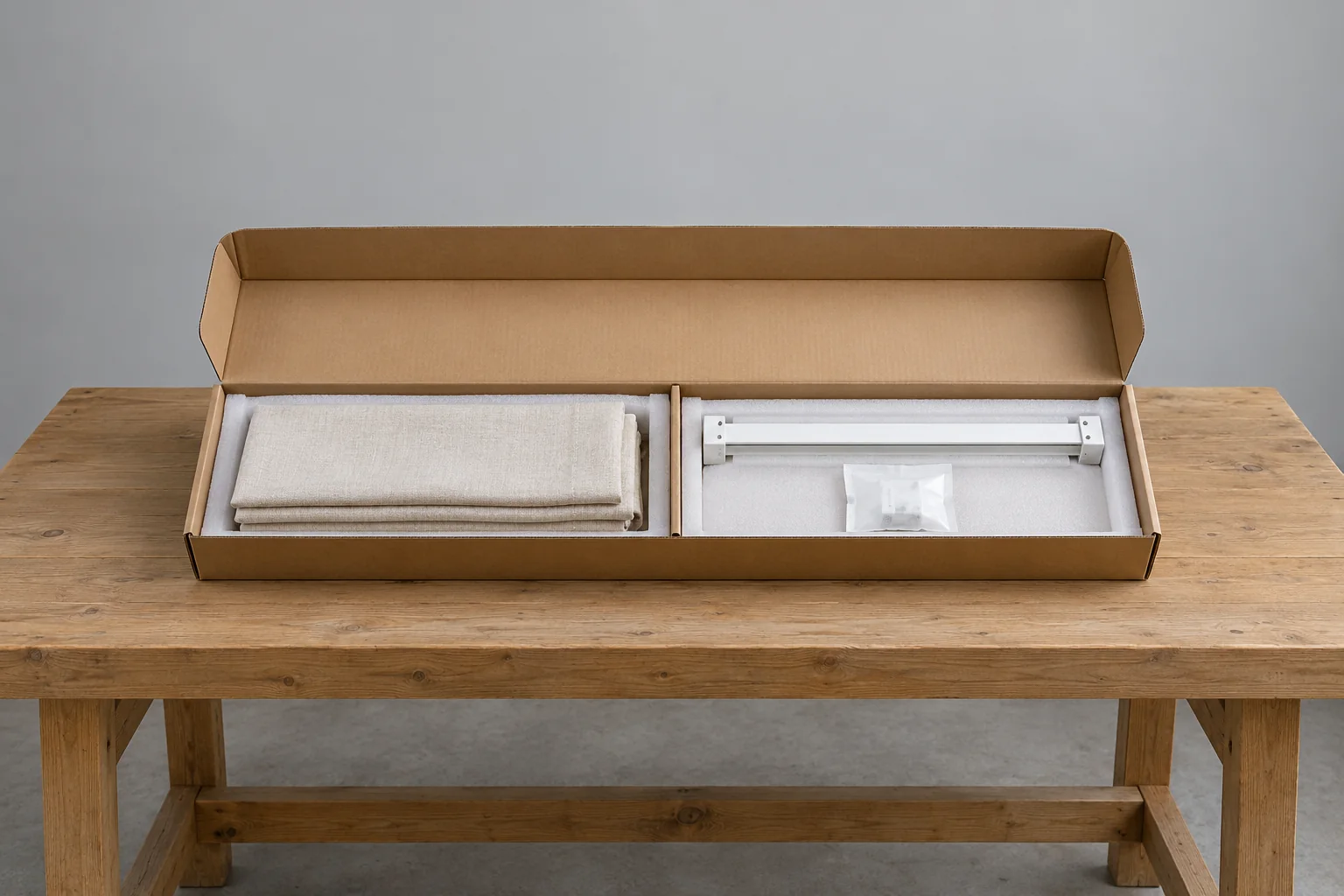
Use the supply coordination context to define who receives, checks, stores and transfers the package. Record the actual proposed packing and allocation responsibilities. A folded specimen in padding does not establish a complete order, correct length or transport-test result.
Compare relevant received identities and visible condition through the agreed process. Keep affected packaging information, objects and observations when a difference appears. An intact fabric piece cannot close a changed heading, missing component or rail version that formed part of the reviewed hanging arrangement.
When can the curtain configuration be released?
Match each gap with its affected commitment
Read the complete curtain, rail, recess, finished levels, stack and applicable reviews together. A preferred appearance can advance while another location or interface remains provisional. Define the release permitted by the records and the object needing further confirmation before fabrication or installation proceeds.
| Observed condition | Approval gap | Buyer response | Evidence needed next |
|---|---|---|---|
| Fabric choice substitutes for complete hanging identity | Construction and rail scope are undefined | Reconcile the selected objects | Current configuration and included parts |
| Drop is measured from an unexplained datum | Finished dimension basis is unclear | Obtain the applicable reference | Selected hanging point and level record |
| Recess omits fabric or layer occupation | Available envelope is unconfirmed | Review the actual combination | Current system and site comparison |
| Closed elevation replaces open-stack observation | Operating relationship is unrepresented | Locate and review the stated condition | Identified setup and bounded response |
| Changed floor, heading or rail inherits earlier approval | Previous basis may not apply | Reconcile before dependent work | Revised configuration and affected review |
| Required references and scoped responses agree | Defined release can be considered | Authorize the allocated combination | Retained basis and change route |
These actions organize procurement without assigning universal fullness, stack percentages, recess dimensions, care instructions or contractual remedies. The actual system, textile, project and agreement determine applicable acceptance and release authority.
Keep the installed configuration available
Retain room and opening allocations, installed rail and curtain identities, applicable care information and required installation records. Give the operator the accepted operating and service route. A decorative image cannot replace the references needed to request a later component or fabric change.
For replacements or adjustments, identify the altered object and the earlier decision it affects. Similar color or length cannot establish unchanged construction, operating geometry or compatibility. Keep the applicable response with the installed reference before treating the proposed alternative as equivalent to the accepted arrangement.

Conclusion
Release curtains against a complete identified hanging configuration and an accepted finished-level basis. Connect the fabric, construction, heading and rail with the actual recess, opening and operating stack. A preferred swatch, approximate elevation or unexplained room height cannot settle those separate relationships.
Bound represented observations by their actual components and conditions. Keep textile claims, mounting and powered controls with their applicable evidence and reviewers. Reconcile changes to the floor, rail, heading, lining or surrounding arrangement against the affected decisions before they inherit an earlier approval. Preserve the accepted identities and dimensions through fabrication, receiving and handover.
Prepare the curtain and opening schedule, current rail and site references, retained fabric and unresolved dimension or operation questions when requesting curtain sourcing support. Ask which complete configuration the supplier offers and what confirmation permits its release. That gives the maker a clear, retrievable basis.
Frequently Asked Questions
Does room height establish the curtain’s finished drop?
Identify the actual suspension reference, heading and relevant finished level used by the maker. Room height can describe a different dimensional object. Retain the applicable measured basis before issuing a fabrication instruction for the selected hanging configuration.
Can one stack percentage be used for every curtain?
Review the actual fabric, construction, heading, layers and rail arrangement with the maker. An approximate symbol or generic proportion does not establish the finished operating stack. Obtain the applicable configuration and opening comparison.
Does a blackout fabric prove complete opening blackout?
Read the actual material and report scope, then identify any installed opening or configuration requirement separately. A fabric-level result cannot establish every surrounding relationship. Keep the selected construction and relevant project assessment with the requirement being accepted.
What should happen after the rail or floor changes?
Locate the affected suspension datum, envelope, finished drop and operating relationship. Obtain the relevant maker and site reconsideration before dependent work proceeds. An unchanged fabric selection does not preserve every earlier dimensional or installation decision.