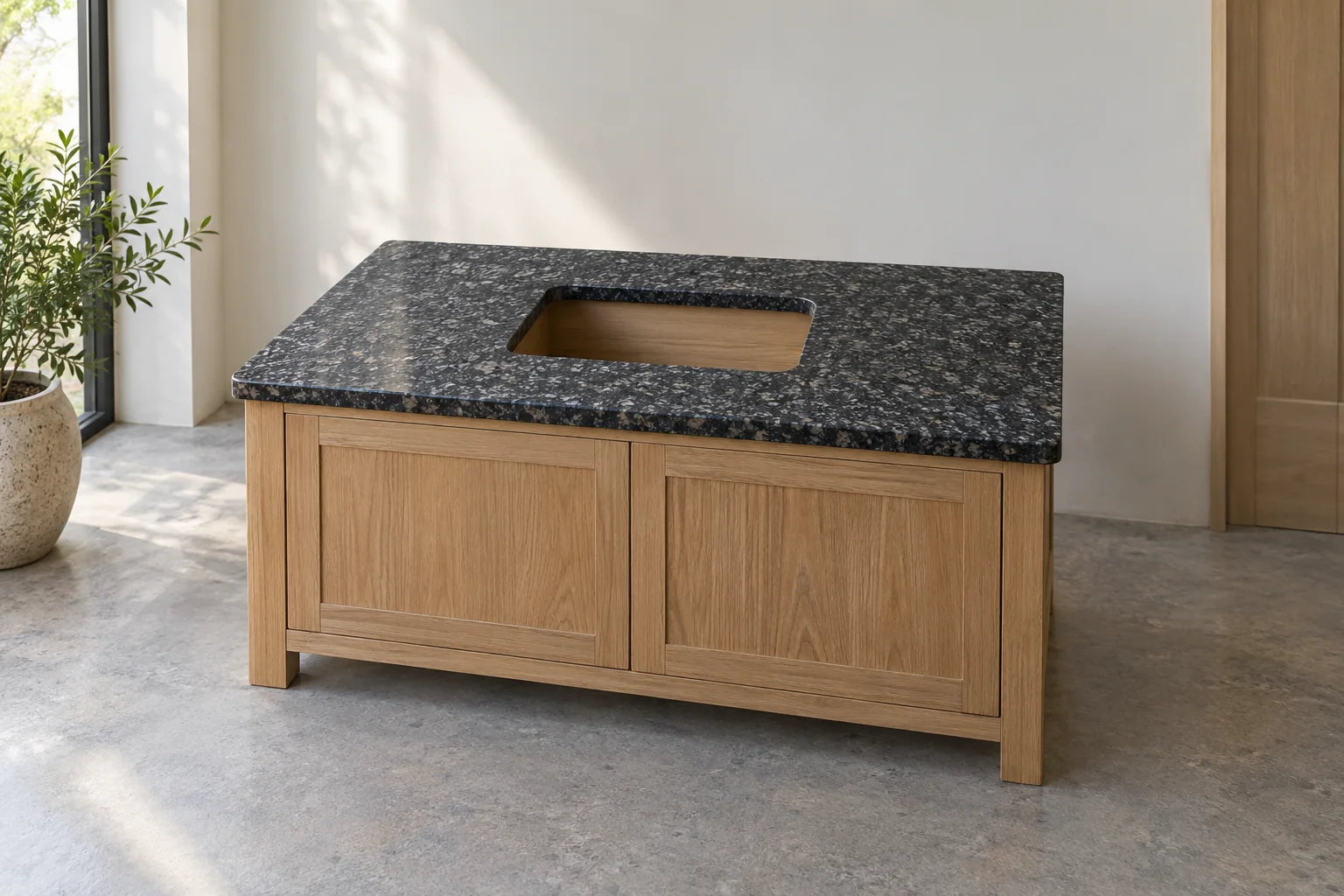
Granite slabs need a coordinated finished-piece basis before edge work and openings are released. A selected face can establish appearance while leaving the actual fixture, countertop geometry and support arrangement unresolved. Buyers should connect those decisions to the identified material and current project references before authorizing the affected fabrication.
Start with the proposed pieces and their counterparts, then retain a clear response to each interface question. Keep slab appearance, cutting geometry and installed support within their appropriate review scope. A plausible alternative can then be compared against the relationships it changes, without assuming that a similar stone face preserves the accepted countertop arrangement.
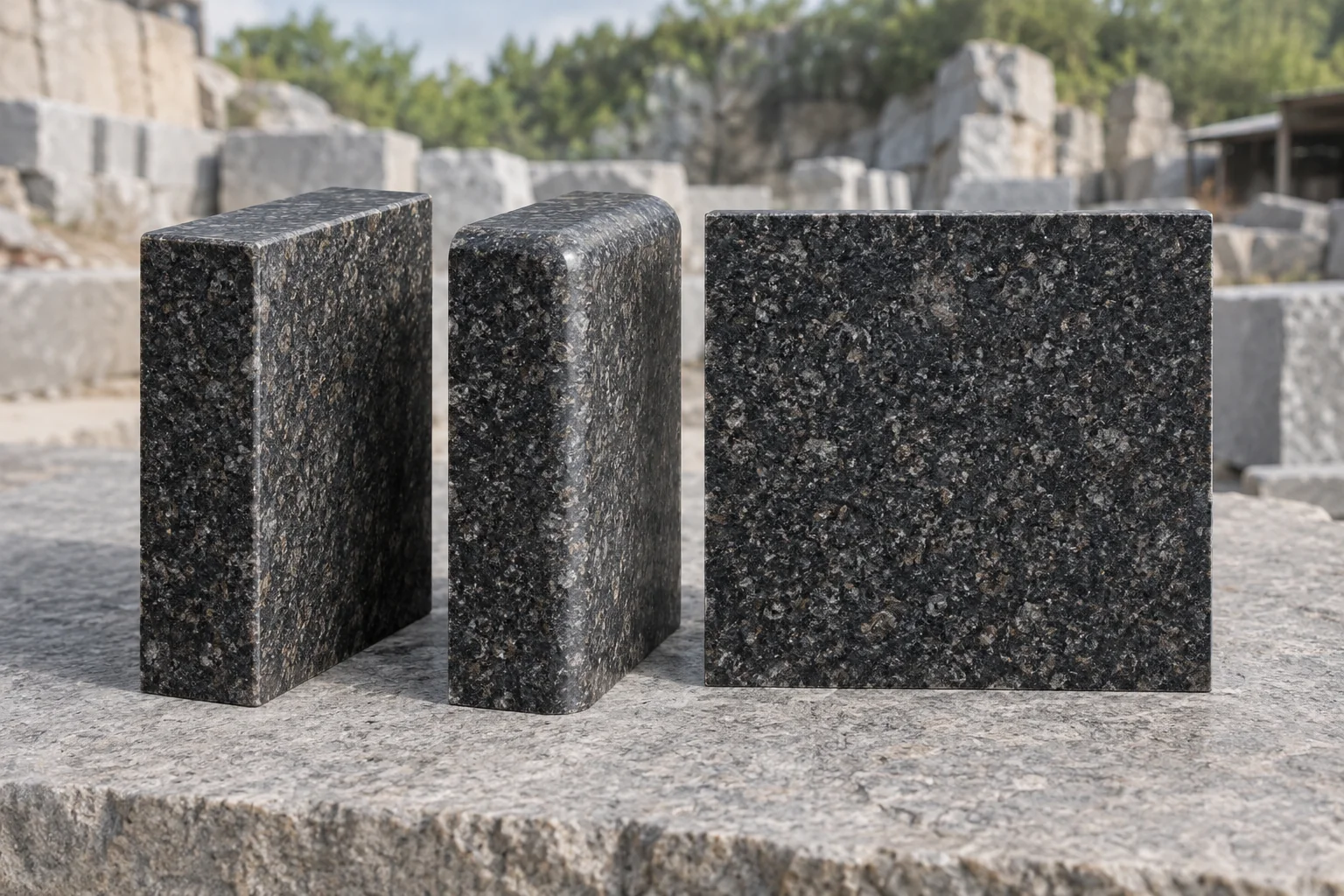
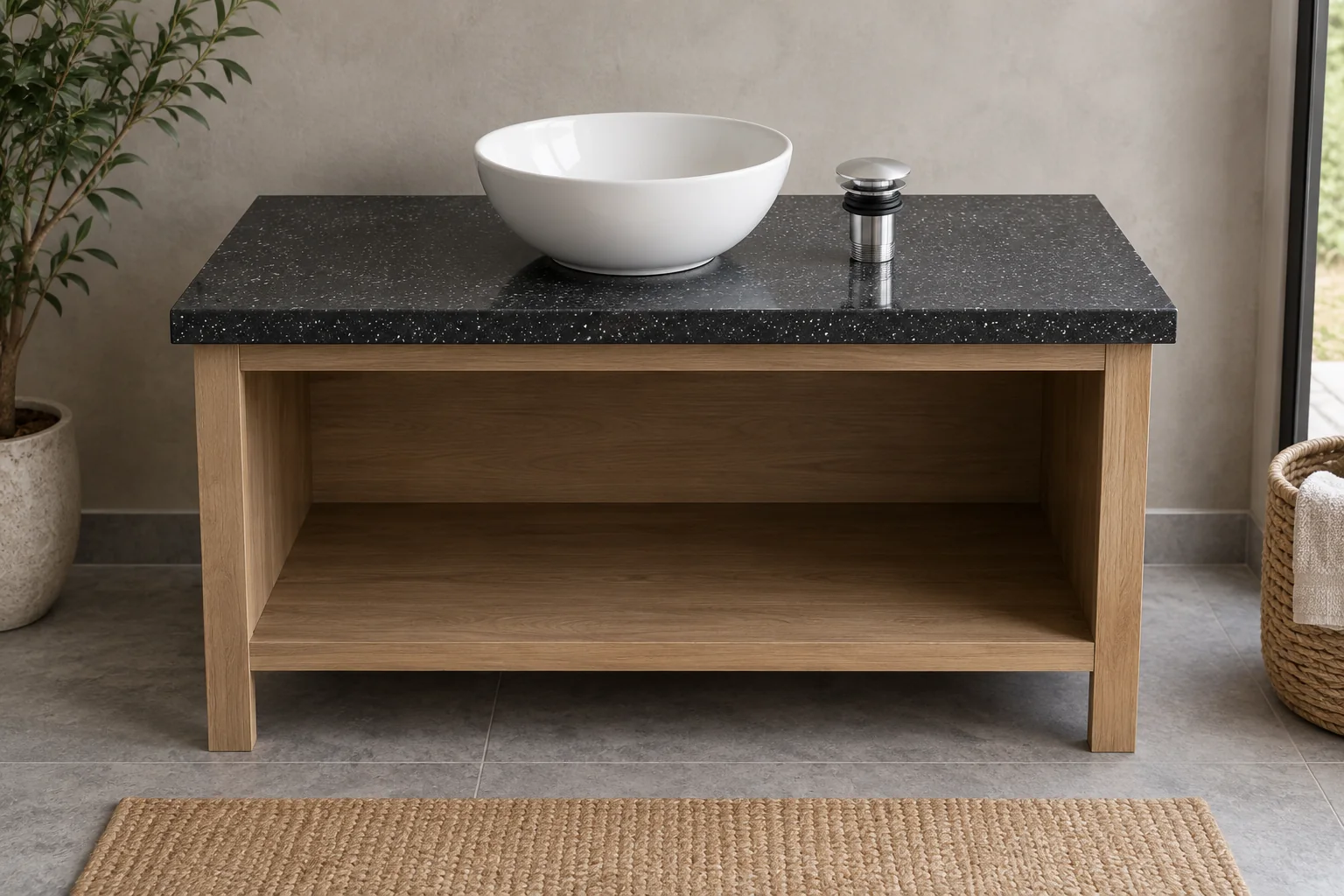
AI-generated piece and cutout concept, not an actual granite selection, fabricated dimension or accepted support arrangement.
What should granite slabs be released as?
Identify the material and finished pieces
For granite slab selection, record the actual offered material, finish and relevant slab or piece identities. Distinguish raw material selection from approval of a fabricated countertop. The buyer should be able to identify which physical supply and work the decision covers without treating an attractive full-face photograph as a complete cutting specification.
Give the supplier and fabricator the current piece schedule and relevant project locations. State which information remains provisional. A named countertop piece can connect the material to the intended work, while an early room outline may still leave its actual boundaries, joins and counterpart positions open to the later fabrication review.
For natural-stone sourcing, retain the offered commercial designation and relevant material information together. Ask which actual selection the proposal represents and what applicable evidence supports its intended use. A familiar stone-group name should not replace identification of the material now offered or the project conditions the responsible reviewer needs to assess.
Define the controlled geometry
Ask the responsible designer and fabricator to identify the finished reference points used for each relevant dimension. Clarify which visible edge, return, join or other boundary the drawing controls. A precise number can remain an incomplete acceptance input when the parties have not agreed which feature of the finished piece it describes.
Connect edge sections, opening positions and applicable counterpart references with the current piece revision. Ask which records the fabricator will use and how their identities are confirmed. A separate shape sketch can support discussion while leaving scale, final geometry or the actual product relationship unresolved for release.
State what the geometry approval authorizes. The buyer may accept a preliminary arrangement before final fixture or site inputs are available. Retain that limited scope and the missing information needed for the affected next commitment. A general approved note should not allow cutting against assumptions that another party still expects to revise.
Which fixture and template records control cutouts in granite slabs?
Identify the actual counterpart
For bathroom basin coordination, retain the selected model, mounting form and applicable opening information with the proposed piece cut from granite slabs. Ask the relevant reviewers what physical or controlled product reference is required for the comparison. An outer fixture outline and the intended countertop opening are different inputs that need identified treatment.
Ask which template or digital file applies to the selected fixture and installation form. Preserve its model and relevant revision with the countertop reference. A paper shape, online drawing or CAD file should not be used as an accepted cutting basis solely because it resembles the product the design team originally preferred.
For each opening, distinguish the visible relationship the designer wants from the fixture envelope and the cut line the fabricator will use. Have the reviewers confirm these references together. A sketch that identifies only a bowl outline can leave the accepted reveal or mounting form undecided.
For bathroom faucet coordination, identify the actual product, mounting arrangement and relevant component holes. Ask which party supplies and reviews each input. A preferred faucet finish can remain a visual selection while its position, connection and mounting relationship with the stone piece still require confirmation.
Compare the complete arrangement
The opening register keeps counterpart identity connected to the geometry decision.
| Opening input | Reference to retain | Responsible reviewer | Release question |
|---|---|---|---|
| Fixture identity | Actual model and installation form | Buyer and supplier | Which counterpart is accepted |
| Template identity | Applicable controlled file or physical reference | Supplier and fabricator | Which geometry the opening follows |
| Position | Current piece and room reference points | Designer and installer | Where the opening belongs |
| Related components | Actual faucet,accessory or other relevant inputs | Component owner and installer | Which other interfaces are affected |
| Cabinet envelope | Actual internal construction and occupied space | Cabinet and installation reviewers | Whether the arrangement is coordinated |
| Revision | Identified changed model or project input | Change owner and buyer | Which cutting decision must reopen |
Give the fixture, stone and cabinet reviewers a common set of current inputs before accepting the opening. Ask which relationships the proposed comparison resolves and which remain open. One supplier’s product information can be necessary without establishing the complete countertop and cabinet configuration in which the buyer intends to use it.
If the fixture, mounting form or related component changes, identify the affected opening and countertop piece before substitution. Obtain the applicable new response rather than treating an unchanged product category as acceptance. A revised fixture name without its relevant template and project comparison can leave the cutting decision attached to the wrong configuration.
What should edge and finish approval establish?
Retain the actual profile reference
Agree which edge shape and relevant face/return details belong to the selected piece. Ask the designer and fabricator to identify the applicable section or physical reference. A style name can organize options while leaving the actual profile, join relationship and finished requirement unresolved when the parties use that name differently.
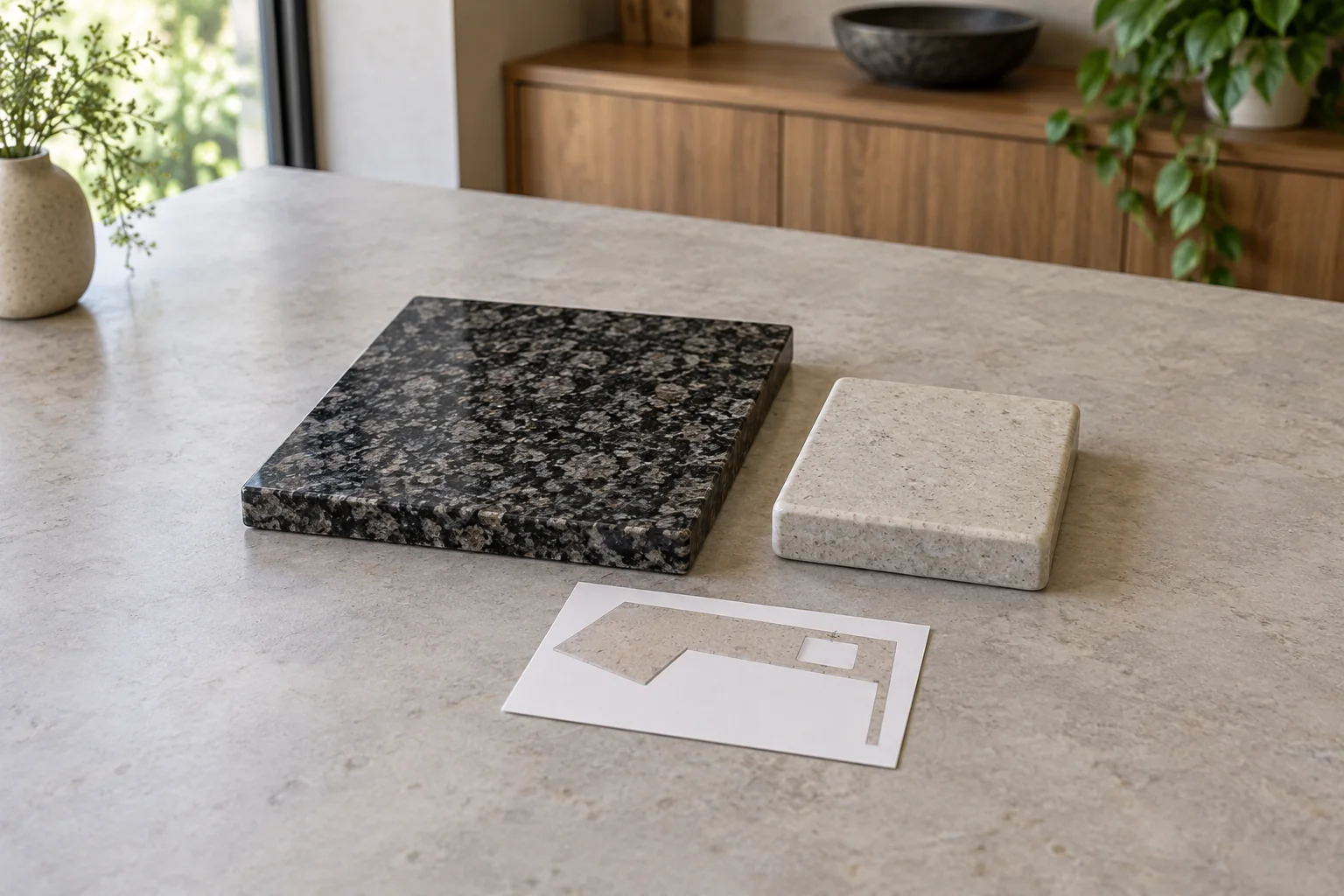
Retain the accepted edge specimen with the material and finish information it represents. Ask what the sample is intended to establish and which aspects require another applicable review. A small profile reference can support shape and appearance discussion without proving the dimensions, condition or installed support of every finished piece in the proposed order.
Connect the relevant edge, corner and visible opening details with the current piece drawing. Identify which party reviews the proposed arrangement and what information remains provisional. This guide does not prescribe a universal internal radius, edge thickness, reinforcement method or acceptance tolerance for unknown material and geometry.
Compare the visible result within its scope
Agree the appearance relationship between the selected face and relevant edges or adjoining pieces. Retain usable views and the actual comparison context. A photograph of one attractive area can leave a transition or another visible feature unresolved, so the buyer should identify which parts of the proposed finished result the appearance approval addresses.
If a disclosed treatment or observed feature matters to the edge or opening, retain its position and the relevant technical question. Ask the qualified reviewer for an applicable disposition before the affected work proceeds. Procurement can preserve the observation without diagnosing every mark or feature from a close image or a descriptive label alone.
When the profile, finish or selected material changes, identify which sample and piece references are affected. Retain the revised comparison and response before release. A replacement described as equivalent should not inherit the earlier edge approval when the actual shape, visible relationship or applicable technical basis is different.
How should support and service space be coordinated for granite slabs?
Review the actual supporting arrangement
For kitchen cabinet and granite countertop coordination, give the responsible parties the actual cabinet, countertop and relevant fixture references together. Ask which support, opening and service relationships require agreement. A cabinet’s exterior size cannot establish every condition that needs to be reviewed for the selected piece and mounting form.
For bathroom cabinet coordination, identify the actual internal arrangement and the objects occupying relevant space. Ask the installer and cabinet reviewer to compare the selected fixture, mounts and service components with that configuration. An apparently suitable footprint can leave a different question unresolved behind a drawer, frame or finished panel.
Clarify who provides and reviews the stone support, fixture support and other applicable components. Keep their responsibilities identifiable even when the products form one room package. This guide requests a qualified project response without prescribing universal spans, overhangs, bracket spacing or a method for transferring fixture loads through the countertop.
Preserve access and changes to the counterpart
Ask the qualified reviewers to identify relevant service access for the actual fixture and components within the proposed arrangement. Retain the accepted references and any remaining assumptions. A dry prototype can help discuss geometry while leaving the completed configuration’s support and operation dependent on applicable technical and installation review.
If the cabinet, fixture or supporting arrangement changes, connect the change with the affected countertop piece and approval. The buyer needs to know whether the earlier opening and edge decisions still apply. A material face that remains visually unchanged does not establish that a revised counterpart preserves the accepted assembly.
State which unresolved support or access input prevents the next commitment. The buyer can retain the preferred granite and profile while obtaining that response. Keep the condition visible in the order rather than allowing an approaching installation date or routine fabrication assumption to turn missing project information into presumed technical acceptance.
How should layout and care scope remain traceable?
Link selected material to the finished arrangement
Ask which actual slab allocation and appearance references control the intended finished pieces. Retain orientation and adjoining relationships where they matter to the design. A material quantity can support the enquiry while leaving usable allocation and the composition after cutting unresolved. The fabricator and designer need the applicable current proposal before accepting those decisions.
For quartzite slab alternatives, identify the actual offered material and relevant geometry, support and care evidence if a replacement enters the comparison. A similar stone appearance does not establish that the alternative preserves the granite proposal’s accepted technical or operating basis for the intended application.
For engineered-quartz alternatives, retain the proposed product configuration and its applicable information separately. Ask the responsible reviewers which countertop and counterpart relationships change. Visual continuity can remain a design objective while the alternative’s fabrication, support and care decisions need a clear response of their own.
Retain the applicable handover records
Request the care and relevant treatment information for the actual granite and finish. Ask the makers and operator to assess the proposed routine with the adjoining materials. This article does not supply a universal cleaner, sealing interval or performance promise, and an edge appearance specimen cannot establish acceptance of an unidentified maintenance method.
For whole-house material coordination, connect the granite pieces with the current room and counterpart schedule. Keep the relevant product and acceptance references available through handover. The operator should be able to identify the supplied material and applicable care record without relying on a general project name or an old showroom image.
Clarify which drawings, appearance records and other relevant handover items accompany the supply. Confirm actual support and commercial terms directly where they affect procurement. A request for useful records should not become an invented repair outcome, fixed response time, replacement stock guarantee or service-life claim for the selected countertop package.
What should receiving and release authorize for granite slabs?
Compare the actual supply with the accepted piece
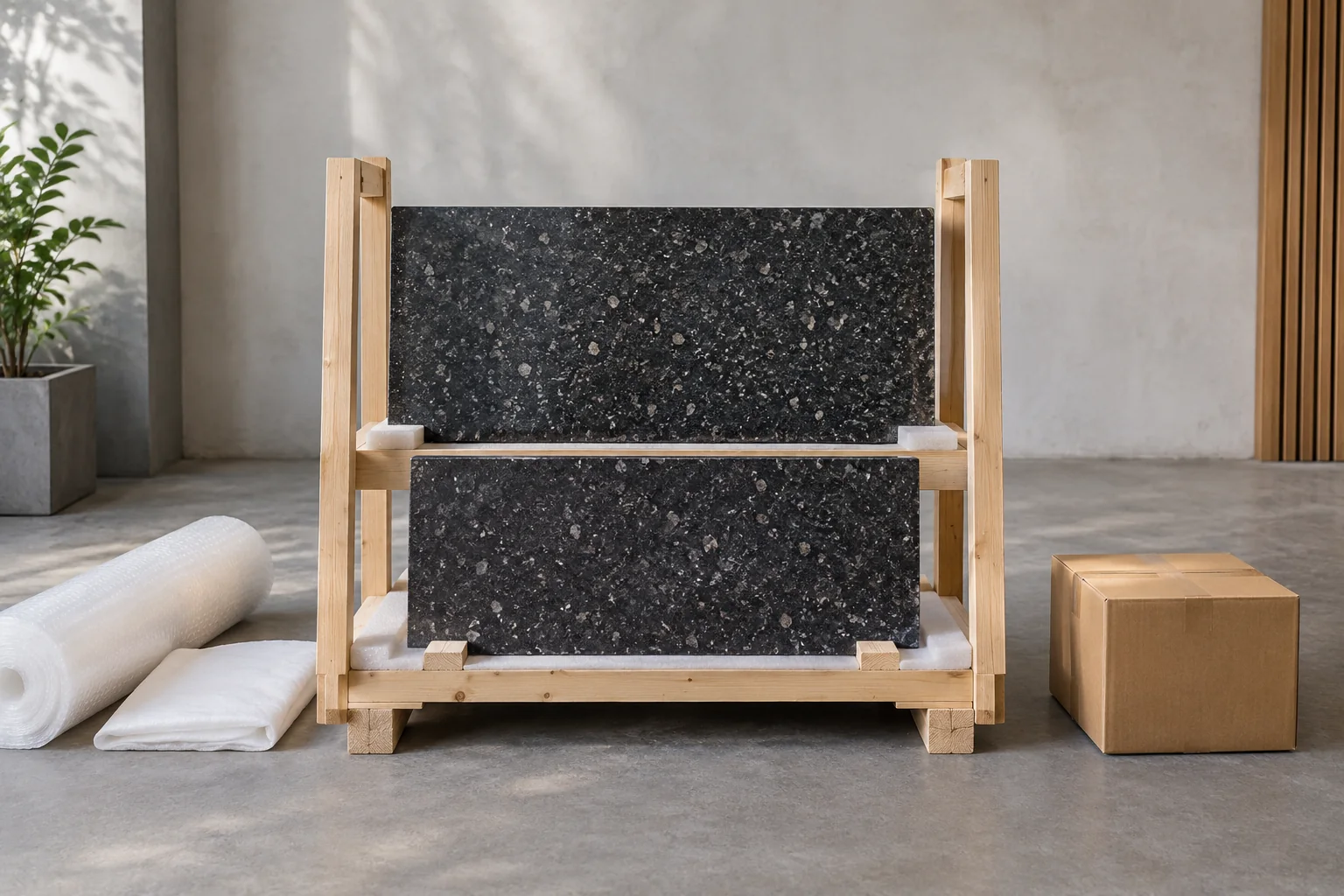
Ask how the receiving team can connect each piece cut from granite slabs with the selected material, current drawing and relevant appearance references. Agree applicable identifiers before dispatch. A familiar speckled face or protective crate can be useful within a record while leaving the actual piece, opening orientation or approved revision unidentified.
Record visible condition and identified differences within the agreed receiving scope. State which item and feature were observed and which question needs a response. Intact packaging does not establish complete assembly acceptance, and a close photograph does not by itself prove the cause of an issue. Keep the relevant disposition attached to the same piece.
The release register connects a finding with the fabrication or installation decision it affects.
| Observed gap or change | Evidence to obtain | Buyer response | Scope to reopen |
|---|---|---|---|
| Piece geometry is provisional | Accepted drawing and reference points | Hold affected cutting release | Named finished piece |
| Fixture or template differs | Actual model and applicable comparison | Review before substitution | Opening and related holes |
| Edge reference is unclear | Current section/specimen and finish response | Obtain profile acceptance | Affected visible details |
| Support basis changes | Actual counterpart and qualified review | Hold affected technical release | Selected assembly |
| Material condition is unresolved | Identified observation and technical disposition | Segregate for review | Relevant piece/application |
| Received identity differs | Order-linked material,piece and revision records | Request receiving disposition | Affected installation items |
Preserve the updated commitment basis
Before release, identify the accepted material, piece revision and relevant technical responses. State whether the decision authorizes selection, cutting, dispatch or installation, and which inputs remain provisional. The supplier and project team should be able to find a common basis without extending one completed appearance or receiving review to every unresolved assembly requirement.
When an opening, profile, support or counterpart changes, retain the old reference and new response together. Identify what changed and why the affected work may proceed. A revised piece number or supplier assurance without the corresponding comparison can leave the current offer disconnected from the arrangement that the buyer originally accepted.
Use a scoped disposition when an issue is scoped. The buyer should be able to identify affected pieces and requirements while leaving other accepted work traceable. Approval of one specimen should not cover unexamined geometry, and a concern with one item should retain its actual boundary in the order and receiving records.
Conclusion
Release granite against an identified selection and a coordinated finished-piece basis. Connect the actual edge, opening and counterpart references with the relevant support and technical responses before the affected cutting or installation commitment proceeds. Early appearance and layout work can remain useful while provisional inputs stay explicitly connected to the decisions they prevent.
Retain the selected material, current geometry and applicable care information through receiving and handover. Revisit the affected relationship when a fixture, template, cabinet, profile or supporting arrangement changes. An unchanged stone face should not conceal a different assembly, and a replacement should receive a response addressing the actual acceptance basis it alters.
Use Sibolla’s material coordination services to discuss the granite pieces, retained profile references and unresolved cutout or support questions. Confirm the proposed supply and qualified review responsibilities directly before ordering.
Frequently Asked Questions
Does a selected granite slab establish its finished cutouts?
No. Connect the material with the current piece drawing, actual counterpart, applicable template and relevant project references. Obtain the appropriate fabrication and technical responses before release. A full-face image can support appearance selection while those geometry decisions remain unresolved.
What should identify a sink or basin template?
Retain the actual fixture model, installation form and applicable controlled file or physical reference. Ask the responsible reviewers to establish its relationship with the proposed opening and current countertop arrangement before treating it as a cutting basis.
Can cabinet exterior dimensions establish countertop support?
No. Give the responsible reviewers the actual cabinet construction, relevant internal arrangement, selected piece and fixture information. Obtain an applicable support and interface response. A nominal exterior dimension does not establish every mounting, service or occupied-space relationship.
When should an opening or edge change return for review?
Revisit the affected acceptance when the fixture, template, position, profile, material or support arrangement changes. Retain the updated piece and counterpart comparison with an explicit disposition before extending the previous fabrication or technical release to the new proposal.