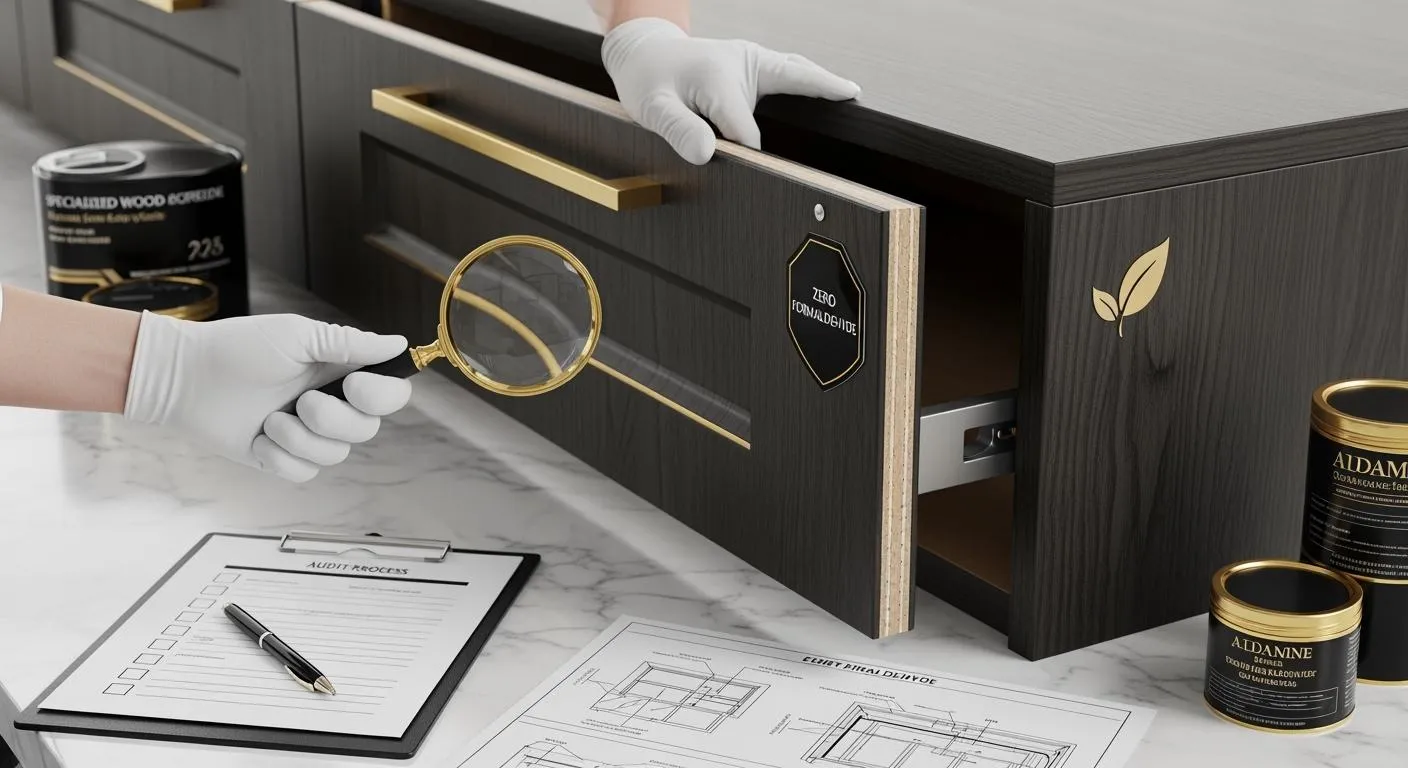
For high-end kitchen cabinet sourcing and OEM audits, I review panel identity, edge-banding quality and formaldehyde-emission evidence separately. Moisture-resistant MDF is not waterproof, and an adhesive marketed as no-added-formaldehyde does not prove the complete cabinet has zero emissions. See Sibolla Building for related project options. [1]
| Certification | Description | Impact on Quality and Compliance |
|---|---|---|
| CARB Phase 2 | Limits formaldehyde emissions from composite wood products | Improves indoor air quality and adheres to health regulations |
| TSCA Title VI | Extends CARB Phase 2 rules nationwide | Ensures suppliers are certified and compliant with regulations |
Key Takeaways
- Request actual panel and adhesive identification with relevant emissions evidence. No-added-formaldehyde resin, a green core or an MDI reference does not establish zero emissions or every destination’s compliance.
- Make clear goals for the audit. Focus on edge sealing, formaldehyde emissions, and material quality. This helps get better results.
- Pick OEM partners with good quality systems and a strong history. This makes sure the cabinets are made well.
- Get all needed papers ready, like supplier certifications and safety sheets. This helps find problems early.
- Do careful checks at the factory to see how edge sealing is done. This makes sure cabinets do not get damaged by water.
- Make sure adhesives are safe by looking at supplier certifications and asking for lab test results.
- Keep checking during production and do random checks. This helps find problems before they hurt quality.
- Use clear audit reports to share what you find and give advice. This helps keep high standards.
Cabinet Sourcing Audit Planning
Cabinet Sourcing: Setting Audit Goals
You begin by making clear goals for your audit. Sibolla Building helps you focus on important things for High-End Kitchen Cabinets. You want cabinets that do not let water in and use safe adhesives. You set targets for edge sealing, formaldehyde emissions, and material quality. You make sure your goals follow world rules. This step stops confusion and keeps your project moving.
Tip: Write your audit goals down before you visit any factory. This makes checking things easier and better.
Cabinet Sourcing: Choosing Qualified OEM Partners
You need good partners to make High-End Kitchen Cabinets. Sibolla Building uses a step-by-step way to pick OEMs. You look for factories with strong quality systems and good history. You check if they use new machines and train workers well. You also look at their certificates and old projects. This helps you find OEMs that fit your needs.
- Look for OEMs with:
- Regular quality checks
- Teamwork on improvement projects
- Strong ways to keep quality high
| Evidence | Description |
|---|---|
| Quality Audits | Regular quality checks make sure the cabinets always meet the rules. This is important for keeping custom kitchen cabinets high quality. |
| Joint Quality Improvement | Working together on projects saves money and makes cabinets better. This helps the cabinets be higher quality. |
| Robust Quality Assurance Methods | Having strong quality checks at every step makes sure the cabinets are good in the end. |
Preparing Documentation and Standards
You get all your papers ready before the audit. Sibolla Building checks certificates like TSCA and CARB. You collect safety sheets and supplier records. You compare these papers to your project rules. This helps you find problems early. You make sure every OEM follows the same rules. You keep your papers neat so you can check them easily.
Note: Always ask for new certificates and test reports. This keeps your project safe from hidden problems.
Cabinet Sourcing: On-Site MDF Checks
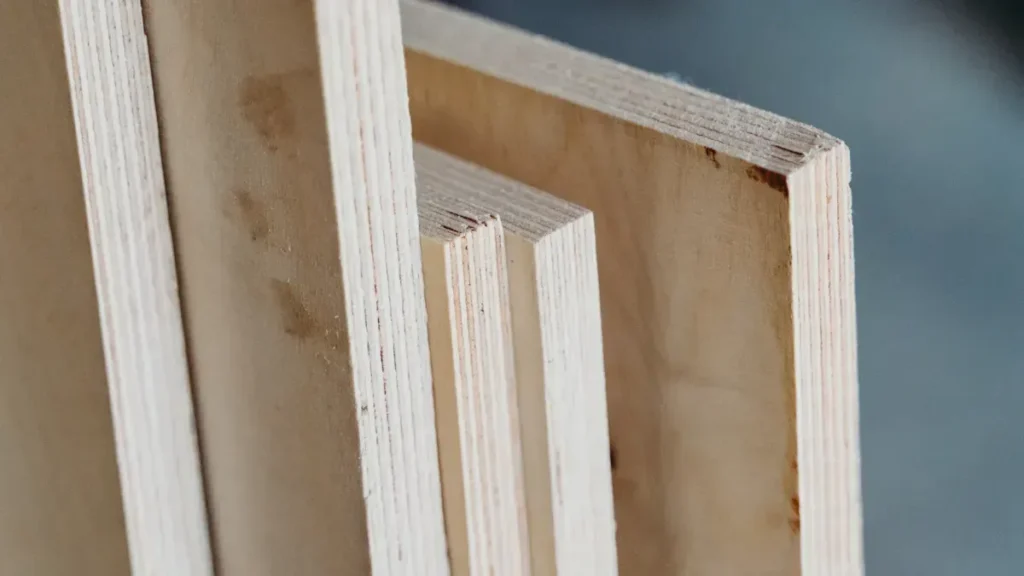
Image Source: pexels
When you visit an OEM factory, you need to check how they protect MDF panels from water. This step is important for High-End Kitchen Cabinets. You want cabinets that last long and look good, even in kitchens where water is common.
Inspecting Edge Sealing Methods
Visual and Physical Checks
You start by looking at the edges of the MDF panels. You check if the edges are smooth and fully covered. You touch the surface to feel if the sealant or edge banding is even. You look for any gaps, cracks, or rough spots. These problems can let water in and damage the cabinet.
- Edge banding and special sealants make MDF much stronger against water.
- Good edge treatment helps cabinets last longer in wet kitchens.
- If you skip edge sealing, you may see swelling, soft edges, or color changes.
You want to see that every edge is sealed well. You check both the inside and outside edges of each panel.
Consistency and Coverage Review
You check many panels, not just one. You look for the same quality on every piece. You want to see that the sealant or banding covers the whole edge, with no missed spots. You check corners and cutouts, because these areas can be weak. You ask the workers to show you how they seal the edges. You watch for careful work and good tools.
Tip: Take photos of good and bad examples. This helps you explain what you want to the OEM.
Testing for Moisture Resistance
Water Immersion and Swell Tests
Agree a documented moisture-resistance test with defined conditioning, exposure and acceptance criteria. An improvised water dip is not proof that a panel or finished cabinet is waterproof.
Durability and Adhesion Checks
You also want to know if the edge stays strong over time. You can use special tests to check this. Some common tests include:
| Test Name | Description |
|---|---|
| Cross-Cut Adhesion Test | You cut a pattern on the surface and use tape to see if the film peels off. This checks the bond. |
| Heat Aging Tests | You put samples in a hot oven for a set time. This shows if the panel can handle heat in kitchens. |
| Cold Check Testing | You move the panel between hot and cold many times. This checks if the glue and sealant stay strong. |
You want High-End Kitchen Cabinets that pass these tests. This means they will last longer and look better in real kitchens.
Evaluating Process Controls at OEMs
Machinery and Maintenance Review
You check the machines that seal the MDF edges. You look for clean, modern machines. You ask how often the factory cleans and fixes the machines. Well-kept machines make better cabinets. You want to see a schedule for machine checks and repairs.
Operator Training Assessment
You talk to the workers who seal the edges. You ask if they get training. You want to see that they know how to use the machines and apply the sealant. You check if they follow safety rules. Trained workers make fewer mistakes and keep the quality high.
Note: Good process controls help you get the same quality every time. This is key for big projects with many cabinets.
Cabinet Sourcing: Verify Adhesive and Emission Claims
Image Source: unsplash
You want your custom cabinets to be safe at home. Sibolla Building cares a lot about health and safety. You need to make sure the adhesives do not give off formaldehyde. This keeps your air clean and your kitchen safe.
Reviewing Supplier Certifications
TSCA/CARB and Third-Party Proof
You start by checking if the supplier has certificates. TSCA and CARB Phase 2 are important rules. These rules limit how much formaldehyde can be in the air. You ask the supplier for papers that show they follow these rules. You also look for proof from other trusted groups. These groups test the cabinets to make sure they are safe.
| Compliance Standard | Impact on Formaldehyde Emissions |
|---|---|
| CARB Phase 2 | Needs strong testing to keep emissions low |
| TSCA | Sets the lowest allowed formaldehyde levels |
| Third-party Certifiers | Check the rules with more tests |
You want to see certificates that fit your project. CARB Phase 2 means the cabinets use safer resins. Cabinets that pass get special labels for indoor air. You can trust these labels because outside groups check them often.
Tip: Always ask for new certificates. This helps you avoid hidden dangers and keeps your project safe.
Material Safety Data Sheets (MSDS)
You also ask for Material Safety Data Sheets. MSDS tell you what chemicals are in the glue. You read these sheets to make sure there is no formaldehyde. You check if the information is clear and easy to understand. If something is missing or confusing, you ask the supplier for more proof.
| Grade | Formaldehyde Limit | Primary Applications |
|---|---|---|
| E0 | ≤0.5 mg/L | Best for homes, kids, and hospitals |
| E1 | ≤1.5 mg/L | Good for most furniture and cabinets |
| E2 | ≤5.0 mg/L | Used for boxes and short-term buildings |
You want glue that meets E0 or E1 grades. These grades mean the glue gives off very little formaldehyde. E0 is best for homes and schools. E1 is good for most cabinets and furniture.
Lab Testing and Independent Verification
Formaldehyde Emission Tests
You do not just trust the certificates. You ask for lab test results too. Labs test the finished cabinets for formaldehyde. You look for tests from trusted labs. These tests show how much formaldehyde comes out. Cabinets that meet CARB2 rules have much less formaldehyde. This makes your air better and keeps you healthy.
- Cabinets with low emissions help you breathe better.
- You avoid problems like coughing or sore throat.
- You keep your family or customers safe from harm.
You check the test reports for clear numbers. You compare these numbers to the limits from CARB and TSCA. If the cabinets pass, you know they are safe.
Batch Traceability
You also check batch traceability. You want to know which glue batch was used in your cabinets. You ask the supplier for batch records. These records show when the glue was made and tested. If there is a problem, you can find out where it started.
Note: Batch traceability helps you fix problems fast. You can find a bad batch and stop it before it causes trouble.
Sibolla Building checks all these steps for you. You get cabinets that meet strict rules. You get clear records and test results. You know your High-End Kitchen Cabinets are safe and strong.
Cabinet Sourcing Quality Assurance
Assessing OEM Quality Systems
ISO and Internal Audits
You need to check if your OEM follows strong quality systems. Look for ISO certifications like ISO 9001. This shows the factory uses clear rules for making cabinets. Ask to see their audit reports. These reports show how often they check their own work. You can also ask about their last internal audit. This helps you know if they fix problems quickly.
| Quality System | What to Check | Why It Matters |
|---|---|---|
| ISO 9001 | Certificate and audit reports | Shows the factory follows world standards |
| Internal Audits | Audit schedule and results | Proves they check and improve their work |
Avoiding Superficial QMS
Some factories only show papers but do not follow real steps. You need to look deeper. Walk around the factory. Watch how workers follow rules. Ask questions about their process. If you see workers skipping steps, the quality system may not be strong. You want a partner who uses their system every day, not just for show.
Tip: Trust what you see, not just what you read in reports.
Ongoing Monitoring and Sampling
Random Checks and Non-Conformity Handling
You should not stop checking after the first audit. Plan random checks during production. Pick samples from different batches. Test these samples for size, finish, and safety. If you find a problem, ask how the factory handles it. Good OEMs have a clear way to fix mistakes. They keep records of every problem and how they solved it.
- Random checks catch hidden issues.
- Quick action on problems keeps your project on track.
Corrective Actions and Follow-Up
Root Cause Analysis
When you find a problem, do not just fix the surface. Ask the factory to find out why it happened. This is called root cause analysis. The team looks for the main reason behind the mistake. They may use simple tools like a “5 Whys” chart. This helps stop the same problem from happening again.
Implementation Review
After the factory fixes the problem, you need to check if the solution works. Review the changes they made. Test new samples if needed. Make sure the problem does not come back. Keep notes on every fix. This helps you build trust with your OEM and keeps your High-End Kitchen Cabinets at top quality.
Note: Good follow-up means better cabinets and fewer surprises in your project.
Cabinet Sourcing: Reporting and OEM Approval
Structuring Audit Reports
Key Findings and Recommendations
You need a simple report to help you decide. First, write down what you saw at the factory. Show what the factory does well, like good edge sealing or clean work areas. Also, show what is not good, like missing papers or edges that are not covered right. For each problem, say what should be done. If you see gaps in edge sealing, tell them to train workers more or get better machines.
- Write good things and bad things in different lists.
- Use easy words for every point.
- Give one idea to fix each problem.
Tip: Use bullet points or short paragraphs. This helps your team read and share the report easily.
Supporting Evidence
Always show proof for what you find. Add pictures of both good and bad work. Put in copies of certificates, test results, and training papers. If you did tests, add those results too. You can use tables to show how many panels passed or failed.
| Checkpoint | Result | Notes |
|---|---|---|
| Edge Sealing Coverage | 95% Passed | 2 panels had missed spots |
| Formaldehyde Emission | All Passed | E0 grade confirmed |
| Operator Training Records | Complete | Updated last month |
This table helps you see what is working and what needs to get better.
Cabinet Sourcing: OEM Approval Criteria
Compliance Thresholds
You need clear rules to pick the right factory. These rules help you choose safe cabinets. The table below shows what you should check:
| Criteria | Description |
|---|---|
| E1/E2 Standards | Must meet at least E1 (≤ 1.5 mg/L) or E2 (≤ 5.0 mg/L) for formaldehyde. |
| E0 Grade | Stricter grade (≤ 0.5 mg/L) often required for export projects. |
| CARB Phase II | Needed for US market; formaldehyde ≤ 0.11 ppm. |
| CE Marking | Required in Europe (EN 13986) for compliance. |
| UKCA Documentation | Needed for products sold in the UK. |
| ISO Certifications | ISO 9001 (quality) and ISO 14001 (environment) show strong management. |
| Sustainable Forestry Labels | FSC or PEFC labels show responsible wood sourcing. |
| Independent Lab Reports | Must provide test reports for emissions, moisture, and additives. |
Only say yes to factories that meet these rules. This keeps your cabinets safe and ready for any country.
Risk Assessment
Check for problems before you say yes to a factory. Look at old mistakes, like late orders or failed tests. See how the factory fixes problems. Ask if they have backup plans for supply issues. Mark each risk as low, medium, or high.
- Low risk: Factory meets all rules and fixes problems fast.
- Medium risk: Some small problems, but the factory tries to get better.
- High risk: Many problems or missing papers.
Note: Pick factories with low or medium risk for your jobs. This helps you avoid delays and keeps your brand strong.
You feel calm when you follow Sibolla Building’s audit steps for custom cabinets. Good quality checks and working closely with suppliers lower risks. This also helps your orders arrive on time.
| Practice | Benefit |
|---|---|
| Continuous performance evaluation | Problems get fixed early, so work stays on track. |
| Real-time order visibility | You find issues quickly and stop delays. |
| Strong supplier relationships | Trusted partners help you reach higher goals. |
You keep cabinets good by picking strong materials and caring about how long they last. Always trying to get better means your kitchen cabinets stay nice and strong for a long time.
Cabinet Sourcing FAQ
Moisture-resistant MDF has a special layer that keeps out water. Kitchens often get wet, so this is important. It helps your cabinets stay strong and look nice for a long time.
You ask for papers like CARB or TSCA certificates. You also look at Material Safety Data Sheets (MSDS). Trusted labs can test the cabinets for harmful gases. Always check the papers and ask for new test results.
Continuous edge banding can reduce exposure at vulnerable edges, but does not make MDF waterproof. Protect cutouts and joints and control installation moisture.
Sibolla Building checks every part of the process. They help you plan audits and check factories. The team looks at test results and makes sure your cabinets follow all the rules.
If a batch fails, you ask the OEM to find out why. You check how they fix it and test new samples. Sibolla Building helps you watch the problem and make sure it does not happen again.
Yes, you can use these steps for wardrobes, bathroom cabinets, and more. This way, you get safe and good furniture for any room.
References and Sources
Sources checked on 27 September 2026. Apply each standard within its stated scope and verify current requirements for the project destination.