Outdoor tiles should be released against actual exposure, drainage and substrate conditions, with product evidence tied to the selected material and intended use. A tile labeled exterior can leave the complete installation, water route and surface-performance basis unresolved. The buyer needs those separate objects reconciled before a preferred finish becomes a committed outdoor floor package.
For a residential or commercial project, the immediate decision is which tile and area combinations can proceed under the applicable product and site reviews. Suppliers identify offered selections and records. Designers establish appearance and layout, while qualified project personnel confirm structural, drainage and installation requirements.
Build the enquiry around the actual tile, location and complete assembly. Keep appearance, material testing and site acceptance distinguishable. This guide assumes no universal frost grade, friction threshold, slope, adhesive, movement-joint size or care routine for an unknown outdoor product and destination.
AI-generated outdoor application illustration; no actual installed material, measured friction, weather test or accepted drainage is represented.
Which outdoor tiles and applications are offered?
Identify the actual material and complete selection
Give each tile a product and area reference, actual material or construction identity, finish, format and relevant document revision. Distinguish the proposed ground, step, threshold or other application where conditions differ. A broad outdoor-tile name cannot establish the intended use of every product in the scheme.
Use the outdoor tile category to frame the enquiry. Attach actual locations and interface questions, then ask the supplier to identify its offered selection. A category route does not establish a particular tile’s test evidence, available stock or acceptance for the project.
Record relevant trims, transitions and other included objects beside the field tile. Ask which party supplies each and what information covers the proposed complete combination. A finished-patio image can show intention without establishing the actual purchase and installation responsibilities behind it.
Connect the selection with its actual use
Retain the selected items within the wider tile schedule, identifying which areas use each construction and finish. A coordinated appearance can remain useful while another application receives review. State the actual approved scope rather than extend one exterior sample comment throughout every location.
For natural-stone selections, retain actual material, finish and relevant treatment information. A ceramic test record and a stone product can concern different objects. Keep those identities distinguishable before a similar appearance is treated as installation or exposure equivalence.
Ask the responsible project team to identify intended traffic, occupation and relevant operating conditions. A patio, entrance or step can ask different questions of the selected product. The enquiry should describe the actual application without inventing a universal loading, footwear or exposure condition from its category name.
Which exposure and site records are needed for outdoor tiles?
Describe conditions at the actual location
Record relevant moisture, freezing, sunlight, contamination and other exposure conditions through project information. Identify unresolved inputs and owners. A destination name or exterior photograph cannot establish the actual environment governing the offered material and complete installation at every position.
Give the appointed reviewers the current ground or supporting construction, finished levels and surrounding interfaces. A paved surface can leave the concealed substrate unknown. The buyer needs an actual site and selected-product comparison rather than infer installation suitability from an attractive finished face.
The register connects product, exposure and complete-system information with their separate decision owners.
| Application input | Record to retain | Decision it supports | Confirmation owner |
|---|---|---|---|
| Tile and area | Exact material, finish, format and position | Identify the offered application | Supplier and designer |
| Exposure and use | Actual site and operating conditions | Define relevant product requirements | Project team and appointed reviewers |
| Substrate and support | Current construction and site information | Review the installation basis | Contractor and qualified personnel |
| Drainage and edges | Water route, receiving conditions and interfaces | Resolve complete water management | Responsible site and installation reviewers |
| Surface and material evidence | Applicable method, configuration and records | Bound the performance decision | Makers and appointed technical reviewers |
| Care and changes | Selected-product limitations and active identities | Preserve handover and revisions | Operator and coordinator |
An unresolved entry should remain attached to its affected commitment. The register does not declare a product frost resistant, a floor safe or a complete drainage arrangement accepted.
Keep adjoining operation visible
For outdoor furniture, retain relevant positions and ordinary operation where they affect the floor and access discussion. An empty patio can leave another intended occupation unrepresented. Give the actual furnishing and tile arrangement to the responsible reviewers before freezing the area layout.
For pergola interfaces, identify relevant supports, finished ground and proposed water discharge where they meet the tiled area. A sheltered-looking rendering cannot establish exposure or drainage acceptance. Keep the actual systems and shared interface questions identifiable.
If an area changes use or surrounding conditions, obtain the relevant applicability response. A retained decorative preference can remain useful without approving the revised application. Record the actual new input and affected review rather than assume that an unchanged tile name preserves every earlier condition.
How should material and surface evidence be interpreted?
Match exposure records with the tested object
Where outdoor tiles face freezing or other exposure requirements, identify the applicable criterion and responsible reviewer. Request applicable evidence for the selected tile, material and conditions. A frost-proof description or low water-absorption result should not replace the record required for the specific application.
Read any freeze-thaw report for the actual material, method and configuration it covers. A test of a ceramic or glass specimen can answer a different question from the whole outdoor assembly or another material. The method name alone cannot establish that an unknown product, substrate and installation meet the project’s full requirements.
For slate tile selections, retain actual material and finish references with relevant application information. A dark or textured-looking sample cannot identify the complete offered selection or its exposure evidence. Ask the maker and appointed reviewer which records apply to that actual construction.
Keep friction measurement within its scope
Where surface-performance requirements affect selection, retain the applicable method, product and measured conditions with the intended use. A result under controlled conditions can provide useful information without predicting every actual use or slip. Give the responsible reviewer the real application rather than choose a universal number for all outdoor floors.
A rough appearance, marketing label or numerical friction result cannot settle every contamination, maintenance, footwear and site condition. Identify relevant project information and selected-maker limitations. Keep that complete use comparison distinguishable from the isolated product measurement.
For wood-look porcelain selections, retain actual construction, finish and product evidence rather than infer properties from the image’s grain. A coordinated decorative style can contain different surfaces. Each selected product needs applicable review for its own stated application.
How should drainage and substrates be reviewed for outdoor tiles?
Locate the actual water route
Ask responsible project personnel to identify the intended collection, discharge and receiving conditions at the tiled area. Give them selected-system information and current site references. A dry appearance model can discuss the layout while leaving the actual route and complete installation unconfirmed.
Distinguish a drainage component from the relevant waterproofing and supporting assembly where those objects are present. An integrated-looking mat or channel does not establish every connection and receiving interface. Obtain the selected-maker and project response without deriving a universal drainage detail from another product example.
For doors and windows at an exterior threshold, retain the actual frame, finished levels and relevant operating geometry. A convenient tile edge can leave another building interface unresolved. Give affected trades the active references before the floor and opening are treated as a coordinated accepted arrangement.
Review the actual attachment and support combination
Obtain installation information for the exact tile, setting components, substrate and proposed construction. Ask qualified personnel to identify applicable site records and limitations. Similar tile faces can conceal different complete installation objects, so a prior response should not transfer by decorative resemblance alone.
Where joints, edges or other local construction differ, locate those conditions and their review owners. A repeated floor plan can hide another support or water-management object at one position. Retain the selected system and actual location before a convenient detail is repeated throughout the project.
This guide supplies no slope percentage, drainage sizing, adhesive recipe, membrane procedure or substrate threshold. If the receiving route or underlying condition remains unknown, identify the missing input and commitment it prevents. An exterior product label cannot close a site prerequisite that the responsible reviewer has not considered.

Which layout and appearance observations need a bounded review?
Use actual products and area references
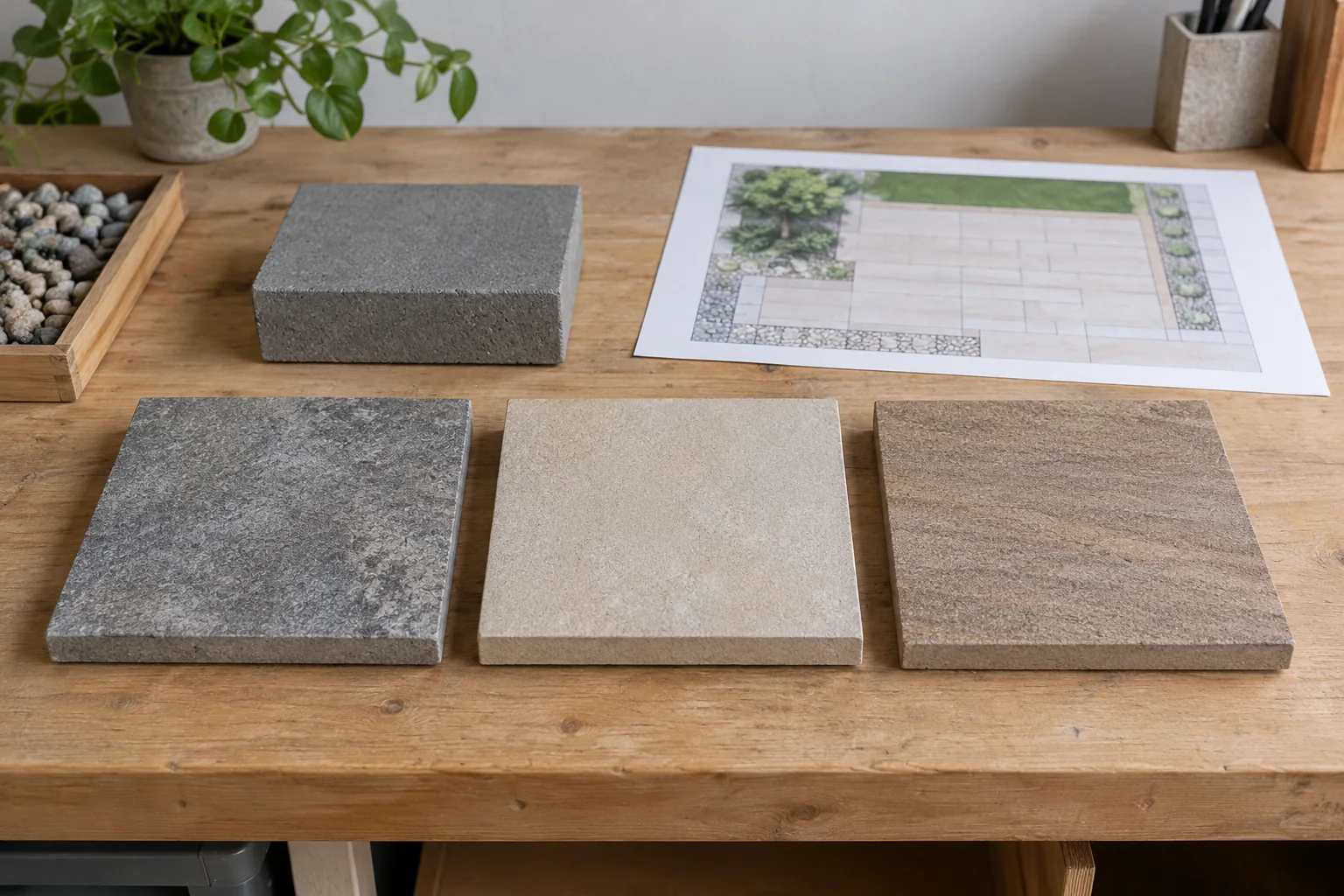
Retain the selected physical appearance reference, actual format and proposed layout with the area schedule. Identify which pattern, tone range, joints and adjoining finishes the observation represents. A small specimen can resolve color or texture while leaving the complete installed arrangement open to another review.
For terracotta tile selections, retain actual construction, finish and relevant care information. An earthy appearance should not establish every material or exposure property. Ask the maker and responsible reviewer which evidence covers the offered product and intended position.
Record any stand-in or absent condition before using a represented observation for release. A favorable image should identify its actual scope rather than approve an undefined supply batch or variant. The observation cannot become evidence of measured friction, frost performance or complete drainage acceptance.
Keep local interfaces attached to their decisions
For staircase and step interfaces, identify the actual tiled application and relevant edge, supporting construction and movement. A flat patio specimen cannot approve another step arrangement. Obtain the applicable product and project response before the alternative inherits unrelated floor acceptance.
For outdoor lighting positions, retain relevant bases, penetrations or service occupation where they affect the tiled area. Sharing an exterior design does not establish the same installation and evidence requirements for both systems. Give the appropriate reviewers the actual selected objects.
If a format, position or adjoining finish changes, locate the appearance, installation and quantity questions it affects. Preserve the revised references and relevant response before dependent work proceeds. A matching product name cannot preserve a layout or interface that the actual alternative does not share with the accepted arrangement.
How should delivery and care preserve the selection?
Retain product and area allocation identities
Agree how outdoor tiles, trims, batch or format information and area allocations remain traceable through delivery. Keep the actual order and accepted layout with those records. Similar-looking pieces should not be distributed only by appearance before their product and intended-position linkage is available.
Use the supply coordination context to establish who receives, checks, protects and transfers the materials. Ask suppliers to explain the actual proposed protection and relevant product conditions. Specimens in padding cannot establish available stock, a complete delivered order or tested transport performance.
Compare relevant delivered identities, included objects and visible condition through the agreed receiving process. Retain affected packaging and observations when a difference appears. A correct total count cannot close a changed finish, format or companion part that formed part of the reviewed package.

Keep the actual maintenance basis available
Obtain applicable care information for the selected tile, joints, treatments and adjoining materials. Ask the makers and operator to assess the proposed routine and relevant limitations. A generic exterior cleaning sheet can leave another surface or complete system outside its actual scope.
For whole-house material coordination, retain outdoor product and area identities beside active site and furnishing records. A changed operation, coating or surrounding installation should reach the reviewer whose decision it affects. Shared project naming cannot replace the configuration needed for a precise service question.
Record an observed issue and its actual location before assigning a cause or selecting a remedy. Ask the relevant maker and qualified project personnel to assess the available information. A photograph cannot diagnose every moisture, frost or installation concern, and this guide supplies no universal cleaner, pressure-washing, abrasion or repair procedure.
When can buyers approve outdoor tiles for installation?
Match the finding with the missing evidence
Read the selected tile, actual exposure, substrate, drainage and relevant surface records together. A preferred appearance can advance while another prerequisite remains open. Define the commitment permitted by the current information and identify the area or component needing a response before the next stage proceeds.
| Observed condition | Approval gap | Buyer response | Evidence needed next |
|---|---|---|---|
| Exterior label substitutes for actual application information | Exposure and use are undefined | Describe the relevant conditions | Current product and site record |
| Frost or friction evidence covers another material or method | Performance scope is unclear | Obtain applicable confirmation | Identified requirement and selected-product evidence |
| Drainage component lacks a receiving-site review | Complete water route is open | Coordinate before dependent work | Current system and discharge interfaces |
| Substrate or setting combination changes | Earlier installation response may not apply | Reconsider the affected assembly | Revised construction and qualified response |
| Format, care or adjoining object differs | Previous observation has limited coverage | Locate and review the difference | Updated identities and bounded assessment |
| Required records and scoped reviews agree | Defined package release can be considered | Authorize the allocated application | Retained basis and change route |
These actions organize procurement without assigning universal frost or friction values, installation details or contractual remedies. The actual products, site, project and agreement determine applicable acceptance and release authority.
Leave a usable installed-system record
Retain installed tile and area identities, applicable maker documents, accepted site interfaces and required technical or installation outcomes. Give the operator the current care and service route. A completed-patio photograph cannot replace the evidence needed to assess a later material, use or drainage change.
Keep any unresolved condition and owner beside the permitted release. A proposed replacement should identify which earlier response remains applicable and which needs reconsideration. The useful procurement file describes accepted objects and conditions without presenting a surface specimen as proof of every outdoor system requirement.
Conclusion
Release outdoor tiles when the selected product and its actual application have received the relevant exposure, drainage and substrate reviews. Keep material and surface evidence connected to the configuration and conditions it covers. An exterior label, rough appearance or isolated product figure cannot establish the complete site’s acceptance basis.
Bound represented observations by their actual materials and layout. Reconcile affected decisions when tile, setting components, substrate, water route or surrounding use changes. Preserve product and area identities through receiving, then retain applicable care and technical records for the installed selection. Keep an observation separate from an unverified cause or proposed remedy.
Prepare the outdoor tile schedule, actual site and water-management references, applicable evidence and unresolved interface questions when requesting outdoor tile sourcing support. Ask which complete configuration the supplier offers and what confirmation permits its release. That gives procurement a clear, retrievable basis.
Frequently Asked Questions
Does an exterior tile label approve the complete installation?
Identify the actual product, application and relevant site conditions with the responsible reviewers. A label can leave substrate, drainage and adjoining interfaces unconfirmed. Obtain applicable selected-system and project responses before the affected installation is released.
Can one frost test approve every tile material and assembly?
Read the actual report for its material, method, configuration and conditions. An isolated specimen test can leave another material or complete installation outside its scope. Retain the applicable evidence and qualified response for the proposed outdoor application.
Does a friction result predict every actual slip condition?
Measurements under stated conditions can provide useful information without predicting every use or incident. Give the appointed reviewer actual application, maintenance and surrounding-condition information. A number or rough appearance alone cannot settle the full site comparison.
What should follow a changed drainage or substrate arrangement?
Locate the altered object and the earlier installation or water-management decision it affects. Obtain the relevant maker and project reconsideration before dependent work proceeds. An unchanged tile face does not preserve every earlier complete-system response.