Bathroom mirrors need an approval record that connects the selected product with its wall, lighting and service requirements. A preferred shape or illuminated edge can establish the design direction while leaving the mounting arrangement, controls and power scope open. Procurement should identify those inputs before committing the affected mirror package.
For a contractor coordinating a residential or hospitality bathroom, the immediate decision is which configuration the supplier will deliver and what the site must prepare. A plain mirror, a lighted mirror and a cabinet containing a mirror can carry different requirements. Their shared appearance does not establish the same fixing, connection or service plan.
This guide develops a model, interface and release record. It does not provide wiring steps, circuit values, mounting loads or a universal wet-location rating. The selected maker, installer and qualified electrical reviewer must establish the applicable requirements for the actual product, location and destination.
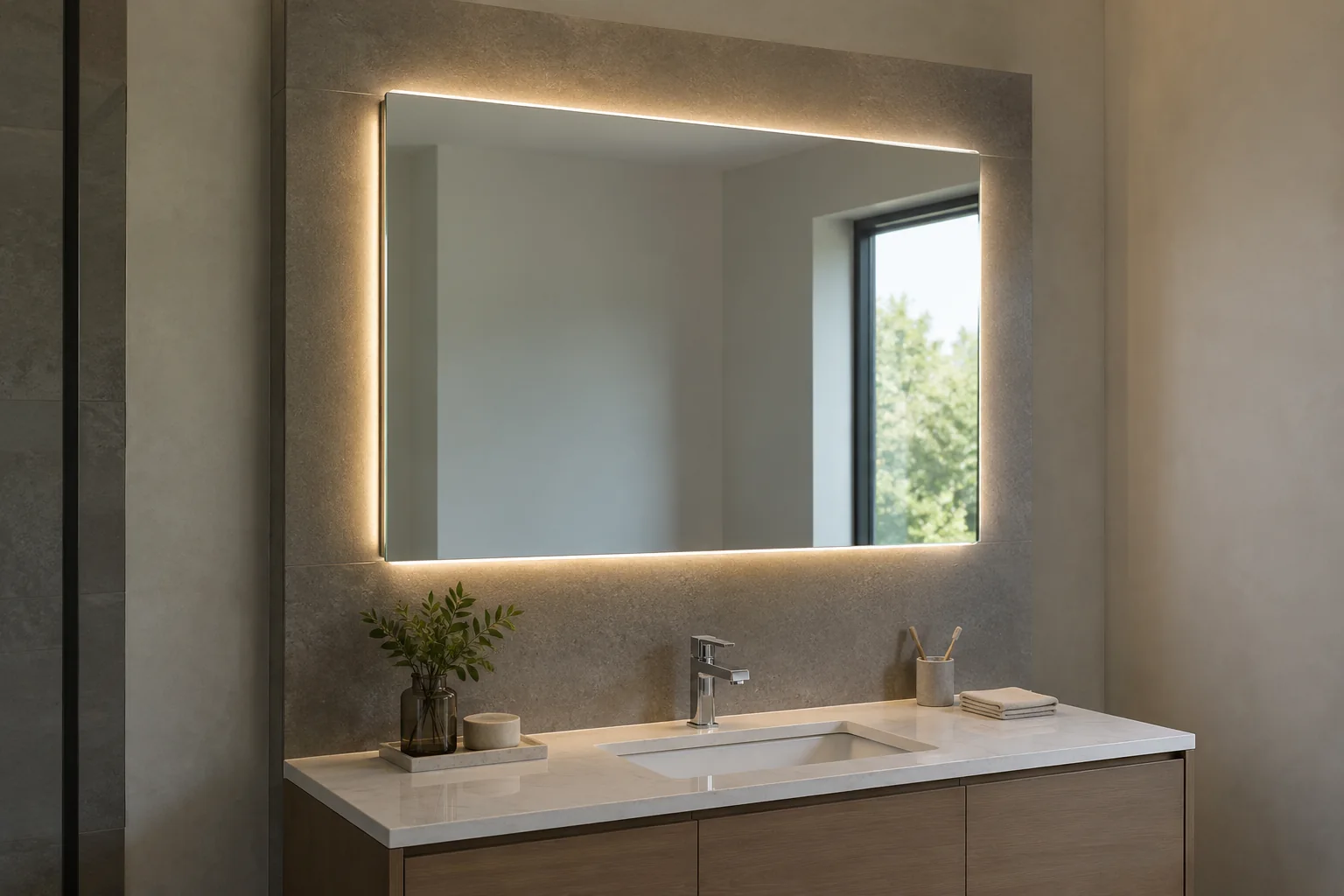
AI-generated coordination illustration; not an actual supplied model, illuminance result or approved mounting and electrical installation.
Which bathroom mirrors and functions are included?
Identify the offered configuration
Request the actual reference, dimensions, orientation, glass/finish description and intended location. State whether the offer concerns a plain mirror, a powered unit or another configuration. If a cabinet, storage or opening feature is included, identify it separately instead of allowing a product image to define the scope.
The bathroom mirror category can frame the enquiry. Attach the room and elevation references, then ask the supplier to identify the configuration being quoted. The site team should be able to locate the same model and revision that procurement intends to order.
List the functions that need coordination
Identify lighting, dimming, demisting, switches, sensors and other offered functions where present. Ask which components are included and which require another supply or review. A feature label cannot establish the complete electrical, control or mounting arrangement.
Use this register to connect the offer with its necessary project inputs.
| Input | Record to obtain | Approval question | Review owner |
|---|---|---|---|
| Model and geometry | Reference, orientation, size and supplied scope | Which configuration is being ordered? | Supplier and specification team |
| Included functions | Identified lights, controls and other features | What must the site coordinate? | Maker and electrical reviewers |
| Mounting and backing | Product-specific fixing and actual wall inputs | Which support arrangement applies? | Installer and responsible project team |
| Power and control | Applicable product and system documents | What selected configuration has been reviewed? | Qualified electrical reviewer |
| Finished interfaces | Current elevation and adjoining references | Are geometry and access coordinated? | Designer and relevant trades |
| Receiving and service | Identity, components and access records | How will the accepted scope remain traceable? | Buyer and operating team |
Keep an open item attached to the decision it prevents. A designer can select a mirror shape while another function or site input is reviewed. The register does not establish a listing, circuit requirement or structural approval for every mirror.
What should mounting and wall reviews establish for bathroom mirrors?
Connect the actual product with its support
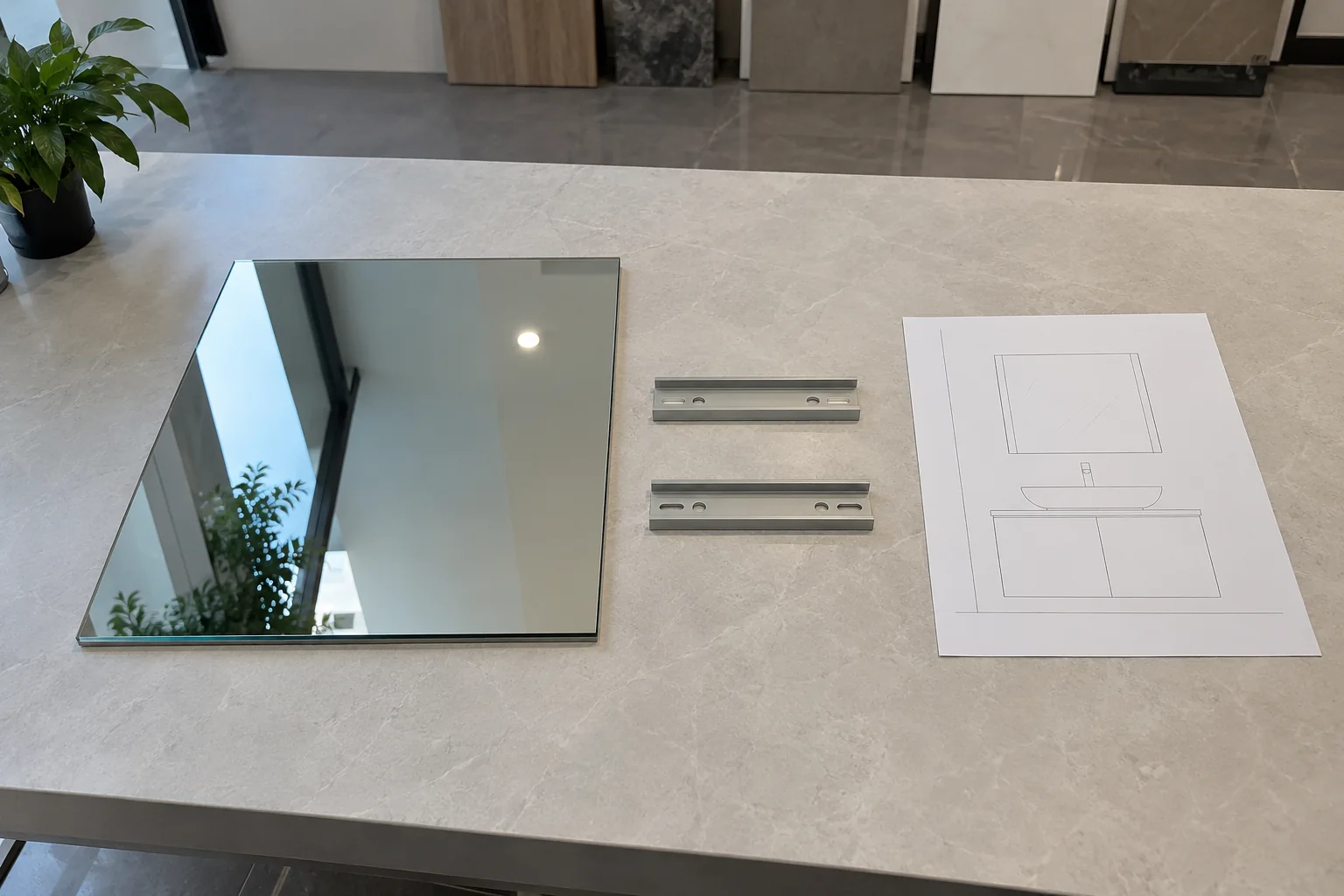
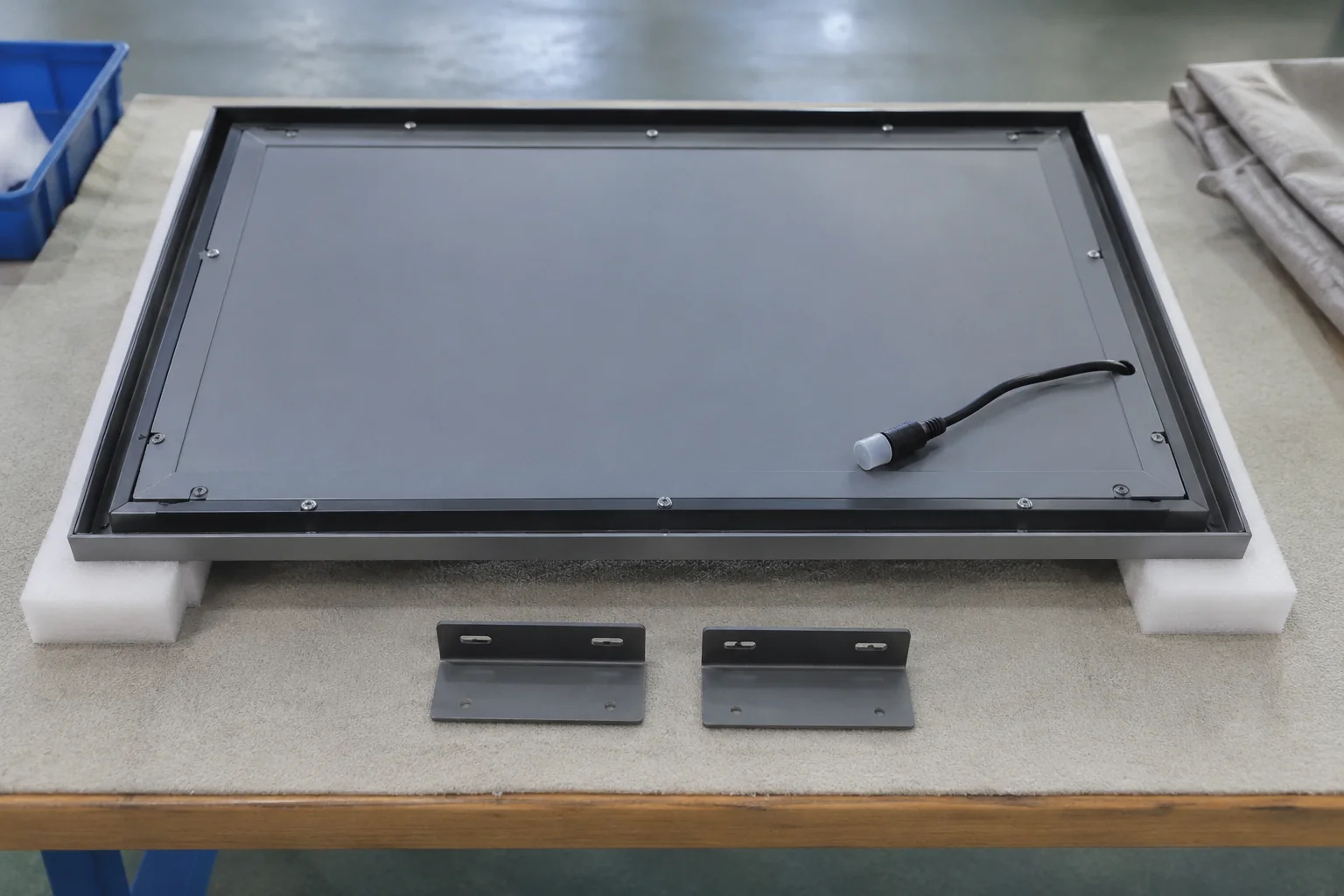
For bathroom mirrors, give the selected maker’s mounting information to the appointed installer with relevant wall and backing details. Ask which inputs must be confirmed before the fixing arrangement is accepted. A bracket pictured beside a mirror does not establish its compatibility with every substrate.
For wall-panel coordination, distinguish the visible finished layer from the support that the mirror arrangement requires. The panel’s presence or material name cannot approve the complete fixing. Retain the product and wall information that the responsible reviewer needs.
Resolve geometry before concealment
Connect the actual fixing and mirror references with the current finished elevation. Identify the wall, edge and relevant services through the appropriate project records. The installation team needs an identifiable basis before a finished surface or concealed work makes a change harder to coordinate.
For bathroom tile interfaces, retain the actual finish and relevant penetration or junction detail. A preferred tile appearance cannot establish the mirror support or complete wet-area requirements. Those decisions need their assigned technical reviewers and applicable information.
Ask who confirms the wall conditions and who reviews a proposed mounting alternative. The response should identify the product and location considered, rather than promise that the fitter will find suitable fixings later. A supplied hardware packet is one input to that review, not its conclusion.
If the mirror size, orientation or wall build-up changes, identify the affected fixing and elevation records before accepting the substitution. Similar front appearances can leave different support or service questions. Keep the change specific so procurement can obtain the appropriate confirmation.
How should electrical functions and controls be reviewed?
Separate the offered functions
Give the qualified electrical reviewer the actual mirror reference, included components and intended operation. Ask which power, control and connection information applies to that configuration. A unit advertised with lighting and a demister should not be assumed to have one universal supply or switching arrangement.
Ask whether lighting, demisting or another included function has a separate power or control requirement in the selected model’s information. Identify the components and operation intended for the actual room. Keep the qualified review specific to that configuration; another mirror’s circuit value, dimmer recommendation or listing does not establish the offered product’s requirements.
Confirm the selected system and location
Ask the maker and qualified reviewer to connect the proposed control and location with the applicable product information and destination requirements. Identify any separate component or confirmation needed before the package advances. The article does not define wire colors, circuit protection or installation steps for an unidentified product.
For project lighting coordination, keep the mirror’s controls connected to the intended lighting arrangement where relevant. A room dimmer or control system accepted for another luminaire does not automatically establish compatibility with the mirror’s selected components.
Clarify which work and components the mirror quotation includes and which belong to the site or another package. The buyer needs to know who supplies them, who reviews their use and what information each party receives. An excluded control line should not become an assumed included service.
If the electrical function or control changes after selection, return the affected configuration for review. The mirror’s appearance can remain similar while its system inputs differ. Record which earlier confirmation still applies and which decision requires another maker or electrical response.
What should lighting and appearance samples show for bathroom mirrors?
Define the visible question
Agree whether the review concerns shape, finish, lighting appearance, reflection or the relationship with other fixtures. Identify the actual reference and relevant viewing conditions. An attractive catalog image can guide design without documenting the selected model’s complete performance or control scope.
For wall lamps near the mirror, coordinate the intended visible position with the mirror elevation and appearance review. The combined view can help the designer discuss the arrangement. It does not approve electrical connections, mounting or an unexamined fixture specification.
Keep appearance and technical evidence distinct
A sample or mock-up can support a defined visual decision while leaving output, control compatibility or application requirements to their applicable evidence. If the project requires measurement or testing, identify the method, configuration and responsible reviewer separately. A glowing edge in a photograph is not that result.
For bathroom cabinet coordination, include the actual visible cabinet, countertop and mirror references where they affect the design. A selected finish pairing should remain connected to named objects. A generic vanity image cannot establish the exact room combination or operating relationship.
Record the sample, functions represented, viewing arrangement, observations and approval limits. The supplier should be able to locate what the designer accepted. If an element is merely an illustrative example, keep that status clear rather than convert it into a promised product result.
Where the buyer requires a functional sample review, agree the selected configuration, qualified reviewer and observations in advance. Separate the requested control behavior from a visual lighting preference. Record which included functions were represented and which were outside the review. If a demonstration uses another model or a different control, identify that limitation instead of approving the offered package from the demonstration alone.
After a size, frame, control or lighting change, identify which part of the review needs reconsideration. A limited follow-up can resolve a defined uncertainty without rebuilding every unrelated selection. Retain the earlier comparison basis so the revised decision remains understandable.
Which fixture interfaces and service access must be coordinated?
Work from the actual finished arrangement
Reconcile the mirror elevation with basin, countertop, fittings, wall finishes and relevant openings. Ask which current dimensions and references govern the relationship. A mirror size selected in isolation may leave a visible boundary or an operating feature unresolved.
For bathroom basin coordination, identify the actual basin and countertop references. The designer and installer should understand how the mirror arrangement relates to them. The article does not prescribe a universal mounting height or dimension from a model bathroom photograph.
Keep operation and maintenance possible
Ask how the selected mirror and any included opening, control or service component will be accessed through the reviewed arrangement. Give the responsible installer and operating team the actual product documents. A preferred front appearance does not establish that a maintenance task can be completed after surrounding finishes are fixed.
For bathroom faucet coordination, retain the actual fixture position and relevant operating information through the project team. A generic basin/faucet pair cannot close every mirror boundary or cleaning-access question. Keep the actual selected combination identifiable.
Clarify how a failed or replaced component would reach the responsible service route, using the selected maker’s information. Identify which access or removal condition must be coordinated before the order. The article provides no disassembly or electrical servicing procedure for every mirror.
If an adjoining cabinet, fixture or finish changes, identify the effect on the accepted geometry and service review. The response may concern a limited boundary rather than the mirror itself. Retaining the references helps the team choose an appropriate revision instead of guessing which package must move.
How should receiving preserve the selected bathroom mirrors?
Verify identities before losing their records
Ask how the supplied bathroom mirrors, components and room allocations are identified and protected. Keep the information needed to compare delivered material with the selected reference after unpacking. A protective carton cannot establish that the included mounting or electrical configuration is the one reviewed.
For coordinated bathroom fixtures, retain separate model and component identities across the room schedule. The mirror, basin and other fixtures can belong to different packages while sharing important interfaces. A broad bathroom label should not replace the relevant product records.
Connect visible condition with the agreed process
Inspect the relevant delivered identities and visible condition through the actual agreed receiving procedure. Retain affected packaging information, components and observations when a discrepancy appears. Ask the supplier and appropriate reviewer to compare it with the accepted scope before deciding the next action.
For whole-house material coordination, make the mirror’s outstanding wall, control or room inputs visible alongside other categories. The responsible parties should identify what prevents the next release or installation stage. A broad programme date cannot close every selected-product prerequisite.
Clarify the care information and component references the operating team receives. It should identify the installed mirror and relevant maker instructions, with a service route for conditions outside that scope. The article does not import another mirror’s cleaner ratio, warranty period or claims rule.
If later material or a replacement unit is proposed, compare the actual reference, functions, fixing and service inputs with the accepted records. A matching front dimension does not establish an unchanged configuration. Identify the affected room and obtain the necessary follow-up before use.

When can the bathroom mirror package be released?
Match the missing input with its next review
Compare model, dimensions, included functions, wall support, power/control scope and finished interfaces together. A buyer may approve a design direction while another item remains provisional. The order should explain what the available references permit before a sample preference becomes a full installation commitment.
Use this table to decide whether the model description, wall support, electrical control or service arrangement still prevents the mirror package from advancing.
| Observed condition | Approval gap | Buyer response | Next record |
|---|---|---|---|
| Illuminated is the only functional description | Actual model and included components are unclear | Request the offered configuration | Identified function and product schedule |
| Wall finish is treated as complete support | Applicable mounting basis is absent | Obtain selected-product and wall review | Accepted fixing/backing references |
| Control is selected from another fixture | Compatibility has not been established | Request maker and qualified electrical review | Actual system and location confirmation |
| Appearance image is used as an output result | Required technical evidence is missing | Identify the applicable separate assessment | Defined configuration and review method |
| Adjoining detail obstructs proposed access | Service scope remains unresolved | Coordinate the relevant geometry | Current interface and access references |
| Product and scoped confirmations align | Defined package release can be considered | Authorize within recorded limits | Retained order and change route |
These actions guide procurement. They do not establish universal fixing, circuit, protection, lighting or legal acceptance values.
Retain the configuration that governs change
Attach the actual model, function scope, relevant documents, elevation, wall inputs, control references and room allocation to the order. Identify who reviews a proposed alternative before it affects supply or site work. The supplier, installer and electrical reviewer should be able to locate the same current configuration.
Where a confirmation remains open, name the item affected and the commitment it prevents. A defined early selection or reservation can have a smaller scope than technical installation approval. Make that distinction explicit through the actual agreement so another party does not inherit a preferred image as a completed review.

Conclusion
Release bathroom mirrors through a specific model and a coordinated wall, function and service record. Identify what the supplier provides, which controls or site components remain separate and which product documents govern the arrangement. A preferred shape or glowing edge cannot close the mounting and electrical review alone.
Use a representative sample to resolve the visible questions, while retaining the separate evidence needed for technical output, location and complete installation acceptance. Keep the basin, cabinet and wall interfaces traceable. Review a changed function, size, support or control through the relevant parties before treating it as an equivalent substitute.
Prepare the selected model, room elevations, wall information, included functions and open power or access questions when requesting bathroom material sourcing support. Ask which configuration the supplier will deliver and who confirms the remaining inputs. That gives the next order commitment a defined, reviewable basis.
Frequently Asked Questions
Does every bathroom mirror require electrical coordination?
Identify the actual functions and configuration. A plain mirror can have a different scope from a powered unit or another mirror product. Review the mounting and applicable interfaces, then involve the qualified electrical reviewer where the selected functions require it.
Can a room dimmer be assumed compatible with a lighted mirror?
Provide the selected model and control information to the maker and qualified electrical reviewer. Obtain the confirmation applicable to that system and location. Approval for another fixture does not establish the mirror’s compatibility.
Do supplied brackets prove the wall support is sufficient?
Connect the actual product’s mounting information with the site wall and backing through the responsible installer and project reviewer. Included hardware is an input. It does not by itself establish an accepted support arrangement for every substrate.
What should be checked after a mirror substitution?
Compare the actual model, size, functions, mounting, controls and service inputs with the retained references. Identify the affected room and required follow-up. A similar front appearance does not establish an unchanged installation configuration.