Bathroom tiles should be selected within an identified complete wet-area assembly, with the actual position, substrate and adjoining interfaces requiring their own review. A preferred face or low water-absorption figure can describe the tile while leaving waterproofing, joints, drainage and fixture connections undecided. The buyer needs those separate objects reconciled before the finish selection becomes an installation commitment.
For a residential or commercial project, the immediate decision is which tile and area combinations can proceed under the accepted system references. Suppliers identify offered products and applicable documents. Designers establish appearance and layout, while qualified project personnel confirm the wet-area construction and site requirements.
Build the enquiry around the selected tile and its actual assembly. Keep appearance, product evidence and complete-system acceptance distinguishable. This guide assumes no universal grout width, friction threshold, waterproofing detail, test duration or cleaning method for an unknown bathroom and destination.
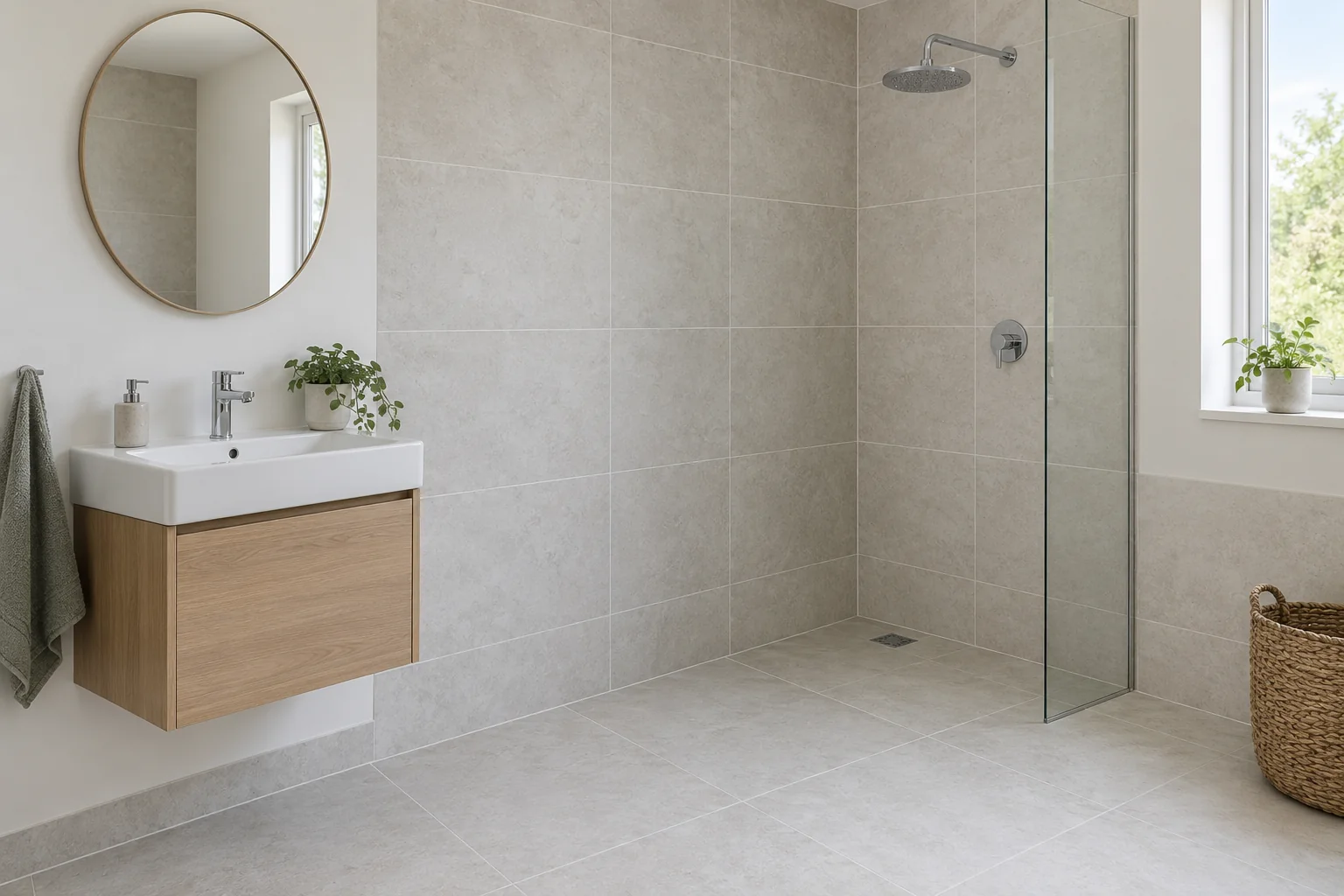
AI-generated bathroom illustration; no actual tile identity, waterproofing, measured traction or accepted installed room is represented.
Which bathroom tiles and positions are being selected?
Identify the actual tile and application
Give each selection a room and surface reference, actual material or construction identity, finish, format and relevant document revision. Distinguish the proposed floor, wall, shower or other position where requirements differ. A broad bathroom-tile label cannot establish the application of every product shown in the scheme.
Use the bathroom tile category to frame the enquiry. Attach the actual areas and interface questions, then ask the supplier to identify its offered selection. A category route does not establish a particular tile’s performance evidence, stock or acceptance for the project.
Record relevant trims, companion pieces and other included objects beside the field tile. Ask which party supplies each and which information covers its relationship with the selected assembly. A finish photograph can show a complete-looking room without defining the actual purchase and installation scope.
Retain construction identity within the room package
Connect the wider tile schedule with the actual bathroom selections. A coordinated collection can support design intent while leaving another surface or product variant unreviewed. Keep each material, format and application identifiable rather than extend one sample comment throughout the room.
For glass tile selections, obtain the actual supplied form, relevant backing and applicable maker information. A sheet-like or transparent appearance cannot establish those construction objects. Give the responsible installation team the selected product before it inherits a response for another tile type.
State which decision the first approval permits. A preferred color or layout direction can remain selected while site and system inputs receive confirmation. Identify the affected commitment and its prerequisites so an appearance discussion does not silently authorize installation against an unconfirmed wet-area basis.
What should the complete assembly for bathroom tiles include?
Identify the objects below and beside the face
Give the appointed reviewers the actual substrate, selected tile, setting components, waterproofing arrangement and relevant connection information. Ask which parties supply and accept those objects. A tested tile can leave a membrane, support, joint or another adjoining part outside its product evidence scope.
The tile and grout face should not be treated as proof of the complete waterproofing arrangement. Identify the selected system and the actual seams, corners, penetrations and drain relationships requiring review. Procurement needs applicable product and project responses rather than infer a completed water-management assembly from decorative surfaces.
The register makes those distinct inputs and responsibilities visible.
| Assembly input | Record to retain | Decision it supports | Confirmation owner |
|---|---|---|---|
| Tile and position | Actual construction, format, finish and area | Identify the application | Supplier and designer |
| Substrate | Actual supporting construction and condition | Review the installation basis | Contractor and qualified personnel |
| Waterproofing | Selected system and relevant components | Establish the water-management object | System supplier and appointed reviewers |
| Joints and connections | Current corners, penetrations and drain references | Resolve shared interfaces | Responsible installing trades |
| Layout and evidence | Actual arrangement and configuration-linked records | Bound appearance and performance | Designer and technical reviewers |
| Sequence and care | Accepted stages, active records and applicable routine | Preserve release and handover | Coordinator and operator |
An open field should remain attached to its decision and owner. The register does not approve a substrate, a waterproof connection or a complete installed bathroom; it identifies what the responsible parties still need to establish.
Keep requirements tied to their actual system
Identify any water, vapor or other exposure requirement relevant to the stated application. Ask the appointed team which assembly and evidence address it. A material described as waterproof can leave another performance property or complete configuration unconfirmed, particularly where the actual room function differs from the original brief.
For bathroom fixture coordination, keep tile and wet-area responsibilities connected to the current room package. A combined quotation should state its actual boundaries. It cannot establish that separately supplied fixtures and construction layers have received a complete interface review.
Where a selected system requires a particular component or condition, obtain its applicable maker information and project confirmation. Do not transfer another product’s procedure into the order. A convenient material substitute should remain an identified question until the responsible parties confirm its suitability within the actual assembly.
Which substrate and waterproofing conditions need confirmation?
Review the actual supporting construction
Give qualified reviewers the installation information for the selected bathroom tiles, along with current wall and floor construction records. Identify known conditions and provisional inputs. A flat-looking finished face cannot establish every supporting layer, movement condition or surface preparation question relevant to the offered tile assembly.
Ask the responsible team to locate differences between areas rather than approve the room from one convenient description. A repeated elevation can conceal another substrate or support arrangement. Retain the actual location and selected-system response before a detail accepted elsewhere is repeated at an unconfirmed position.
For natural-stone bathroom selections, retain the actual material and finish alongside applicable setting and care information. Similar decorative appearance does not establish the same construction as a ceramic selection. Give the appropriate makers the proposed combination before treating an earlier tile response as interchangeable.
Reconcile concealed interfaces before closure
Ask which corners, seams, movement relationships and penetrations need assessment under the selected wet-area system. Identify their actual locations and responsible parties. A generic joint symbol can leave the final components or adjoining construction outside the review that procurement believes it has obtained.
Where required project inspections or assembly testing form part of acceptance, establish their actual method, scope and responsible reviewer. Keep the relevant outcome with the selected configuration before dependent work conceals the condition. This article does not provide a test depth, duration, timing or permission to infer a pass from a photograph.
If a substrate, waterproofing component or connection changes, locate the affected response before further commitment. Obtain the applicable reconsideration and retain the active reference. An unchanged tile face cannot preserve every concealed interface decision when the assembly behind it is different.
How should bathroom tiles meet drains and fixtures?
Use actual levels and connection objects
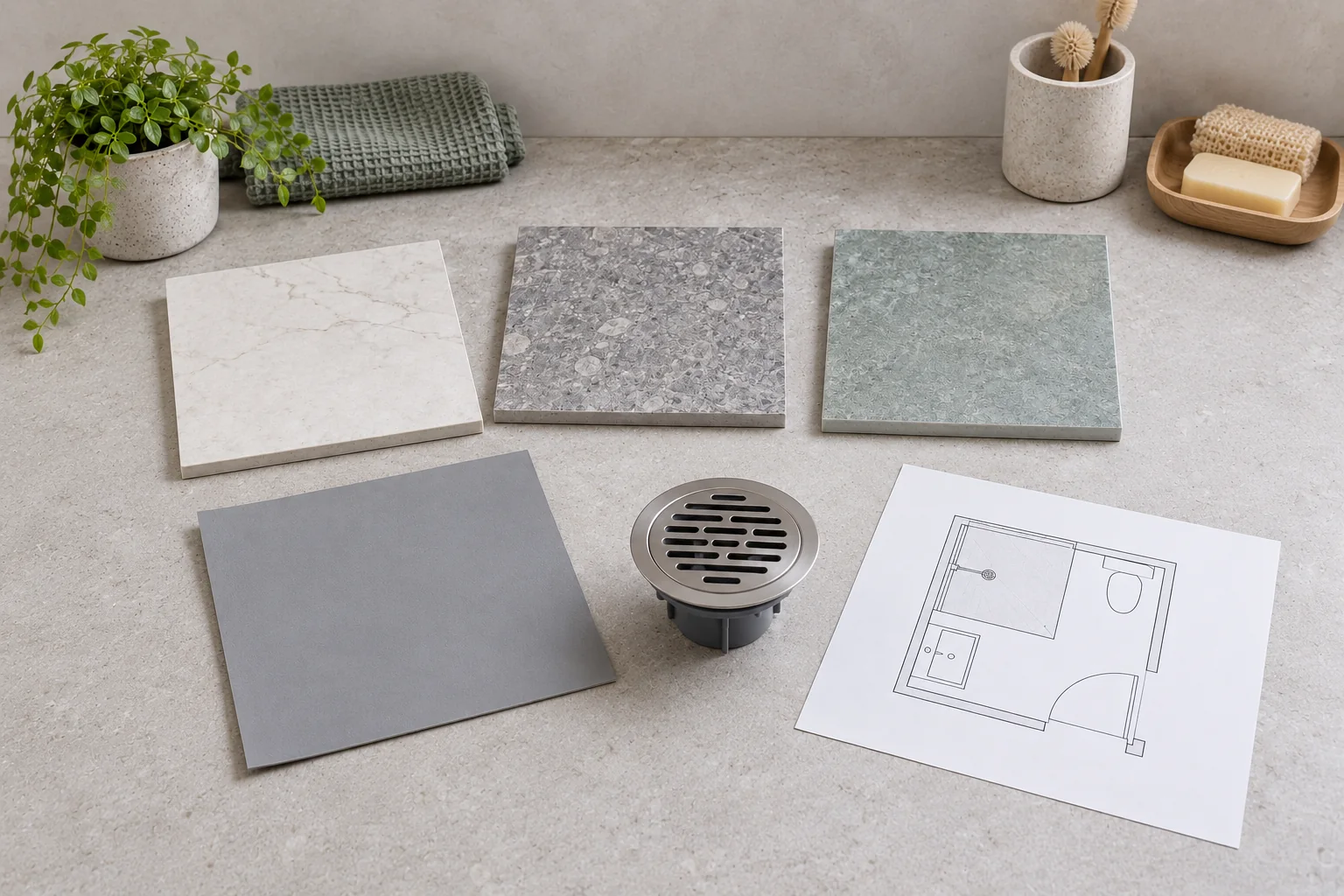
Give the appointed reviewers current floor and wall references, selected drain or receiving arrangement and relevant fixture positions. Ask which geometry and complete-system relationships require confirmation. A dry layout model can discuss appearance without establishing the actual water route or an accepted installed connection.
For shower enclosure interfaces, retain the selected enclosure, finished surfaces and relevant mounting responsibilities. A later tile build-up or threshold change can affect an earlier enclosure basis. Give both teams the active references before one visual scheme becomes permission to proceed with adjoining work.
For shower-head positions, identify actual mounting and surrounding construction where they affect the wet-area discussion. A shower symbol cannot establish an accepted penetration or complete supply arrangement. Keep those independent technical objects with their responsible reviewers.
Keep adjoining products within their reviewed scope
For bathtub and surround relationships, obtain actual ledge, finish and selected-system information where relevant. A wall assembly reviewed for one context should not automatically approve another fixture edge. Retain the applicable product and project response for the proposed combination.
For bathroom cabinet interfaces, identify the actual position, relevant mounting and service occupation. A complete room rendering can leave another cabinet or floor relationship unresolved. Ask the responsible reviewers which current selected objects and operating states their acceptance covers.
Do not prescribe a universal drain, slope, sealant or fixture connection from an appearance example. The selected makers and qualified project team should determine the actual arrangement. Procurement needs the accepted identity, applicable record and owner so another trade does not proceed from an illustrative assumption.
What should surface evidence and appearance observations establish?
Match each claim with its actual object
Identify the application requirement before selecting the relevant tile evidence. Request records for the actual product, method, configuration and conditions the review must address. A water-absorption result, finish label or laboratory logo cannot establish every property of the complete bathroom installation.
Where friction or another surface-performance question matters to the project, retain the applicable method and selected-product record with the intended use. Measurements made under stated conditions can provide useful information without predicting every actual use or incident. Give the appointed reviewer the real application rather than select a universal number for every bathroom.
For marble tile selections, keep the actual supplied material, finish and treatment references with their evidence. A polished or textured-looking face cannot establish all performance and care conditions. The appearance decision and required technical review should remain identifiable separately.
Bound the represented finish comparison
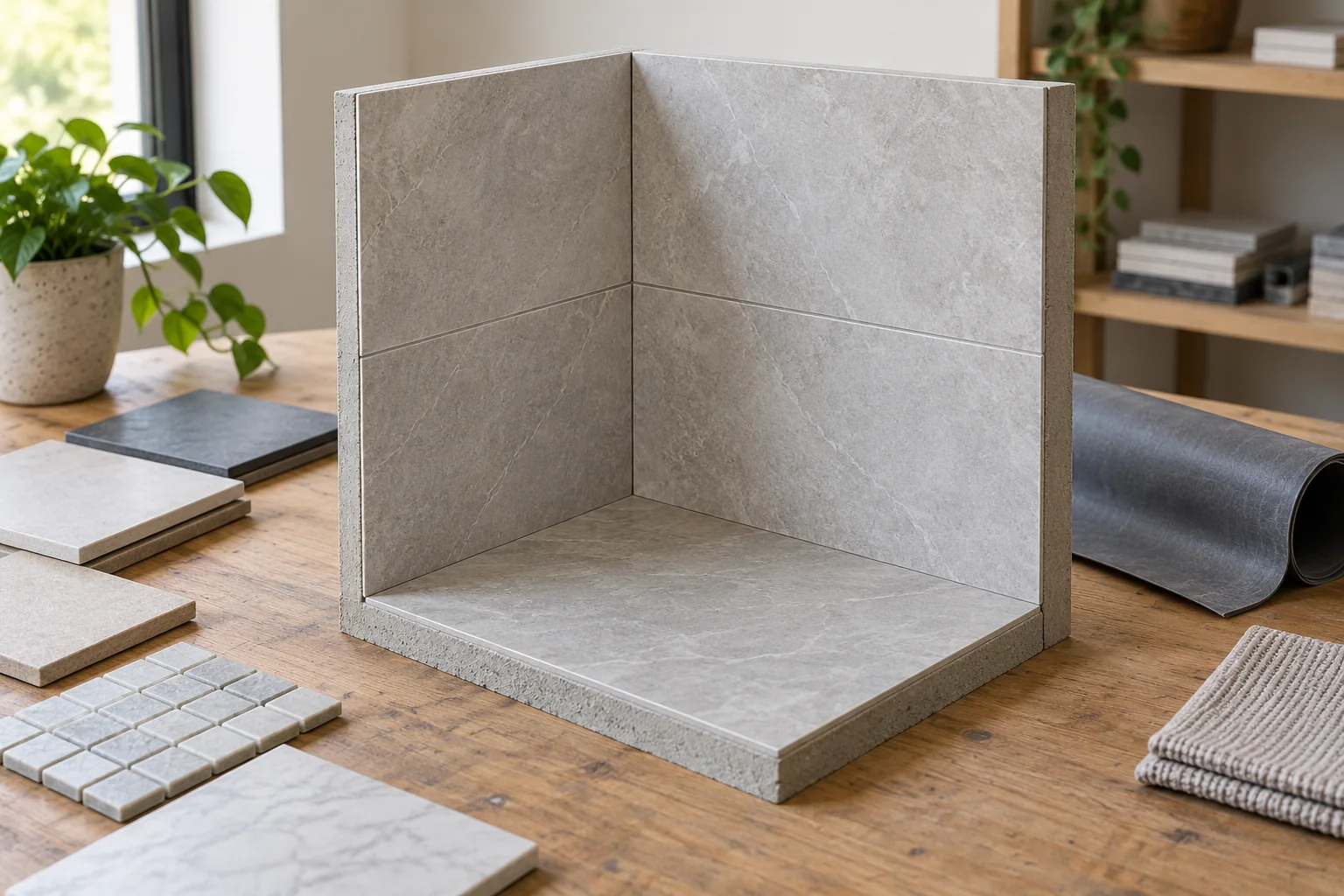
Choose a represented observation around the actual visible uncertainty: tone range, joint relationship, pattern or adjoining finish. Identify the tiles, relevant components and conditions used. A small sample can resolve one appearance question while leaving final supply, site or system requirements unconfirmed.
For bathroom basin relationships, retain relevant finish and position references where they share the visual field. An attractive comparison should identify which actual objects it covers. It should not imply common material construction, mounting or care acceptance across unrelated selections.
Record stand-ins, omitted conditions and any difference from the proposed supply. If a sample or selected component changes, locate the affected appearance or assembly question before release. A favorable comment or generated image cannot become evidence that a later variant meets a requirement the observation did not represent.
How should receiving and care preserve the accepted assembly?
Retain material and area identities
Agree how bathroom tiles, trims, batch or format references and companion objects remain identifiable through delivery. Keep the actual room and surface allocation with those records. Similar-looking pieces should not be distributed solely by appearance before the accepted selection and intended position are retrievable.
Use the supply coordination context to establish who receives, checks, protects and transfers the materials. Ask suppliers to explain the actual proposed method and relevant evidence. Specimens protected in padding cannot establish a complete delivered assembly or tested transport performance.
Compare relevant delivered identities, included parts and visible condition through the agreed process. Retain affected packaging and observations when a discrepancy appears. A correct tile count cannot close a changed finish, format or system component that formed part of the reviewed selection.
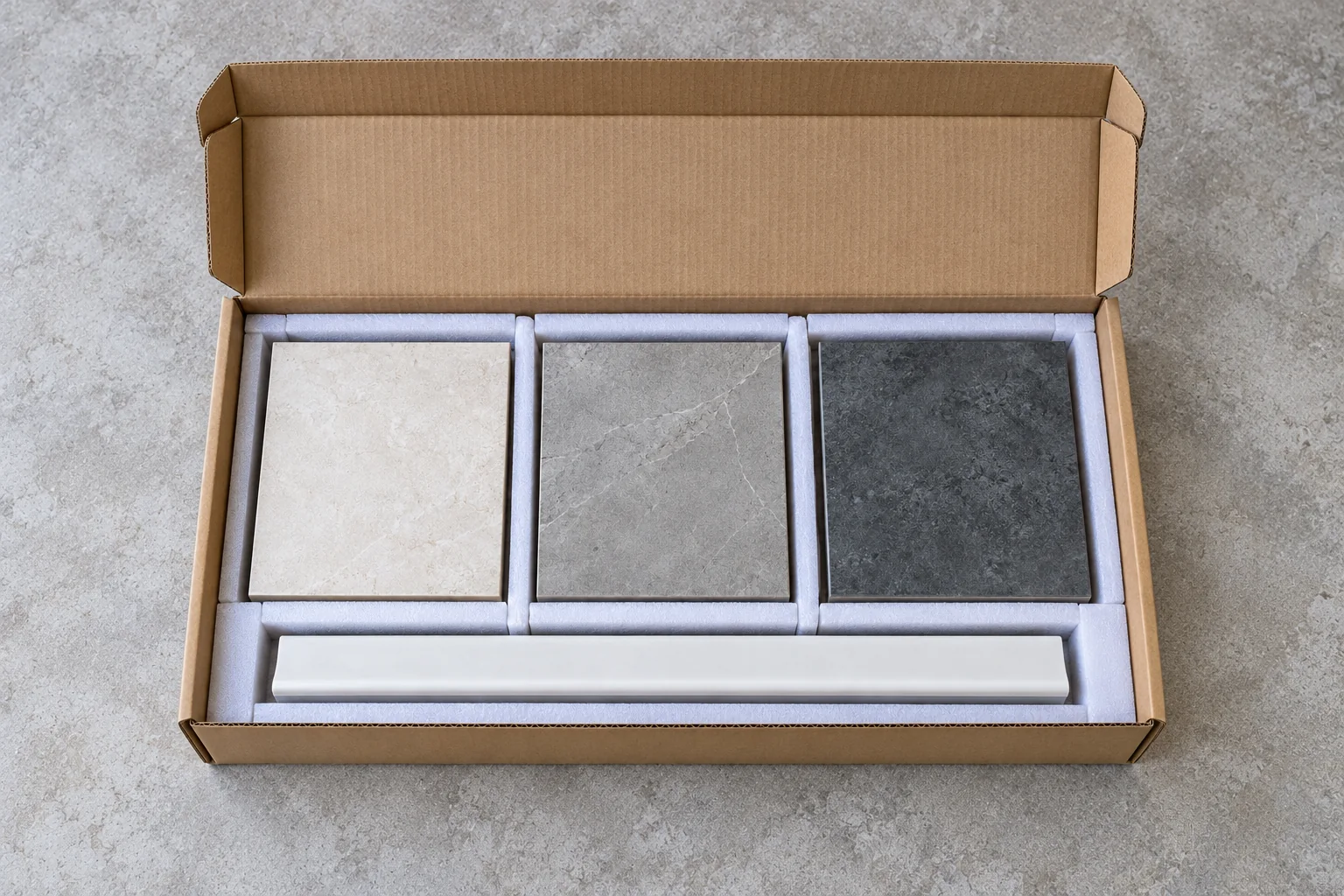
Keep care and later changes product-specific
Obtain care information for the actual tiles, joints, treatments and adjoining materials. Ask the makers and operator to assess the proposed routine and resolve relevant compatibility questions. A tile-care sheet should not silently approve another membrane, seal, coating or fixture surface outside its actual scope.
For whole-house material coordination, retain bathroom product and area identities with the active room references. A later fixture, floor or care change should reach the reviewer whose acceptance it affects. Shared project naming cannot replace the configuration needed to ask a precise service question.
Keep actual replacement terms and available material information distinct from the technical review. Ask the supplier what can be confirmed rather than promise a future batch match or interchangeable assembly parts. This guide supplies no universal cleaner, sealer, repair method or maintenance interval for an unidentified wet-area system.
When can buyers approve bathroom tiles for installation?
Match the finding with its affected commitment
Read selected tiles, actual positions, substrate, wet-area system and adjoining interfaces together. A preferred finish can advance while another prerequisite remains open. Define what the available records permit and identify the surface or component needing another response before the next stage proceeds.
| Observed condition | Approval gap | Buyer response | Evidence needed next |
|---|---|---|---|
| Bathroom label replaces product and position identity | Application scope is undefined | Reconcile the selection | Actual tile and area record |
| Tile face substitutes for complete waterproofing evidence | Assembly responsibility is unclear | Obtain the selected-system review | Identified layers, joints and connections |
| Substrate or concealed component differs | Earlier response may not apply | Reconsider before closure | Current site and assembly information |
| Drain or fixture position changes | Shared interface is unconfirmed | Coordinate the affected products | Revised geometry and responsible response |
| Surface or mock-up evidence covers another variant | Acceptance scope is incomplete | Obtain applicable confirmation | Actual configuration and bounded evidence |
| Required records and scoped reviews agree | Defined package release can be considered | Authorize the allocated assembly | Retained basis and change route |
These actions organize procurement without assigning universal waterproofing details, test criteria, installation values or contractual remedies. The actual products, project and agreement determine applicable acceptance and release authority.
Leave a retrievable installed basis
Retain installed tile and area identities, applicable maker documents, accepted interfaces and required installation or technical outcomes. Give the operator the current care and service route. A complete-looking bathroom photograph cannot replace the records needed to assess a later component or construction change.
Keep unresolved conditions and their owners beside the permitted release. A proposed alteration should identify which earlier response remains applicable and which needs reconsideration. The useful file describes the accepted objects and conditions without presenting a face sample as proof of every wet-area requirement.
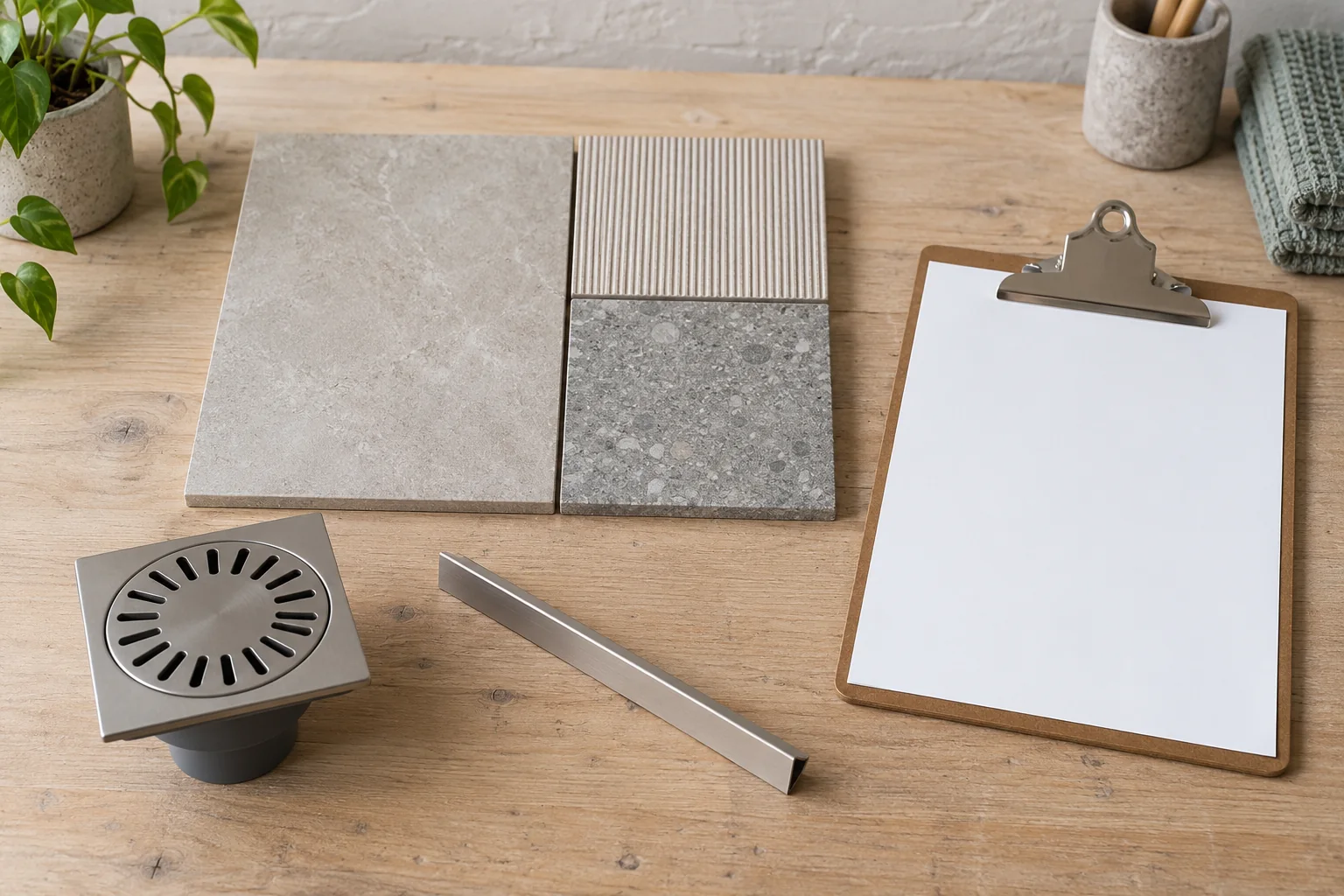
Conclusion
Release bathroom tiles when the identified wet-area assembly and its actual application have received the applicable reviews. Connect the selected product and surface with relevant substrate, waterproofing, joint and drainage records. A preferred appearance or tile-level result cannot establish every concealed condition behind the finished bathroom.
Bound represented observations by their actual products and comparison conditions. Keep required surface evidence and complete-system acceptance with their applicable scope and responsible reviewers. Reconcile affected decisions when materials, fixtures, connections or site inputs change, then preserve product and area identities through receiving and handover. Give the operator care information for the actual installed selections.
Prepare the bathroom tile schedule, current room and assembly references, applicable documents and open interface questions when requesting bathroom tile sourcing support. Ask which configuration the supplier offers and what confirmation permits its release. That gives procurement a clear, retrievable basis.
Frequently Asked Questions
Does a low tile water-absorption value approve the wet area?
Identify the actual tile and the complete assembly separately. A tile-level result cannot establish every substrate, membrane, joint or drain connection. Obtain the applicable selected-system and project responses before releasing the affected installation.
Can one bathroom tile approval cover walls and shower floors?
Record the actual products and positions the review addresses. Different applications can require separate evidence and installation confirmation. A broad bathroom label or coordinated finish does not establish that every surface has the same acceptance basis.
Does an approved appearance sample establish waterproofing?
A sample can resolve its stated visible question under represented conditions. Complete waterproofing and adjoining interfaces need their own applicable records and responsible review. Retain those scopes separately rather than extend a finish comment to concealed work.
What should happen after a drain or tile component changes?
Locate the altered object and the earlier product, layout or assembly decision it affects. Obtain the relevant maker and project reconsideration before dependent work proceeds. Similar appearance does not establish an unchanged wet-area configuration.