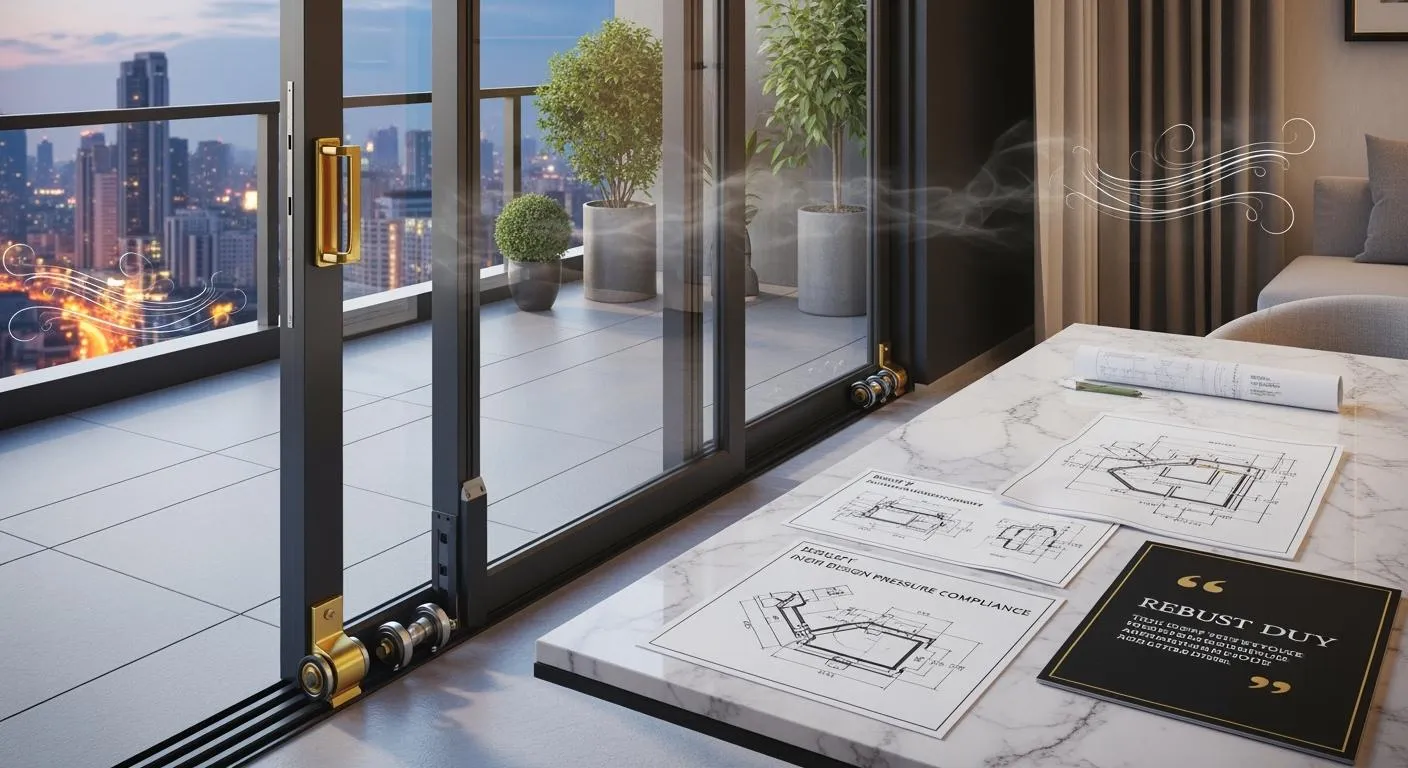
When selecting sliding door rollers for a high-rise balcony, I check the whole door system’s design pressure separately from the roller’s sash-weight capacity. The frame, glazing, locks, tracks, anchorage and installation work together; a roller rating alone is not a wind-load approval. See Sibolla Building for related project options. See doors and windows for related project options.
Key Takeaways
- Distinguish whole-door design pressure from roller weight capacity and operational durability.
- Pick a trusted supplier like Sibolla Building. Their easy process makes your project simple. It also helps stop mistakes and saves you time and money.
- Get all your project papers ready before asking for a quote. You need things like floor plans, door sizes, and project specs. This helps you get the right quote.
- Look at more than just prices when you check quotes. Think about material quality, weight capacity, compatibility, adjustability, and how long the rollers last.
- Choose materials and glazing from the approved design and verified exposure requirements; no single alloy or interlayer is universally best.
- Use the best ways to install your doors. Make sure all parts fit right. Test the system after you put it in to find problems early.
- Request relevant whole-system reports and separate hardware load and durability information.
- Talk clearly with your suppliers. Share specs and project details early. This helps stop delays and makes installation go smoothly.
Quotation Process for Sliding Door Rollers
Starting a high-rise balcony project means you need the right sliding door rollers. Sibolla Building has a clear system that helps you get what you need. Their process makes things easy and keeps your project moving forward. You can trust their steps to help you avoid mistakes.
Steps to Request a Quote
Supplier Selection
Pick a supplier who has done high-rise projects before. Sibolla Building handles everything from engineering to delivery. You only talk to one person, so you get answers faster. This means fewer errors and less waiting. It saves you time and money.
Project Information Needed
To get a good quote, you need to gather important documents. Suppliers like Sibolla Building use this information to find the right rollers for your job. Here is a table showing what you need:
| Required Documentation | Description |
|---|---|
| Floor Plans | Needed to estimate sliding door rollers. |
| Door Sizes | Used to pick the right roller specs. |
| Project Details | Helps suppliers know what your project needs. |
| Business Registration | Shows you are a real business for quotes. |
| Resale/Tax Information | Needed for wholesale buying and following rules. |
| Order Forecasts | Helps suppliers plan what to make and stock. |
| Project Specs | Needed for dealer or builder accounts to quote correctly. |
| Drawings | Helps suppliers see your project and check specs. |
| Finish Details | Used to match rollers to your style. |
You should also collect:
- Installation instructions
- Hardware schedule documents
- Technical drawings for custom sliding doors
- Shop drawings for commercial jobs
Sibolla Building gives you templates and checklists to help. You can send your documents online, which makes the review and quote faster.
Comparing Specs and Offers
When you get quotes, look at more than just the price. Check the specs and features from each supplier. Focus on these important things:
- Material Quality: Pick rollers made from strong materials like polymer wheels or marine-grade metals. These last longer and resist corrosion under suitable conditions and maintenance.
- Weight Capacity: Make sure the roller can hold your door’s weight. This keeps your doors working well.
- Compatibility: Check that the roller fits your door frame and track.
- Adjustability: Choose rollers you can adjust in height. This helps if your building moves or the frame is not level.
- Durability: Pick rollers with sealed bearings or features that keep out dirt and need less care.
Sibolla Building makes comparing easy. You get clear specs and choices side by side. Their team explains each option so you can choose with confidence.
Tip: Always check the technical data and ask for samples if you can. This lets you see the quality before you buy.
If you follow these steps, your project will go well. Sibolla Building’s system helps you get the right products, on time, with support from start to finish.
Wind Load Solutions for High-Rise Balconies

Image Source: pexels
Importance of Wind Load
Risks of Non-Compliance
Have the project engineer establish wind loads and opening-specific pressures under the adopted code. Check the frame, glazing, anchorage and connections against that design.
Performance and Safety
Corrosion-resistant materials still need suitable design and maintenance. They can deform or corrode under conditions beyond their verified scope.
Note: In tall buildings, windows and doors must be very safe. If you pick the right Wind Load Solutions, you save money and keep people safe.
Design Strategies
Material Choices
You need to choose materials that can handle strong winds. The table below shows how metals do in high winds:
| Material issue | Check |
|---|---|
| Strength | Actual grade, section and engineered loads |
| Corrosion | Exposure, finish and maintenance |
| System performance | Complete tested assembly |
Select alloy, glazing build-up and connection details from project engineering and verified system evidence.
Structural Enhancements
You can make buildings safer from wind with smart choices:
- Impact-rated glazing can still crack. Confirm retention and complete-system approval for the required test and installation.
- Add strong frames and anchors to stop movement.
- Put in good gaskets and seals to block air, dust, and water.
- Make sure drains work well so water does not build up.
Ask Sibolla for evidence for the proposed configuration; do not assume every system need verification against the applicable project requirements.
NAFS DP Standards Overview
Understanding DP Ratings
Design Pressure (DP) ratings help you measure how much force a door or window can handle. You see these ratings in pounds per square foot (PSF). DP ratings show both the “push” and “pull” forces that wind can put on your sliding doors and windows.
- Positive numbers show the “push” pressure from wind hitting the outside.
- Negative numbers show the “pull” pressure when wind tries to suck the window or door outward.
Calculation Methods
You need to know how DP ratings are calculated to make smart choices for your project. Many factors change the final DP rating. The formula that converts wind speed to wind pressure uses several variables. Each one changes the pressure for the same wind speed.
Wind pressure depends on the applicable design method, exposure, height, building geometry and opening location. An isolated wind speed cannot establish the required product pressure.
You must look at:
- How tall your building is
- Where the window or door sits on the building
- The land around your building
- If your building is on a hill or flat ground
- The size of the window or door
All these things change the DP rating you need.
High-Rise Requirements
Use the project engineer’s opening-specific pressures and verify the actual system reports. A higher generic DP number does not guarantee storm survival or insurance savings.
Confirm the insurer’s conditions separately. Design-pressure evidence is not a promise of a discount or survival in every storm.
You protect your building and the people inside when you follow these rules.
Compliance and Testing
You must test your doors and windows to make sure they meet NAFS DP standards. Certified labs use special machines to push and pull on the products. They check if the doors and windows can handle the rated pressure. You get a test report that shows the product passed.
Request the actual whole-door reports, tested sizes and installation conditions for the proposed configuration.
Selecting Heavy-Duty Sliding Door Rollers
Image Source: unsplash
Key Criteria
Material and Load Rating
You need rollers that work well for high-rise balcony doors. The right material and load rating help your doors move safely. Stainless steel and aluminum are strong and resist corrosion under suitable conditions and maintenance. Forged steel is also tough and lasts a long time.
| Hardware issue | Selection basis |
|---|---|
| Weight capacity | Manufacturer’s defined rating and load distribution |
| Durability | Relevant cycle testing and maintenance |
| Compatibility | Approved sash, wheel and track configuration |
| Wind pressure | Separate whole-door system evidence |
Use the roller manufacturer’s load definition and selection method, including sash mass, roller quantity, load distribution and duty. Do not apply a universal 1.25 multiplier.
Tip: Precision rollers and strong tracks help your doors move easily every day.
Compatibility with Doors and Windows
Rollers must fit your door and window systems. If they do not fit, you may have problems installing them. Sibolla Building has rollers with adjustable sizes and custom brackets. These options let you match many aluminum profiles and track systems.
Important compatibility factors are:
- Roller size must fit the door frame and track
- Hardware must work with multipoint locks and weather seals
- Rollers should support both standard and custom doors
Specify corrosion resistance and sealing for the actual exposure. An IP claim must identify the tested component and conditions.
Sibolla Building Product Integration
Verify roller load, cycle and corrosion evidence. Compare actual quotations and project records before claiming a percentage improvement.
Sibolla Building helps your project with:
- Custom materials for less wear and less noise
- Adjustable sizes for many sliding door systems
- Custom brackets made from your drawings or samples
- Engineering help for easy installation and stable doors
- Quality tests like checking raw materials and bearing strength
You can count on Sibolla Building for rollers that fit their doors and windows. Their products work well even in high-rise buildings with strong wind and bad weather. With these features, you spend less on repairs, keep people safe, and protect your building for many years.
Specifying Sliding Door Rollers for Projects
Writing Specifications
Essential Elements
You need to write clear specifications for sliding door rollers. Good specs help your project go well and stop mistakes. First, decide if you want performance-based or prescriptive requirements. Performance specs let you pick any product that works. Prescriptive specs tell suppliers what materials and methods to use. Use these when you need strict rules.
Follow these steps to write strong specs:
- Balance Performance and Prescriptive Needs: Pick the type that fits your project. Performance specs give you choices. Prescriptive specs give you strict rules.
- List Acceptable Manufacturers: Add more than one supplier. This keeps prices fair and gives you more choices.
- Keep Information Current: Make sure products and codes are up to date. Change your specs if rules or products change.
- Coordinate with Drawings: Check that your specs match your drawings. Review them often to find mistakes.
- Write for the Field: Use simple words. Make sure installers can follow your specs. Add warranty terms and testing steps.
Tip: Always add cycle ratings and material choices. High-rise projects need rollers that last and resist wear.
Referencing NAFS DP
State the design-pressure requirement for the complete door and the operational load requirement for its rollers separately.
All sliding door rollers must meet or exceed NAFS DP 50 requirements as tested by a certified lab.List the test methods and needed reports. Ask for proof that the rollers passed these tests. This keeps your project safe and follows the rules.
Coordination with Suppliers
You need good communication with your suppliers. Share your specs, drawings, and project details early. Ask suppliers to check your specs and suggest changes if needed. This helps you avoid problems during installation.
- Ask for technical data sheets and samples.
- Set clear deadlines for submittals and approvals.
- Plan regular meetings to check progress.
- Make sure all products match your specs before delivery.
Sibolla Building helps you at every step. Their team checks your documents, looks for conflicts, and helps you pick the right rollers. You get expert advice and quick answers. This keeps your project moving and lowers risk.
Note: Good teamwork means fewer surprises and a smoother build. You save time, money, and effort when you work closely with your supplier.
Installation and Compliance
Best Practices
Secure Installation
You need to install sliding door rollers carefully. This keeps them safe and working well for a long time. First, check all the parts before you start. Use the correct tools for each job. Follow the manufacturer’s instructions step by step. If you skip steps, the door might not line up right or could get damaged.
Here are important steps for secure installation:
- Look at the door frame and track for dirt or damage.
- Make sure the roller size fits the door and track.
- Use a level to keep the frame straight.
- Tighten all screws to the right amount.
- Test how the roller moves before finishing.
Tip: Always use screws and hardware that resist corrosion. This stops rust and keeps your system strong in bad weather.
Post-Install Testing
After you finish installing, you need to test the system. This makes sure the doors and rollers work as they should. You should:
- Open and close the door many times to check movement.
- Listen for strange sounds like grinding or squeaking.
- Check the seals for leaks of air or water.
- Look at the lock to see if it works right.
- Check if the door lines up with the frame.
If you find problems, adjust the rollers or hardware. Keep testing until everything works well.
Note: Testing often after installation helps you find problems early. This saves money on repairs and keeps your building safe.
Sibolla Building Support
Sibolla Building helps you during and after installation. You get a site survey before the project starts. This survey checks all sizes and site conditions. The team gives you drawings checked by CAD to avoid mistakes.
You also get training for installers. Certified trainers teach your team how to fit and adjust the rollers. They show best practices and answer your questions. This training lowers mistakes and makes the job faster.
Sibolla Building gives warranty support for all doors, windows, and hardware. If you have a problem, you can contact their technical team. They answer quickly and help you fix issues. You also get guides for maintenance and checklists for follow-up.
If you want more information, look at the product FAQs on the Sibolla website. You will find answers about secure installation, care, and fixing problems.
Approval depends on complete-system evidence and installation; supplier coordination does not establish every compliance requirement.
Best Practices and Next Steps
Summary
You want your high-rise balcony project to work well. You need to follow best steps when picking sliding door rollers and wind load solutions. Start by looking at what your project needs. Make sure you know why NAFS DP standards are important. These standards help keep your building safe and help you follow local rules.
Focus on the features that matter most for your doors and windows. Smooth movement makes doors easy to use every day. Quiet operation keeps your rooms nice and calm. Higher load support lets you use bigger doors. Long service life means you fix things less often. Stable alignment stops doors from wobbling or wearing out. The table below shows why these features are important for your project:
| Buyer Priority | Why It Matters | What It Often Signals |
|---|---|---|
| Smooth movement | Makes daily use comfortable | Better bearing and wheel design |
| Quiet operation | Keeps rooms peaceful | Less friction and steady movement |
| Higher load support | Works with modern doors | Stronger parts and more uses |
| Long service life | Lowers repair needs | Tough materials and tested strength |
| Stable alignment | Stops wobble and damage | Good engineering and track fit |
Always check these features when you look at products. You want to avoid doors that stick, wobble, or break quickly. Make sure your rollers fit your door size and weight.
Tip: Try samples before you buy. This helps you see if the product fits your project.
Getting a Tailored Quote
You can get a custom quote from Sibolla Building in a few easy steps. First, gather your project papers. These include floor plans, door sizes, and technical drawings. You should also get your project specs and finish details ready. This information helps Sibolla Building find the right products for you.
Next, send your papers to the Sibolla team. You can use their online tools for quick review. Their experts will check your details and suggest the best choices. You will get a clear quote with specs, prices, and lead times.
You can ask for samples or technical data sheets. This lets you compare choices and make smart decisions. Sibolla Building’s team will answer your questions and help you pick the right rollers and doors.
Note: Talking with your supplier helps you avoid delays and mistakes. You get the right products, on time, with full support.
You can trust Sibolla Building to help you from start to finish. Their step-by-step process, expert help, and quality products let you build safe, strong high-rise balconies.
Provide sash dimensions, mass, wind-pressure requirements and exposure conditions, then verify compatible rollers and whole-door evidence.
FAQ
A NAFS DP rating shows how much wind a door or window can take. This rating helps you pick safe products for tall buildings.
Check your door’s weight and the size of the frame. Look at local wind load rules too. Pick rollers made from strong materials like stainless steel or aluminum. Sibolla Building can help you find the right roller for your job.
Yes, you can ask for special sizes, finishes, and hardware. Sibolla Building offers OEM and ODM services to fit your project needs.
Corrosion-resistant materials like aluminum and marine-grade stainless steel last longer. They work well in wet or coastal places. These materials help stop rust and lower repair costs.
You need floor plans, door sizes, technical drawings, project specs, and finish details. These papers help Sibolla Building give you a fast and correct quote.
You get site surveys, CAD-checked drawings, and training for installers. Sibolla Building also gives you guides for care and warranty help for all their products.
Separate whole-door air, water and structural reports from roller load and durability tests.
Yes, you can ask for samples or technical data sheets. This lets you check if the product fits your needs before you buy a lot.