Custom Laundry Room Cabinet Manufacturer — Efficient Storage Systems for Utility Spaces
Share your laundry room layout and we customize cabinet sizes, tall units, countertops, and finishes to create a durable, moisture-resistant storage system that keeps your utility space organized, functional, and easy to maintain.
Why Choose Sibolla Building for Laundry Room Cabinet Projects
Engineered Storage Solutions for Demanding Utility Spaces
Sibolla Building manufactures durable, moisture-resistant custom laundry room cabinets for global residential and commercial projects. With stable production, strict quality control, and export-ready delivery, we provide end-to-end support from design planning to installation guidance—ensuring reliable timelines and consistent project quality.
Laundry Room Cabinets Styles
Suspended units clear floors; adjustable shelves maximize reach.
Custom Cabinet Manufacturing Expertise by Sibolla
Recommended Laundry Room Cabinet Countertop Heights
Ergonomic Standards for Comfortable and Efficient Use
Proper cabinet height improves comfort, workflow efficiency, and long-term usability in laundry spaces. The following guidelines are based on ergonomic principles and common residential standards:
General ergonomic rule: Countertop height ≈ elbow height − 5–10 cm (2–4 in), reducing strain during folding and sorting.
Standard working range: 88–92 cm (34.6–36.2 in). Suitable for most users and everyday laundry tasks.
For frequent folding or ironing: Increase to 92–95 cm (36.2–37.4 in) for a more upright posture.
- Installed above a washer: Lower the surface by about 5 cm (2 in) to ease loading and minimize vibration impact.
- With integrated sink: 90–92 cm (35.4–36.2 in) aligns with typical kitchen counter height for easy cleaning and handwashing.
Quick reference:
Countertop height = elbow height − 5–10 cm (2–4 in)
Laundry Cabinet Sizing Guide
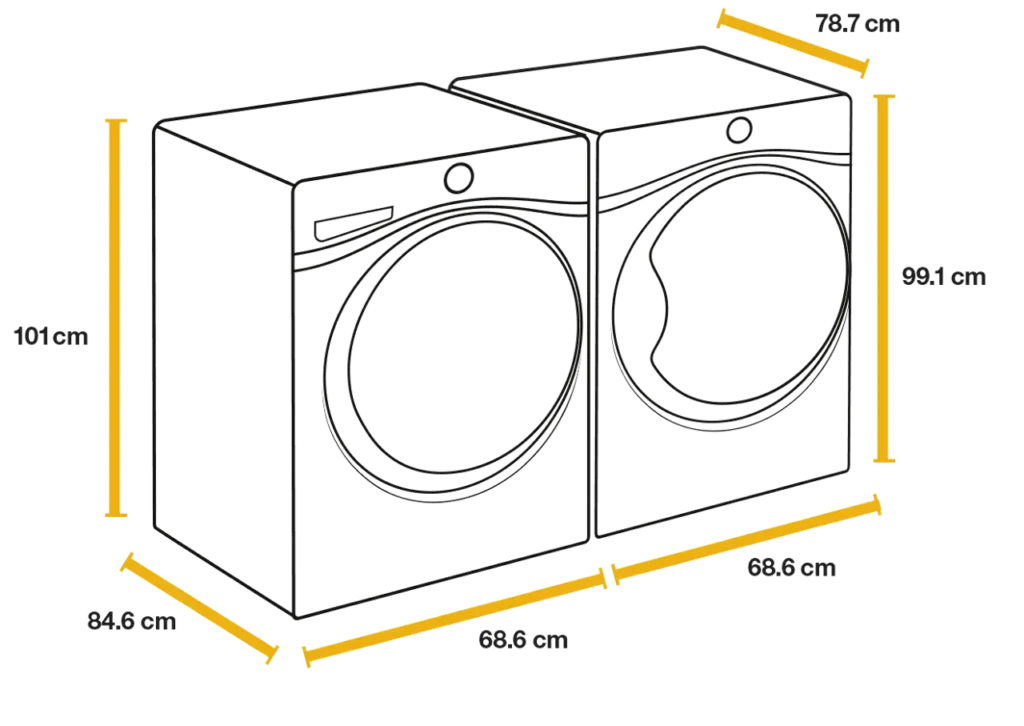
Appliance Dimensions & Cabinet Clearance Standards
Front loader (typical): 600 W × 850 H × 560–600 D mm
Internal width: appliance W + 20–30 mm
Internal height: appliance H + 20–30 mm
Depth: worktop 600 mm; cabinet ≥ 580 mmTop loader (typical): 600 W × 900 H × 600 D mm
Use the same internal clearances as above.Compact (45–50 cm) models: 450–500 W × 850 H × 560–600 D mm
Use the same internal clearances as above.
Sizes vary by brand and model—always measure your appliance before ordering cabinets.
Clearances (leave space):
10–20 mm (0.4–0.8 in) on each side
50 mm (2 in) at the back for pipes and ventilation
≥ 600 mm (23.6 in) in front for door swing and loading
For inset doors, check hinge swing and door thickness so they don’t clash with knobs or control panels.
Laundry Room Cabinet Material Options
Stainless Steel
Stainless steel cabinets are highly resistant to moisture, corrosion, and daily wear—making them ideal for humid laundry environments. Easy to clean and long-lasting, they suit modern, minimalist, or utility-focused spaces where durability and hygiene are priorities.
Oak
Oak offers a warm, natural appearance with strong structural stability. Its grain texture adds visual depth, making it a popular choice for traditional, transitional, or upscale residential interiors. While more premium in cost, it delivers long-term durability and timeless appeal.
Multi-layer Solid Wood
Multi-layer solid wood combines natural wood appearance with improved structural stability. It is less prone to warping than traditional solid wood and offers a more budget-friendly option while maintaining strength and durability. Compatible with a wide range of paint finishes, it adapts easily to both modern and classic laundry room designs.
Space Aluminum
Space aluminum is lightweight yet highly resistant to moisture, corrosion, and sunlight—making it ideal for humid laundry environments. Its modern finish options and flexible color choices allow clean, contemporary designs while ensuring long-term durability with minimal maintenance.
Best Locations for Laundry Room Cabinets
Choosing the right location for laundry cabinets affects usability, durability, and maintenance. Key factors include water supply and drainage access, airflow, available space, and how the laundry area connects with your daily routine.
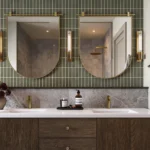
Bathroom
Bathrooms are a practical option where plumbing and drainage are already available. This setup simplifies installation and allows easy transfer of clothes directly from washing to drying or storage. Moisture-resistant cabinet materials are recommended for long-term performance.
Laundry Room
A dedicated laundry room offers the most efficient layout. Cabinets can integrate with washers, sinks, and storage systems to keep detergents, tools, and linens organized in one zone. Proper separation from food-preparation areas ensures better hygiene and workflow.
Balcony
Balconies are increasingly used for laundry areas due to natural ventilation and sunlight, which help reduce humidity and drying time. The semi-outdoor environment supports flexible cabinet layouts, but weather-resistant materials are essential.
Custom Laundry Cabinet FAQs
Get straight answers to the most common questions about custom laundry cabinets—what they’re used for, when to choose custom vs. ready-made, the best cabinet and countertop materials, typical cost ranges, and timelines.
Q: What are laundry cabinets used for?
Q: Should I choose a custom laundry cabinet or a pre-made one?
Q: What is the best material for laundry room cabinets?
Q: What materials are suitable for laundry cabinet countertops?
Q: How much does a custom laundry cabinet cost?
Contact Us
We’ll get back to you within 24 hours. For urgent project inquiries, contact us directly at +86 13695169816. You can also upload your project drawing files