Good stairs follow simple logic: a moderate riser, enough tread depth, and a clear width. Get these right first, then refine details.
The three comfort numbers (useful ranges)

- Riser height: 160–180 mm
- Tread depth: 260–300 mm
- Clear width (main internal stair): 900–1000 mm or more
| Element | Recommended range | Why it matters |
| Riser height | 160–180 mm | Too high is tiring; too low breaks rhythm |
| Tread depth | 260–300 mm | Full foot support, safer gait |
| Clear width | ≥900–1000 mm | Two people can pass comfortably |
| Nosing | 10–20 mm | Better grip, less edge wear |
| Headroom | Check in section | Prevents bumps on lower flight |
Landings and turns
Landings should take a full step, not a thin strip. At turns or doors, add length so people can pause, turn, and carry items without twisting. On U- and L-stairs, keep the “step module” consistent into the landing to avoid awkward half-steps.
Floating and feature stairs
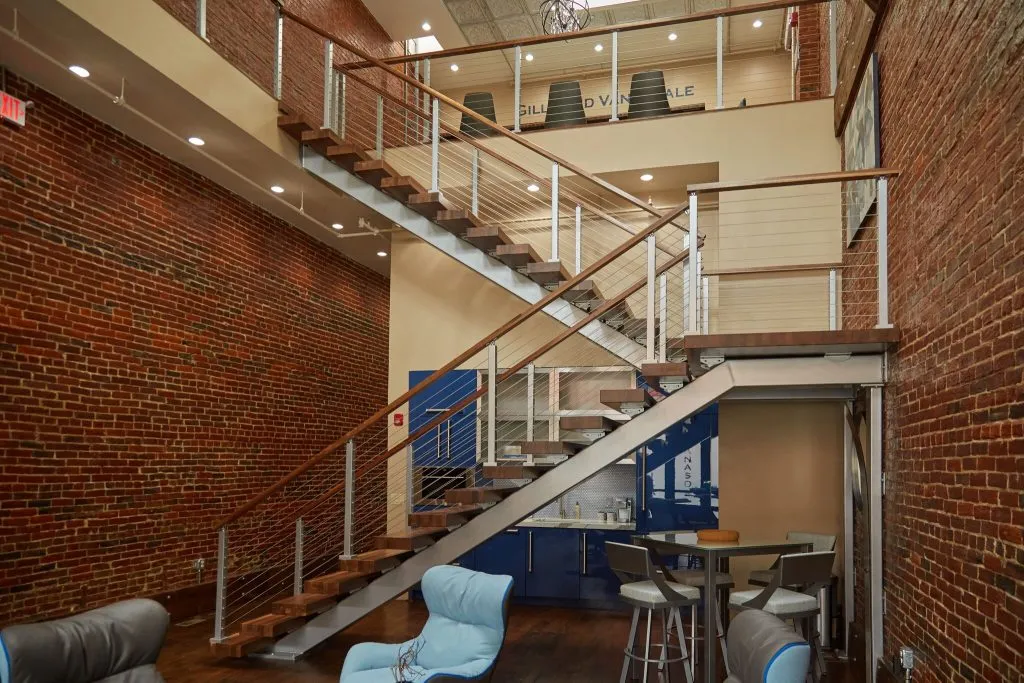
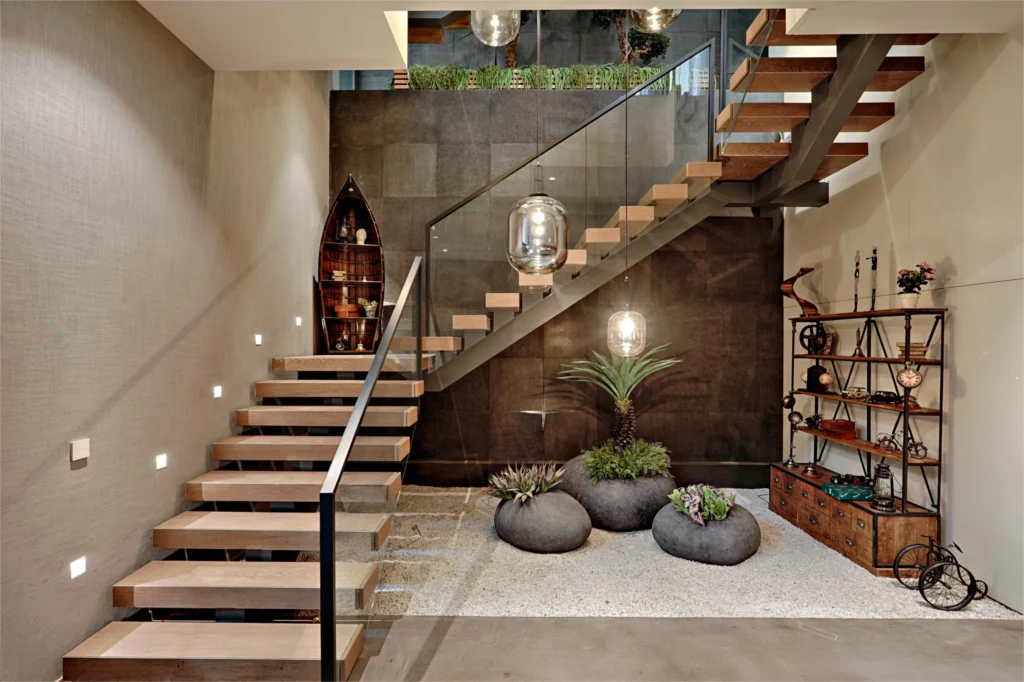
Open risers look light, but sizes still follow the same rules. Keep riser and tread within comfort ranges, add continuous handrails, and consider small infill pieces if children or older users will use the stair often. Place lighting under nosings or along the wall to light the footpath without glare.
Shared or semi-commercial areas
Serviced apartments, clubhouses, and show units carry more people and luggage. Increase clear width and landing length slightly, smooth turning radii, and make lighting and markings obvious so two-way traffic works without stops.
Early checks (start on drawings)
- Plan and section: total rise ÷ riser height = step count; balance with landing sizes.
- Headroom: mark on section; it is easy to miss under the upper flight.
- Doors and routes: confirm door swings and moving routes for large items.
- Materials and edges: decide nosing, anti-slip lines, and trim details early.
- 3D review: test walking line, sight lines, and light; fix before site work.
Working with Mulan Build
Send your floor plan and a simple section. We confirm the three comfort numbers, landing sizes, and headroom. Then we check the stair in 3D, align handrails and lighting, and output clear drawings with sizes, nosings, and edge details. This keeps on-site work clean and avoids late fixes.