In a house staircase, good looks cannot fix wrong sizes. If steps are too steep, too narrow or badly placed, daily use becomes tiring and even unsafe—no matter how premium the materials are.
Mulan Build, a one-stop building materials supplier under George Mulanbuild, helps owners, developers and designers turn a basic staircase size guide into real, buildable spiral, floating and outdoor stairs that fit your floor plan and project level.
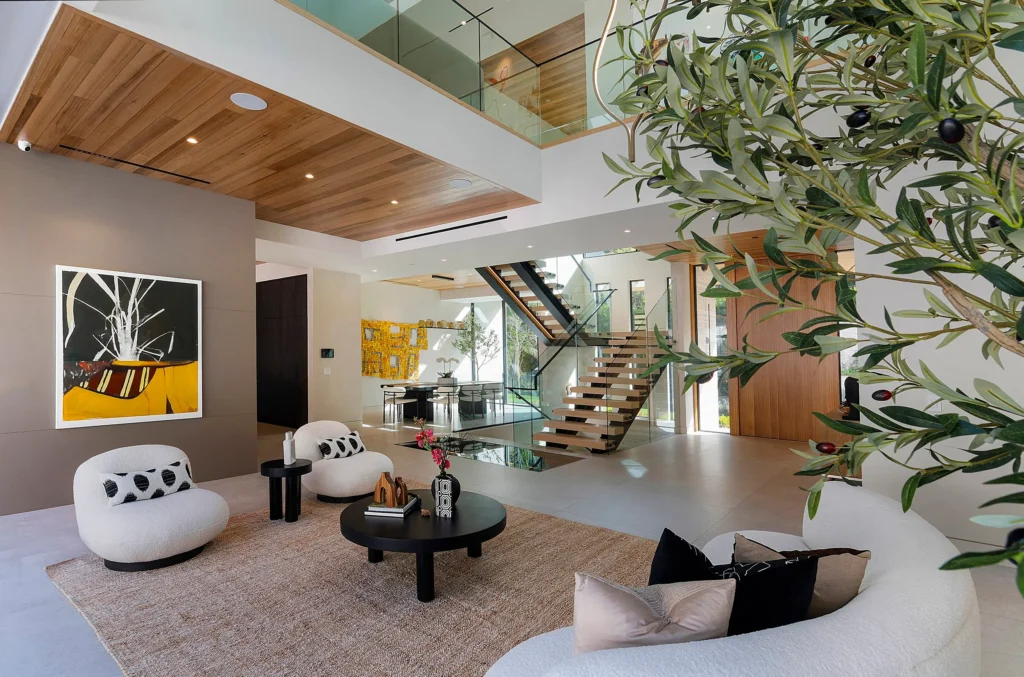
Plan House Staircase Position Before You Think About Style
A staircase that is beautiful but steals too much space, blocks doors or kills headroom will always feel wrong in use. Many house staircase problems start because position and footprint were never planned from the whole layout.
We begin every staircase size guide from your floor plan, not from a catalog photo. We review how people move between floors, then reserve enough length, width and headroom before you choose spiral, floating or outdoor designs.
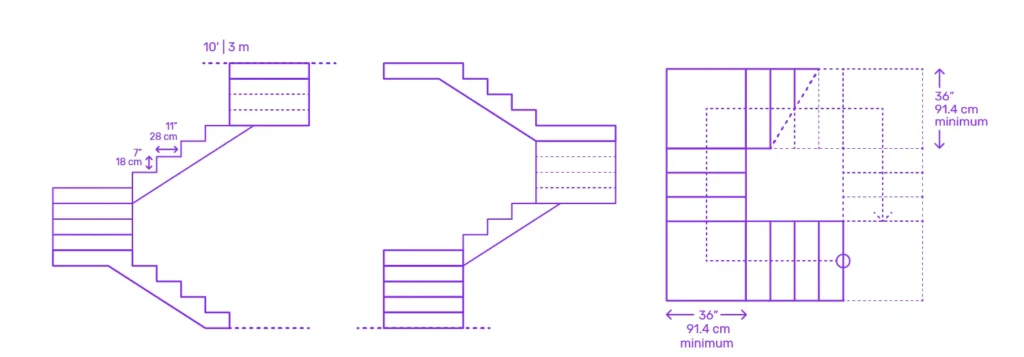
When you send us your floor plan, we first trace vertical circulation: where people enter, how they reach upper floors and how they move between public zones and private rooms. For house staircase solutions in villas, that may include a main feature stair plus a more compact secondary stair. In apartment projects, it often means internal stairs in duplex units that must respect usable area and fire escape logic. We check clearance at the bottom and top of the stair so people are not stepping straight into a door, wall or tight corridor. Then we reserve a realistic footprint—length, width and void—before talking about finishes. For straight or L-shaped stairs, this means enough run to keep risers comfortable; for spiral staircases, enough diameter so treads are walkable. We also check headroom in sections so beams, slabs and ceilings do not cut into the stair volume. Because Mulan Build also designs doors, tiles and wall panels, we can coordinate landings, thresholds and balustrade lines with nearby materials, making your staircase look integrated instead of squeezed into leftover space.
Core Size Guidelines For Comfortable House Staircases
Even with a good position, a staircase can feel tiring if risers are too high, treads too shallow or widths too tight. A practical staircase size guide protects you from “beautiful but uncomfortable” designs.
We use clear, easy-to-communicate size ranges so owners, developers and designers can quickly see if their house staircase is in a comfortable zone before detailed structural design.

For most residential projects, comfortable stairs follow a simple logic: moderate riser height, enough tread depth and clear width. Typical ranges many projects use are around 160–180 mm for riser height and 260–300 mm for tread depth, with a minimum clear width of about 900–1000 mm for main internal stairs. Wider stairs may suit premium villas or commercial lobbies, but very narrow flights quickly feel unsafe and awkward when people pass each other. Landings also matter: they should be long enough for a full step, not just a thin strip, especially where stairs change direction or meet doors. For floating staircases and feature stairs, we apply the same size thinking behind the visual effect; open risers may look light, but step proportions still need to support everyday walking in normal shoes, with children and older users in mind. In shared or semi-commercial areas, like serviced apartments or clubhouses, widths and landing sizes often increase slightly to handle more people and luggage. With Mulan Build, these dimensions are checked early in drawings and 3D views, so you can refine the staircase with confidence and avoid uncomfortable surprises on site.
Staircase Size Guide For Spiral Stairs In Compact Spaces
Spiral staircases can save floor space and add a strong design statement, but if the diameter is too small or the steps are badly shaped, they become difficult to use daily.
We size spiral house staircases from your floor-to-floor height, opening size and user profile. Our goal is to keep them compact without turning them into a “decoration only” stair.
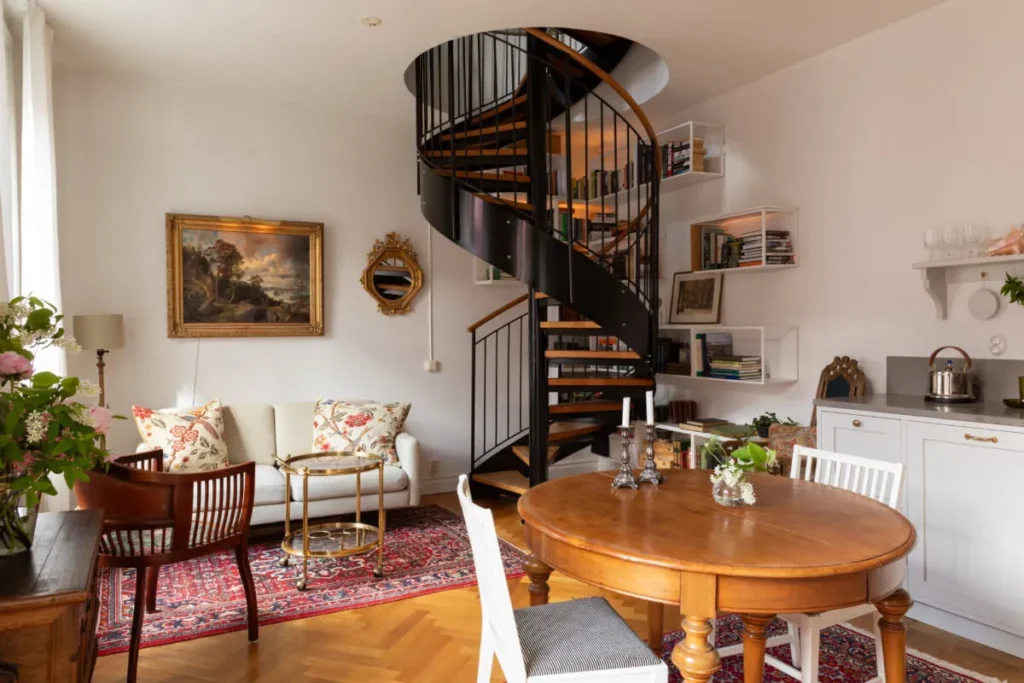
For each spiral staircase, we first look at the floor opening and surrounding walls, then calculate a realistic outer diameter that leaves proper tread depth on the walking line. Very small spirals may look cool in renderings but are uncomfortable in real life, especially when carrying bags or laundry. We also review the total number of risers needed to reach your floor height, keeping each step within a comfortable range so the stair neither feels too steep nor too flat. The clear width on the useful part of the tread—usually about two-thirds of the radius from the center—is more important than the total diameter, so we design step shapes with this in mind. In villas, spiral staircases often connect living rooms to mezzanines, roof terraces or private studies, so we position them where they can be seen from key areas without blocking furniture layouts. In apartment projects, spirals may connect compact duplex levels where every millimeter matters; here we balance size and comfort more carefully and often recommend slightly larger diameters than the bare minimum. Handrail height, baluster spacing and landing connections are checked so the stair feels safe, not just sculptural. With Mulan Build as your one-stop supplier, we also match spiral stair finishes with surrounding floors, wall panels and even outdoor tiles if the stair extends to a terrace, keeping your design language consistent.
Size Considerations For Floating And Outdoor Staircases
Floating staircases and outdoor stairs both need more than nice photos. If thickness, width, risers and landings are not planned correctly, they can feel shaky or unsafe, especially in high-traffic areas.
We apply a clear staircase size guide to floating and outdoor stairs, checking structure, tread dimensions and landings so they handle daily use, weather and cleaning in real projects.
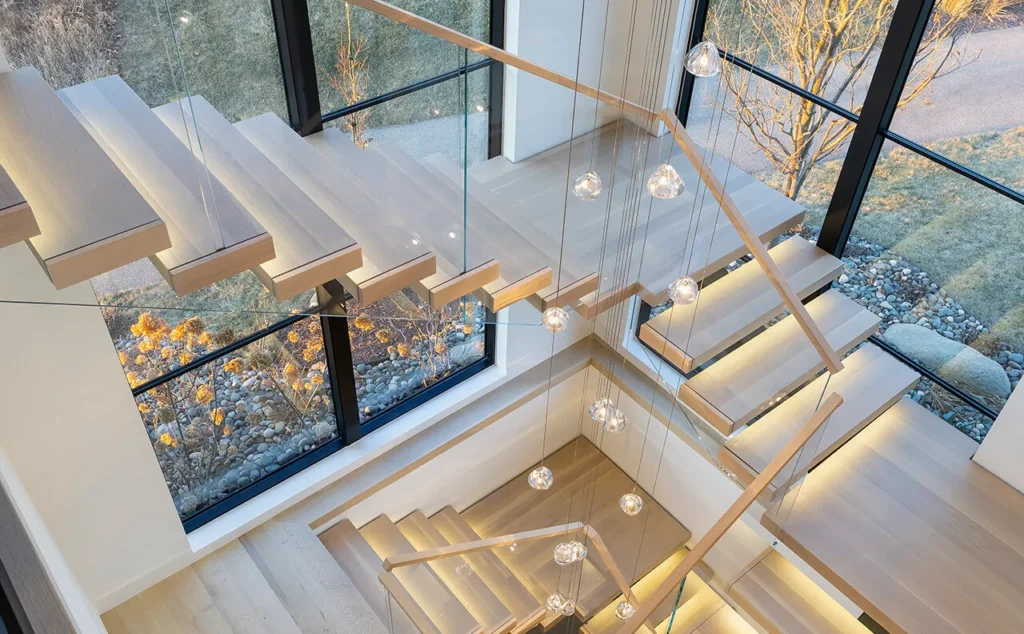
For floating stairs inside the house, we start with structure: what supports the treads—hidden steel, concrete stringers or wall fixings—and how much deflection is acceptable. Tread thickness is sized not only for visual proportion but also for strength over the typical span. We keep riser and tread dimensions within the same comfortable ranges as enclosed stairs, even if the design looks lighter. Clear width is chosen according to your project level: tighter for compact duplexes, more generous for feature stairs in villas or commercial lobbies. Balustrade height and handrail grip are planned to feel secure, especially on open sides and landings. For outdoor staircases, size is strongly linked to weather and use. Wider treads and slightly deeper steps can improve safety when surfaces are wet or when people carry items up and down to gardens, pools or rooftop decks. We also allow enough length for proper slope and drainage at the top and bottom of outdoor stairs so water does not pool at doors or sills. Non-slip finishes and drainage gaps are integrated into step design rather than added later as an afterthought. Because Mulan Build can supply stone, tiles and metalwork as part of one package, we align outdoor staircase sizes with adjacent terraces, paths and facades, making the whole transition more comfortable and easier for your local contractor to build.

Share Your Plan, Get Ideas:
Send us your floor plan and a brief description of your residential or commercial project—how many floors you have, where you want feature stairs, and whether you are considering spiral, floating or outdoor staircases. Our team at Mulan Build will turn this staircase size guide into concrete proposals and drawings tailored to your house staircase or project layout.