Terrazzo Tile Manufacturer: Decorative Floor & Wall Tiles
Durable terrazzo tiles for living areas, bathrooms, lobbies, and retail spaces—available in custom chip blends and modern finishes.
About Terrazzo Tile: Composition, Performance & Applications
What Is Terrazzo?
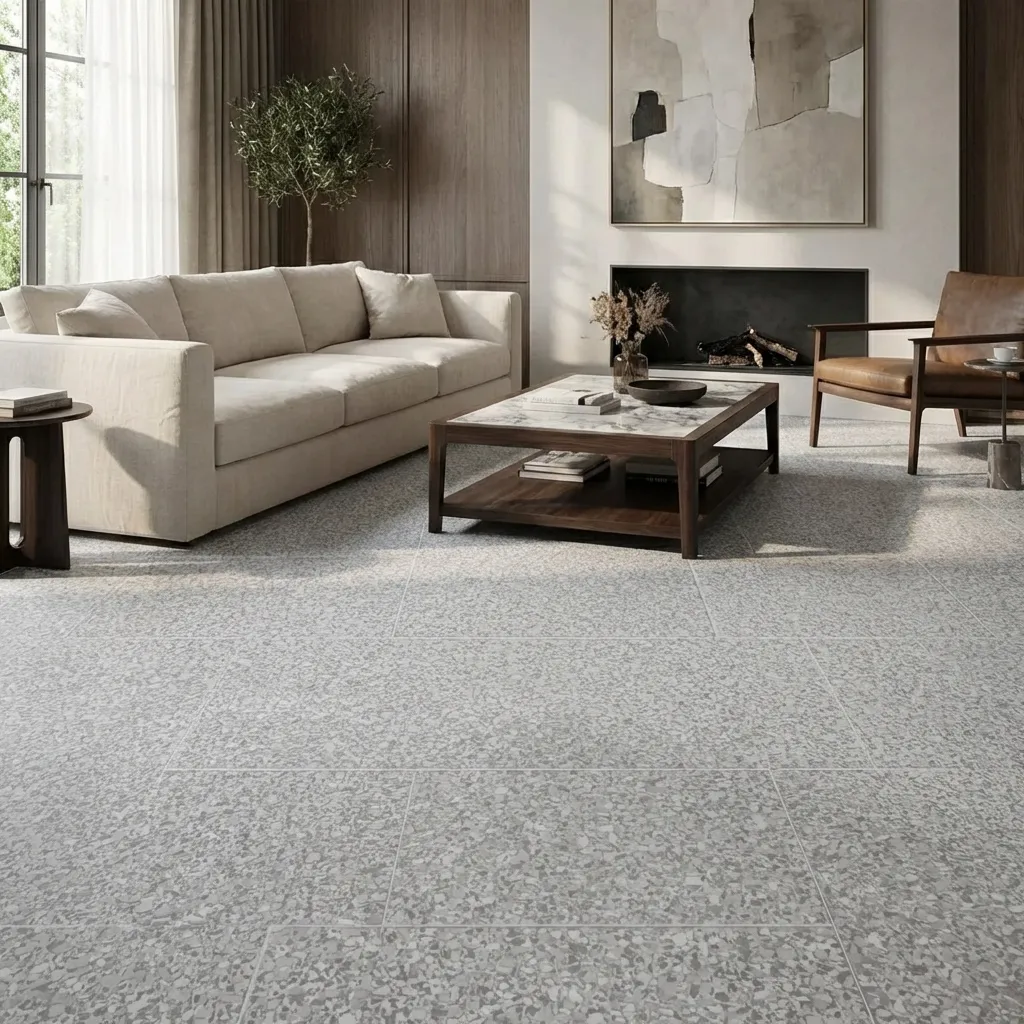
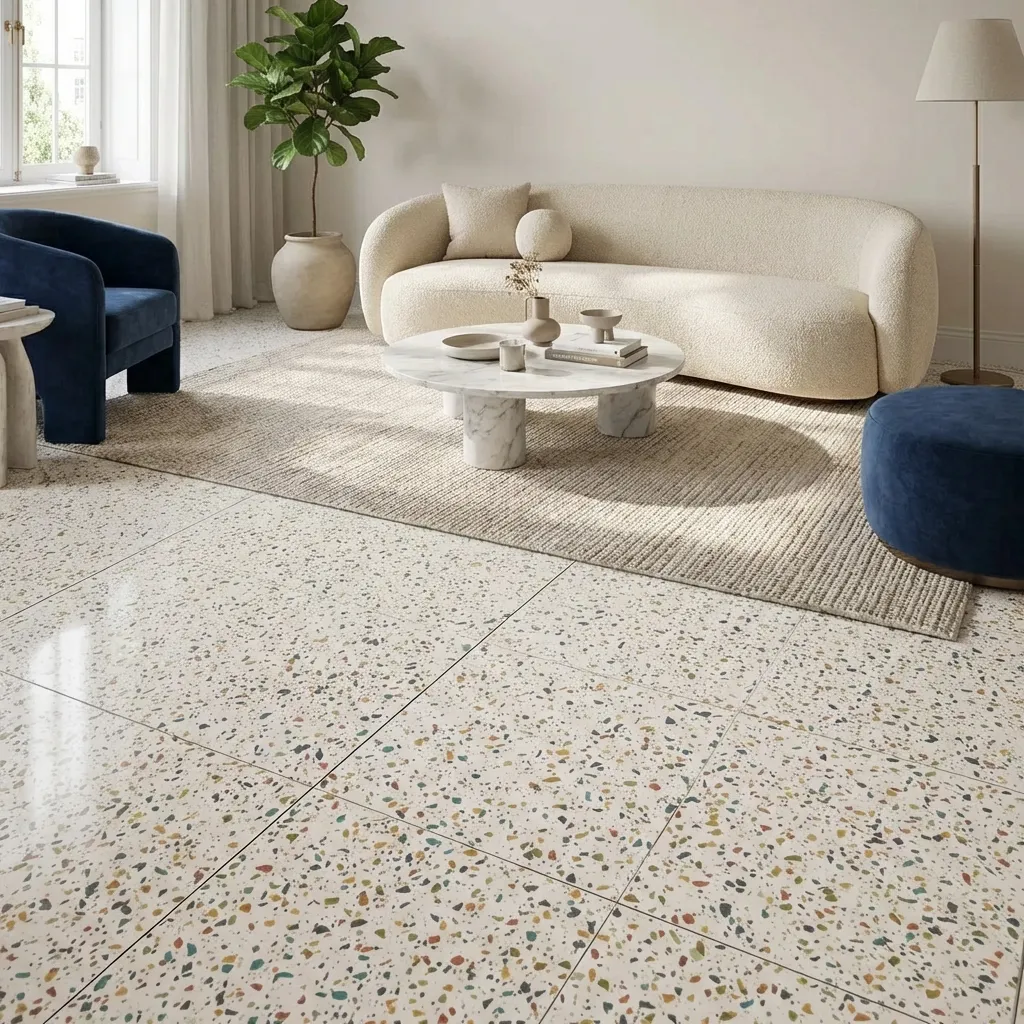
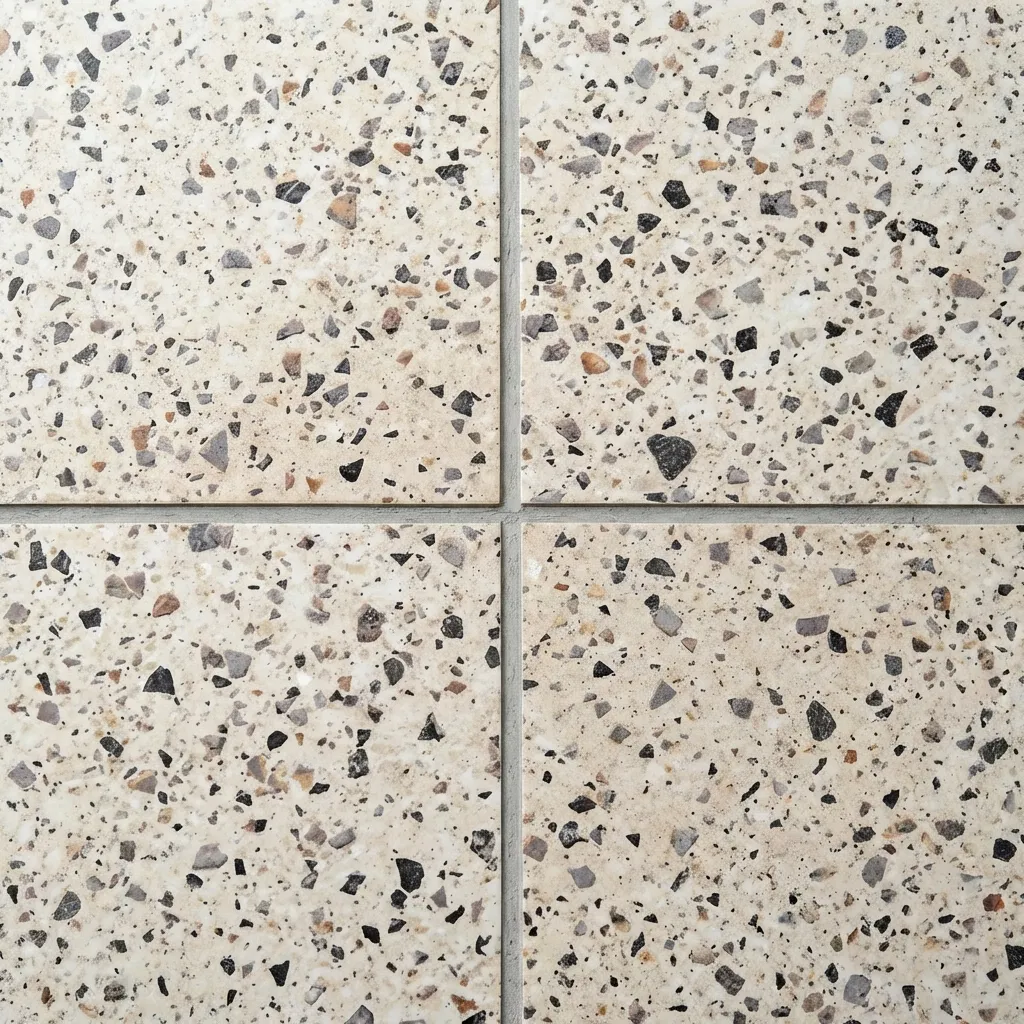
Terrazzo is a composite material made by embedding stone or glass aggregates into a cement-based or epoxy resin matrix, then grinding and polishing the surface to reveal a decorative chip pattern.
Cement terrazzo — natural matte appearance, UV-stable, suitable for indoor and outdoor use.
Epoxy terrazzo — vibrant color range, low porosity, lightweight, ideal for interior applications.
Available in factory-made tiles or poured-in-place systems.
Where Can It Be Used?
Terrazzo tiles are specified for both residential and commercial projects where durability and design flexibility are required.
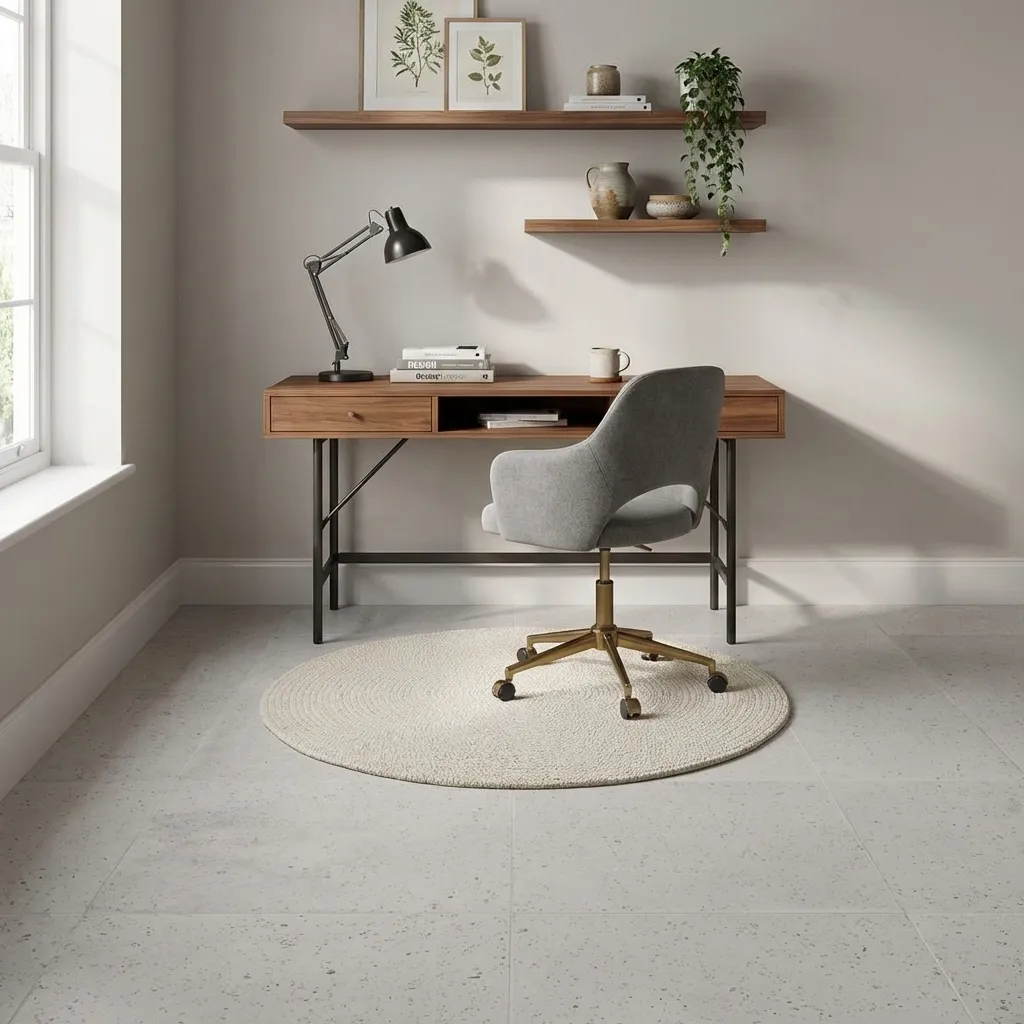
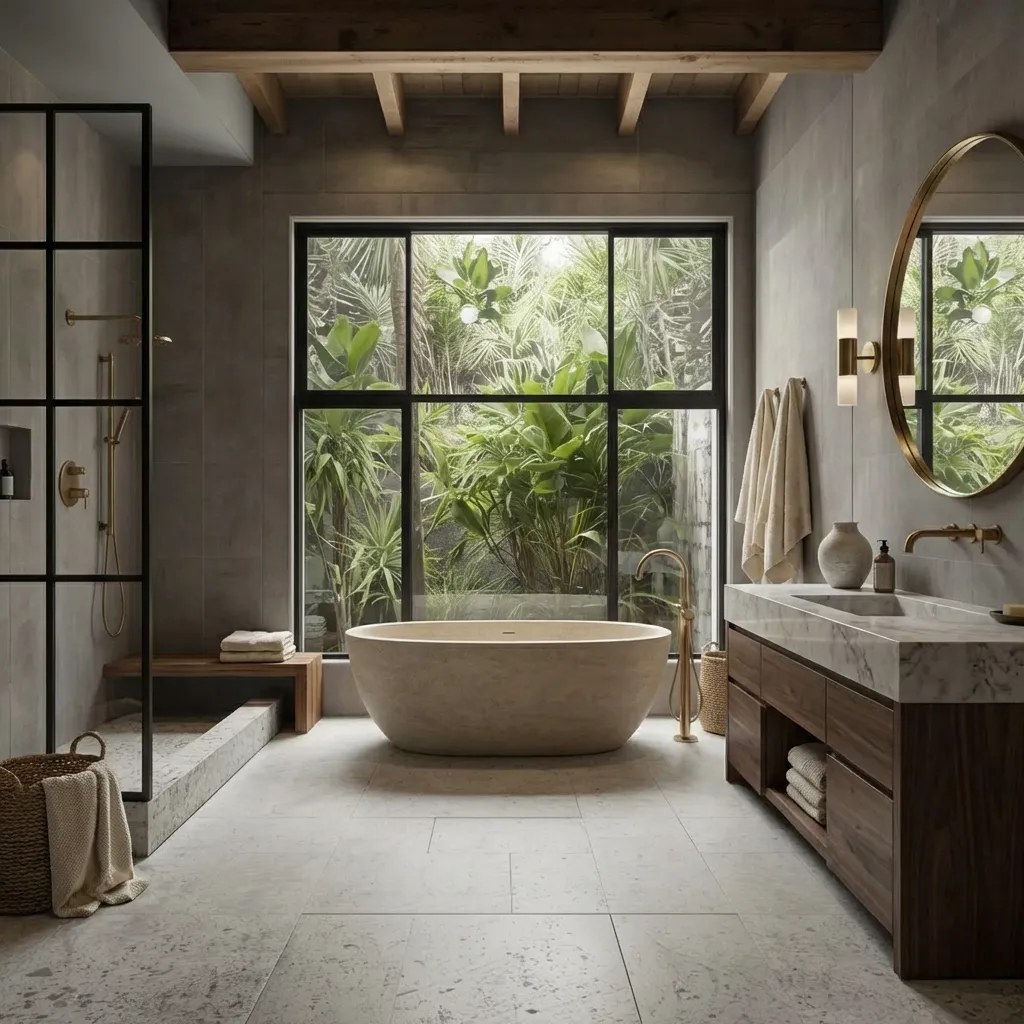
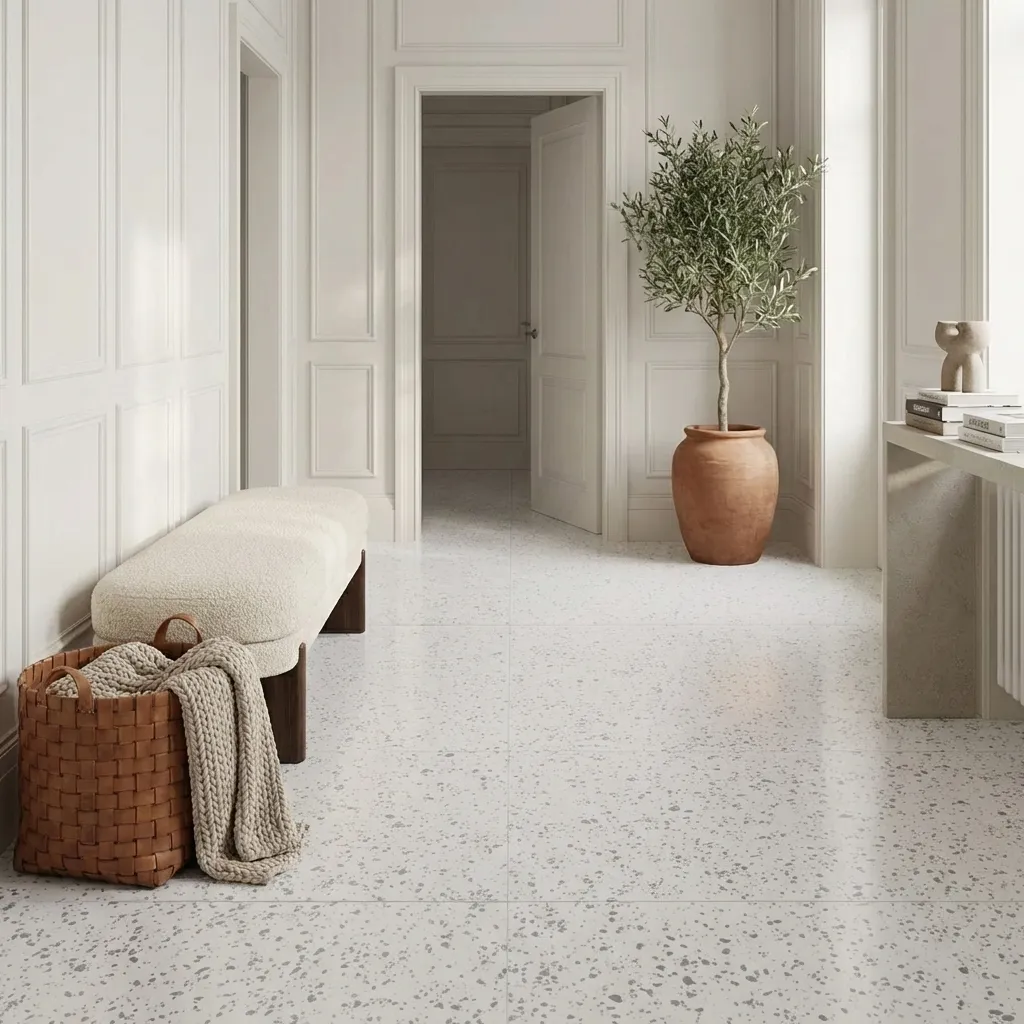
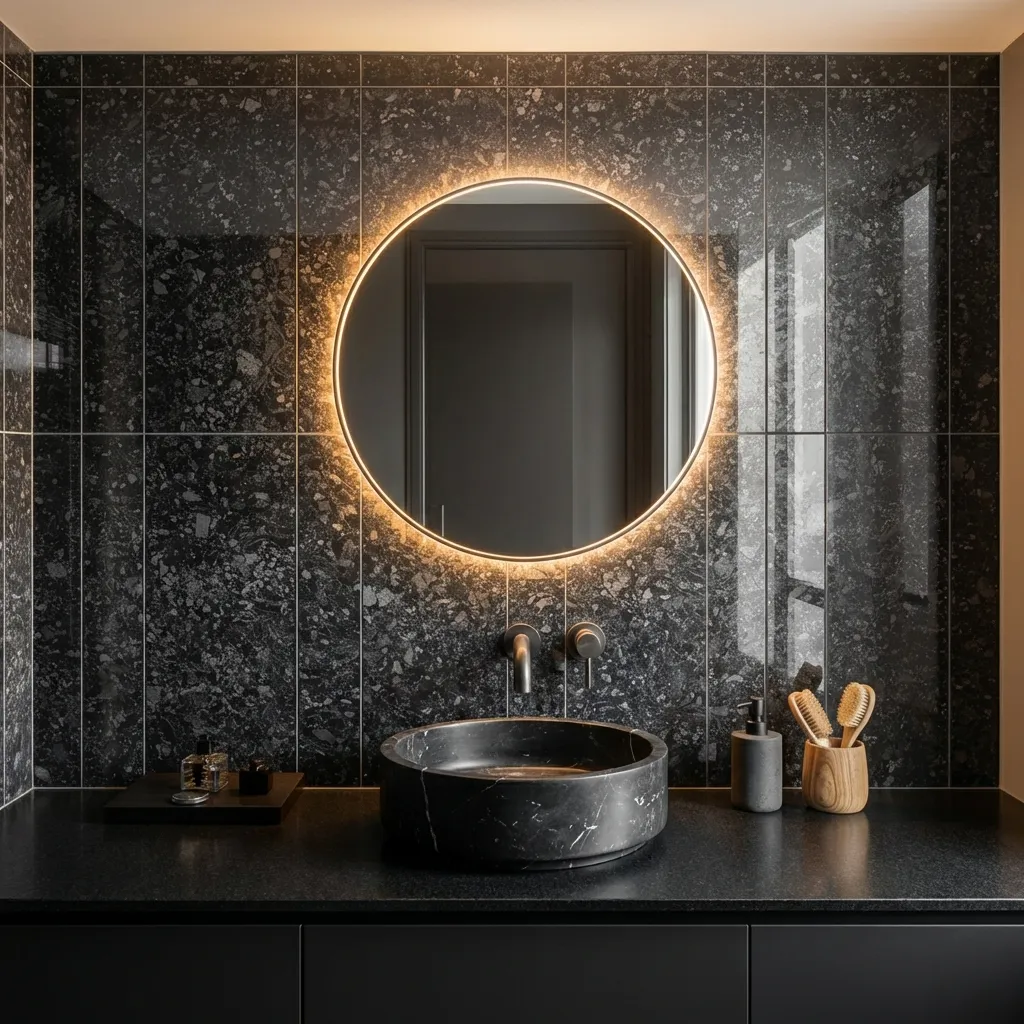
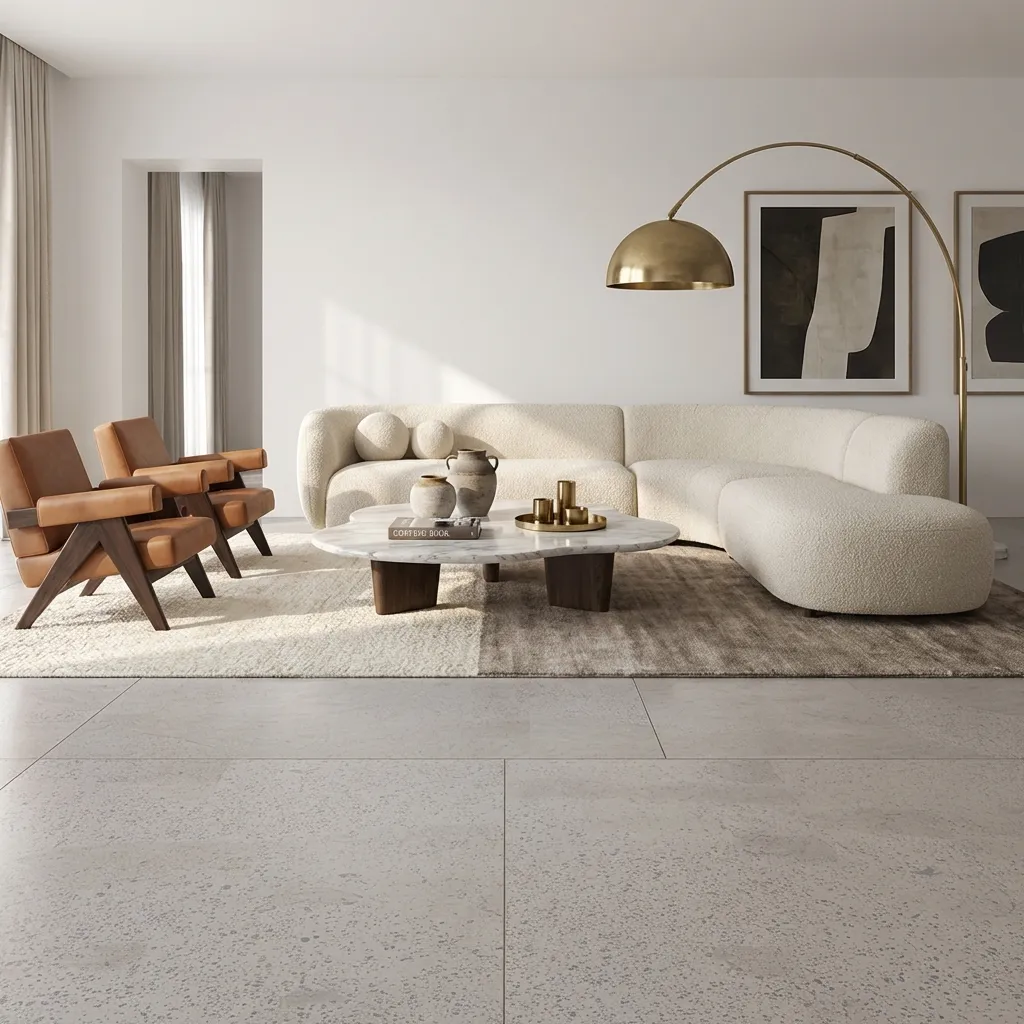
Interior floors & walls — living rooms, kitchens, bathrooms, corridors, and retail spaces.
Commercial areas — hotel lobbies, offices, reception counters, and stair details.
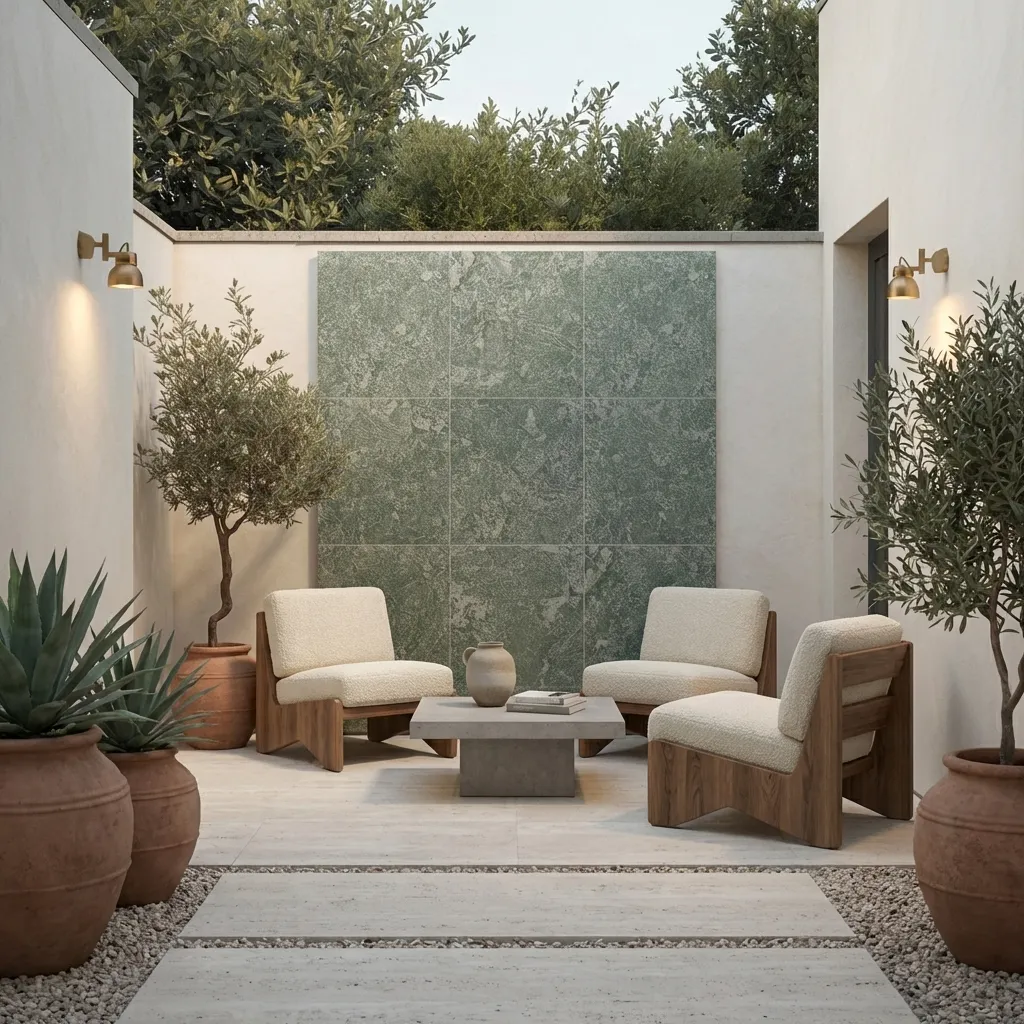
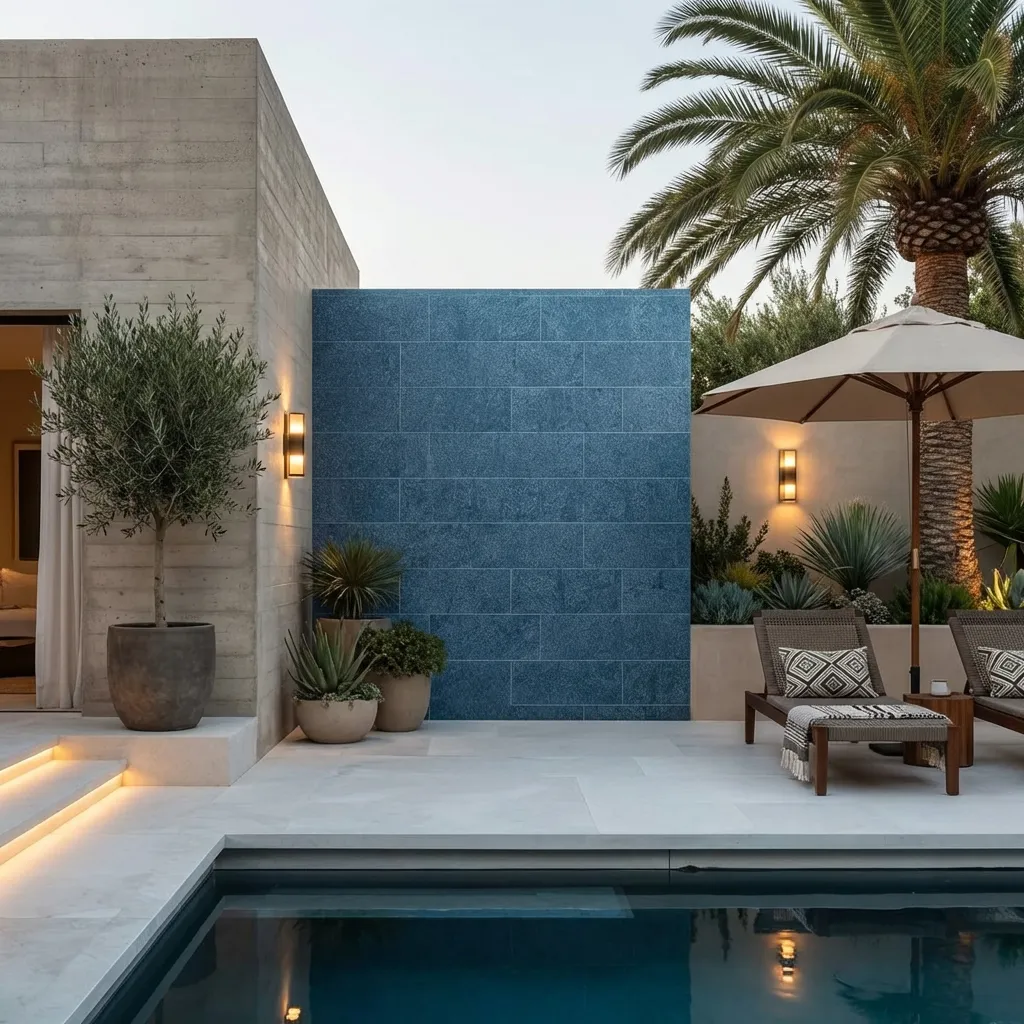
Outdoor areas — patios, verandas, and pool surrounds (cement-based or textured finishes recommended).
Also suitable for countertops, skirting, stair treads, and custom fabrication.
Terrazzo Aggregate Types: Visual Impact & Performance Differences
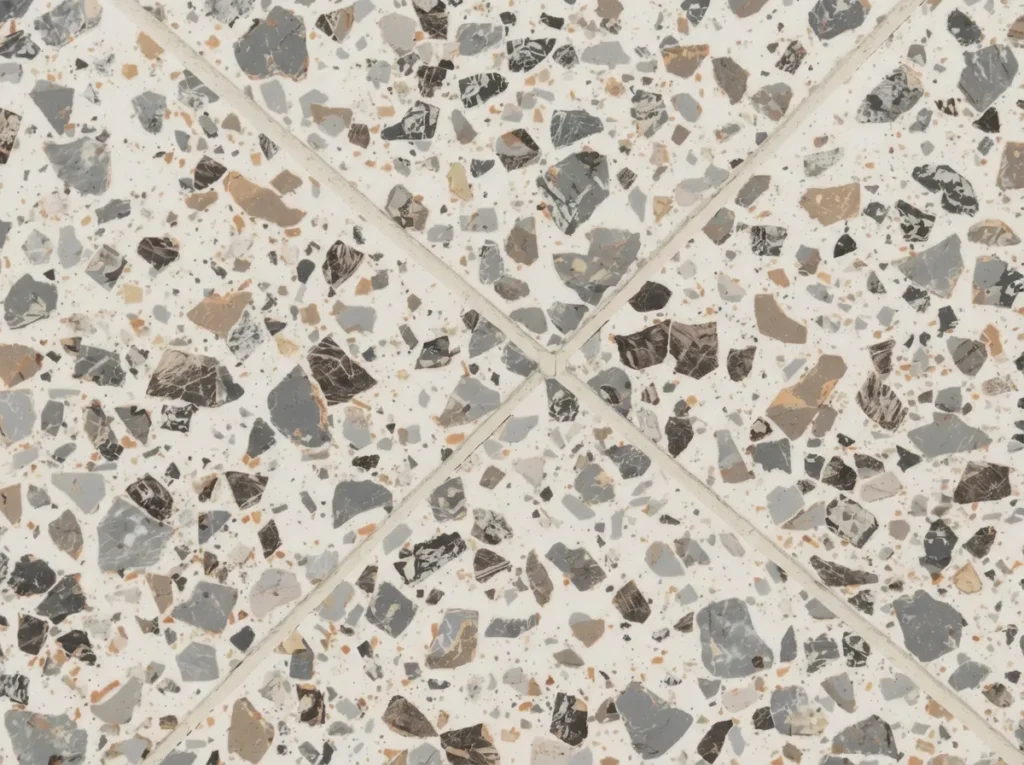
Marble Aggregate Terrazzo
Timeless stone character with natural warmth.
Appearance: Organic veining with chip sizes from fine “salt & pepper” to bold fragments
Performance: Durable and grindable; compatible with cement or epoxy binders
Applications: High-traffic floors, corridors, kitchens, hotels, and retail spaces
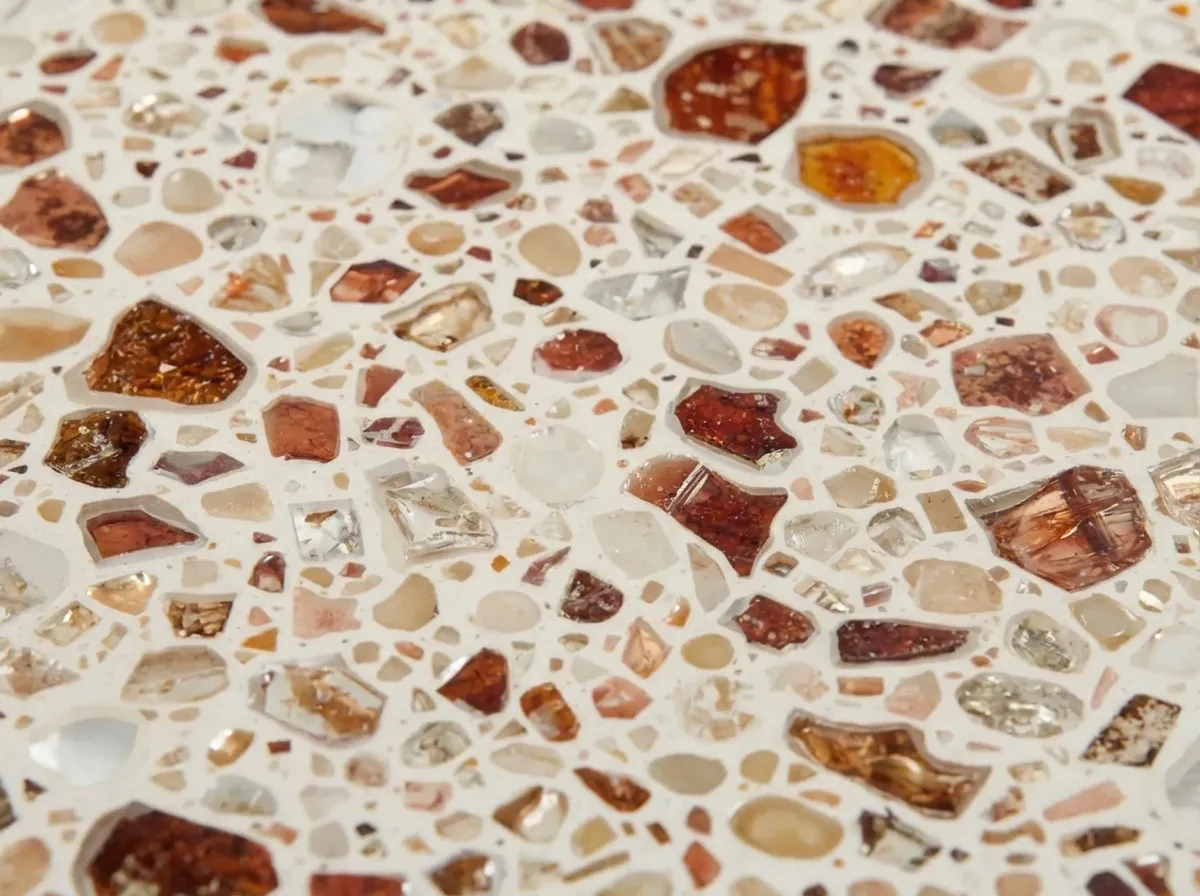
Glass Aggregate Terrazzo
Vivid color and luminous depth.
Appearance: Translucent chips that sparkle under light; optional backlighting effects
Sustainability: Often incorporates recycled glass content
Performance: Best in epoxy systems for low porosity and smooth polish
Applications: Feature floors, lobbies, bars, and branded interiors
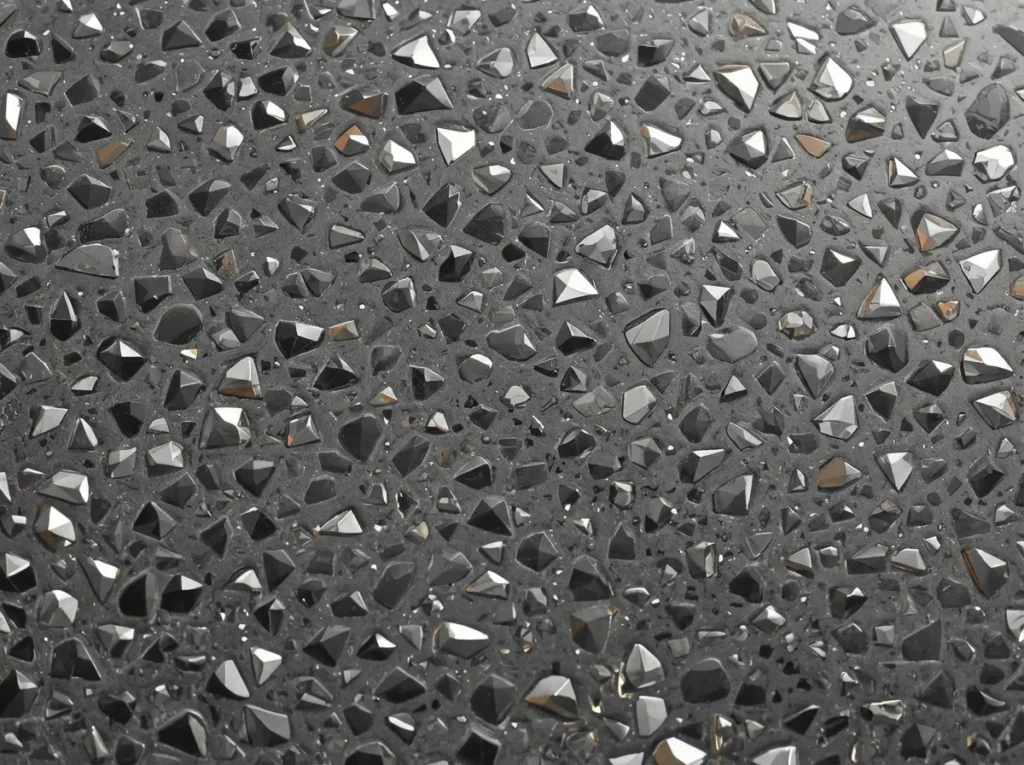
Mirror Aggregate Terrazzo
Reflective and dramatic finish.
Appearance: High-shine fragments create a “star-like” sparkle
Performance: Typically set in epoxy; edges are tumbled for safe grinding
Applications: Reception counters, boutique showrooms, hospitality features, statement walls
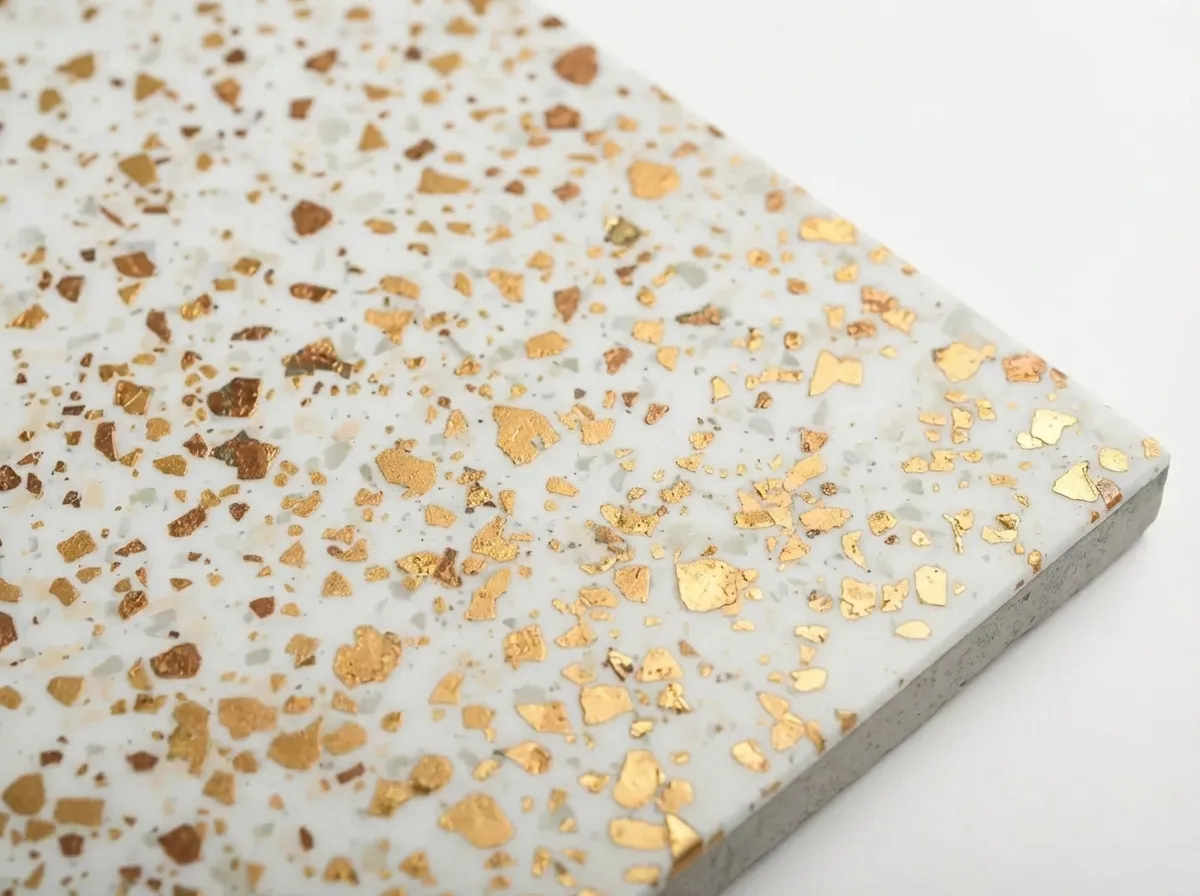
Metal Aggregate Terrazzo
Architectural and contemporary.
Appearance: Brass, copper, aluminum, or stainless accents with evolving patina (for certain metals)
Performance: Highly durable; requires proper sealing to manage oxidation (especially copper/brass)
Applications: Logos, borders, wayfinding, premium retail and commercial lobbies
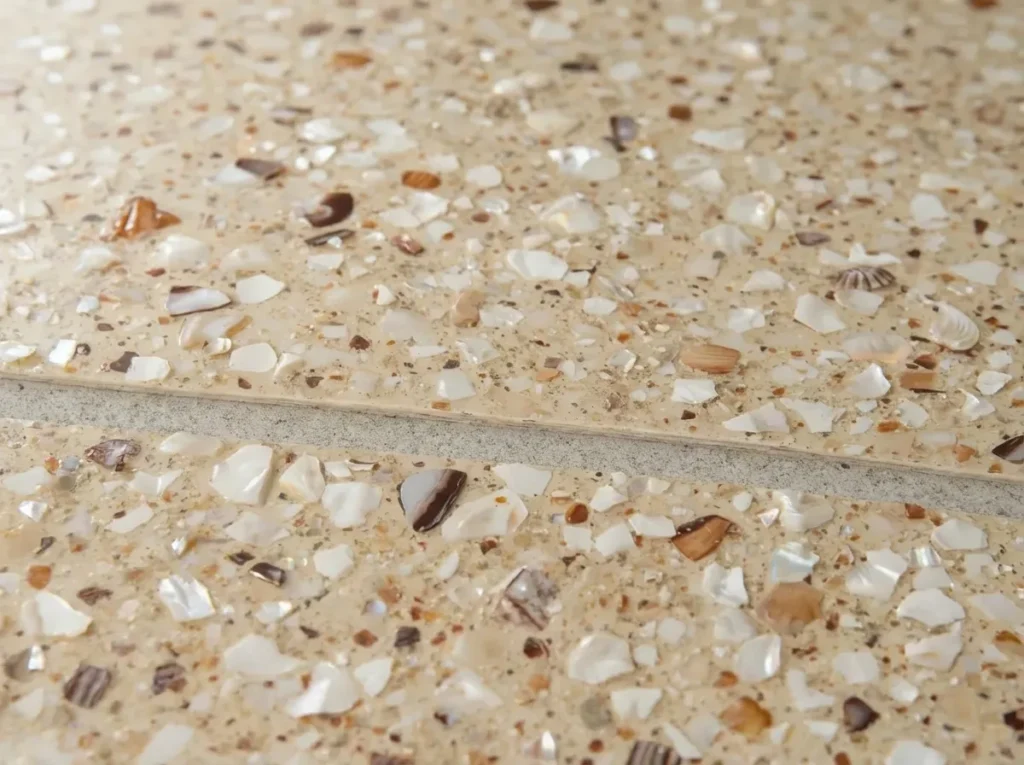
Shell Aggregate Terrazzo
Coastal elegance with subtle iridescence.
Appearance: Natural shell fragments with soft shimmer and tonal variation
Performance: Softer than stone; best in epoxy; requires careful grinding and sealing
Applications: Feature floors, bathroom walls, vanities, reception desks, decorative panels
Sibolla Building Terrazzo Tile Solution FAQs
Q: What’s the difference between cement-based and epoxy-based terrazzo tiles?
A: Cement terrazzo is UV-stable, breathable, ideal for outdoors/heavy traffic, and usually thicker (≈15–20 mm). Epoxy (resin) terrazzo has vivid color, very low porosity, excellent stain resistance, is lighter/thinner (≈8–12 mm), and best for indoor use because most resins can yellow under UV.
Q: Are terrazzo tiles suitable for kitchens or food-service areas?
A: Yes—when properly sealed and maintained. Apply a high-quality penetrating sealer (two initial coats), re-seal periodically, and clean with pH-neutral products. Choose honed or micro-textured finishes where extra slip resistance is needed.
Q: Can terrazzo tiles be used outdoors?
A: Yes—select cement-based, frost-resistant tiles with a non-slip finish (e.g., R11/R12). Avoid epoxy outdoors. Provide proper waterproofing, drainage, and movement joints matched to the climate.
Q: Are terrazzo tiles compatible with underfloor heating?
A: Yes. Use a flexible polymer-modified thin-set, honor movement joints, and commission the system gradually after curing. Keep surface temperature ≤ 27 °C (80 °F) for long-term stability.
A: Orders ship from the same production lot with cartons labeled by batch number. Because aggregates are natural, slight variation is normal—approve a control sample/mock-up and order 5–10% overage for cuts and future repairs.
A: Because of size/edge variation, use a wider joint—typically 3/16–3/8 in (5–10 mm)—with sanded grout. Set with a polymer-modified thinset/LHT mortar suitable for the substrate (A118.4/A118.15; exterior rated outdoors). Lightly dampen very porous tiles before setting, pre-seal unglazed tiles to prevent staining, and follow EJ171 for movement joints.
Contact Us
We’ll get back to you within 24 hours. For urgent project inquiries, contact us directly at +86 13695169816. You can also upload your project drawing files