Terracotta Tile Manufacturer: Rustic Clay Tiles for Floors & Walls
Natural clay tiles for interiors and outdoor areas — warm tones, breathable structure, and timeless Mediterranean character for residential and commercial projects.
Why Choose Terracotta Tiles
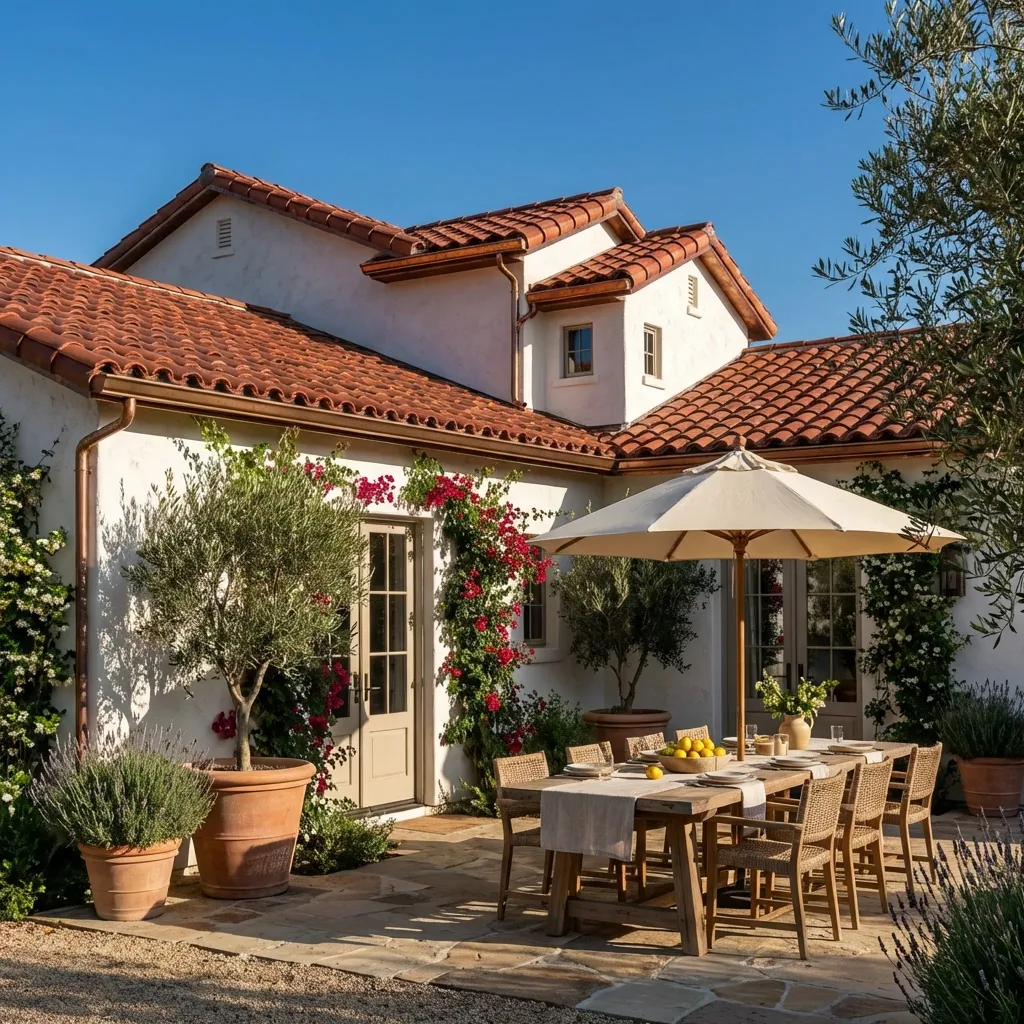
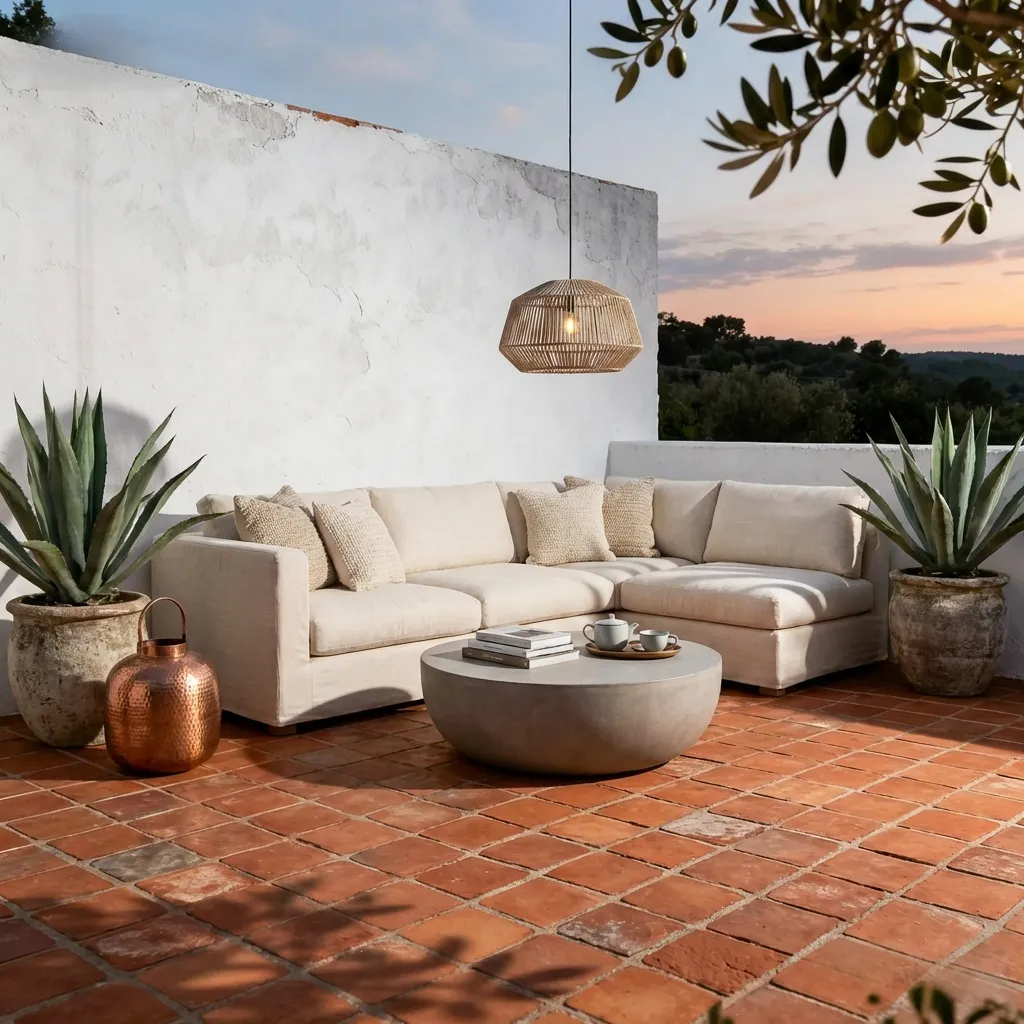
Hand-crafted clay character with natural warmth and breathable comfort. Terracotta develops patina over time, connects indoor and outdoor spaces, and delivers timeless Mediterranean appeal for residential and hospitality projects.
Natural tones & finishes: salmon, ochre, and burnt-earth shades; raw, waxed, sealed, or glazed options.
Authentic texture: smooth, sanded, or tumbled surfaces with hand-crafted edges.
Built for real use: slip-resistant options and frost-safe bodies for patios and exterior climates.
Flexible formats: square, rectangle, hex, and decorative patterns for classic layouts.
Complete accessories: steps, skirting, thresholds, copings, and matching grout systems.
Easy maintenance: neutral cleaning and periodic sealing keep surfaces durable and repairable.
Terracotta Body Types: Glazed vs Unglazed
Glazed Terracotta Tile
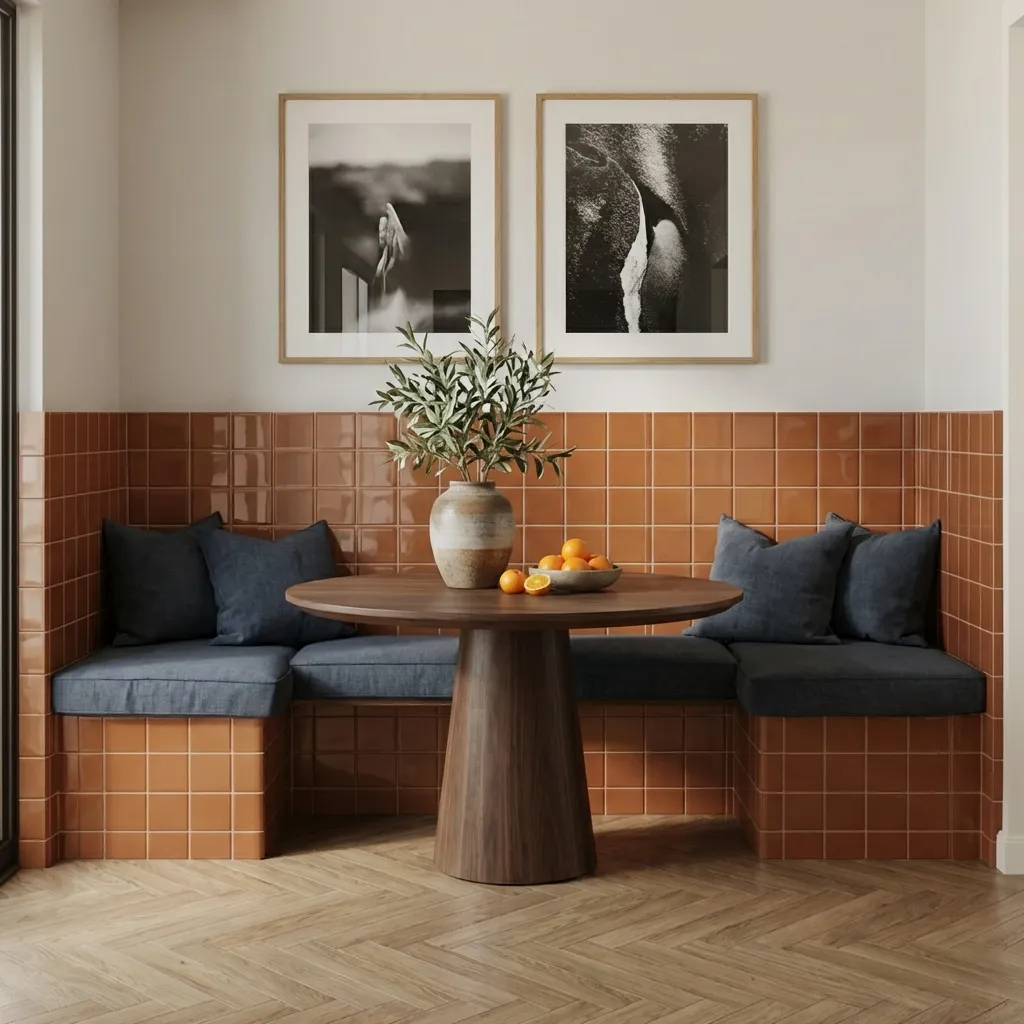
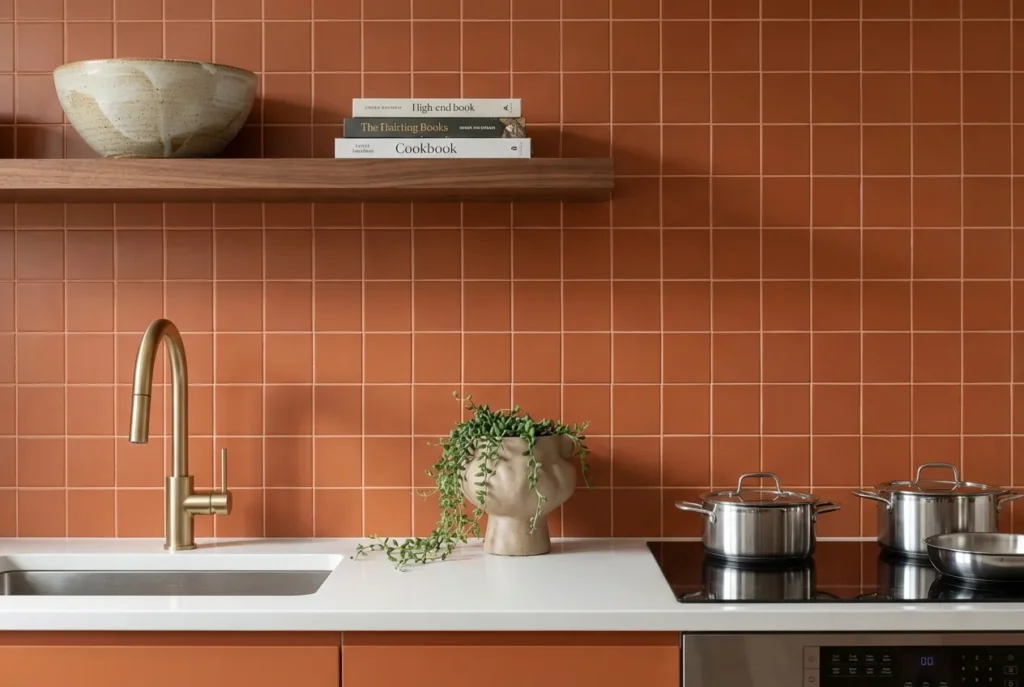
Appearance: Even tone with gloss, satin, or matte glaze; custom colors available.
Protection: Low absorption surface resists stains, oils, and daily spills.
Texture & slip: Smooth finish; textured glaze options for extra grip.
Maintenance: No sealing required (grout sealing only); simple neutral cleaning.
Best for: Backsplashes, shower walls, feature walls, and light–medium traffic interior floors.
Unglazed Terracotta Tile
Appearance: Natural clay variation with authentic handcrafted character; develops patina over time.
Performance: Higher porosity — requires sealing at installation and periodic resealing.
Maintenance: Neutral cleaning; individual tiles can be refinished or replaced.
Terracotta Tile Layout Ideas for Different Spaces
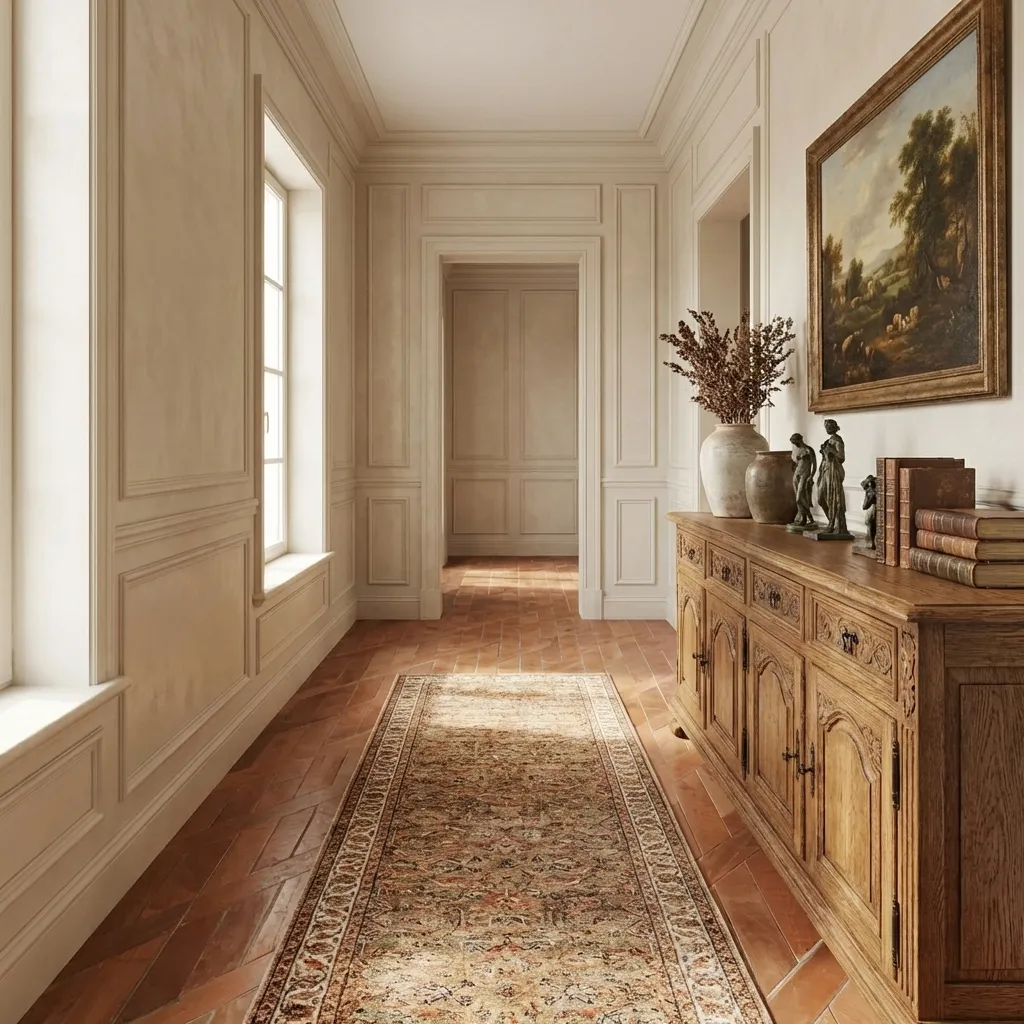
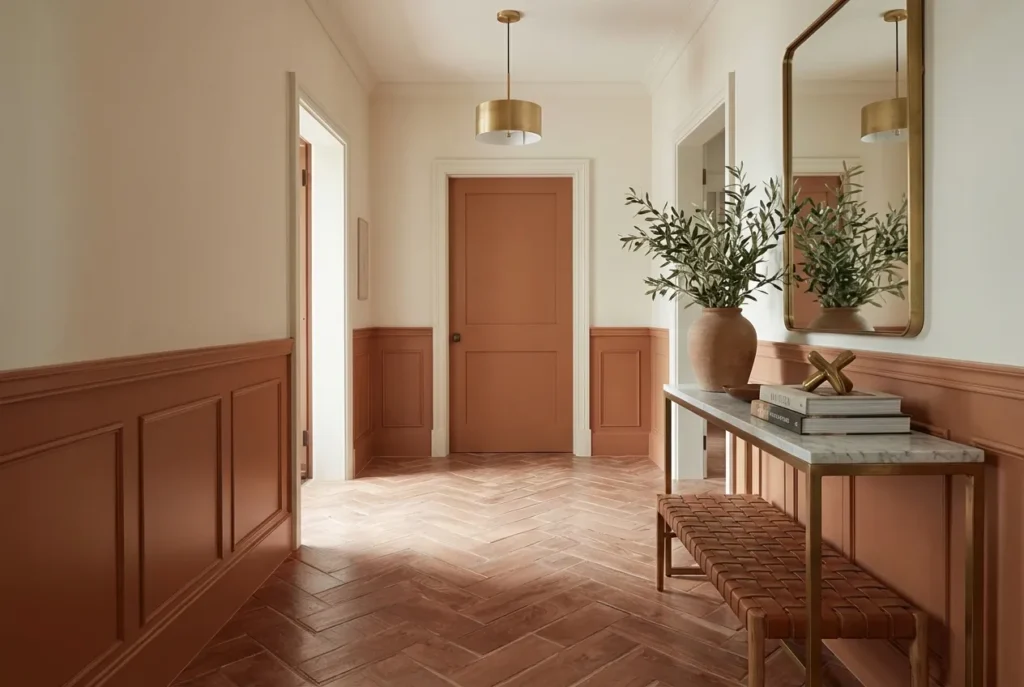
Herringbone Terracotta Tile
Creates visual movement and a refined architectural feel. Ideal for hallways, entryways, and patios where you want depth and directional flow.
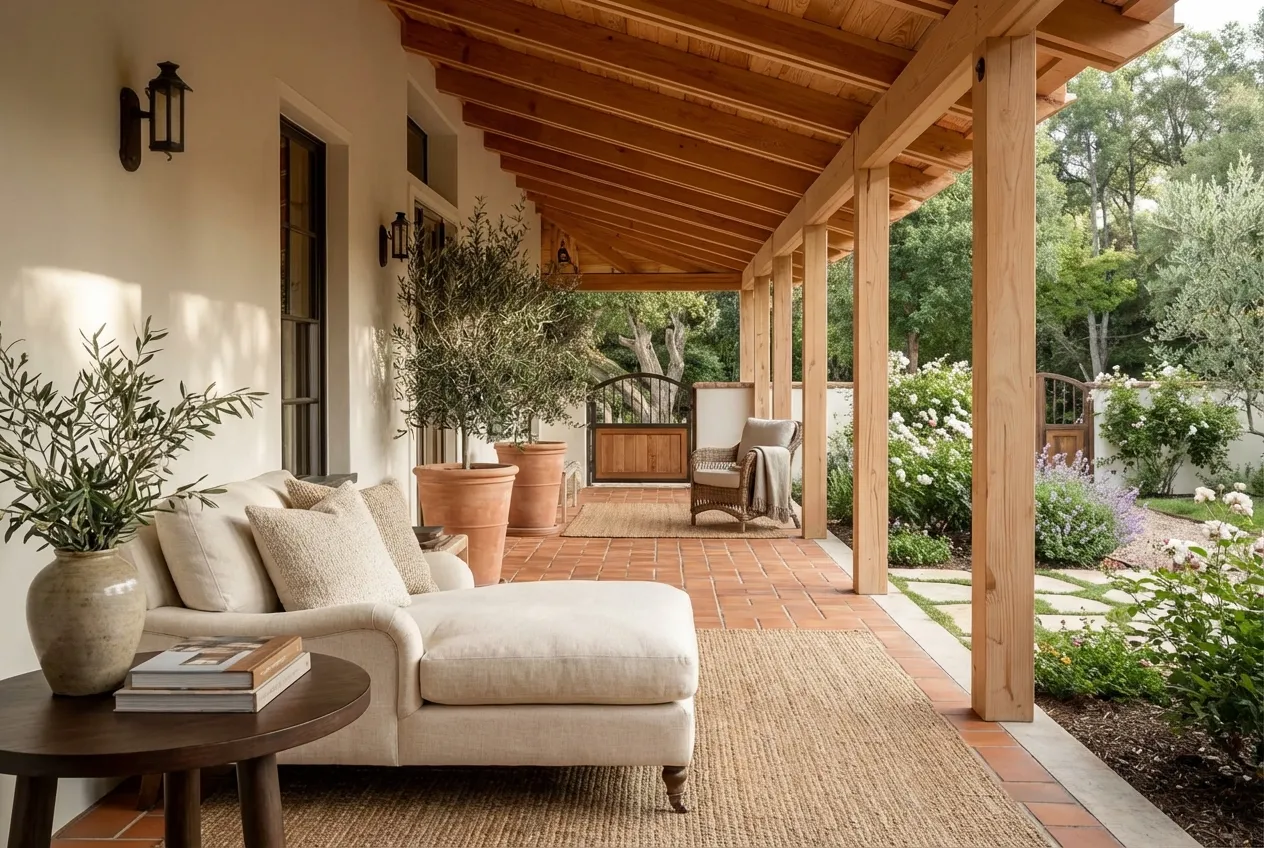
Running Bond Terracotta Tile
Simple offset pattern with efficient installation and minimal waste. Works well for long corridors, porches, and large terraces.
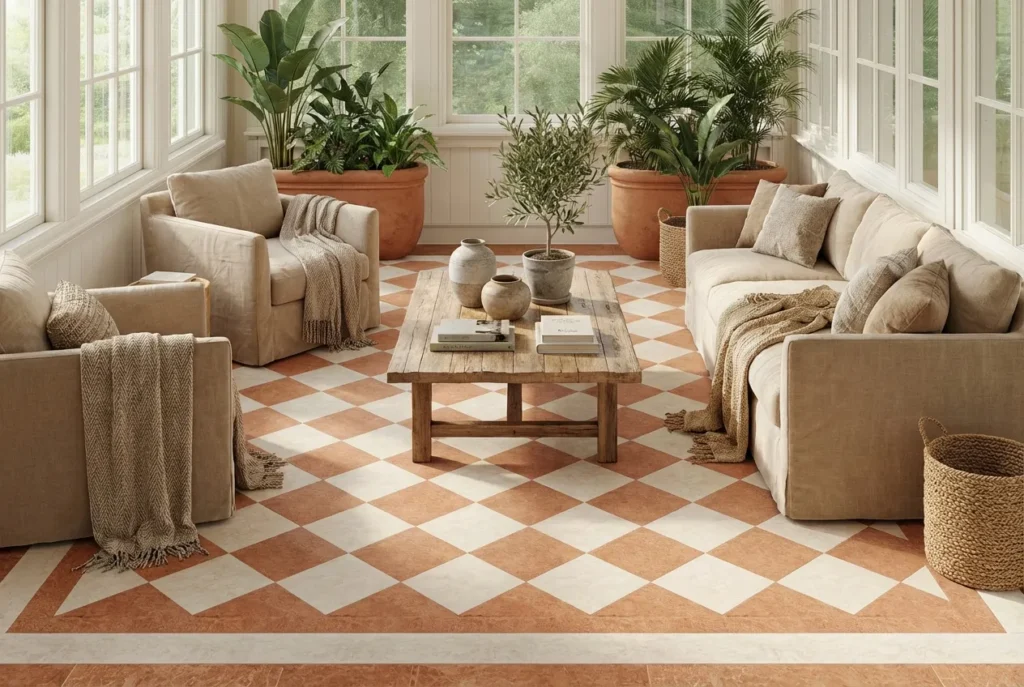
Checkerboard Terracotta Tile
Alternating tones define zones and add vintage character. Suitable for dining areas, sunrooms, and transitional indoor-outdoor spaces.
Rustic Terracotta Tile
Tumbled edges and shade variation emphasize natural texture and conceal daily wear. Perfect for farmhouse interiors and relaxed outdoor lounges.
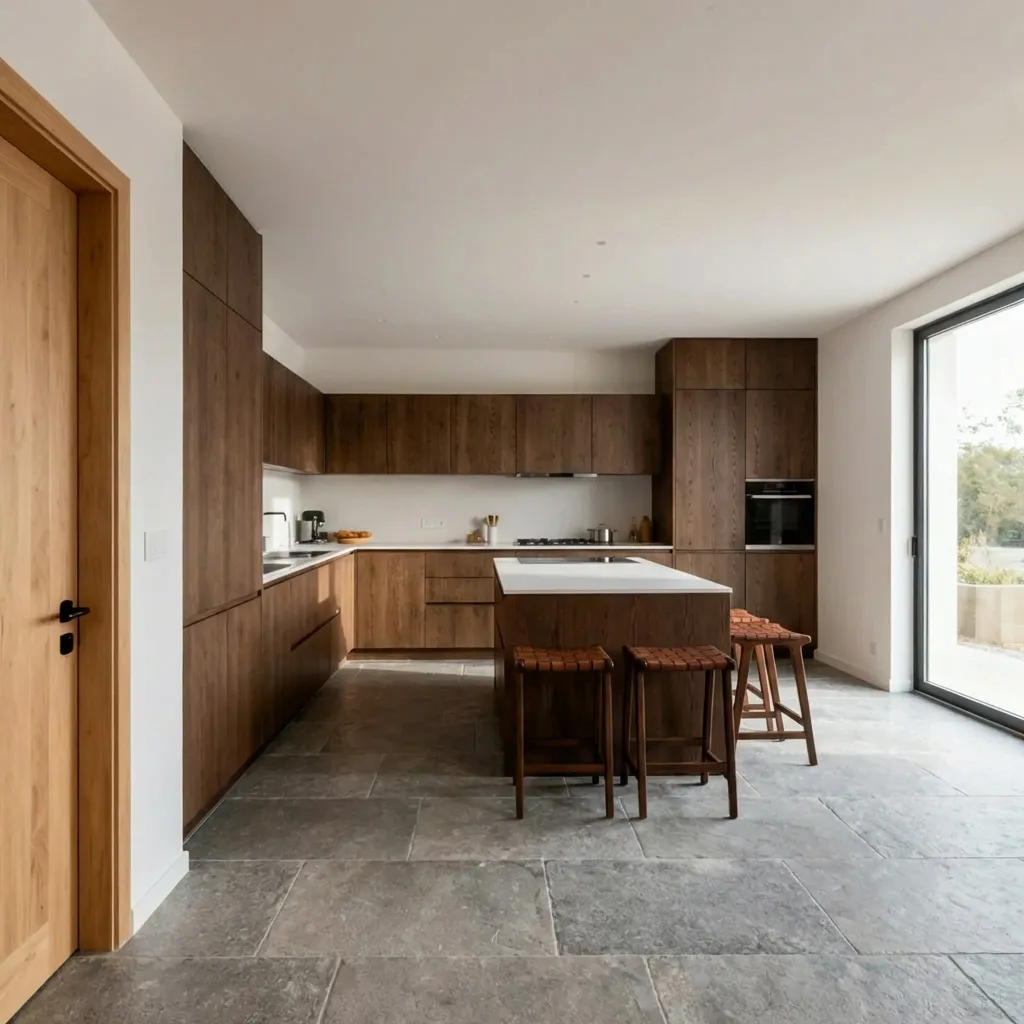
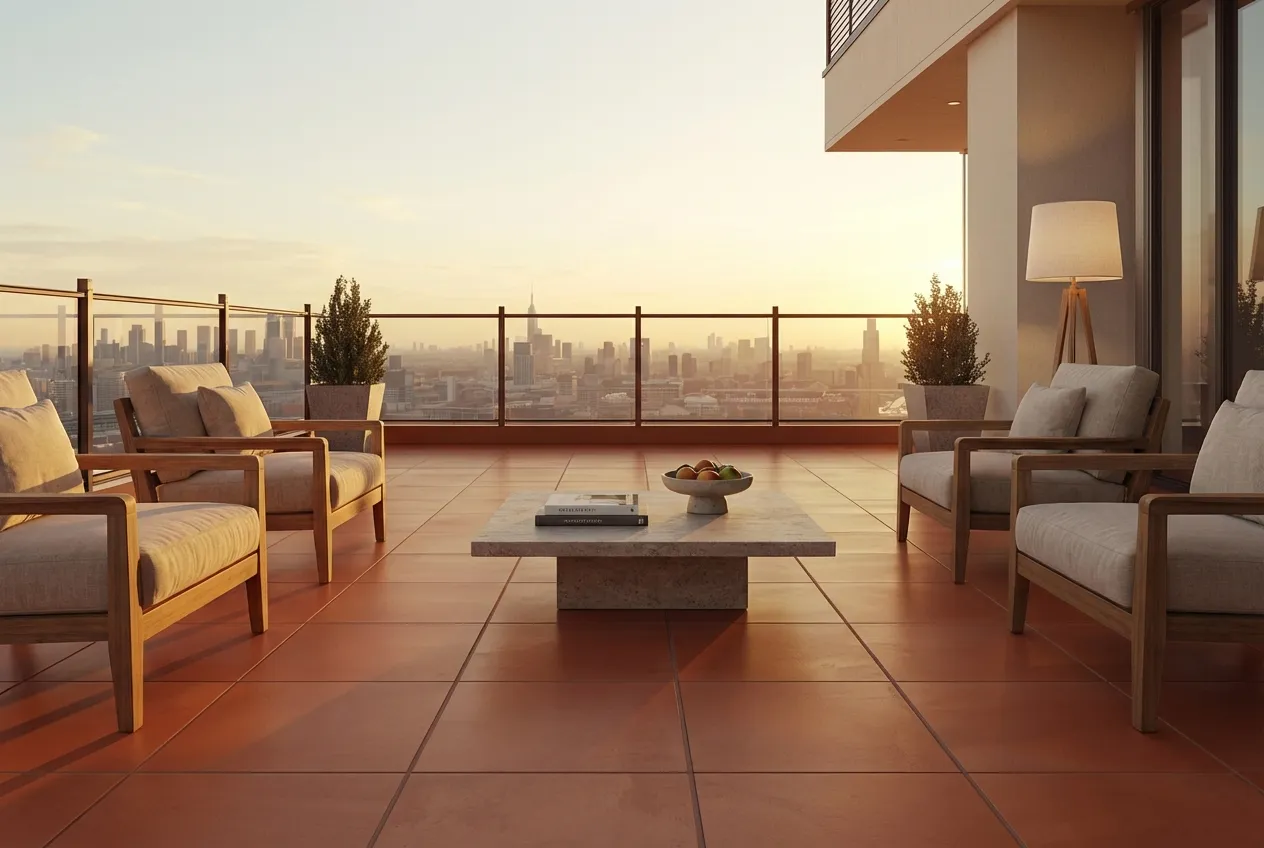
Smooth Terracotta Tile
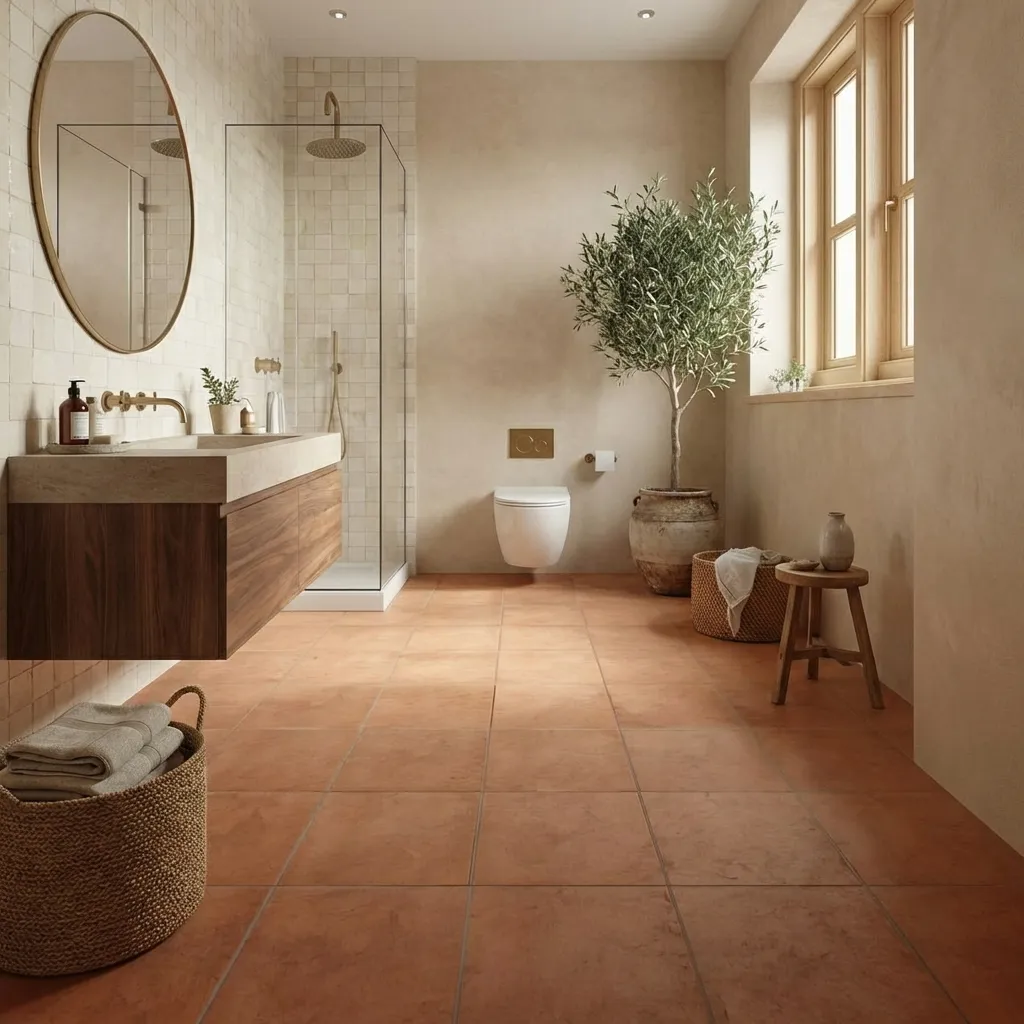
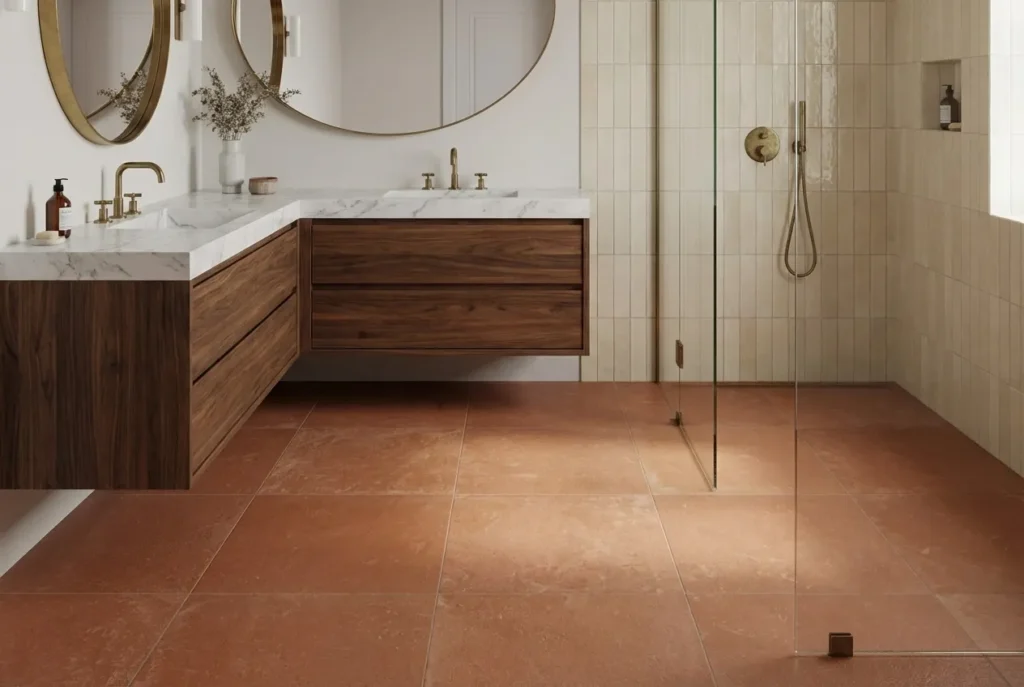
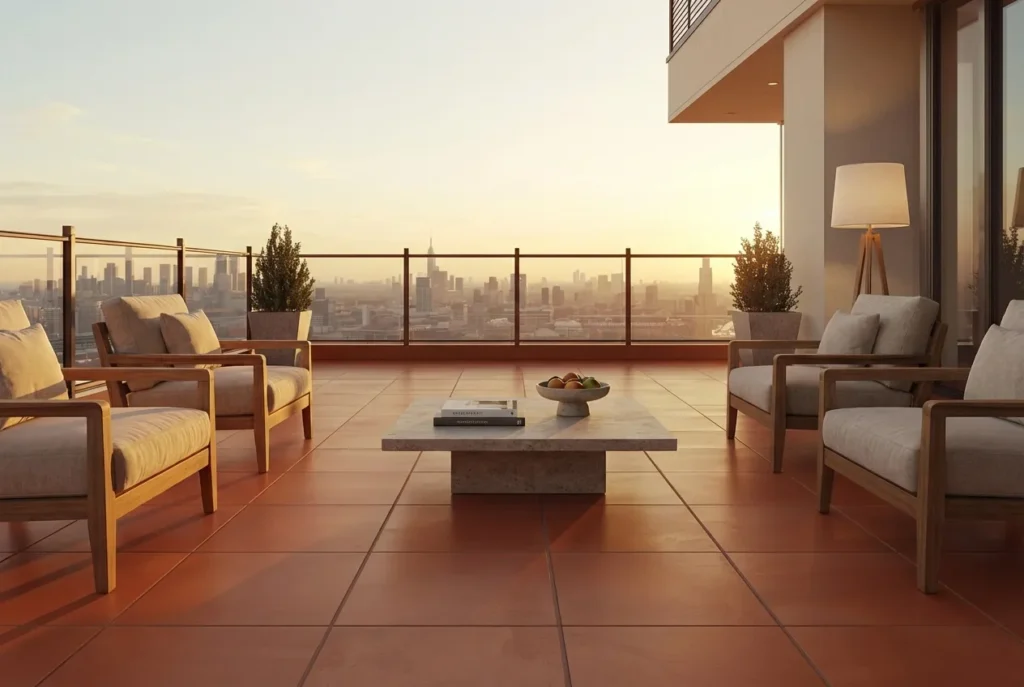
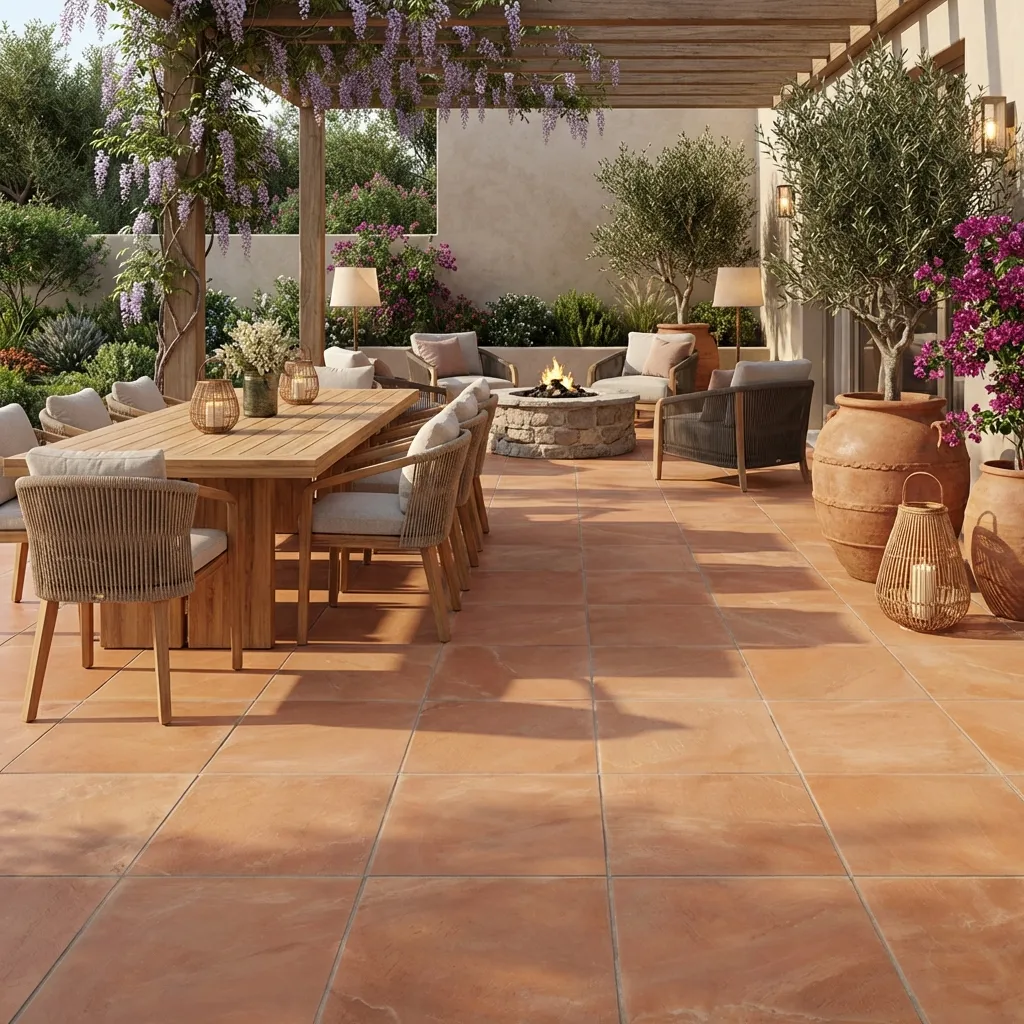
Even, honed surface for a cleaner contemporary look. Comfortable underfoot and suitable for rooftops and covered terraces; anti-slip treatment optional.
Sibolla Building Terracotta Tile Solution FAQs
Q: Do terracotta tiles need sealing?
A: Glazed terracotta generally does not need sealing (seal the grout only). Unglazed terracotta must be sealed: apply a penetrating sealer before grouting (works as grout-release), then finish with your preferred topcoat or leave matte with a breathable penetrating sealer only. Reseal periodically based on traffic; exterior or wet zones may need more frequent maintenance.
Q: Can terracotta be used in bathrooms or showers?
A: Yes—with the right specification. Use slip-resistant finishes on floors; glazed or sealed unglazed tiles are ideal for walls. Always install over a waterproof membrane with proper slope and use wet-area-rated mortars and grouts. Terracotta is not recommended for continuous immersion (e.g., pools, fountains).
Q: Is it suitable for freeze–thaw climates?
A: Choose a frost-resistant, low-absorption body (≤3–5% water absorption) and follow exterior best practices: full mortar coverage (≥95%), movement joints, positive drainage, breathable penetrating sealer, and avoidance of de-icing salts where possible. When specified this way, terracotta performs well in freeze–thaw conditions.
Q: How much color variation should I expect?
A: Unglazed, handmade terracotta has natural shade and tone variation (typically V3–V4); it will deepen and patina over time. Glazed tiles are more uniform (V1–V2). Blend from multiple boxes during installation, and approve a control range/sample board before production to set expectations.
Q: What grout joint and mortar should I use for handmade tiles?
A: Because of size/edge variation, use a wider joint—typically 3/16–3/8 in (5–10 mm)—with sanded grout. Set with a polymer-modified thinset/LHT mortar suitable for the substrate (A118.4/A118.15; exterior rated outdoors). Lightly dampen very porous tiles before setting, pre-seal unglazed tiles to prevent staining, and follow EJ171 for movement joints.
Contact Us
We’ll get back to you within 24 hours. For urgent project inquiries, contact us directly at +86 13695169816. You can also upload your project drawing files